Sash windows have a reputation that does them a disservice. Many people assume they are draughty relics, suited only to crumbling Georgian townhouses or listed buildings with strict rules. The reality is quite different. Modern upgrades mean sash windows can be energy-efficient, low-maintenance, and genuinely valuable to your property. Whether you own a Victorian terrace in Edinburgh, a period cottage in the Cotswolds, or a commercial building in a conservation area, understanding sash windows properly will help you make smarter choices about repairs, replacements, and retrofits.
What are sash windows and how do they work?
A sash window is a window made up of one or more movable panels, called sashes, that slide vertically within a frame. Unlike casement windows that swing outward on hinges, sash windows glide up and down. This sliding action is controlled by a counterbalance system, traditionally using weights hidden inside the frame, connected by cords or chains. Modern versions often use spring balances instead, which are easier to maintain.
The sash window originated in England in the 1670s and became the defining feature of Georgian, Victorian, and Edwardian architecture. The classic Georgian style features six panes over six, giving that elegant grid pattern you see across historic British streets. These windows are not just decorative. They are central to the character and authenticity of period properties across England and Scotland.
The three main types you will encounter are:
- Double-hung sash windows: Both the upper and lower sashes move independently, allowing flexible ventilation from top or bottom.
- Single-hung sash windows: Only the bottom sash moves, while the upper sash is fixed in place.
- Sash and case windows: Common in Scotland, this design uses a box frame that conceals the counterweights, giving a clean, traditional appearance.
Sash windows are not simply old-fashioned alternatives to modern windows. They are an architectural language. Changing them without care can alter the entire character of a building.
If your property is listed or sits within a conservation area, you may be legally required to retain or faithfully replicate original sash windows. Many homeowners worry that this limits their options, but as we will explore, it does not have to mean sacrificing comfort. You can replace original sash windows with sympathetic modern versions that meet both heritage and energy standards.
Types of sash windows: Comparing designs for modern and period properties
With a working definition established, let us examine the most popular types of sash windows and how to choose between them. Each type has distinct advantages depending on your property’s age, style, and your practical priorities.
Common types include double-hung, where both sashes move, single-hung, where only the bottom moves, and in Scotland the sash and case design, which refers to the characteristic box frame construction.
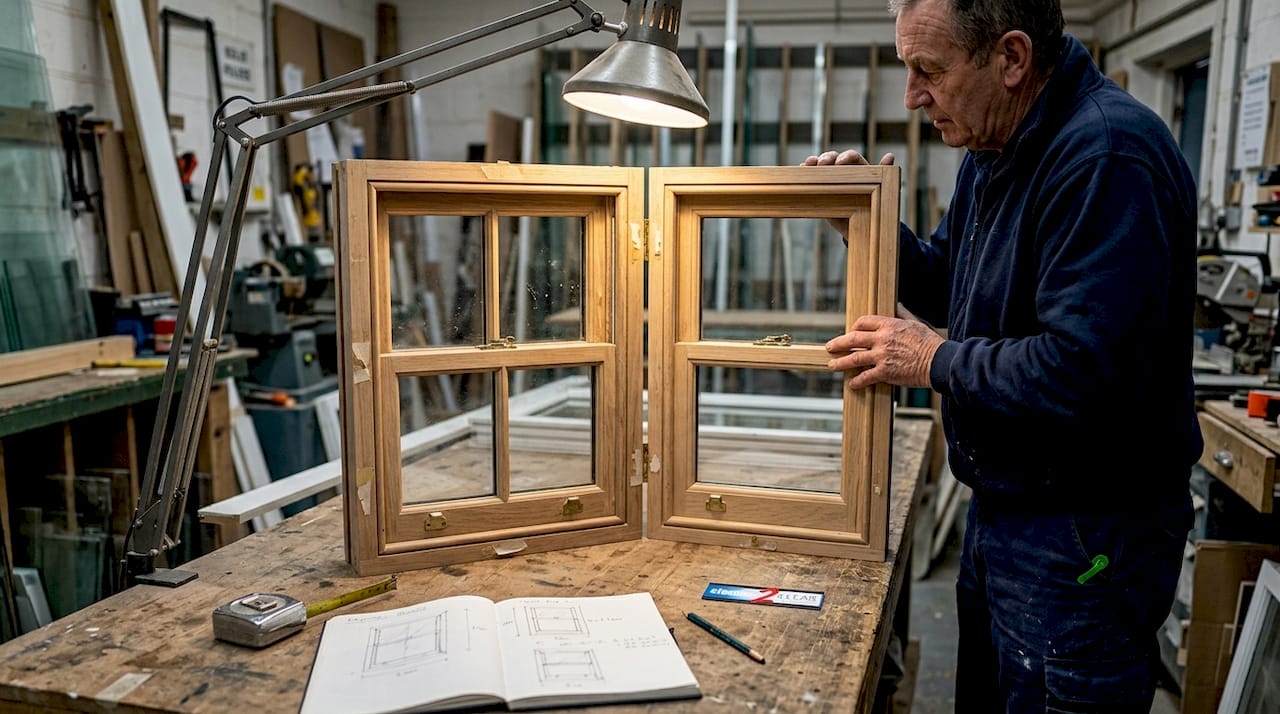
| Type | Best suited to | Key benefit | Drawback |
|---|---|---|---|
| Double-hung | Georgian, Victorian, Edwardian | Flexible ventilation | More moving parts to maintain |
| Single-hung | Modern period-style builds | Simpler mechanism | Limited airflow control |
| Sash and case | Scottish traditional properties | Authentic heritage look | Specialist repair needed |
How to identify your existing sash window type:
- Look at the upper sash. If it slides down as well as the lower sash sliding up, you have a double-hung window.
- Try pushing the upper sash downward. If it is fixed, you have a single-hung window.
- Check the frame sides for a box-like casing. If the frame is noticeably deep and hollow-sounding, it is likely a sash and case design.
- Look for visible sash cords or pulleys at the top of the frame, which confirm a traditional counterweight system.
- Check the glazing bars. A six-over-six pane pattern strongly suggests Georgian origin.
Choosing the right type matters for more than aesthetics. Double-hung windows offer the best ventilation because you can open both top and bottom simultaneously, creating a natural airflow effect. Single-hung windows are simpler and slightly cheaper to maintain. Sash and case windows are the standard choice for Scottish period properties and are often required by local planning rules.
When upgrading, it is worth exploring your double glazing options early in the process, as the glazing type you choose will affect both performance and whether your changes comply with heritage guidelines.
Energy efficiency and cost savings: What sash windows can deliver
Understanding the differences in design leads naturally to questions about how these windows perform, especially regarding comfort and running costs. The good news is that sash windows, when properly upgraded, can deliver real and measurable savings.
Double-glazed sash windows can save you up to £120 per year on heating bills. Draught-proofing alone can improve airtightness by 30 to 40 per cent, and upgrading to double glazing can improve your property’s EPC rating, potentially boosting resale value by 3 to 7 per cent, or up to 15 per cent in period homes where authentic sash windows are a genuine selling point.
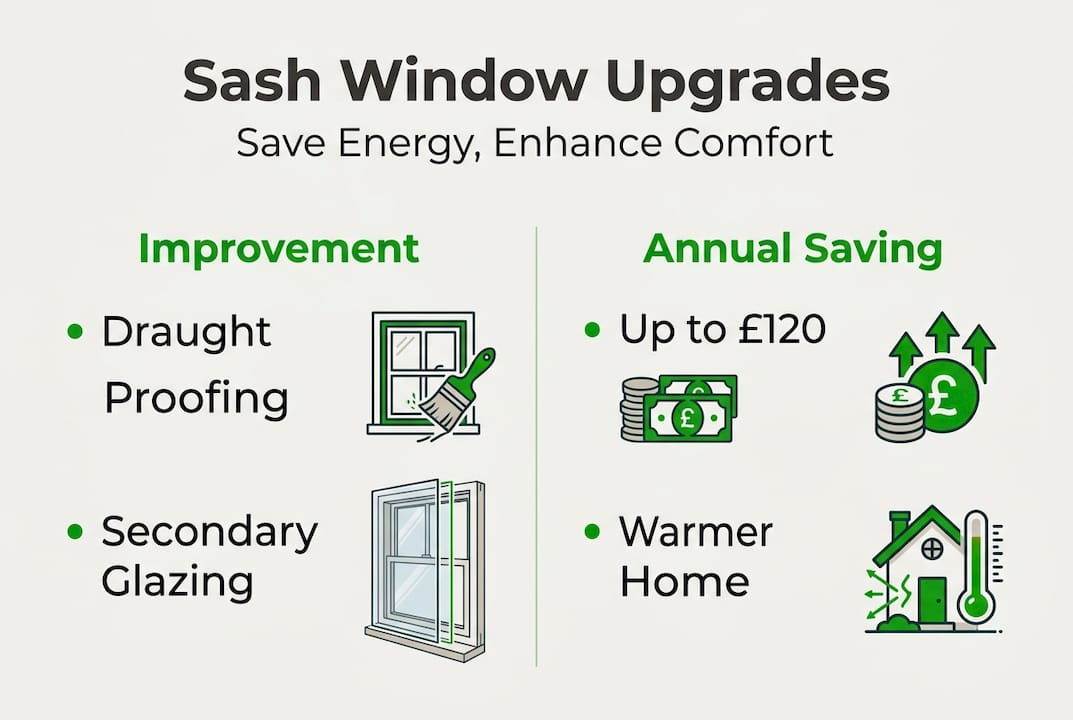
| Upgrade type | Estimated annual saving | EPC impact | Cost range |
|---|---|---|---|
| Draught-proofing | £25 to £50 | Minor improvement | £100 to £300 |
| Secondary glazing | £50 to £80 | Moderate improvement | £300 to £800 per window |
| Double glazing retrofit | Up to £120 | Significant improvement | £500 to £1,200 per window |
Effective draught proofing techniques are often the most affordable first step. Brush strips fitted along the sash meeting rails and the sides of the frame can dramatically reduce heat loss without altering the window’s appearance. This is particularly important for listed properties where structural changes are restricted.
Secondary glazing is another option worth considering. It involves fitting a slim inner pane behind the existing sash window, which improves insulation without altering the external appearance. This is often the preferred solution in conservation areas.
Pro Tip: Start with draught-proofing before committing to full double glazing. In many period homes, draught-proofing alone can recover 60 per cent of the thermal benefit at a fraction of the cost. Once done, you can assess whether further investment is worthwhile. For a fuller picture of energy savings with sash windows, it helps to look at your current EPC rating as a baseline.
Repair, replace or retrofit: Making practical choices for sash windows
Once you understand the efficiency potential, it is vital to know how to maintain or upgrade sash windows in a cost-effective and heritage-sensitive way. The decision between repairing, replacing, or retrofitting is not always obvious, but asking the right questions makes it much clearer.
Ask yourself:
- Are the sashes sticking or rattling but the frames still solid? Repair is likely the right call.
- Is there visible rot in the frame itself, or are the frames warped beyond adjustment? Replacement may be necessary.
- Are the frames structurally sound but the glazing single-pane and draughty? Retrofitting new sashes into the existing frames is worth exploring.
- Does your property have listed status or sit in a conservation area? This will shape what changes are permitted.
- What is your budget? Retrofitting is typically the most cost-effective middle ground.
Retrofitting new sashes into original frames can cost 40 to 60 per cent less than a full replacement, while preserving the original character of the property.
Pro Tip: Before assuming you need a full replacement, get a specialist to assess the frames. Timber sash frames are often repairable with epoxy filler and careful joinery work, even when rot appears significant at first glance.
For guidance on when to replace sash windows versus repair, consider the overall condition of the frame, the glazing, and the hardware together rather than each in isolation. And if you are unsure about draught proofing advice for your specific window type, a professional assessment can save you money in the long run.
Heritage value and planning rules: Protecting period character
Choices around keeping, altering, or upgrading sash windows are shaped by heritage and planning requirements, especially in England and Scotland. Getting this wrong can result in enforcement action and costly reinstatement work, so it pays to understand the rules before you start.
Sash windows are not just aesthetically important. They are legally significant in many areas. As noted earlier, sash windows originated in England in the 1670s and are now considered essential to the historical authenticity of Georgian, Victorian, and Edwardian properties in conservation areas and listed buildings across England and Scotland.
Replacing original sash windows with inappropriate modern alternatives in a conservation area can reduce a property’s value and trigger enforcement action from the local planning authority.
Steps to check your planning position before making changes:
- Visit your local council’s planning portal and search for your property address.
- Check whether your property is listed (Grade I, II*, or II in England; Category A, B, or C in Scotland).
- Look up whether your street or neighbourhood falls within a designated conservation area.
- Contact the local planning office directly if you are unsure. Most councils offer pre-application advice.
- Speak to a specialist window company experienced in heritage properties before ordering any materials.
Authenticity genuinely adds value. Properties with well-maintained original sash windows consistently attract buyers who value period character. In sought-after conservation areas, that authenticity can be a meaningful differentiator. For those in protected areas, sash window repairs in protected areas require a specialist approach that respects both the planning rules and the building’s character.
Why sash window upgrades are a win-win for tradition and comfort
There is a persistent assumption in the property world that you must choose between heritage and performance. Either you keep your draughty original windows to satisfy the planners, or you rip them out and install something modern and efficient. We think that framing is outdated and, frankly, unhelpful.
The truth is that expert retrofitting and sympathetic upgrading have moved on enormously. Slim-profile double glazing, high-performance draught seals, and precision-engineered timber sash replacements now make it entirely possible to have windows that look indistinguishable from the originals but perform far better. A well-maintained sash window with draught-proofing and secondary glazing can genuinely outperform a poorly installed modern casement window in real-world conditions.
We also think there is an underappreciated sustainability argument here. Retaining and upgrading existing timber frames uses far less embodied energy than manufacturing and installing new uPVC windows. Choosing modern window glazing for period homes that works with your existing frames is often the greener as well as the more cost-effective choice. Sash windows, done right, are not a compromise. They are an opportunity.
Upgrade or repair your sash windows with peace of mind
If you are ready to act on sash window upgrades or repairs, expert help is at hand. At Cloudy2Clear Windows, we have been helping homeowners and businesses across England and Scotland with window repairs, replacements, and upgrades since 2005. We understand the specific demands of period properties and conservation areas.

Whether you need double glazing glass replacement, draught-proofing advice, or a full sash window retrofit, we offer straightforward guidance tailored to your property. Our team can advise on heritage-compliant solutions without the jargon. If you are based in or around Oxford, our sash window repair Oxford team is ready to help. Get in touch today for a no-obligation consultation and find out what is possible for your home or business.
Frequently asked questions
What are sash windows made of?
Traditional sash windows are usually made of timber, but modern materials such as uPVC and aluminium are now also used, offering better durability and lower maintenance requirements.
Can you double glaze original sash windows?
Yes. You can retrofit double glazing into most original sash window frames, or add secondary glazing as an alternative that does not alter the external appearance.
How do I know if my home is in a conservation area?
You can check with your local council’s planning office or search your address on their online planning portal to find out whether special rules apply to your property.
Is it cheaper to repair or replace sash windows?
Repairing minor rot or stuck sashes is usually cheaper and helps preserve original features. Full replacement is best reserved for cases where frames are severely damaged or beyond economical repair.