Many homeowners in England spot cloudy patches in their double glazed windows and wonder if energy is slipping away. Understanding glazing units matters because the right choice can make your home warmer, quieter, and more cost-effective to run. With options ranging from standard double glazing to advanced coatings and gases, this guide clears up myths and explains how modern glazing units improve energy efficiency and reduce condensation hassles—helping you get the most value from your windows.
Glazing Units Defined and Common Myths
A glazing unit is the glass component of your window system that controls how much light, heat, and sound pass through. It’s the part you look through, and it’s far more sophisticated than a single pane of glass.
Most modern glazing units in UK homes consist of two or three panes of glass separated by spacer bars, creating an air gap between them. This gap is where the energy-saving magic happens—it acts as insulation, trapping air that slows heat loss in winter and heat gain in summer.
What Makes Up a Glazing Unit
A complete glazing unit contains several key components working together:
- Glass panes: Usually toughened or laminated for safety and durability
- Spacer bars: Aluminium or plastic strips that maintain consistent distance between panes
- Desiccant material: A moisture-absorbing substance sealed inside the spacer bar to prevent condensation between panes
- Sealant: Butyl or polysulphide compounds that create an airtight seal around the perimeter
The overall frame around the glazing unit—made from uPVC, aluminium, or timber—is separate, though homeowners often confuse the two. The glazing unit itself is just what you see when you look at your window.
Understanding Different Types
Different glazing units serve different purposes. Double-glazed units with sealed air gaps represent the standard across most English homes, offering a reliable balance between cost and thermal performance.
Triple-glazed units add a third pane for superior insulation, whilst low-emissivity (low-E) coatings reflect heat back into your home. Some units use argon or krypton gas instead of regular air—these heavier gases perform better but cost more upfront.
Common Myths About Glazing Units
Myth 1: All glazing units are the same.
This couldn’t be further from the truth. The quality of seals, the type of glass, the gas filling, and the spacer construction all vary significantly between manufacturers and products. A premium unit will outperform a basic one by years.
Myth 2: Condensation between panes means the unit has failed.
Yes, condensation between the glass panes indicates the seal has broken and moisture has entered. However, condensation on the inside of your windows (between the glass and your room) is usually caused by humidity in your home, not a faulty unit.
Myth 3: Thicker glass always means better insulation.
The air gap thickness matters far more than glass thickness for thermal performance. A 4mm-12mm-4mm unit typically performs better than a 6mm-6mm-6mm one, despite the thinner outer panes.
Myth 4: You must replace the entire frame if the glazing unit fails.
Incorrect. The glazing unit can be removed and replaced independently from the frame in most cases. This is why Cloudy2Clear specialises in glazing unit replacement rather than full window replacement. A faulty glazing unit is a simple repair—don’t let anyone convince you otherwise. The unit itself can be replaced without touching your frames.
Pro tip: When inspecting your windows for issues, check the spacer bars around the edges of the glass. If you can see discoloured desiccant material or condensation, that unit needs replacing soon before moisture damage spreads.
Types of Glazing Units and Their Functions
Not all glazing units perform the same way. The type you choose depends on your home’s location, age, budget, and specific needs—whether that’s energy savings, noise reduction, or heritage preservation.
Understanding the different types helps you make an informed decision rather than accepting whatever a surveyor recommends. Each type serves distinct functions and offers different performance levels.
Double-Glazed Units
Double glazing remains the most common choice in UK homes. It consists of two glass panes with an air gap (typically 16mm) between them sealed by spacer bars and sealant.
This design works because the air gap creates an insulating layer. Heat struggles to pass through air, so your warmth stays inside during winter and external heat stays out in summer.
Double-glazed units with quality seals provide adequate thermal performance for most homes at a reasonable cost. They also reduce external noise by around 30%, making them practical for busy roads or urban areas.
Triple-Glazed Units
Triple glazing adds a third pane and another air gap, doubling the insulating layers. This extra barrier delivers superior thermal performance—typically 20-30% better than double glazing.
The trade-off is cost. Triple glazing units are significantly more expensive upfront. However, the energy savings build over time, especially in poorly insulated older homes or homes in cold regions.
Triple glazing also excels at noise reduction, making it ideal if you live near airports, motorways, or train lines. The additional glass and air gaps create multiple barriers to sound waves.
Low-Emissivity (Low-E) Coated Units
Low-E coatings are thin, invisible metallic layers applied to glass surfaces. They reflect heat back into your home whilst allowing light through—essentially making your windows smarter.
This coating particularly benefits winter heating. In summer, you can select coatings that reflect external heat, reducing cooling demands. Many modern double and triple units include low-E technology as standard.
Secondary Glazing Units
Secondary glazing systems offer reversible energy improvements without removing original windows. These are single or double-glazed panels installed on the inside of existing frames, leaving historic windows untouched.
This matters for listed buildings or period properties where heritage rules restrict replacement. Secondary glazing can improve thermal performance by up to 40% whilst preserving character.
Specialist Units for Specific Needs
Some glazing units address particular requirements:
- Laminated glass: Holds together if broken, ideal for ground floors or commercial properties
- Toughened glass: Extra-strong, often required by building regulations for safety-critical areas
- Solar control glazing: Tinted or reflective coatings for properties with excessive solar gain
- Acoustic glazing: Laminated units with special interlayers that absorb sound vibrationsDifferent types serve different purposes. The “best” glazing unit depends on your home’s specific situation, not on cost alone.
Pro tip: When comparing glazing units, ask about the spacer bar material and sealant type. Warm-edge spacers and flexible sealants perform better than older aluminium designs and will extend your unit’s lifespan by several years.
To help you compare common glazing unit types, refer to the table below:
| Glazing Unit Type | Typical Insulation (U-Value) | Noise Reduction | Ideal Use Case |
|---|---|---|---|
| Double-glazed | Around 1.3–1.5 W/m²K | Medium (approx. 30%) | Most family homes |
| Triple-glazed | As low as 0.8–1.0 W/m²K | High | Busy roads, cold climates |
| Low-E coated | 1.0–1.3 W/m²K with coatings | Medium-High | Max energy-saving needed |
| Secondary glazing | Varies (improvement up to 40%) | Low-Medium | Heritage or listed buildings |
How Glazing Units Improve Energy Efficiency
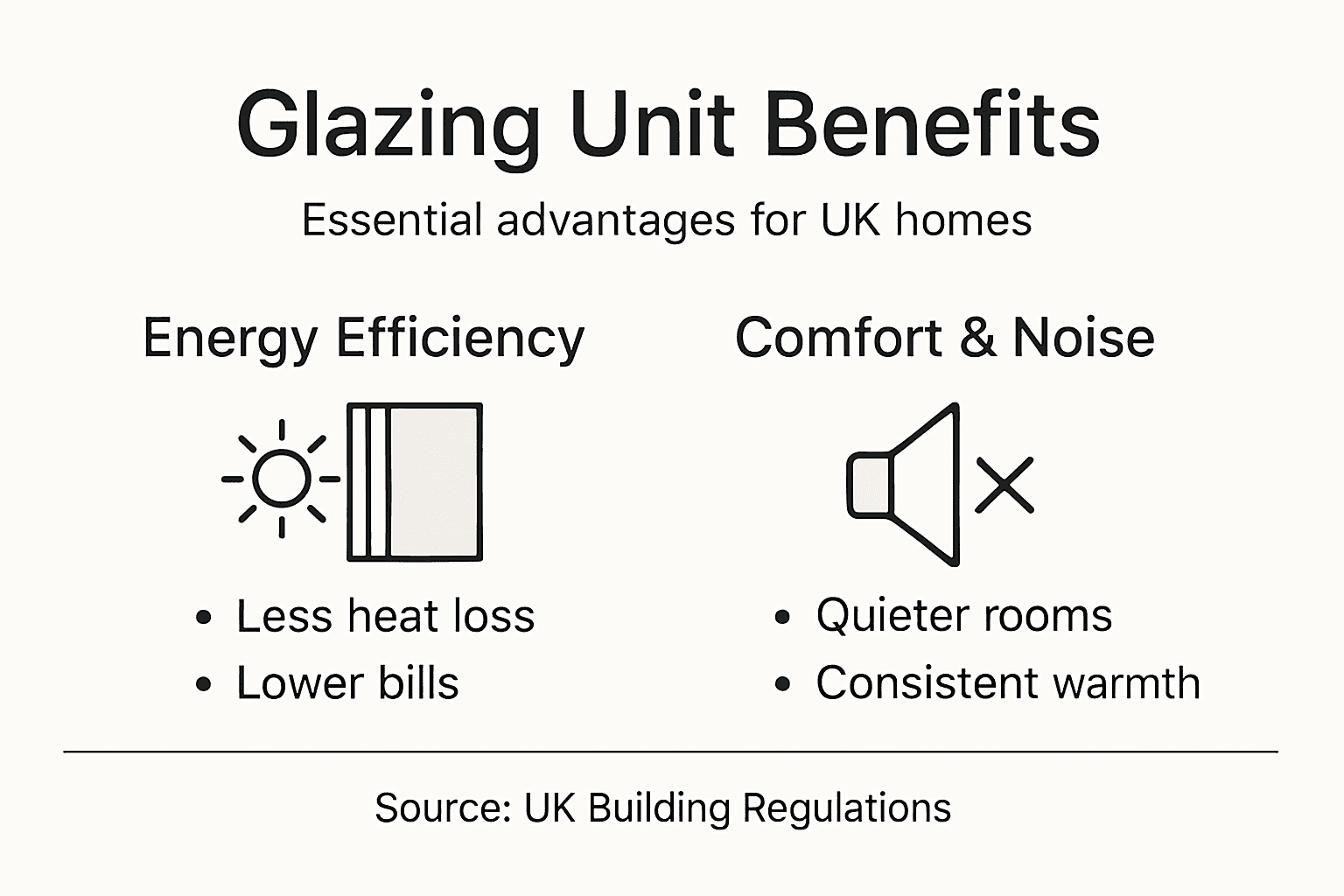
Your windows are responsible for significant heat loss in winter. A single-glazed window loses roughly three times more heat than a modern glazing unit, which is why upgrading makes such a tangible difference to your energy bills.
Glazing units work by trapping air between panes. This trapped air acts as an insulating barrier, preventing heat from escaping your home and keeping cold draughts at bay. It’s simple physics with profound financial benefits.
How the Air Gap Creates Insulation
The space between glass panes is the secret ingredient. Air naturally resists heat transfer—it moves slowly compared to solid materials like glass or metal.
When you seal air between two panes, you create a thermal buffer. Heat from your radiator hits the inner pane and transfers through it, but then encounters the air gap where movement slows dramatically. By the time heat reaches the outer pane, significantly less energy remains to escape outside.
Thicker air gaps work better, but only up to a point. A 16mm gap is optimal; beyond 20mm, air movement inside the gap actually reduces efficiency. That’s why manufacturers have standardised this dimension.
The Role of Gas Filling
Some premium glazing units use argon or krypton gas instead of regular air. These gases are heavier and slower-moving than air, making them superior insulators.
Argon gas improves thermal performance by approximately 10% compared to air-filled units, whilst krypton performs even better. The downside is cost—gas-filled units cost more upfront, though the energy savings justify the investment over time.
Low-Emissivity Coatings Boost Performance Further
Low-E coatings are where modern glazing becomes truly clever. These invisible metallic layers reflect infrared radiation—essentially heat—back into your home.
In winter, they act like a thermal mirror, bouncing your heating energy inward. This alone can improve efficiency by 15-20%. Many contemporary glazing units combine air gaps, quality gas, and low-E coatings for maximum performance.
Real-World Energy Savings
Improved glazing reduces heat loss substantially and cuts energy bills significantly. Homeowners replacing single glazing with modern double-glazed units typically see heating cost reductions of 10-15% annually.
For homes with poor insulation elsewhere, this saving compounds. High-quality glazing units work alongside loft insulation and cavity wall filling to create a comprehensive energy-efficient home.
Why Condition Matters
Even excellent glazing units deteriorate over time. Seals degrade, allowing air to escape and moisture to enter. A failed unit loses much of its insulating benefit—the air gap fills with moisture, turning your window into poor insulation.
This is why unit replacement, not frame replacement, makes financial sense. Cloudy2Clear replaces failed units whilst keeping your existing frames, delivering energy efficiency gains without unnecessary expense. Modern glazing units typically perform 70-80% better than single glazing. That performance degrades gradually as seals fail, making timely replacement essential.
Pro tip: Check your windows on a cold day. If you see condensation between the glass panes (not on the inside surface), your seal has failed and you’re losing significant insulating benefit. That’s your signal to arrange a replacement.
Condensation, Repairs, and Cost Implications
Condensation between glass panes signals a failed seal. Moisture has breached the glazing unit’s perimeter, and the desiccant inside can no longer absorb it. This fogging reduces visibility and insulation performance dramatically.
Unlike condensation on your windows’ interior (caused by indoor humidity), condensation between panes indicates a structural problem with the unit itself. It’s a repair signal, not a cleaning issue.
Understanding the Condensation Problem
When a seal fails, two things happen simultaneously. Air pressure inside the unit equalises with outside pressure, allowing moisture to enter. The desiccant becomes saturated and stops working.
Over time, this moisture collects between the panes, creating visible fogging. Your window becomes cloudy, and more importantly, the air gap loses its insulating properties. You’re essentially paying for double glazing that performs like single glazing.
Repair Options and Their Limitations
Resealing or replacing the sealed unit are the main repair approaches. Resealing attempts to create a new seal around the perimeter, but this temporary fix often fails within months because the internal desiccant remains saturated.
Full unit replacement is more reliable. The entire glazing unit is removed and a new one installed, restoring full insulation and clarity. This is what Cloudy2Clear specialises in.
Cost Breakdown for Repairs
Blown window repair costs vary depending on pane size and damage severity, ranging from approximately £50 to £600 per unit. Several factors influence the final price:
- Unit size: Larger panes cost more to replace
- Glazing type: Low-E or specialist coatings increase expense
- Frame type: uPVC costs less than aluminium or timber
- Number of units: Multiple failed units add up quickly
Typical costs for a standard double-glazed unit average around £500, with installation taking approximately one day. This is considerably cheaper than replacing entire window frames.
Here’s a quick overview of cost factors and what influences glazing repair value:
| Cost Factor | Impact on Price | Long-Term Value |
|---|---|---|
| Pane size | Larger increases cost | Bigger units save more energy |
| Specialist features | Low-E, gas fill add cost | Higher energy bill reduction |
| Frame condition | Good frames save money | Avoids unnecessary expenses |
| Number of units | Bulk work costs more | Multi-unit savings accumulate |
Why Full Replacement Might Be Better
Partial repairs can extend window life, but replacement guarantees better long-term performance and energy efficiency. A repaired unit might fail again within years; a new unit comes with manufacturer warranties lasting 10-15 years.
Consider your window’s age. If frames are damaged, rotting, or difficult to operate, replacing just the unit leaves other problems unsolved. A full window replacement might offer better value over time.
The Cost-Benefit Analysis
A £500 unit replacement saves roughly £80-120 annually on heating costs. That unit pays for itself within 4-6 years through energy savings alone. Beyond that, you’re banking pure savings.
Delaying repair costs more. Failed units worsen insulation continuously, bleeding money through heat loss month after month. Failed glazing units don’t improve with age. Every month you delay replacement costs real money in wasted heating energy.
Pro tip: Get multiple quotes from installers before deciding. Prices vary significantly, and some installers include extended warranties or guarantee their workmanship beyond manufacturer terms, making them better value despite higher initial cost.
Legal Standards and UK Building Regulations
Your glazing unit isn’t just a purchase—it’s subject to UK Building Regulations. These rules ensure your windows meet safety, thermal, and ventilation standards. Understanding them helps you make compliant choices and protects your home’s legality.
Building Regulations apply to new installations, replacements, and major renovations in England and Wales. Scotland and Northern Ireland have separate standards, but the principles remain similar.
Thermal Performance Requirements
Modern Building Regulations set U-values (thermal transmittance) that windows must achieve. A lower U-value means better insulation. Current standards typically require double-glazed units to achieve U-values around 1.4 W/m²K or better.
This sounds technical, but it’s straightforward: your glazing unit must insulate to a minimum standard. Older single-glazed windows typically have U-values around 5.0 W/m²K, which is why they lose so much heat.
When replacing glazing units, installers must ensure new units meet current standards. This usually happens automatically with modern units, but it’s worth verifying during specification.
Safety Glass and Location Requirements
Building Regulations cover safety glass requirements and specify where tempered or laminated glazing is mandatory. Certain positions require specialist glass:
- Ground-floor windows: Laminated or toughened glass within 1.5m of doors
- Bathrooms and wet rooms: Robust glazing to resist impacts
- Sloped glazing: Reinforced units to prevent falls
- Balcony and stairwell glazing: Safety glass rated for structural demands
Your installer should identify these locations automatically and specify appropriate glass. Cloudy2Clear ensures compliance during unit selection.
Ventilation and Escape Routes
Building Regulations require adequate ventilation to prevent condensation and maintain indoor air quality. Windows must provide sufficient opening area for natural ventilation unless mechanical systems exist.
For bedrooms, escape routes must include openable windows. These requirements prevent situations where sealed units create uninhabitable spaces or safety hazards.
Competent Person Schemes and Self-Certification
Registered installers under Competent Person Schemes can self-certify compliance, streamlining the approval process. This means no local authority inspection is needed—the installer’s certification proves compliance.
Cloudyto Clear’s registration ensures installations meet standards without additional bureaucratic steps. You get compliance assurance without paperwork delays.
Listed Buildings and Conservation Areas
Historic properties face additional restrictions. Double glazing for listed buildings often requires specialist conservation glazing that replicates original styles whilst meeting thermal standards.
Planning permission or Conservation Area Consent may be required before installation. This isn’t Building Regulations—it’s heritage protection. Check with your local authority first.
Why Compliance Matters
Non-compliant installations create legal liability. If you sell your home without proper certification, buyers can sue for remedial work costs. Insurance claims may be denied if installations violate regulations. Non-compliance isn’t just inconvenient—it creates legal and financial exposure when selling your home.
Pro tip: Always request a Building Regulations Completion Certificate or Competent Person Self-Certification documentation from your installer. File these with your home records—you’ll need them when selling or making future claims.
Enhance Your Home’s Comfort with Expert Glazing Unit Solutions
Understanding what a glazing unit is and the key benefits it brings to your home is just the first step. The real challenge lies in addressing issues such as failed seals, condensation between panes, and declining energy efficiency — problems that impact your comfort and increase heating costs. With terms like “low-emissivity coatings,” “argon gas filling,” and “sealed air gaps” highlighting the technology behind energy-saving glazing units, it becomes clear that professional replacement and repair services are essential for maintaining these critical features.
At Cloudy2Clear, we share your goal to improve your space by restoring the full benefits of modern glazing systems. Our skilled team specialises in replacing blown or failed glazing units without disturbing your existing frames, ensuring reduced heat loss, clearer views, and enhanced noise reduction. Discover how our decades of experience can transform your home by visiting Cloudy2Clear.

Take control of your home’s energy efficiency today. Contact Cloudy2Clear to schedule a glazing unit inspection and experience the difference of expertly replaced double or triple glazing. Don’t let condensation or failing seals cost you more in the long term. Visit Cloudy2Clear to explore how we can help you uplift your living space with trusted glazing solutions.
Frequently Asked Questions
What is a glazing unit?
A glazing unit is the glass component of a window system that controls light, heat, and sound transmission. It typically consists of two or three panes of glass separated by an air gap for insulation.
What are the benefits of double-glazed units compared to single-glazed units?
Double-glazed units provide better thermal insulation, reducing heat loss during winter and heat gain in summer. They also lower external noise levels and can lead to significant energy cost savings.
How do low-emissivity (low-E) coatings enhance glazing unit performance?
Low-E coatings reflect heat back into the home while allowing light to pass through, improving energy efficiency by reducing heating and cooling demands in both winter and summer.
Can you replace just the glazing unit without changing the entire window frame?
Yes, in most cases, the glazing unit can be replaced independently from the frame, making for a simpler and more cost-effective repair when a seal fails.
Recommended
- What is Triple Glazing, and is it Right for You? – Cloudy2Clear Windows
- Everything You Need To Know About Double Glazing – Cloudy2Clear Windows
- Why Update Your Double Glazing? – Cloudy2Clear Windows
- Double glazing options explained: How to buy the right windows for your home – Cloudy2Clear Windows
- Understanding the Benefits of an Environmentally Friendly Glass Cleaner for Your Chandeliers
- Gas Appliance Conversion: Improving Home Efficiency