Waking up to a wall of misty windows is one of those small frustrations that quickly becomes a big problem. For homes and businesses across England and Scotland, condensation on double glazing is a daily reality during the colder months. Left unchecked, it can soften window frames, encourage mould growth, and quietly erode the insulating performance you paid for. The good news is that most condensation problems are entirely preventable once you understand what is driving them. This guide walks you through the causes, practical fixes, and maintenance habits that keep your windows clear year-round.
What causes condensation in double glazing?
After outlining the everyday challenge, we need to understand what is really happening behind those misty panes.
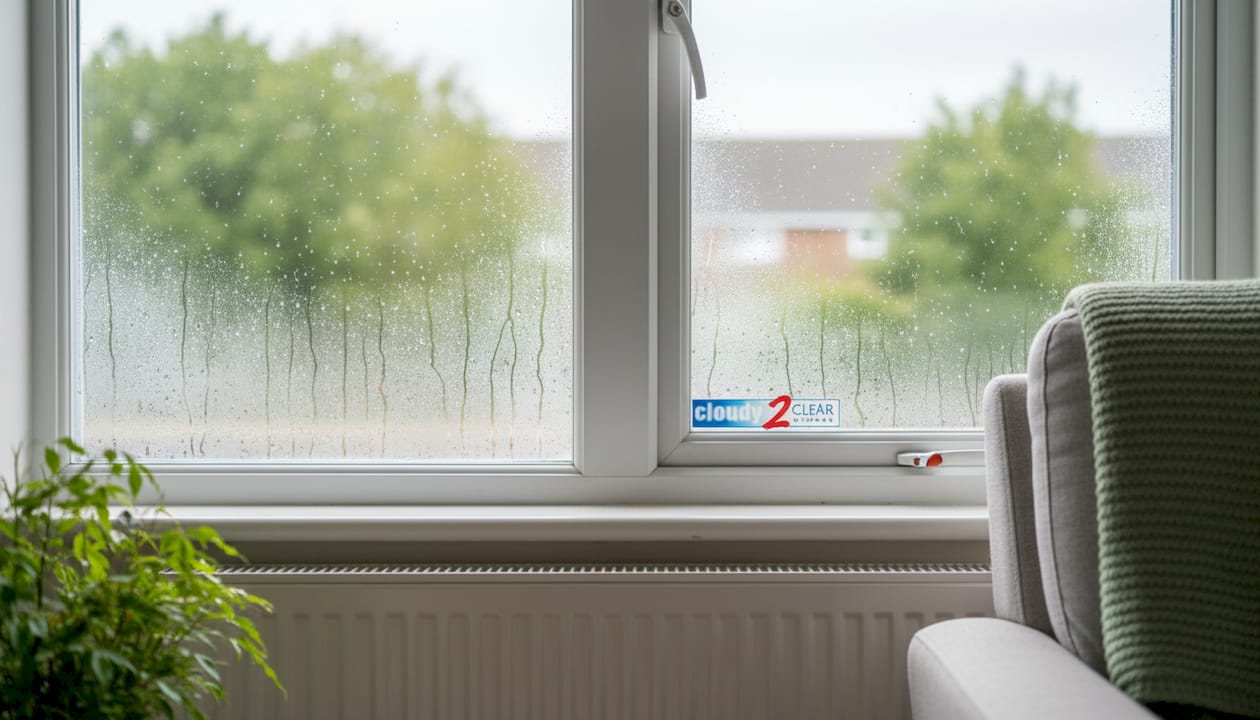
Warm, moisture-laden air is the root cause. When that air meets a cold glass surface, it cannot hold its moisture any longer and deposits it as tiny water droplets. This is the same effect you see on a cold glass of water on a warm day. Inside your home or business, that moisture comes from a surprising number of sources.
Cooking, showering, boiling a kettle, running a tumble dryer, and even breathing all release water vapour into the air. A family of four can release up to 12 litres of moisture into the home every single day just through normal activities. When that humidity builds up and your windows are the coldest surface in the room, condensation is almost inevitable.
Here is something worth knowing: condensation on the outside of your double glazing is actually a positive sign. It means your windows are insulating so well that heat is not escaping through the glass to warm its outer surface. The causes of window condensation you really need to address are those appearing on the inside.
Interior condensation is a warning sign of excess indoor humidity. It tells you the air in your property is holding more moisture than your ventilation can handle.
Understanding why glazed units mist up between the panes is a separate issue caused by seal failure, which requires a different fix entirely.
Common causes at a glance:
- High indoor humidity from cooking, bathing, and drying clothes
- Large temperature difference between indoor air and the glass surface
- Poor or blocked ventilation trapping moisture indoors
- Insufficient background heating creating cold spots
- Furniture placed against external walls restricting airflow
Top 5 tips to prevent condensation
Now we know why condensation strikes, here are five proven ways to keep your windows crystal clear. As reducing moisture and improving ventilation are the cornerstones of prevention, these tips address both directly.
- Ventilate rooms daily. Use trickle vents fitted to your window frames and open windows briefly after cooking or showering. Even ten minutes of air exchange makes a measurable difference. Check out our advice on improving home ventilation for more detail.
- Reduce moisture at its source. Put lids on pans while cooking to trap steam. Dry clothes outside whenever possible, or use a vented tumble dryer that exhausts to the outside. These two habits alone can significantly reduce indoor humidity.
- Maintain consistent low-level heating. A cold room overnight creates cold window surfaces that attract condensation. Keeping background heat on at a low setting, especially in bedrooms, prevents those cold spots from forming.
- Use and maintain extractor fans. Bathroom and kitchen extractors are your first line of defence. Clean their filters regularly so they shift air efficiently. A clogged fan is almost as useless as having no fan at all.
- Move furniture away from external walls. Sofas and wardrobes pushed tight against outside walls block air circulation and create hidden damp spots. Even a small gap allows air to move freely and reduces moisture build-up.
If you have a conservatory, the same principles apply. Our guide to condensation in conservatories covers specific solutions for that space.
Pro Tip: Older properties and recently insulated homes often have too little background ventilation after draught-proofing. If your home has been recently sealed up, consider a retrofit ventilation solution such as a whole-house positive input ventilation unit.
Smart moisture control: Dehumidifiers and temperature
With daily routines covered, let us look at how technology and smart monitoring further boost your results.
The key number to remember is 60%. Once indoor relative humidity (RH) rises above that level, condensation on windows becomes likely. Keeping your home or office between 40% and 55% RH is the comfortable, safe zone that protects your glazing and your health.
| Indoor humidity (RH) | Likely outcome | Recommended action |
|---|---|---|
| Above 60% | Condensation probable | Run dehumidifier, increase ventilation |
| 55% to 60% | Risk zone | Monitor closely, improve airflow |
| 40% to 55% | Safe and comfortable | Maintain current habits |
| Below 40% | Too dry | Risk of dry air irritation; reduce dehumidifier use |
A dehumidifier is one of the most effective tools available. Timer-based dehumidifier use in coastal homes brought RH below 55%, eliminating condensation entirely. To get the most from yours, close the doors of the room you are treating, match the unit’s capacity to the room size, and set it on a timer so it runs during the hours when humidity is highest.
Consistent background heating matters just as much. Cold spots on walls or near window frames create localised condensation even when overall room humidity is acceptable. Maintaining an even temperature across the room removes those cold surfaces where moisture settles.
For our broader advice on caring for double glazing throughout the year, our dedicated guide is worth bookmarking.
Pro Tip: Place a small hygrometer near your windows. They cost very little and give you an instant humidity reading so you can act before condensation appears rather than after.
Ventilation upgrades and insulation: What actually works?
It is time to weigh up the real-world effectiveness of popular solutions and what most property owners miss.
Many homeowners assume that better insulation automatically means less condensation. In fact, the opposite can be true. Exterior condensation worsens after loft insulation when ventilation is not upgraded at the same time. Insulation seals a building more tightly, trapping the moisture that was previously escaping through gaps. Without extra ventilation, that moisture has nowhere to go except your windows.
| Solution | Key benefit | Potential risk | Typical cost |
|---|---|---|---|
| Loft or wall insulation | Reduces heat loss | Can worsen condensation if ventilation is not improved | £300 to £2,500+ |
| Trickle vent retrofit | Low-cost airflow improvement | Minimal, if correctly sized | £50 to £150 per window |
| Positive input ventilation | Whole-house air exchange | Requires professional installation | £500 to £1,200 |
| Mechanical extract ventilation | Targeted moisture removal | Can increase heating bills slightly | £150 to £400 per unit |
For residents in Scotland, Home Energy Scotland grants can help cover the cost of eligible ventilation and insulation upgrades. England homeowners should check with their local authority or the Energy Saving Trust for available support schemes.
For advice on solving window condensation based on where it appears, our guide breaks down each scenario clearly.
Signs you may need better ventilation:
- Musty or stale smells that linger even after cleaning
- Windows misting every morning without fail
- Black mould appearing around window frames or in corners
- Wallpaper peeling near external walls
Maintaining your double glazing for condensation-free living
Once you have upgraded airflow and insulation, ongoing maintenance is the last piece for clear, trouble-free windows.
Double glazing is robust, but it is not maintenance-free. Small issues left unattended grow into expensive repairs. The seals around your window units, the trickle vents in the frames, and the drainage channels at the base of the frames all need periodic attention. Good window maintenance practices extend the life of your glazing and keep condensation at bay.
Your maintenance schedule:
- Weekly: Wipe down condensation from glass and frames with a dry cloth. Do not let moisture sit on seals or timber frames.
- Monthly: Clean trickle vents with a soft brush to remove dust and debris. Check drainage slots at the bottom of frames and clear any blockages.
- Every six months: Inspect rubber seals around the glass unit. Look for cracking, shrinkage, or gaps. Check that opening sashes close fully and lock properly.
- Annually: Lubricate hinges and locking mechanisms. Inspect for any visible misting between panes, which signals seal failure inside the unit itself.
If you spot misting between the panes, that is not a condensation problem you can solve with ventilation. It means the sealed unit has failed and needs replacing. Catching this early keeps costs manageable.
Pro Tip: Catching minor seal leaks early, before water ingress softens the frame, can save you hundreds of pounds compared to a full frame replacement later.
A fresh perspective: Why ‘just open a window’ misses the point
The advice to open a window is well-meaning but incomplete. We have spent over two decades working in homes and commercial properties across England and Scotland, and the pattern is clear: opening a window helps temporarily but does not address the underlying imbalance between moisture production and air exchange.
Modern, well-insulated homes are built to be airtight. That is great for energy bills but it means natural air leakage, the kind older draughty properties had in abundance, no longer exists to dilute indoor moisture. Organisations such as Home Energy Scotland consistently stress the importance of planned ventilation in modern insulated properties precisely because the old passive approach no longer works.
The real gains come from combining three things: a reliable daily ventilation habit, a humidity monitor so you know what is actually happening in the room, and targeted upgrades such as trickle vents or a dehumidifier where the data tells you they are needed. Random quick fixes rarely stick.
We also see this problem in commercial spaces, where condensation in conservatories and large glazed areas can cause significant disruption if not managed systematically. A consistent strategy always outperforms reactive measures.
Expert help for stubborn condensation issues
If you have worked through these tips and your windows are still misting, it may be time to bring in a specialist. Persistent internal condensation that does not respond to ventilation improvements sometimes points to a failed sealed unit, a compromised frame seal, or a structural issue allowing cold bridging.

At Cloudy2Clear Windows, we have been helping homeowners and businesses across England and Scotland keep their glazing in excellent condition since 2005. Whether you need a straightforward window repair service or a full double glazing replacement, our local experts can assess the situation quickly and give you an honest, no-obligation quote. Clear windows and a comfortable, healthy indoor environment are closer than you think.
Frequently asked questions
Is exterior condensation on double glazing a problem?
No, exterior condensation is a normal sign that your windows are insulating properly. As noted in research on preventing home condensation, it is benign and not a cause for concern.
What indoor humidity level prevents condensation?
Keep indoor humidity below 60% and ideally between 40% and 55%. Timer-based dehumidifier use has been shown to bring RH comfortably below 55%, eliminating condensation in problem properties.
Should I install new insulation or focus on ventilation?
For most homes, you need both, but ventilation is the priority. Adding insulation without improving airflow can trap moisture indoors and make condensation worse after upgrades.
How often should I maintain my double-glazed windows?
Clean seals and trickle vents monthly, and carry out a full inspection every six months. Regular window upkeep catches small faults before they develop into costly repairs.
Recommended
- Identify and solve window condensation issues in 2026
- How to maintain double-glazed windows & make them last longer | Cloudy2Clear Windows
- Double Glazing Care Tips 2026: Extend Lifespan by 7 Years
- Reduce Double Glazing Installation and Repair Costs – Cloudy2Clear Windows
- Efficient air conditioning for conservatories: UK guide – Akita AC