Windows are the most exposed surface on most business premises, yet they are often the last thing owners think about when planning security upgrades. Doors get reinforced locks. Alarm systems get installed. But glass? It is frequently left as standard, meaning a determined intruder needs only seconds to gain access. Secure glazing changes that equation entirely. It acts as a physical deterrent, slows forced entry, meets compliance requirements, and can even reduce your energy bills. This article explains what secure glazing is, why it matters for businesses in England and Scotland, and how to make the right choices for your premises.
Understanding security risks in commercial glazing
Most business owners assume their front door is the weakest point of entry. In reality, windows and glazed facades are often easier to breach than a locked door, and far less likely to have been hardened. Standard float glass shatters quickly under impact, giving an intruder rapid access with minimal noise and effort.
The threats to commercial glazing are more varied than many people realise. They include:
- Forced entry: The most common threat, where glass is smashed or broken to allow access to door handles, locks, or the premises itself.
- Surreptitious entry: Gradual, quiet penetration through glass without triggering alarms, often using specialist cutting tools.
- Ballistic attacks: Less frequent but significant in certain sectors, where projectiles are used to penetrate glass surfaces.
- Blast and impact events: Relevant for high-risk locations near transport hubs or public spaces.
According to the National Protective Security Authority, windows and glazed facades in business premises are vulnerable to forced entry, ballistic, surreptitious, and other attacks. This is not a fringe concern. It is a documented pattern that affects businesses of all sizes.
Why do businesses consistently underestimate this? Partly because glazing is invisible as a risk. It looks solid. It is clean and professional. But standard glass offers almost no resistance to deliberate attack. A brick through a window takes under three seconds.
“The most common entry point in commercial break-ins is not the door. It is the glass beside it or around it.”
Understanding the full range of business window risks is the starting point for making any meaningful upgrade. The good news is that secure glazing options have advanced considerably, and the right choice can close these vulnerabilities quickly and cost-effectively.
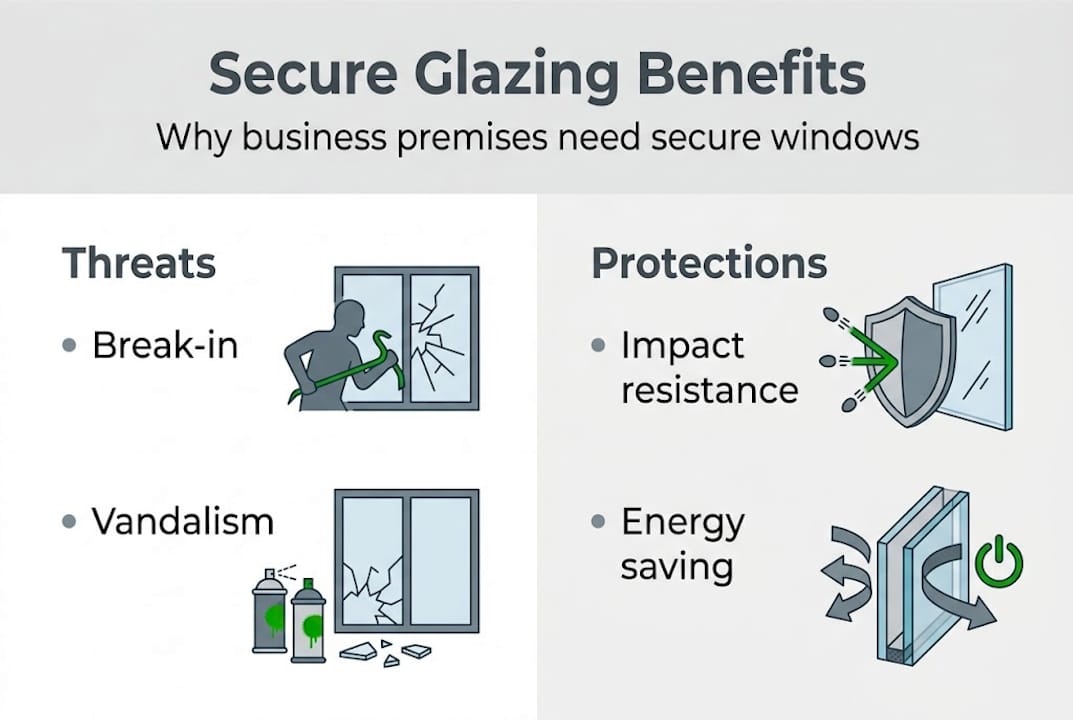
How secure glazing strengthens your business protection
With the risks defined, it is critical to understand how secure glazing shifts the balance in your favour. Unlike standard glass, which breaks cleanly on impact, secure glazing is engineered to resist, absorb, and delay penetration. That delay is everything. It buys time for alarms to trigger, staff to respond, or intruders to abandon the attempt.
Here are the main types of secure glazing available for business premises:
- Laminated glass: Two or more panes bonded with a tough interlayer, usually polyvinyl butyral (PVB). When struck, the glass cracks but holds together, making penetration extremely difficult without sustained effort.
- Toughened glass: Heat-treated to increase strength. When broken, it crumbles into small blunt pieces rather than sharp shards, reducing injury risk. Read more about toughened glass for businesses and its practical applications.
- Reinforced or composite glass: Combines multiple layers and materials for the highest levels of resistance, suitable for high-risk locations.
The NPSA confirms that secure glazing acts as the first line of defence against varied attacks on business premises. That phrasing matters. It is the first line. Not a secondary layer.
| Feature | Standard glazing | Secure glazing |
|---|---|---|
| Impact resistance | Very low | High to very high |
| Entry delay on attack | Under 10 seconds | Several minutes |
| Break-in risk | High | Significantly reduced |
| Insurer acceptance | Basic | Often preferred or required |
| Shard risk on breakage | High | Low (laminated/toughened) |
Exploring the different safety glazing types helps you match the right product to your specific situation.
Pro Tip: Your location and sector should drive your glazing choice. A city-centre retail unit faces different threats than a rural office or a financial services building. A glazing specialist can carry out a simple risk assessment to guide you.
Secure glazing and compliance: What business owners need to know
Beyond basic protection, another crucial driver for secure glazing is staying on the right side of the law and your insurer. Compliance is not optional for many business types. Building regulations, planning conditions, and insurance policies all have a say in how glazing is specified and installed.
In both England and Scotland, commercial premises must meet specific standards under the Building Regulations, particularly where glazing is used in critical locations such as doors, low-level panels, and areas accessible to the public. The NPSA notes that secure glazing is essential for compliance with modern building protection standards. Ignoring this can leave you liable in the event of an injury or break-in claim.
Key compliance points for business owners include:
- Part K and Part N of the Building Regulations cover glazing safety and resistance requirements for England.
- Scottish Building Standards set equivalent requirements north of the border.
- PAS 24 and Secured by Design standards provide recognised benchmarks for enhanced security glazing in commercial settings.
- Insurance policy conditions frequently specify minimum glazing standards. Falling below them can invalidate a claim.
| Standard | Applies to | Key requirement |
|---|---|---|
| Building Regs Part N | England | Safety glazing in critical locations |
| Scottish Building Standards | Scotland | Equivalent safety and security thresholds |
| PAS 24 | Both | Enhanced security performance for windows |
| Secured by Design | Both | Police-preferred specification scheme |
Understanding window building regulations before you commission any work saves time and avoids costly remedial action later. It is also worth reviewing how glazing affects insurance compliance before speaking with your broker. Properly installed and certified glazing, in line with glazing installation standards, can demonstrably reduce your risk profile and, in many cases, your premiums.
Energy efficiency and cost-saving benefits of secure glazing
Durable security is not the only advantage. The right glazing can also transform your business’s efficiency. Modern secure glazing is engineered to perform on multiple levels simultaneously, and energy performance is one of the most tangible financial benefits available to commercial premises in 2026.

Heat loss through poor or ageing glazing is a significant and often invisible cost. Draughts, condensation on panes, and large temperature swings between day and night all signal glazing that is no longer performing efficiently. Upgrading to secure, energy-rated glazing addresses these problems at the source.
The NPSA reinforces that windows and glazed facades must be both secure and efficient to fully protect business premises. Security and efficiency are not competing priorities. They are complementary.
Key energy benefits of modern secure glazing include:
- Lower heating and cooling costs: Advanced low-emissivity (low-e) coatings reduce heat transfer, keeping interiors warmer in winter and cooler in summer.
- Noise reduction: Multi-layer glass significantly dampens external noise, improving staff concentration and customer experience.
- Condensation control: Better insulation reduces the temperature differential across the glass, preventing moisture build-up that can damage frames and interiors.
- Improved comfort: A stable internal environment means staff are more comfortable and productive throughout the year.
For a detailed look at the financial case, exploring energy-efficient glazing for commercial premises is a useful next step. You can also review guidance on selecting energy saving glass to find the specification that balances performance with budget.
Pro Tip: Secure glazing with a high Window Energy Rating (WER) pays back its upfront cost through reduced energy bills. For most commercial premises, that payback period is well within five years, making it a sound financial decision alongside the security benefits.
Our view: Investing in glazing is smarter than ever
After nearly two decades working with businesses across England and Scotland, we have noticed a consistent pattern. Business owners invest heavily in alarm systems, CCTV, and access control, then leave standard glass in place as if it were invisible. It is a blind spot that experienced intruders rely on.
Glass is your first physical barrier. An alarm tells you a breach has happened. Secure glazing slows or prevents it from happening in the first place. That distinction is worth pausing on.
We also see the value conversation framed incorrectly. Secure glazing is treated as a cost rather than an asset. In practice, it contributes to glazing and business value, supports staff confidence and wellbeing, and signals to clients that your premises are professionally managed. The risks are in plain sight. Quite literally. Treating glazing as a genuine investment rather than a maintenance line item changes both the decision and the outcome.
Explore secure glazing solutions for your business
If you are ready to make your premises safer and more efficient, the next step is straightforward. At Cloudy2Clear, we have been working with commercial clients since 2005, delivering glazing upgrades that meet security standards, building regulations, and energy performance requirements across England and Scotland.
Whether you need a full review of your commercial glazing solutions, a fast response for commercial glass repair, or a straightforward double glazing replacement to bring ageing windows up to standard, our specialists are ready to help. Speak to our team today for practical advice and a no-pressure assessment of your current glazing.
Frequently asked questions
What types of attacks does secure glazing protect against?
Secure glazing protects against forced entry, ballistic impacts, and surreptitious attacks by making glass significantly harder and more time-consuming to penetrate. Each attack type requires a different level of glazing specification, which a qualified installer can advise on.
Does upgrading to secure glazing help reduce insurance premiums?
Yes, many insurers lower premiums when secure glazing is installed because it demonstrably reduces the risk of break-in and the likelihood of a successful claim. Always inform your broker of any glazing upgrades and request a policy review.
Is secure glazing required by UK building regulations?
Certain business premises must meet secure glazing requirements as part of official standards. The NPSA confirms that secure glazing is essential for compliance with modern building protection standards, particularly for glazing in vulnerable or publicly accessible locations.
How does secure glazing improve energy efficiency?
Secure glazing typically incorporates advanced insulation layers and low-e coatings, which reduce heat transfer and keep energy bills lower throughout the year. The result is a more comfortable working environment and measurable savings on heating and cooling costs.
Recommended
- Benefits of commercial glazing for energy efficiency 2026
- How glazing affects home insurance: compliance, costs, claims
- Commercial Fenestration – Cloudy2Clear Windows
- How glazing impacts property value: a homeowner’s guide
- How effective drainage protects your commercial property
- Why upgrade exterior windows? Boost safety, savings, and comfort