Many homeowners believe that replacing old windows with modern double glazing is purely about comfort and energy bills. Yet glazing upgrades significantly influence property market value, buyer appeal, and long-term financial returns. This guide clarifies which glazing improvements genuinely boost property value, how energy efficiency translates into market advantage, and what choices deliver the best return on investment. Understanding these connections helps you make informed decisions that enhance both your living environment and your property’s worth in today’s competitive housing market.
How glazing improves property value and energy efficiency
Modern glazing transforms how buildings perform thermally. Double glazing reduces heat loss by up to 50%, creating a barrier between indoor warmth and outdoor cold through two panes separated by an insulating gas layer. This fundamental improvement delivers multiple benefits that directly influence property value.
Homebuyers increasingly prioritise energy efficiency when evaluating properties. A home with quality double glazing signals lower running costs, reduced carbon footprint, and modern standards compliance. These factors translate into tangible market advantages. Properties with newer double glazing see faster sales and better offers from buyers appreciating energy savings. Estate agents consistently report that efficient glazing features prominently in buyer decision-making, particularly among younger purchasers conscious of environmental impact and utility expenses.
Beyond thermal performance, double glazing delivers comfort improvements that enhance daily living quality:
- Noise reduction creates quieter indoor environments, especially valuable in urban locations near traffic or commercial areas
- Condensation control prevents moisture buildup that damages window frames, sills, and surrounding walls
- Draught elimination removes cold spots near windows, making rooms more comfortable throughout
- UV protection reduces fading of furnishings, carpets, and artwork exposed to direct sunlight
The payback period concept connects these benefits to property value. Initial glazing investment typically recovers within five to eight years through energy savings alone. When you factor in increased property sale price, the financial case strengthens considerably. A mid-terrace home spending £4,000 on complete double glazing replacement might save £300 annually on heating whilst adding £5,000 to £8,000 to market value, depending on local demand and property type.
Expert analysis confirms these patterns. According to glazing specialists, quality window upgrades rank among the most cost-effective home improvements for value enhancement, outperforming many cosmetic renovations. The combination of measurable energy savings, regulatory compliance, and buyer appeal creates multiple value drivers that compound over time.
Pro Tip: Request thermal imaging surveys before and after glazing upgrades to document heat loss reduction. These visual records provide compelling evidence of performance improvements when marketing your property.
Types of glazing and their effect on property value
Understanding different glazing technologies helps you select options that match your property type, climate, and value objectives. Each glazing category offers distinct performance characteristics and cost profiles.
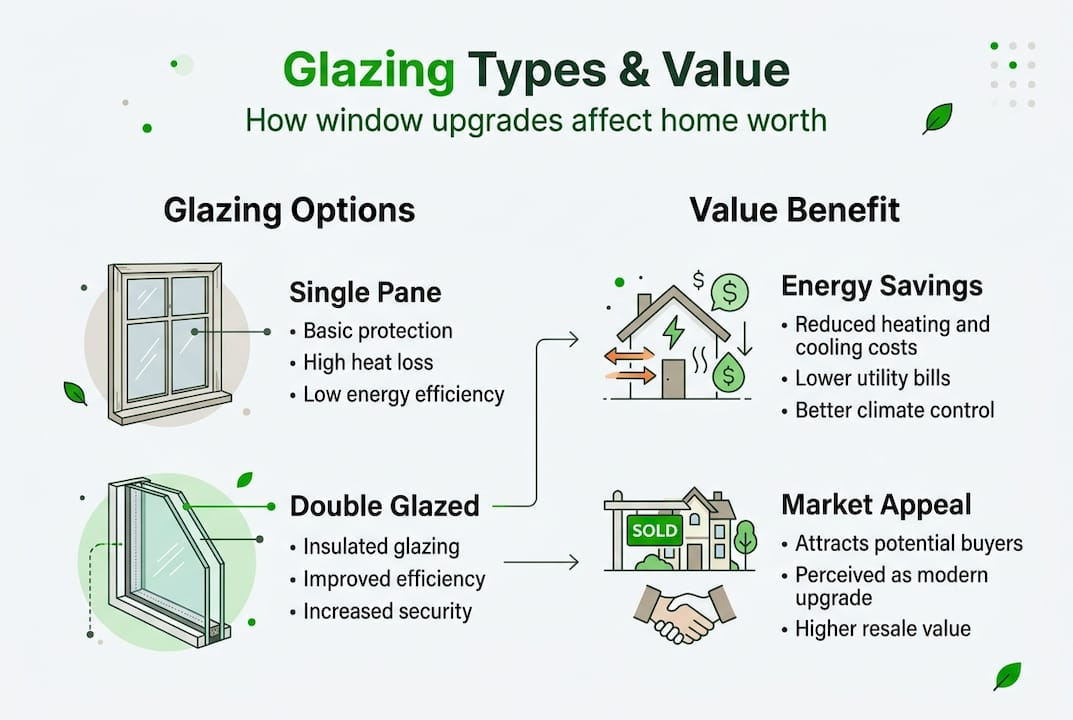
| Glazing Type | Thermal Performance | Typical Cost | Value Impact | Best Application |
|---|---|---|---|---|
| Single glazing | Poor (U-value 5.0) | £150-250/m² | Negative in modern market | Heritage properties only |
| Standard double glazing | Good (U-value 1.6) | £300-450/m² | Moderate increase | Most residential properties |
| Low-E double glazing | Excellent (U-value 1.2) | £400-550/m² | Strong increase | Energy-conscious buyers |
| Triple glazing | Superior (U-value 0.8) | £500-700/m² | Variable increase | Cold climates, premium homes |
Triple glazing offers better insulation but has higher upfront costs and may suit colder climates more. In moderate UK regions, the additional expense rarely justifies the marginal performance gain over quality double glazing with low-emissivity coatings. These microscopic metallic layers reflect heat back into rooms whilst allowing light transmission, delivering excellent thermal efficiency at reasonable cost.
Frame material and style significantly influence both performance and aesthetic appeal:
- uPVC frames offer excellent insulation, minimal maintenance, and competitive pricing, making them popular for standard residential applications
- Timber frames provide traditional appearance valued in period properties and conservation areas, though requiring more maintenance
- Aluminium frames suit contemporary designs and commercial applications, offering slim sightlines and durability despite slightly lower insulation
- Composite frames combine materials to balance thermal performance, appearance, and longevity
Glazing bar configuration affects character and value differently across property types. Georgian-style bars enhance period home authenticity, potentially adding value in conservation areas. However, excessive bars in modern properties can appear dated and reduce light transmission. Glazing bars impact window efficiency by creating additional thermal bridges, though modern warm-edge spacers minimise this effect.
Gas fills between panes influence insulation effectiveness. Argon gas, standard in quality double glazing, offers better thermal resistance than air. Krypton gas provides superior performance in narrower gaps typical of triple glazing but costs significantly more. For most homeowners, argon-filled double glazing with low-E coatings delivers optimal value-to-performance ratio.
Pro Tip: Match glazing specification to your property’s architectural style and local market expectations. Over-specifying triple glazing in a modest semi-detached home rarely recovers additional cost, whilst under-specifying basic double glazing in a premium property limits value potential.
Glazing for commercial properties versus residential homes
Commercial fenestration requirements differ substantially from residential applications, creating distinct value drivers and investment considerations. Understanding these differences helps property managers and business owners optimise glazing decisions.
Commercial fenestration upgrades enhance energy ratings and can attract higher-value tenants seeking modern, efficient premises. Office buildings, retail units, and industrial facilities face stricter energy performance regulations than residential properties. Building regulations Part L sets minimum standards for non-domestic buildings, requiring U-values typically below 1.6 W/m²K for windows. Meeting or exceeding these standards affects Energy Performance Certificate ratings, which directly influence rental values and tenant demand.
Commercial glazing installations prioritise different factors:
- Larger pane sizes require structural considerations and safety glass specifications
- Security features including laminated glass and reinforced frames protect valuable inventory and equipment
- Fire safety regulations mandate specific glass types and frame materials in certain applications
- Acoustic performance matters more in offices and healthcare facilities where noise disrupts productivity
- Aesthetic consistency across large facades affects brand image and street presence
Tenant preferences increasingly favour energy-efficient premises. Businesses face rising utility costs and corporate sustainability commitments, making operational efficiency a key location criterion. Properties with modern, high-performance glazing command rental premiums averaging 8-12% over comparable buildings with outdated windows. This premium reflects both reduced energy expenses and enhanced working environments that support employee wellbeing and productivity.
Retail properties gain additional benefits from glazing upgrades. Large display windows with low-E coatings reduce solar heat gain whilst maintaining product visibility, cutting air conditioning costs in summer. Anti-reflective treatments improve window shopping appeal by eliminating glare that obscures merchandise. These features directly support revenue generation, justifying higher specification investments than typical residential applications.
Commercial fenestration services require specialist expertise in project management, safety compliance, and minimal business disruption. Installation timing often occurs outside trading hours to avoid customer impact, adding logistical complexity and cost compared to residential work.
Pro Tip: Commercial property owners should schedule glazing assessments every three years to identify performance degradation before it affects energy ratings or tenant satisfaction. Proactive maintenance costs less than reactive repairs and protects rental income.
Maintaining glazing to sustain property value
Regular maintenance protects your glazing investment and prevents deterioration that reduces thermal performance and visual appeal. Neglected glazing can lead to reduced thermal performance and visible damage, lowering property curb appeal and market value.
Common glazing problems develop gradually, making early detection crucial:
- Seal failure allows moisture between panes, creating condensation and cloudiness that blocks views and signals poor insulation
- Frame deterioration from weather exposure causes draughts, water ingress, and structural weakness requiring costly repairs
- Hardware wear affects opening mechanisms, locks, and hinges, compromising security and functionality
- Glass damage including chips, cracks, and scratches reduces both appearance and thermal efficiency
- Drainage blockages trap water in frame channels, accelerating corrosion and rot in surrounding materials
Maintenance frequency and costs vary by glazing type and exposure conditions:
| Glazing Type | Average Lifespan | Annual Maintenance Cost | Replacement Indicators |
|---|---|---|---|
| uPVC double glazing | 20-25 years | £50-80 | Seal failure, frame discolouration |
| Timber double glazing | 15-20 years | £120-180 | Rot, paint failure, draughts |
| Aluminium double glazing | 25-30 years | £60-100 | Corrosion, seal failure |
| Triple glazing | 25-35 years | £70-120 | Seal failure, hardware wear |
Preventative maintenance extends glazing lifespan and maintains performance. Clean frames and glass quarterly using non-abrasive cleaners to prevent dirt buildup that traps moisture. Lubricate hinges, locks, and moving parts annually with silicone spray to ensure smooth operation. Clear drainage holes in frame bottoms to prevent water accumulation. Inspect seals for cracks or gaps, addressing minor issues before they escalate into seal failure requiring complete unit replacement.
Double glazing lifespan depends heavily on installation quality and ongoing care. Professional installation with proper sealing and drainage significantly outperforms DIY or budget installations. Similarly, buildings in coastal areas face accelerated deterioration from salt exposure, requiring more frequent inspections and maintenance.
Timely repairs protect property value more cost-effectively than deferred maintenance. A single failed unit costs £150-300 to replace, whilst neglecting it allows moisture damage to spread to surrounding frames and walls, potentially requiring £2,000-5,000 in structural repairs. Estate agents consistently report that visible glazing defects, particularly condensation between panes, create negative first impressions that reduce offers and extend time on market.
External factors also impact glazing longevity. Properties near construction sites, busy roads, or industrial areas accumulate more dirt and pollutants requiring frequent cleaning. Similarly, buildings with poor guttering or drainage systems expose glazing to excessive water, accelerating frame deterioration. Addressing these environmental factors through drain relining and repairs protects your entire property envelope, including windows.
Pro Tip: Schedule professional glazing inspections every five years, even if no obvious problems exist. Specialists identify early-stage issues invisible to untrained eyes, allowing cost-effective interventions before major repairs become necessary.
Enhance your property value with expert glazing services
Cloudy2Clear Windows brings two decades of glazing expertise to homeowners and commercial property managers throughout England and Scotland. Our specialist teams understand how quality glazing improvements enhance both energy efficiency and market value, delivering installations and repairs that protect your investment for years ahead.

We offer comprehensive glazing solutions tailored to your property’s specific requirements and value objectives. From complete window replacements to targeted repairs addressing condensation, seal failure, or hardware issues, our services maintain the thermal performance and visual appeal that buyers value. Our local branches provide personalised consultations, helping you select glazing specifications that match your budget whilst maximising return on investment.
Whether you need double glazing repairs in Milton Keynes, expert service in Oxford, or professional installations across Leicester and Loughborough, our experienced teams deliver quality workmanship that enhances property value whilst improving comfort and efficiency. Contact your nearest branch today to discuss how upgraded glazing can benefit your home or business.
Frequently asked questions
Does double glazing really increase property value?
Yes, quality double glazing typically adds 5-10% to property value depending on local market conditions and existing window quality. Buyers increasingly prioritise energy efficiency and lower running costs when evaluating homes. Properties with modern, well-maintained glazing sell faster and attract better offers than comparable homes with outdated single glazing or deteriorated double glazing showing visible condensation or seal failure.
What type of glazing is best for increasing property value?
Low-E double glazing offers the best value-to-cost ratio for most UK properties. It delivers excellent thermal performance at reasonable cost whilst meeting buyer expectations for modern, efficient homes. Triple glazing suits premium properties in colder regions but rarely justifies additional expense in moderate climates. Match glazing style to your property’s architecture, using traditional designs for period homes and contemporary options for modern buildings to maximise appeal.
How often should glazing be inspected or replaced?
Inspect glazing every three to five years to identify developing issues before they require expensive repairs. Double glazing typically lasts 20-25 years with proper maintenance, though coastal properties and harsh exposure conditions may reduce lifespan. Replace units showing seal failure, persistent condensation between panes, or significant frame deterioration. Proactive replacement maintains property value and prevents moisture damage spreading to surrounding structures.
Can I upgrade glazing in a conservation area?
Conservation areas restrict window alterations to preserve architectural character, but upgrades remain possible with appropriate specifications. Most planning authorities permit like-for-like replacements using traditional materials and designs. Secondary glazing offers an alternative that improves thermal performance without altering external appearance. Consult your local planning department before proceeding, as requirements vary significantly between authorities and specific conservation designations.
How much does professional glazing installation cost?
Complete home glazing replacement typically costs £3,000-£8,000 depending on property size, glazing specification, and frame materials. Individual window replacements range from £100-£700 per unit. Commercial installations vary more widely based on project scale and specification requirements. Obtain detailed quotes from multiple specialists, ensuring comparisons include equivalent glazing specifications, frame materials, and warranty terms. Quality installation significantly affects long-term performance and value protection.