The best window types for Scotland are those that meet the whole-window U-value of 1.6 W/m²K or lower, as required by Scottish Building Standards Section 6 from October 2026. This figure is not just a regulatory box to tick. It directly determines how much heat your home retains through a Scottish winter, and how much you spend on energy bills each year. Whether you are replacing windows in a Victorian tenement in Glasgow or building a new home in the Highlands, the right combination of style, frame material, and glazing is what separates a compliant, comfortable property from one that leaks heat and money.
What are the Scottish Building Standards for window energy efficiency?
A U-value measures how quickly heat passes through a material. The lower the number, the better the insulation. From October 2026, replacement windows must achieve a whole-window U-value of 1.6 W/m²K or lower across all existing homes in Scotland. This is a stricter threshold than the rest of the UK, and it reflects Scotland’s colder, wetter climate.
The critical word here is whole-window. Many manufacturers advertise centre-pane U-values, which measure only the glass at its thickest insulating point. The whole-window value includes the frame, spacer bars, and edge-of-glass zones, all of which perform worse than the centre pane. A window that looks impressive on a product sheet can still fail compliance if the frame drags the overall figure above 1.6. Certified whole-window U-values must be supplied by UKAS-accredited test laboratories or recognised certification bodies at the point of installation.
The financial case for meeting this standard is straightforward. Replacing single glazing with compliant double glazing can reduce heat loss by 60% and save between £195 and £285 annually on energy bills. That saving compounds over the lifetime of the window, making the investment in quality glazing a sound long-term decision for any Scottish homeowner.
Pro Tip: Ask your installer for the certified whole-window U-value documentation before work begins, not after. Building control in Scotland requires this at the point of installation, and retrofitting paperwork is far more difficult than requesting it upfront.
| U-value (W/m²K) | Performance level | Typical glazing type |
|---|---|---|
| Above 5.0 | Very poor | Single glazing |
| 2.8 | Below standard | Basic double glazing |
| 1.6 | Scottish minimum (2026) | Quality double glazing |
| 1.2 or below | High performance | Triple glazing |
How do different window styles perform in Scotland’s climate?
Window styles for Scottish climate conditions include tilt-and-turn, casement, sash, bay, and bow designs, each with distinct advantages depending on your property type and priorities. Style influences ventilation, cleaning access, security, and how well the window integrates with your building’s character. It does not, on its own, determine energy performance. That comes from the glazing and frame combination. However, certain styles lend themselves more naturally to high-performance installations.
Here is how the main options compare for Scottish homes:
- Tilt-and-turn windows are the standout choice for energy efficiency and practicality. They open inward in two modes: tilting at the top for ventilation without full opening, and turning fully inward for easy cleaning. Their multi-point locking systems create an exceptionally airtight seal, which is critical in Scotland’s wind-driven rain. Large-scale retrofit programmes in Glasgow have standardised on PVCu tilt-and-turn windows precisely because they combine performance, security, and ease of installation at scale.
- Casement windows are the most common window style in Scotland and across the UK. They are hinged at the side and open outward, offering good ventilation and a clean, versatile appearance. Modern casement windows with quality frames and warm-edge spacer bars consistently achieve whole-window U-values well below 1.6, making them a reliable choice for both new builds and replacements.
- Sash windows are the defining feature of many Scottish Georgian and Victorian properties. Traditional single-glazed sash windows are among the worst performers for heat retention, but sash designs preserve heritage appearance while accepting double-glazed units in slimline profiles. Slim-profile double-glazed sash windows can meet the 1.6 U-value requirement while keeping the character of a period property intact.
- Bay and bow windows project outward from the wall and are popular in traditional Scottish homes. They are more complex to install and seal correctly, which makes airtightness harder to achieve. With careful installation and quality frames, they can meet standards, but they require more attention during specification.
Comparing frame materials for Scottish homes
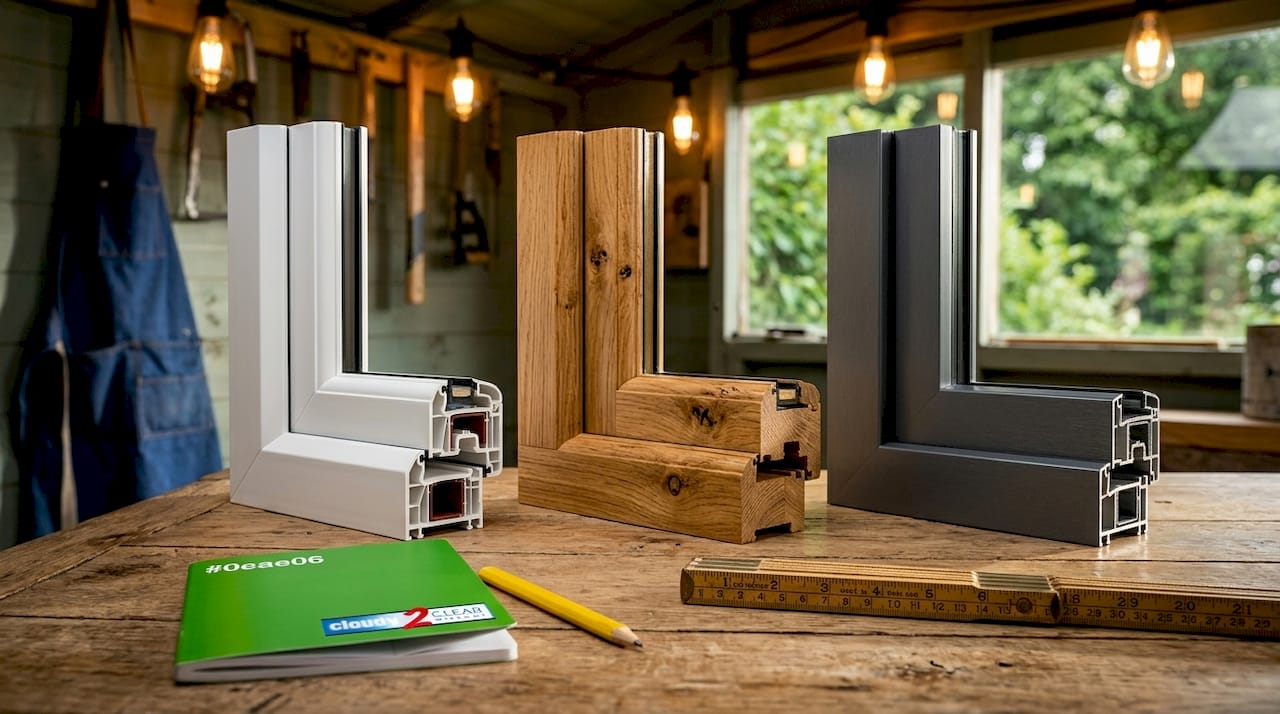
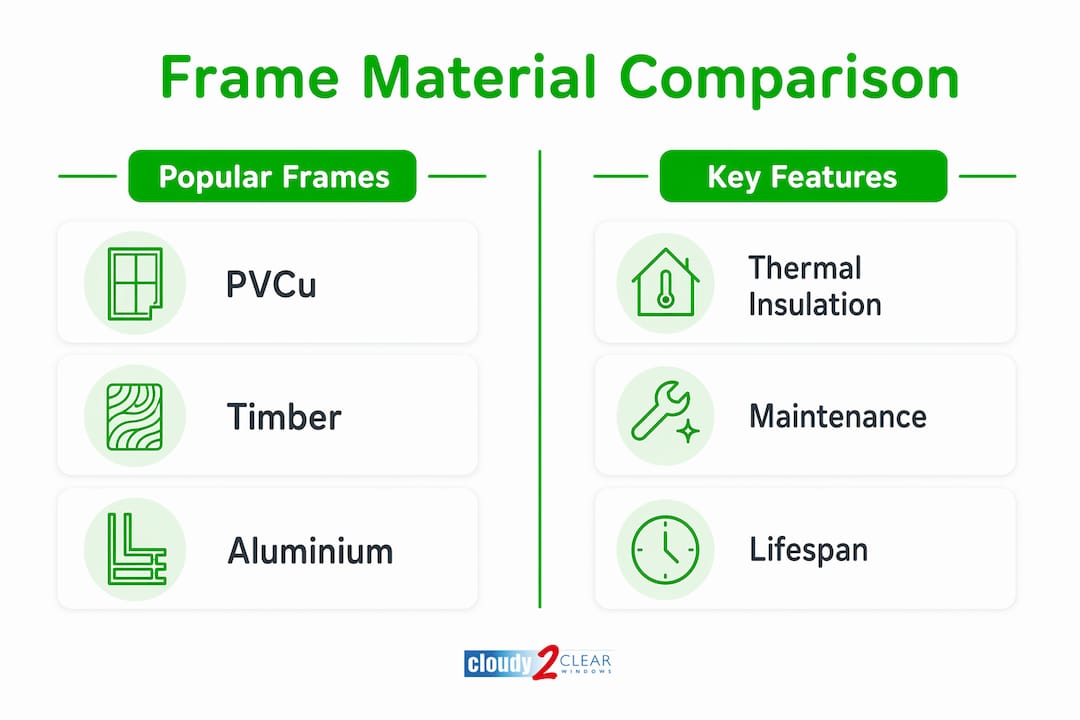
The frame is not a passive component. It contributes directly to the whole-window U-value and determines how your windows hold up against Scotland’s persistent damp, wind, and temperature swings. The three main frame materials in Scotland are PVCu, timber, and aluminium.
| Frame material | Thermal performance | Maintenance | Typical lifespan | Best suited for |
|---|---|---|---|---|
| PVCu | Excellent | Very low | 20–35 years | Modern homes, retrofits |
| Timber | Good (with treatment) | High | 30–60 years | Heritage and period properties |
| Aluminium | Moderate (needs thermal break) | Low | 30–45 years | Contemporary and commercial builds |
PVCu is the most widely used frame material in Scotland for good reason. It is inherently resistant to moisture, does not rot or warp, and requires no painting or sealing. Multi-chambered PVCu profiles trap air within the frame itself, adding to the overall insulation value. Steel reinforcement inside PVCu frames, as used in the Glasgow Whiteinch and Scotstoun retrofit programme, adds structural rigidity without compromising thermal performance. For most Scottish homeowners replacing windows in a standard property, PVCu delivers the best balance of cost, performance, and longevity.
Timber frames offer natural insulating properties and the traditional aesthetic that many Scottish period properties demand. The challenge is maintenance. Untreated or poorly maintained timber absorbs moisture, swells, and eventually rots, which is a significant risk in Scotland’s wet climate. Engineered timber and factory-applied finishes have improved durability considerably, but timber frames still require periodic repainting or re-staining. For listed buildings or conservation areas where PVCu is not permitted, high-quality timber with double glazing remains the correct solution. You can explore window frame performance factors in more detail to understand how each material affects your overall U-value.
Aluminium frames are slim, strong, and visually striking. Their weakness is thermal conductivity. Metal transfers heat rapidly, which means aluminium frames without a thermal break perform poorly in cold climates. Modern aluminium windows use a polyamide thermal break within the frame to interrupt this heat transfer. When specified correctly, thermally broken aluminium can meet the 1.6 U-value requirement, but it typically costs more than PVCu for equivalent performance.
Pro Tip: If you are working on a property in a conservation area, check with your local planning authority before specifying any frame material. Some areas in Edinburgh and Glasgow have specific requirements that restrict PVCu entirely.
Key installation and practical considerations
Choosing the right window is only part of the process. How it is installed determines whether it performs as specified. A window with a certified U-value of 1.4 installed poorly can perform worse in practice than a 1.6-rated window fitted with care.
- Request certified U-value documentation. Compliance demonstration requires certified whole-window U-values from UKAS-accredited laboratories. Do not accept centre-pane values or manufacturer estimates as substitutes. If a supplier cannot provide this documentation, choose a different supplier.
- Specify trickle vents. Airtight windows reduce draughts but also reduce background ventilation. High airtightness without ventilation increases condensation risk and degrades indoor air quality. Trickle vents, fitted into the frame head, allow controlled background airflow without compromising thermal performance. Scottish Building Standards require them in most replacement window scenarios.
- Check installer certification. Look for installers registered with CERTASS or FENSA. Registered installers can self-certify compliance with building regulations, which simplifies the process and provides you with a certificate of compliance at completion.
- Consider the whole opening, not just the glass. Thermal bridging around the window reveal, poor cavity closers, and inadequate sealing at the frame perimeter all undermine the performance of even the best window. A quality energy-efficient window upgrade addresses the full installation, not just the glazed unit.
- Plan for large-scale projects carefully. The Whiteinch and Scotstoun programme in Glasgow installed 890 windows across 124 properties within 16 weeks, valued at £723,000. That scale was only achievable by standardising on a single window style and frame specification. If you are managing a block or estate retrofit, standardisation reduces procurement complexity and quality control risk significantly.
What we have learned from two decades of Scottish window installations
After nearly 20 years of installing and replacing windows across Scotland, the pattern we see most often is this: homeowners focus on the glass and overlook the frame. They compare glazing specifications in detail, then accept whatever frame the installer recommends without question. That is the wrong order of priorities.
The whole-window U-value is a system measurement. A high-performance triple-glazed unit fitted in a poorly insulated aluminium frame without a thermal break will not meet 1.6. A well-specified PVCu casement with quality warm-edge spacers will. The frame is not a secondary consideration. It is half the equation.
We also see the heritage versus efficiency tension play out regularly in Edinburgh’s New Town and Glasgow’s West End. The instinct is to preserve original sash windows at all costs. Our experience is that slim-profile double-glazed sash replacements, fitted by a skilled installer, are virtually indistinguishable from the originals at street level and deliver a genuine improvement in comfort. The conversation with planning authorities is worth having before you assume PVCu or modern glazing is off the table.
One more observation: ventilation planning is consistently underestimated. We have visited properties where new, well-specified windows have been installed without trickle vents, and within 18 months the owners are dealing with condensation on walls and ceilings. Airtight windows are not a problem. Airtight windows without a ventilation strategy are.
— Cloudy2Clear Windows
How Cloudy2Clear Windows can help with your Scottish window upgrade
If you are ready to replace your windows and want products that meet Scotland’s 2026 Building Standards without the guesswork, Cloudy2Clear Windows is here to help.

Cloudy2Clear Windows has been installing and replacing double-glazed windows across Scotland since 2005. Every product we supply comes with certified whole-window U-value documentation, and our installations are carried out to meet Scottish Building Standards Section 6. Whether you need a single window replaced or a full property upgrade, our team covers Glasgow, Ayr, and the surrounding areas. Visit our Glasgow and Ayr branch to find your local team and get started with a no-obligation assessment. You can also read more about energy saving windows to understand exactly what to expect from a compliant installation.
FAQ
What U-value do replacement windows need in Scotland?
From October 2026, replacement windows in Scotland must achieve a whole-window U-value of 1.6 W/m²K or lower under Scottish Building Standards Section 6. This applies to the full window system, including frame and glass, not just the centre pane.
Which window frame material is best for Scotland’s climate?
PVCu is the most practical choice for most Scottish homes, offering low maintenance, good thermal performance, and strong resistance to moisture. Timber suits heritage properties but requires regular upkeep in Scotland’s wet conditions.
Do tilt-and-turn windows meet Scottish Building Standards?
Yes. PVCu tilt-and-turn windows with quality glazing and steel reinforcement consistently meet the 1.6 W/m²K requirement and are widely used in Scottish retrofit programmes, including large-scale social housing projects in Glasgow.
Are trickle vents required in replacement windows in Scotland?
Scottish Building Standards require trickle vents in most replacement window installations to maintain background ventilation. Without them, airtight windows can cause condensation and poor indoor air quality.
Can sash windows meet the 2026 energy standards in Scotland?
Yes. Slim-profile double-glazed sash windows can achieve whole-window U-values at or below 1.6 W/m²K, making them a viable option for period properties in conservation areas where traditional aesthetics must be preserved.