Window rebates are targeted financial incentives that reduce the upfront cost of replacing old, draughty windows with energy-efficient double or triple glazing. In the UK, they play a direct role in encouraging homeowners and building managers to make upgrades they might otherwise delay, particularly when installation costs feel prohibitive. The most significant government-backed programme right now is the Warm Homes: Local Grant, which offers eligible English households up to £15,000 for energy performance improvements, including glazing upgrades.
The core functions of window rebates in the UK include:
- Reducing the financial barrier to energy-efficient window installation
- Incentivising adoption of double and triple glazing in lower-income households
- Supporting national fuel poverty reduction targets
- Encouraging whole-house retrofit approaches rather than isolated upgrades
- Channelling public funding through accredited suppliers to maintain quality standards
How window rebates work in the UK
Rebates are not upfront discounts. You pay for the installation first, then claim back a portion of the cost through the relevant scheme, provided you meet the eligibility criteria and use an accredited installer. This distinction matters because it means you need to plan your finances before work begins.
The typical process looks like this:
- Confirm eligibility based on income, property type, and existing insulation levels
- Obtain quotes from suppliers accredited under the relevant scheme
- Have a retrofit assessor visit your property to determine which measures qualify
- Installation is completed to the programme’s technical standards
- Submit documentation including proof of eligibility, installer certificates, and Energy Performance Certificate (EPC) data
- Await processing, which typically takes several weeks before the rebate is awarded
Pro Tip: Get your EPC updated before applying. An outdated certificate can delay your application or affect which measures you qualify for.
Eligibility for most UK schemes centres on household income, benefit entitlement, and your property’s current energy rating. Building managers overseeing social or rented housing may access separate routes through local authority referrals. Under the ECO4 scheme, window upgrades are classed as secondary measures, meaning your property generally needs loft and cavity wall insulation installed first before glazing qualifies for funding.
What types of window rebates and incentives are available in the UK?
The UK rebate landscape covers several distinct programmes, each with different eligibility rules and funding levels.

| Scheme | Who it covers | Max window funding | Key condition |
|---|---|---|---|
| Warm Homes: Local Grant | Low-income English households | Up to £15,000 for energy performance improvements (including glazing) | Income and EPC criteria; runs to March 2028 |
| ECO4 (Energy Company Obligation) | Low-income and vulnerable households | Varies by measure and supplier | Windows are secondary measures; insulation required first |
| Great British Insulation Scheme | Households in lower EPC bands | Partial contribution; varies | Not a grant; supplier-led; cannot be blended with other schemes |
| Local authority schemes | Varies by council | Varies | Dependent on local funding allocation |
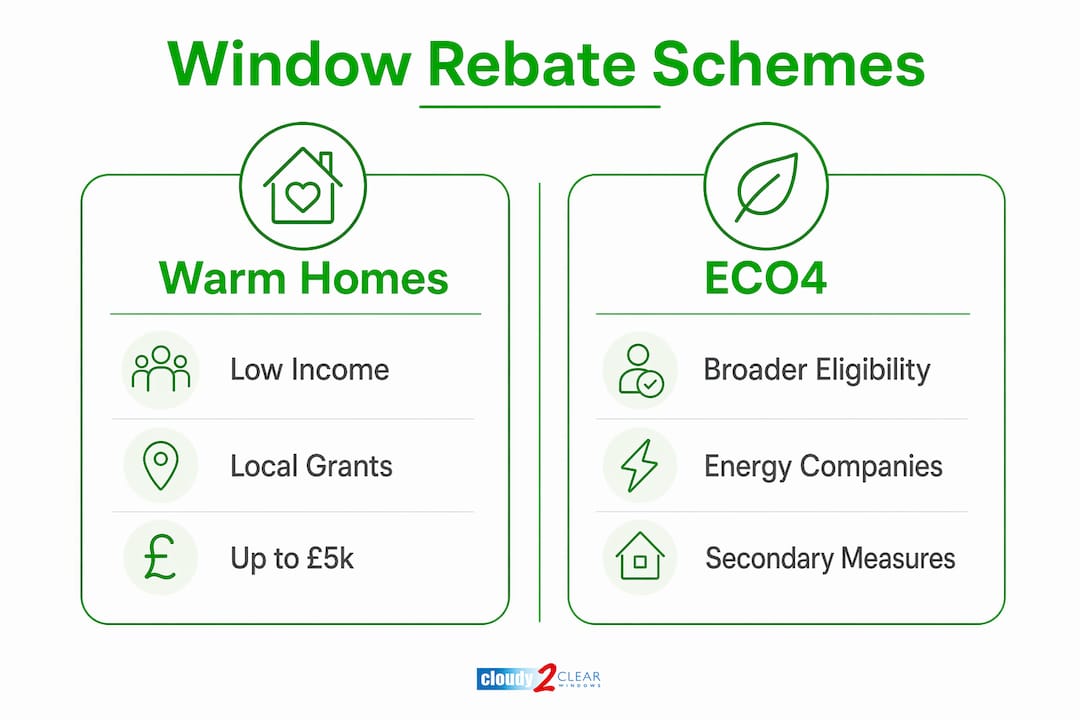
The Warm Homes: Local Grant launched in April 2025 and runs until March 2028, providing eligible households with up to £15,000 for energy performance improvements, including window upgrades, and an additional £15,000 for low-carbon heating. Government grants for windows in England can cover up to £15,000 for eligible households to address fuel poverty and improve energy efficiency, directing the most support to those with the greatest need and least efficient properties. Tax credits for window upgrades are not currently a mainstream route in England, though this may evolve as the Warm Homes Plan develops.
What are the real benefits of window rebates for homeowners?
The most immediate benefit is cost reduction. Replacing single-glazed windows with energy-saving double glazing can meaningfully cut heating bills, and a rebate makes that investment far more accessible. Research from the Great British Insulation Scheme confirms that larger subsidies boost uptake of expensive measures like window replacement more than they do for cheaper insulation options, precisely because the cost barrier is higher.
The benefits extend well beyond the monthly energy bill:
- Lower heating costs as draughts and heat loss through glazing are reduced
- Improved thermal comfort, particularly in older properties with single glazing
- Reduced condensation and associated damp problems
- Potential increase in property value and EPC rating
- Contribution to reducing the UK’s overall residential energy demand
Beyond individual households, window rebates contribute to national energy resilience by cutting aggregated demand across millions of homes, which reduces the UK’s reliance on imported fuels. For building managers, upgraded glazing also reduces maintenance calls related to condensation, failed seals, and draughty frames.
How government policy shapes UK window rebate programmes
The UK government’s Warm Homes Plan sets the strategic direction for all energy efficiency rebates, and its 2026 priorities are clear: whole-house retrofits come first. The plan explicitly moves away from piecemeal upgrades, pushing instead for bundled interventions that combine insulation, glazing, and low-carbon heating in a single coordinated project.
Key policy drivers shaping how rebates are structured include:
- Fuel poverty reduction as a primary goal, directing the largest grants to the lowest-income households
- The insulation-first hierarchy, which means windows typically follow loft and cavity wall work
- Long-term funding commitments (the Warm Homes: Local Grant runs to March 2028) to give suppliers and homeowners planning certainty
- Integration of local authority delivery to reach households not captured by national schemes
- Policy mixes combining grants, information campaigns, and reduced administrative barriers to lift adoption rates
Research published via UKERC identifies long-term policy reliability and effective policy mixes as the factors most consistently associated with higher retrofit volumes internationally. Countries achieving the greatest uptake, including France and Germany, combine financial support with strong intermediary services and multi-scale governance. The UK’s current approach is moving in that direction, though the pace of delivery remains a live policy debate.
Expert insights: how to get the most from window rebate programmes
Navigating the rebate system is straightforward once you know where the complexity sits. The biggest pitfall for homeowners is assuming that any window installer can process a rebate claim. Only suppliers accredited under the relevant scheme can do so, and using an unaccredited contractor means you lose eligibility entirely.
Best practices for maximising your rebate benefit:
- Check your property’s EPC rating before contacting any installer, as this determines which schemes you can access
- Use a one-stop-shop retrofit service that coordinates assessment, accredited installation, and paperwork in a single process
- Time your window upgrade to coincide with insulation work, since most schemes require insulation to be in place first
- Ask your local authority whether they are participating in the Warm Homes: Local Grant, as funding is allocated locally and availability varies
- Combine rebate funding with any available local authority top-up grants to maximise total support
Pro Tip: If you are a building manager overseeing multiple properties, a single retrofit assessor visit can cover several units at once, reducing both cost and disruption.
One-stop-shop models, where a single provider handles advice, assessment, and installation coordination, are particularly effective at increasing uptake among homeowners who would otherwise be deterred by administrative complexity. The UKERC research is clear on this point: reducing the “hassle factor” is as important as the size of the subsidy itself.
Limitations and exclusions you should know about
Window rebates are not available to everyone, and understanding the exclusions upfront saves time and frustration. The most common limitations include:
Income and benefit thresholds. Most schemes, including ECO4 and the Warm Homes: Local Grant, are means-tested. If your household income exceeds the programme threshold, you will not qualify for the highest funding levels, and in some cases you will not qualify at all.
The insulation-first rule. As noted under ECO4 guidance, windows are secondary measures. If your property lacks adequate loft or cavity wall insulation, your glazing upgrade will not be funded until that insulation is in place. This can add time and cost to your overall project.
Scheme blending restrictions. The Great British Insulation Scheme cannot be combined with funding from ECO4, the Home Upgrade Grant, or other national schemes at the same property. You need to choose the most appropriate route rather than stacking multiple programmes.
Geographic variation. The Warm Homes: Local Grant is administered by local authorities in England. Not every council has the same funding allocation, and some areas may have exhausted their budget before you apply. Scotland and Wales operate separate schemes with different rules.
Property type restrictions. Listed buildings, properties in conservation areas, or homes with non-standard construction may face additional planning constraints that affect eligibility or the type of glazing permitted.
Real-world examples of window rebates in action
The practical impact of these programmes is clearest when you look at how they work for specific property types.
Older terraced housing. A homeowner in a pre-1980 mid-terrace with single glazing and no cavity wall insulation would typically need to install loft and cavity insulation first under ECO4 before the windows qualify. Once that insulation is confirmed, the glazing upgrade becomes eligible as a secondary measure, with the energy supplier covering part or all of the cost depending on household income and EPC band.
Privately rented properties. Building managers overseeing privately rented homes can access the Warm Homes: Local Grant through local authority referral routes, particularly where tenants are on qualifying benefits. The grant covers the glazing upgrade directly, reducing the landlord’s capital outlay while improving the property’s EPC rating, which is increasingly relevant given minimum energy efficiency standards for rented homes.
Whole-house retrofit projects. The most cost-effective use of rebate funding is within a coordinated retrofit that bundles insulation, glazing, and heating in one project. A property receiving loft insulation, cavity wall insulation, and double glazing through a single accredited provider can access the maximum available funding while minimising disruption. Cloudy2Clear Windows has been installing and replacing double glazed windows since 2005, and our team can advise on how your glazing upgrade fits within a broader retrofit plan.
For homeowners ready to take the next step, Cloudy2Clear Windows offers double glazing replacement services across the UK, with local teams available in areas including Milton Keynes and beyond.

FAQ
How does the government grant for windows work?
The Warm Homes: Local Grant provides eligible English households with funding for energy improvements including double or triple glazing, delivered through local authorities and accredited installers. You apply via your local council, and funding is subject to income and EPC eligibility criteria.
Why are rebates important for energy-efficient upgrades?
Rebates directly reduce the cost barrier that prevents homeowners from replacing inefficient windows, and larger subsidies produce disproportionately higher adoption rates for expensive measures like glazing compared to cheaper insulation options.
Do window rebates actually save you money?
Yes. Rebates cut the upfront installation cost, while the new glazing reduces ongoing heating bills by limiting heat loss. The combined effect means most households recoup their remaining outlay over time through lower energy costs.
Is it worth replacing 25-year-old windows?
Windows of that age are likely to have failed seals, poor thermal performance, and outdated frames. Replacing them with modern energy-efficient glazing improves comfort, reduces heating costs, and can raise your property’s EPC rating, which matters for both resale value and rental compliance.
Can building managers claim window rebates for commercial properties?
Commercial properties are generally outside the scope of domestic schemes like ECO4 and the Warm Homes: Local Grant, though some local authority programmes cover mixed-use or smaller commercial buildings. Cloudy2Clear Windows offers dedicated commercial window services and can advise on what funding routes may apply to your building.