The professional window insulation process means replacing failed sealed units, upgrading to Low-E glass, adding argon fills, or fitting secondary or triple glazing. It is not about film kits or foam strips. Professional sealed-unit replacement carries a reported success rate of around 95%, compared with roughly 30–40% for DIY desiccant methods, and it is the only approach that genuinely restores or improves your property’s thermal performance.
Your quick decision guide:
- Glass-only sealed-unit repair: the frame is sound, the failure is limited to one or two units, and no structural damage is present.
- Upgrade the glass specification: the frame is intact but the existing units are old, single-coated, or air-filled. Specify Low-E glass and argon fill at replacement time.
- Full window replacement: frames are rotten, warped, or the units are bonded and non-replaceable.
- Secondary or triple glazing: listed buildings, high-noise environments, or where you need to exceed standard energy targets without touching the existing frame.
Your next step is to arrange an inspection from a FENSA, CERTASS, or TrustMark-registered installer and request a written condition report before any work begins.
When should you repair, upgrade, or replace your windows? For practical guidance on door and screen repairs, see Security Screen & Fly Door Repair to compare broader repair practices.
According to Which?, the most common signs that a unit or window needs attention are draughts, leaks, condensation between the panes, and sticking or sagging hardware. Spotting these early keeps costs down.
Use this checklist on site before calling a contractor:
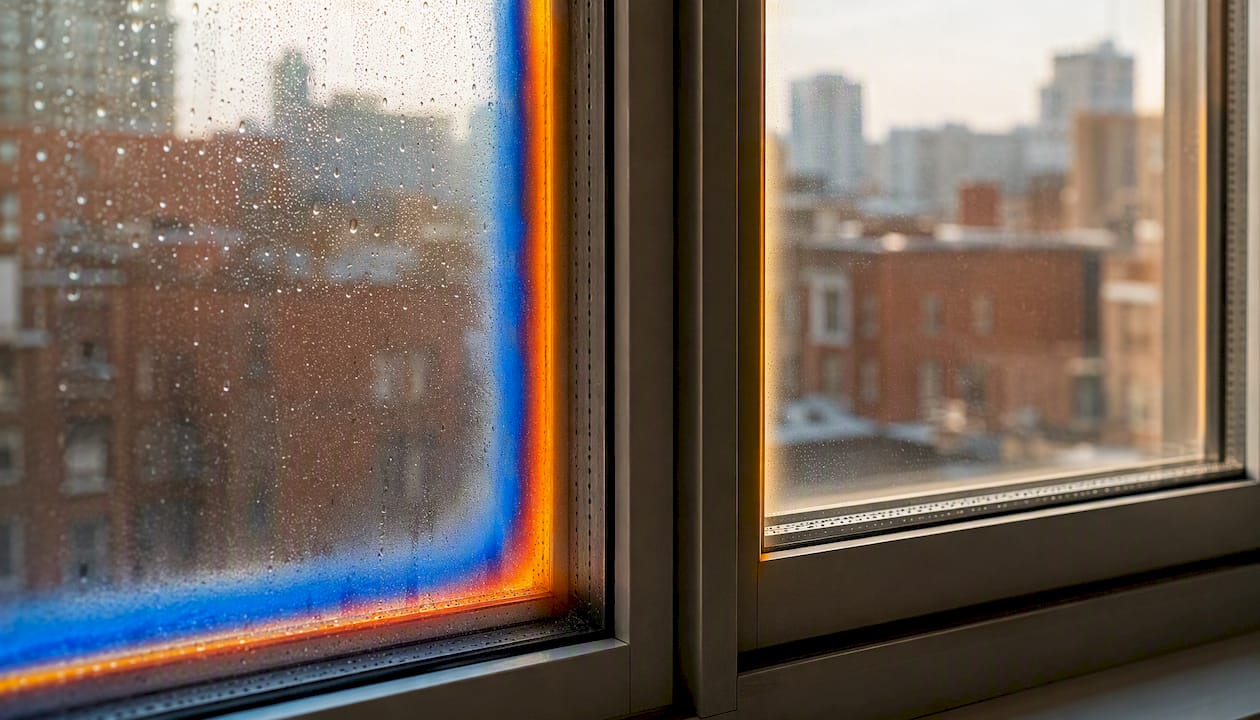
- Condensation between panes: the seal has failed. The unit needs replacing, not resealing with silicone.
- Sticking hinges or broken locks: hardware repair only. Thermal performance is unaffected.
- Single failed unit, frame intact: glass-only replacement is the cost-effective route.
- Multiple failed units, frame sound: replace all units in one visit to avoid repeat call-out costs.
- Rotten, warped, or cracked frames: full window replacement is the correct answer. WindowCost’s triage matrix is clear on this: re-glaze when the frame is sound and the failure is local; replace the whole window when the frame is compromised or the unit is bonded and non-removable.
- Pre-2002 windows with bonded units: these often cannot be re-glazed without disturbing the frame. Check with your installer.
- Listed buildings or high-noise properties: secondary glazing fits inside the existing reveal without altering the external appearance, making it the preferred route where planning consent would be difficult to obtain.
You can check typical double glazing lifespans by frame material to help decide whether replacement is worth the investment at this stage.
Pro Tip: Ask your installer whether the glazing beads are mechanically clipped or bonded. Clipped beads on uPVC and aluminium pressure-plate systems allow the unit to be swapped without disturbing the frame. Timber frames with putty glazing usually need a joiner to remove and replace the surround, which adds time and cost.
What does a professional window insulation job actually involve?
Understanding the workflow helps you ask the right questions and know what paperwork to expect at the end.
- Site inspection and condition report. The installer assesses every window: frame soundness, evidence of water ingress, number of failed units, and any BFRC energy band labels present. This report should be written and handed to you.
- Measurements and U-value specification. Each unit is measured precisely. You agree the glass specification at this stage: standard clear, Low-E coating, argon fill, or triple glazing.
- Removal of the failed sealed unit. Glazing beads are removed carefully. The old unit is extracted whole where possible to minimise glass breakage risk.
- Fitting the new sealed unit. The replacement unit contains a desiccant spacer bar to absorb any residual moisture. If argon fill is specified, the unit arrives pre-filled and sealed from the factory.
- Low-E glass option confirmed. Low-E (low emissivity) coating is a near-invisible metallic layer on the glass surface that reflects heat back into the room. It is specified at the factory stage, not applied on site.
- Resealing and finishing. Glazing beads are refitted, perimeter seals checked, and any minor frame damage made good.
- Testing and customer sign-off. The installer checks for draught, confirms the unit is seated correctly, and provides written confirmation of the work completed, including the U-value specification of the new unit.
The written condition report should confirm: frame soundness, evidence of any water ingress found, number of units replaced, glass specification (Low-E, gas fill type), and the installer’s registration number.
On disposal: registered installers are legally required to hold or use a licensed waste carrier for glass and frame materials. Ask for confirmation that waste will be disposed of responsibly.
How much do different upgrades actually improve performance?
A misted sealed unit can lose up to 40–50% of its insulating value compared with a correctly sealed unit. Replacing it restores U-values to roughly 1.2–1.6 W/m²K depending on specification. To improve beyond the original, you need to deliberately specify better glass at replacement time.
| Upgrade type | Typical U-value (W/m²K) | Best suited to |
|---|---|---|
| Repaired standard double glazing | 1.2–1.6 | Restoring failed units to original spec |
| Double glazing with Low-E and argon | 1.0–1.4 | Most residential upgrades |
| Triple glazing | 0.6–0.8 | New builds, passive house, high energy targets |
| Secondary glazing (added inner pane) | 1.2–1.6 | Listed buildings, noise reduction, older frames |
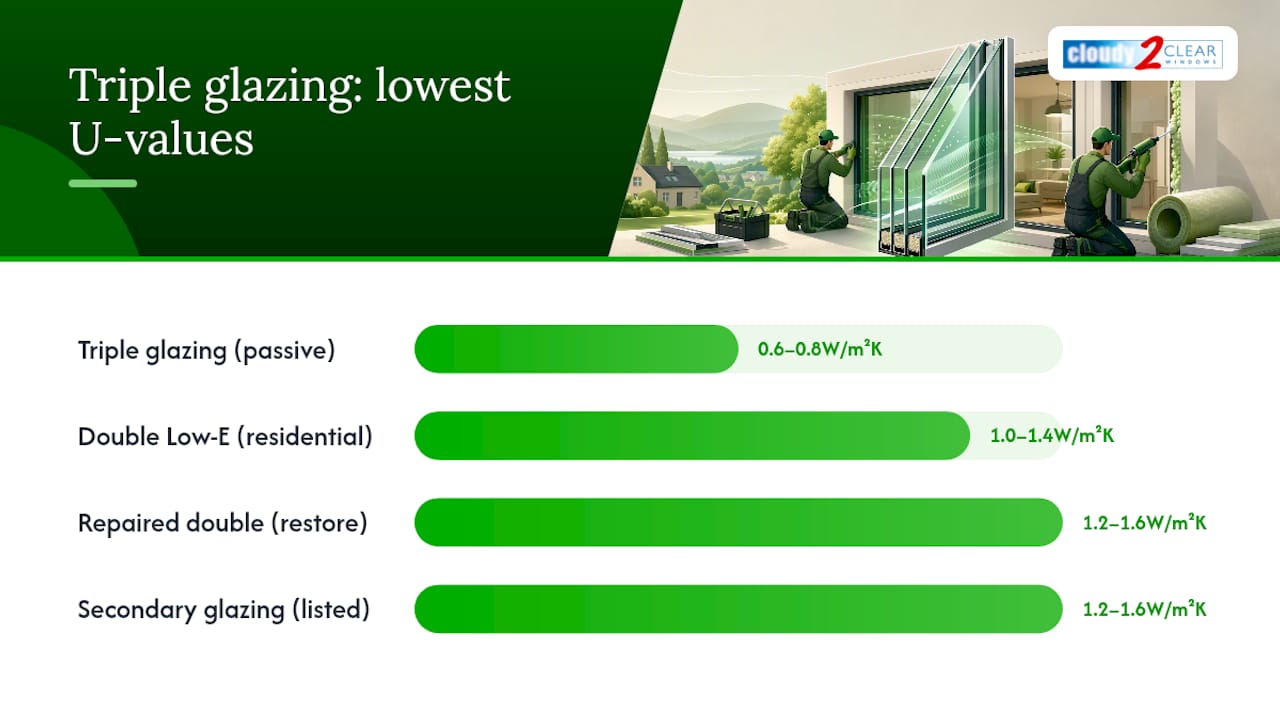
Replacing a failed unit with a like-for-like standard unit returns the window to its original performance. Specifying Low-E glass and argon fill at the same time costs only marginally more per unit but meaningfully reduces heat loss. Triple glazing delivers the lowest U-values but adds weight to the frame, so the frame must be assessed for suitability first.
Secondary glazing does not replace the outer window. It adds an inner pane within the reveal, which creates a still-air buffer. It is particularly effective for noise reduction and works well in properties where the outer window cannot be changed.
Pro Tip: Upgrading to higher-performance glazing reduces air infiltration significantly. Make sure trickle vents are open and functioning after the work is done. Sealing a property too tightly without adequate background ventilation can increase internal condensation and damp. Your installer should flag this during the specification stage. For further guidance, see how to ventilate your home and prevent damp.
What do window repairs and replacements typically cost in the UK?
Axiom’s 2026 cost data shows that sealed-unit replacement is usually possible without replacing the frame and costs considerably less than full window replacement.
Lead times vary by region and installer workload. Most sealed-unit replacements can be completed within one to two weeks of survey. Full window replacement typically involves a longer manufacturing lead time of four to six weeks.
There are no mainstream UK grants that cover sealed-unit replacement. ECO4 supports window replacement only in narrowly defined circumstances, primarily single-glazed properties without central heating. Confirm eligibility directly with your local authority or an ECO4-registered assessor before budgeting on that basis.
What compliance checks and warranties should you request?
Before signing any contract, ask for the following in writing:
- FENSA or CERTASS registration number (or TrustMark accreditation). These are the standard Competent Person schemes for self-certifying window replacement work under Building Regulations in England and Wales.
- Written condition report covering all windows inspected, not just those being replaced.
- Glass specification sheet stating U-values, Low-E coating type, gas fill, and spacer bar material.
- Warranty terms covering: the sealed unit (typically 5–10 years), the gas fill, the frame (if replaced), and workmanship.
- Building control sign-off: glass-only sealed-unit replacement in an existing frame generally does not require a separate building control application if the installer is registered under a Competent Person scheme. Full window replacement does require self-certification or a building control application. Confirm this with your installer before work starts.
Ask specifically: does the warranty cover the gas fill separately from the glass? What is the claims process if a unit mists within the warranty period? Get the answers in writing.
What questions should you ask, and what are the red flags?
When taking quotes, ask every installer these questions:
- What U-value will the replacement unit achieve?
- Is Low-E glass and argon fill included, or is that an extra?
- Are you registered with FENSA, CERTASS, or TrustMark?
- Can you provide a written condition report before and after the work?
- What does the warranty cover, and for how long?
- Can you share a portfolio or case study of similar work?
Red flags to walk away from:
- No written quote provided.
- Refusal to confirm registration or provide a registration number.
- Pressure to sign on the day or accept a verbal-only warranty.
- Vague answers about U-values or gas fill specification.
- Demands for full payment upfront before any work begins.
- Unwillingness to leave a written condition report.
Checking references and asking to see before-and-after U-value examples or independent inspection reports is entirely reasonable. A reputable installer will welcome those questions.
What should you expect after the work is done?
Good maintenance extends the life of new glazing significantly. Follow these steps:
- Clean glass with a mild detergent and soft cloth. Avoid abrasive pads near the bead edges.
- Lubricate hinges and handles annually with a silicone-based lubricant. Do not use oil-based products on uPVC.
- Keep trickle vents open unless your installer has specifically advised otherwise. Closing them entirely in a well-sealed property increases internal humidity.
- Avoid pressure-washing directly at bead edges or frame joints. Water forced into those joints can accelerate seal failure.
To verify the work has succeeded, check for the absence of condensation between panes after two to three weeks. Run a hand around the frame edge on a cold day to check for draughts. If you commissioned a condition report before the work, compare it with the post-work sign-off document.
If problems appear within the warranty period, contact the installer in writing first. If they do not respond, escalate to the relevant Competent Person scheme (FENSA or CERTASS) or TrustMark. Keep all written documentation from the original survey onwards. For guidance on diagnosing misty windows after a repair, the Cloudy2Clear Windows resource library covers the most common post-work questions.
Our perspective on what actually matters in this process
The part of the window insulation process most clients underestimate is the specification conversation, not the installation itself. Fitting a replacement sealed unit is straightforward for any competent glazier. The decision that actually determines whether your energy bills improve is what goes inside that unit: the Low-E coating type, the gas fill, and the spacer bar material. Most homeowners accept whatever the installer proposes without asking. That is where performance gains get left on the table.
A common job we see at Cloudy2Clear Windows is a property with three or four misted units, all of which have lost a significant portion of their insulating value. The frames are sound. The client has been quoted for full window replacement elsewhere. In most of those cases, glass-only replacement with Low-E and argon specification restores comfort, eliminates the condensation, and costs a fraction of full replacement. The outcome is the same; the route is just better matched to the actual problem.
How Cloudy2Clear Windows can help you take the next step
Cloudy2Clear Windows has been repairing and replacing double glazing across the UK since 2005, working with homeowners, landlords, housing associations, and commercial property managers. The service covers glass-only sealed-unit replacement, Low-E and argon upgrades, secondary and triple glazing installation, and compliance inspections with written condition reports.

Every job starts with a thorough site inspection and a written condition report so you know exactly what you are paying for before any glass is ordered. Warranty documentation, U-value specifications, and FENSA-compliant sign-off are provided as standard.
For commercial window repairs and glazing inspections or residential double glazing replacement, contact Cloudy2Clear Windows to arrange your inspection. You can also find your nearest branch, including Milton Keynes, to book directly.
Sources
- Double glazing repairs and maintenance | Which?
- How to fix double glazing condensation | Axiom Eco Homes
- When to Replace vs Repair Windows: A Triage Matrix | WindowCost
Use these sources to verify installer claims, check current cost benchmarks, and confirm whether any grant schemes apply to your property type before committing to a specification.
FAQ
What does a professional window insulation process involve?
It involves replacing failed sealed units with new double-glazed units, optionally specifying Low-E glass and argon fill to improve thermal performance, and fitting secondary or triple glazing where required. The process includes a site inspection, written condition report, and compliance sign-off from a registered installer.
How much does sealed-unit replacement cost in the UK?
A standard sealed-unit replacement typically costs £80–£150 per unit, based on Axiom’s 2026 UK cost data. Upgrading to Low-E and argon fill at the same time usually adds a modest premium per unit and is considerably cheaper than full window replacement.
Do I need building regulations sign-off for glass-only repairs?
Glass-only sealed-unit replacement within an existing frame generally does not require a separate building control application if your installer is registered under a Competent Person scheme such as FENSA or CERTASS. Full window replacement does require self-certification or a building control application.
What U-value should I expect after upgrading my double glazing?
A misted unit replaced with a standard sealed unit typically achieves 1.2–1.6 W/m²K. Specifying Low-E glass and argon fill brings that down to around 1.0–1.4 W/m²K. Triple glazing can reach 0.6–0.8 W/m²K for properties targeting higher energy performance.
How do I know if my installer is reputable?
Ask for their FENSA, CERTASS, or TrustMark registration number, a written quote with U-value specifications, and warranty terms in writing. Cloudy2Clear Windows provides written condition reports and compliance documentation as standard on every job.