If your door glazing would let someone reach in and release an internal lock after breaking it, upgrade to laminated security glass rated to at least P1A before you spend money anywhere else. If your glazing already sits well away from locking points, your money is better spent checking hinges, multipoint locks and frame condition. Either way, get a professional survey and at least two written quotes before committing.
Types of glass used in doors and how they protect you
Not all glass in a door does the same job, and confusing the two main types is the most common mistake homeowners make when budgeting for security.
Toughened glass is heat-treated so it shatters into small, blunt fragments rather than sharp shards. That makes it a safety glass: it reduces injury risk, which is why building regulations require it in low-level door panels. It is not, however, designed to resist a determined attack. Once struck hard enough, it breaks away cleanly and leaves an opening.
Laminated security glazing works differently. Two or more panes are bonded with a plastic interlayer, usually PVB, so the glass cracks on impact but the interlayer holds the pieces together. An intruder has to keep striking the same spot repeatedly, which takes time, noise and effort that most opportunist burglars are not prepared to risk.
BS EN 356 classifies glazing by how much manual attack it resists, with classes such as P1A marking the point widely treated as the minimum for glazing near locks.
- Front doors and side panels within reach of a lock: laminated glass to at least P1A.
- Patio and bifold doors at ground level: laminated glass, particularly where the door opens onto a garden or alley.
- Internal or upper-storey glazing with no lock access nearby: toughened glass is usually adequate.
Pro Tip: Ask your installer which specific pane in the unit carries the security rating, not just the overall unit specification.
UK standards that actually matter for door security
Several UK standards get quoted in marketing material, but only a handful carry real weight when you are judging a quote or a finished installation.
Approved Document Q sets the benchmark for resisting casual or opportunist burglary in new dwellings, and its Requirement Q1 applies to easily accessible doorsets, which must be robust and fitted with appropriate hardware. It is not law for existing homes undergoing a glass-only repair, but it is the document every reputable installer measures against, and it is worth checking your installer’s proposal against it even if you are not building new.
The same guidance gets specific about glazing: where broken glass would let someone reach in and release a lock, Approved Document Q advises a minimum of class P1A, and confirms that a double or triple-glazed unit only needs one pane at that class to meet the standard.
PAS 24 tests the whole doorset, frame, glazing and hardware together, rather than the glass on its own. This matters because a strong pane fitted into a weak frame with cheap hinges still leaves an easy point of entry.
- Approved Document Q: the regulatory benchmark for new doorsets, and a useful reference for upgrades.
- PAS 24 / BS EN 1627: tests the complete doorset assembly, not glazing in isolation.
- BS EN 356: classifies the glass itself, with P1A commonly cited as the practical minimum near locks.
- Secured by Design third-party certification gives independent confirmation that a product genuinely meets its claimed standard, rather than relying on a manufacturer’s own say-so.
A pane rated to BS EN 356 does not guarantee a secure doorset unless the frame, beading and hardware are assessed as one unit, which is exactly what PAS 24 testing checks.
What actually drives the cost of a quote
Quotes for door glazing vary more than most homeowners expect, and the reasons are rarely about the glass alone.
- Door type and size. A standard front door is simpler and cheaper to glaze than a bifold or French door with multiple panels, and bespoke sizes always cost more than off-the-shelf units.
- Frame material and condition. Laminated security glass is heavier than standard toughened glass, and some frames need reinforcing or re-beading to carry the extra weight safely.
- Glass specification. A single-pane safety upgrade costs less than a full laminated P1A specification, and adding acoustic or low-E performance on top changes the price again.
- Hardware and fitting complexity. Multipoint locks, anti-tamper fixings and internal beading all add labour time, and NPSA guidance notes that internal beading with anti-tamper screws meaningfully increases the time it takes an intruder to remove a pane.
- Access and site conditions. Upper floors, awkward access or the need for scaffolding or temporary boarding during the work all affect labour costs.
- Certification and warranty. A PAS 24-certified doorset or a longer guarantee period tends to sit at a higher price point than an uncertified equivalent.
Pro Tip: Before you ask for quotes, decide whether you need a security upgrade or a standard safety replacement. That single decision affects every line of the quote that follows.
A sensible budgeting approach starts with a survey, not a price list. An installer who inspects your frame, hardware and current glazing before quoting will give you a figure that actually reflects your door, rather than a generic estimate that gets revised once they see the job.
Repair or replace: how to decide
The right choice depends on what has actually failed, not just on what feels like the bigger fix.
Glass-only replacement makes sense when:
- The sealed unit has misted or blown but the frame is sound and square.
- The glass is cracked or chipped but the hardware and beading are in good condition.
- You want a security upgrade (toughened to laminated, for example) and the existing frame can take the extra weight without reinforcement.
A full doorset replacement is the better call when:
- The frame shows rot, warping or corrosion that would undermine even the best glass.
- Poor security comes from the frame or fixings rather than the glass itself.
- You want a doorset that carries full PAS 24 certification as a complete, tested unit.
Glass-only work is typically quicker to arrange and far less disruptive, often completed in a single visit once the replacement pane has been measured and ordered. A full doorset replacement takes longer to schedule and fit, since the frame itself has to be removed and refitted. If you let to tenants or manage a multi-occupancy building, check your insurance policy and any housing association compliance requirements before choosing a spec, since some policies specify a minimum security rating for ground-floor glazing. Our guide on checking your frame before ordering laminated glass covers the practical signs worth looking for.
How to specify security glazing and question your installer properly
Getting comparable quotes means being specific about what you are asking for, rather than leaving the specification to the installer’s assumptions.
- State the glass class explicitly. Ask for laminated glazing to BS EN 356, confirming which class (P1A or higher) and which pane within the unit carries that rating.
- Ask about doorset certification. If security is the priority, ask whether the complete doorset is tested to PAS 24, and request a copy of the certificate rather than taking a verbal assurance.
- Request a written scope. This should cover the beading method, fixing type, whether anti-tamper screws are used, and whether the frame needs reinforcement.
- Confirm what the warranty covers. Ask whether it covers the glass, the seals, the hardware, or all three, and for how long.
- Check credentials and insurance. Ask for proof of installer insurance, any trade body membership, and if possible, references from similar jobs.
A useful opening line when calling installers: “Can you confirm in writing which BS EN 356 class the glass meets, and whether the full doorset is PAS 24 tested?” A specific question like this filters out installers who cannot answer it immediately.
Doorset testing matters because glazing ratings alone do not guarantee security. PAS 24 and BS EN 1627 testing evaluate the frame, glass and hardware as one assembly, since a high-performance pane in a weak frame still leaves a vulnerable point of entry.
Red flags include an installer who cannot name the glass class they are quoting, who has no written certificate to show you, or who quotes a price before seeing the door in person. If you want to compare multiple local contractors against each other on the same scope, a sealed-bid marketplace such as BidWolf lets you post the job once and receive comparable quotes rather than chasing several installers individually.
Why decades of fitting doors and windows changes what we check
We have years of experience installing, replacing and repairing double glazing across residential and commercial properties, and that history shapes how we approach a security glazing job. We offer double glazed door repairs, locks, handles and hinges repairs, insulating glass upgrades and inspection services for commercial and housing association properties, so a security glazing query rarely sits in isolation from the rest of the doorset.
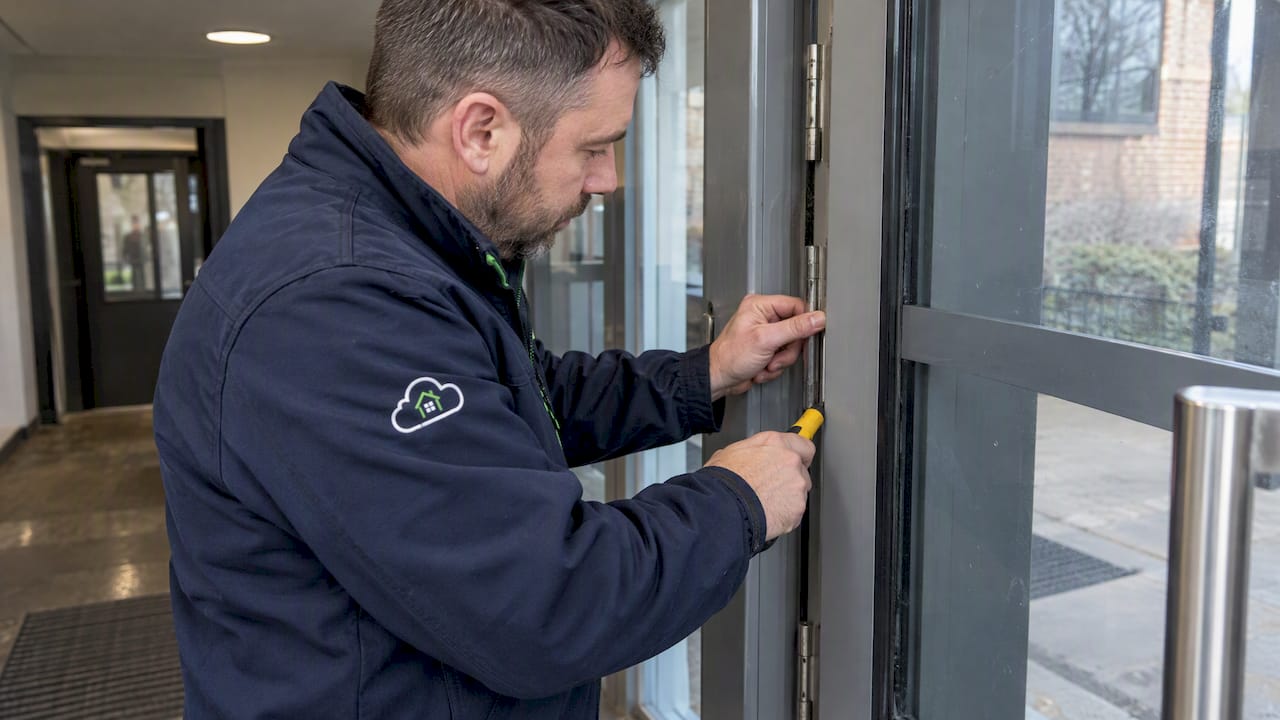
A professional survey looks at the glass, the frame condition, the beading method and the existing hardware together, because a strong pane fitted against a weak frame or worn hinges still leaves a gap. The findings can be put into a written specification before any work is agreed, so you know exactly which glass class is being fitted and what the fixing method covers. That survey is the step most quotes skip, and it is the one that actually determines whether the finished door performs as intended.
Our honest take on security glazing advice
Most online advice on this topic jumps straight to glass thickness and skips the frame, which is backwards. A laminated P1A pane fitted into a soft, rotten or poorly fixed frame achieves very little, because the weakest point in a doorset decides how secure it actually is, not the strongest.
The conventional advice also treats security glazing as a universal upgrade for every door, when in practice it only matters where breaking the glass would give direct access to a lock. Spending on laminated glazing for a high-level panel that nobody could reach is money better spent on hardware or frame repairs elsewhere.
If we had to pick one priority for most readers, it would be this: get the survey before the quote. A proper assessment of frame, hardware and glazing position tells you whether you need a full security specification or a straightforward safety replacement, and that decision should come before any figures are discussed, not after.
Book a survey and get a clear specification
We replace the glass, not the whole frame, wherever the frame allows it, which can keep disruption and turnaround lower than a full doorset replacement. That approach, combined with a comprehensive guarantee, means a security upgrade does not have to mean ripping out a perfectly sound door.
- A written specification before any work begins, so you know the exact glass class and fixing method.
- Glass-only replacement where the frame is sound, or a full doorset recommendation where it is not.
- Nationwide coverage with local teams who know the standards that matter.
| What you get | Why it matters |
|---|---|
| Written survey and specification | Confirms glass class and frame condition before work starts |
| Glass-only replacement option | Less disruption than a full doorset swap |
| Guarantee | Long-term cover on the finished work |
Start with our double glazing replacement service page, or go straight to double glazed door repairs if you already know the glass is the issue. Either way, book a survey and get a written specification before you decide anything.
FAQ
How much does door glass cost?
We do not publish fixed glass prices because the figure depends on door size, glass specification and frame condition, all of which a proper survey needs to assess first. The clearest way to get an accurate figure is a written quote based on an in-person inspection of your door.
Are there security glass doors?
Yes, doorsets exist that combine laminated glazing rated to BS EN 356 with a frame and hardware tested together to PAS 24. The glazing alone only resists attack effectively when the frame, beading and locks are specified to match it.
What is the cost of glass in the UK?
There is no single UK price for door glass, since cost depends on door type, glass specification, frame material and labour, according to market guides on door glazing costs. Getting a written quote from a professional after a survey is the reliable way to find out what your specific door will cost.
Is it expensive to replace glass in a door?
Cost varies with the specification you choose, a standard safety replacement generally costs less than a laminated security upgrade, and bespoke sizes or reinforced frames add further cost. A survey will tell you which category your door falls into before you commit to a price.
Do I need to meet Approved Document Q for an existing home?
Approved Document Q is a legal requirement for new dwellings rather than existing ones, but it remains the practical benchmark installers use when recommending a security specification. If your glazing sits near an internal lock, the guidance’s advice on P1A-rated glass is worth following even outside new-build projects.