An acoustic glass dB rating, written as Rw, tells you how many decibels a pane or sealed unit takes out of the noise passing through it in a laboratory test. Standard double glazing sits in the low 30s. Acoustic laminated units can reach the high 30s and beyond. A gap of around 10 dB is heard as roughly half the loudness, so the rating on the quote matters. This guide explains Rw, C and Ctr, shows what to expect from different glass, and covers why your result at home can differ from the lab figure.
What a dB rating on acoustic glass measures
The headline figure is the weighted sound reduction index, Rw. It is measured in decibels and describes how much sound the glazing blocks. Higher means quieter. It includes a correction factor so that one number represents performance across many frequencies, rather than a single pitch.
Two further values often follow it in brackets, for example Rw 38 (-1; -4). They are adaptation terms, and they exist because not all noise sounds alike.
Rw, C and Ctr in plain words
- Rw is the single-number rating for the glass or window. It is the figure most brochures lead with.
- C adjusts for “pink noise” sources such as everyday living activity, children playing, fast road traffic above 80 km/h and factories producing medium and high frequency noise, according to Saint-Gobain’s testing guidance.
- Ctr adjusts for low-frequency noise such as city traffic. Ctr is always negative, so Rw + Ctr is lower than Rw.
That last point is the one that catches people out. If you live on a busy urban road, Rw + Ctr is the more honest number. A pane quoted as Rw 38 may only deliver the equivalent of 34 or 35 against the rumble of buses and lorries. When you compare quotes, check that every one uses the same measure: Rw, Rw + C or Rw + Ctr. Guidance from a UK window manufacturer says the same thing: clarify which of the three your target is set in.
What about STC?
If you have seen “STC” on a US website, that is the Sound Transmission Class, the American equivalent of Rw. Both come from laboratory tests and both are single numbers where higher is better, but they are calculated with different standards and do not convert exactly. In the UK, look for Rw, ideally with Ctr, and treat any STC figure as a rough guide only. Always ask for the UK or European test report for the glass you are being offered.
Typical acoustic glass ratings compared
Laboratory data from glass manufacturers gives a useful picture of how construction changes the number. The figures below come from an Australian technical bulletin, so treat them as illustrations of the principle rather than a UK product list.
| Glass or unit | Approximate Rw |
|---|---|
| 4 mm single pane | 29 dB |
| 6 mm single pane | 31 dB |
| 6.5 mm acoustic laminate, single pane | 36 dB |
| 4/12/4 sealed unit | 32 dB |
| 6/12/6.5 sealed unit with acoustic laminate | 39 dB |
Two lessons stand out. First, a single acoustic laminated pane already beats a standard sealed unit made of plain glass. Second, putting that laminate inside a sealed unit gets you the best of both: the thermal benefits of double glazing and a significantly higher Rw.
What makes acoustic glass different
Standard glass has a weakness known as the critical frequency, or coincidence dip. At a certain pitch the pane vibrates in sympathy with the sound and lets more through. Modern acoustic PVB laminated glass is designed to overcome this dip and give more uniform performance across frequencies. Simply making plain glass thicker does not solve it. The same technical source notes that thickness moves the dip towards lower frequencies, and that glass would need to be 12 cm thick to push it below 100 Hz.
That is why the plastic interlayer in laminated acoustic glass is the real feature. It damps vibration. If you want to understand the material better, our guide to why laminated glass is worth using at home covers the safety and noise benefits together.
How the test works, and what the figure leaves out
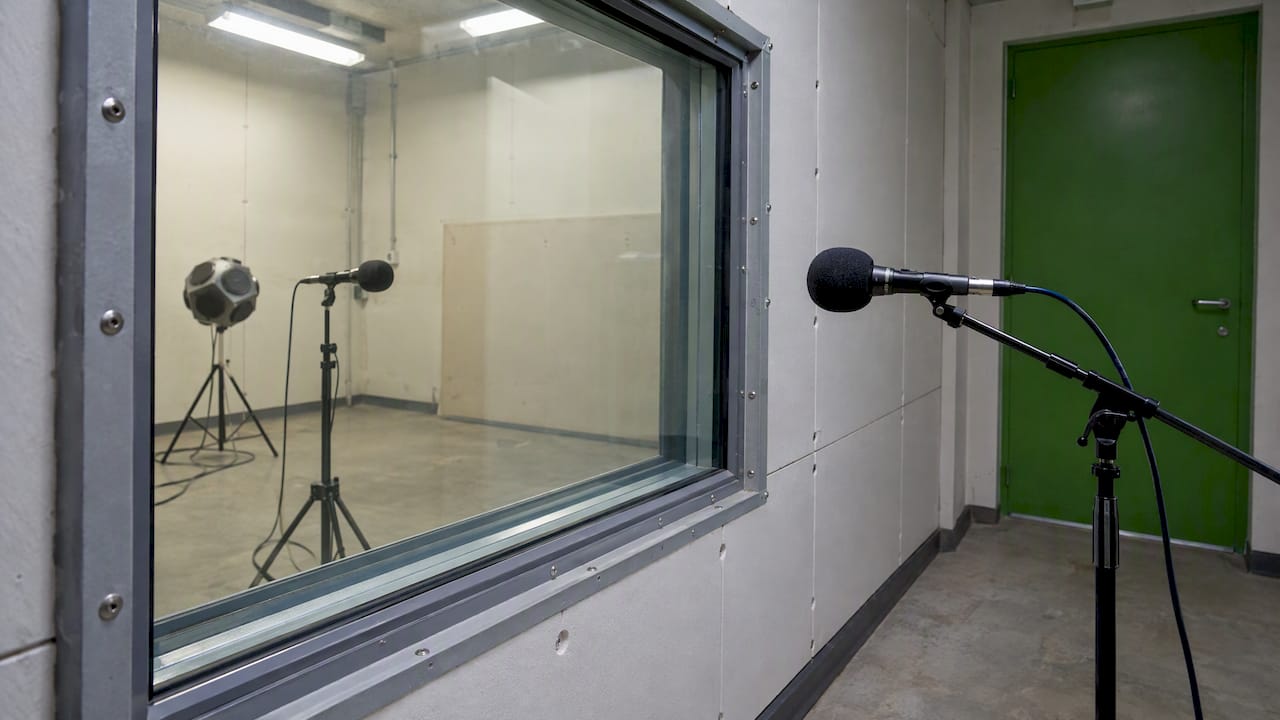
In a standard test, a glass sample is fitted in an acoustic test house and exposed to a range of frequencies. Microphones compare the sound on the source side with the receiving side, and the calibrated chamber measures the glass performance only. That is helpful for comparing products fairly, but it is not a promise about your living room.
Lab figure versus your window
Several things separate a laboratory number from what you hear in your home:
- The frame, seals and sash. Sound reduction depends on the glazing construction, window size, sash, frame and joint sealing. Acoustic performance refers to the complete component, including frames, locking systems, gaskets and wall connections, according to German flat glass industry guidance.
- Installation quality. A US manufacturer notes that a difference of 6 dB can appear between laboratory-tested glass and site-installed panels. That is a large loss in perceived reduction, and it is mostly down to gaps and fit.
- Other routes for noise. Air bricks, trickle vents, letterboxes, loft hatches and thin walls all let sound in. Even a very good window is limited by the weakest path.
- Interaction between parts. The German guidance points out that individual parameters do not always add up neatly, and that accurate values come from measurement, not from calculating glass weight.
Up to about 40 dB, the same source says the frame has a low impact and the glazing mainly drives the result. That is good news if your frames are sound but your glass is old. It is also why replacing glass alone can be effective, provided the seals and frames are in good condition.
This is where a workspace acoustics article is a helpful parallel: in offices too, noise control comes from the complete assembly, not one component.
What the decibel numbers mean in daily life
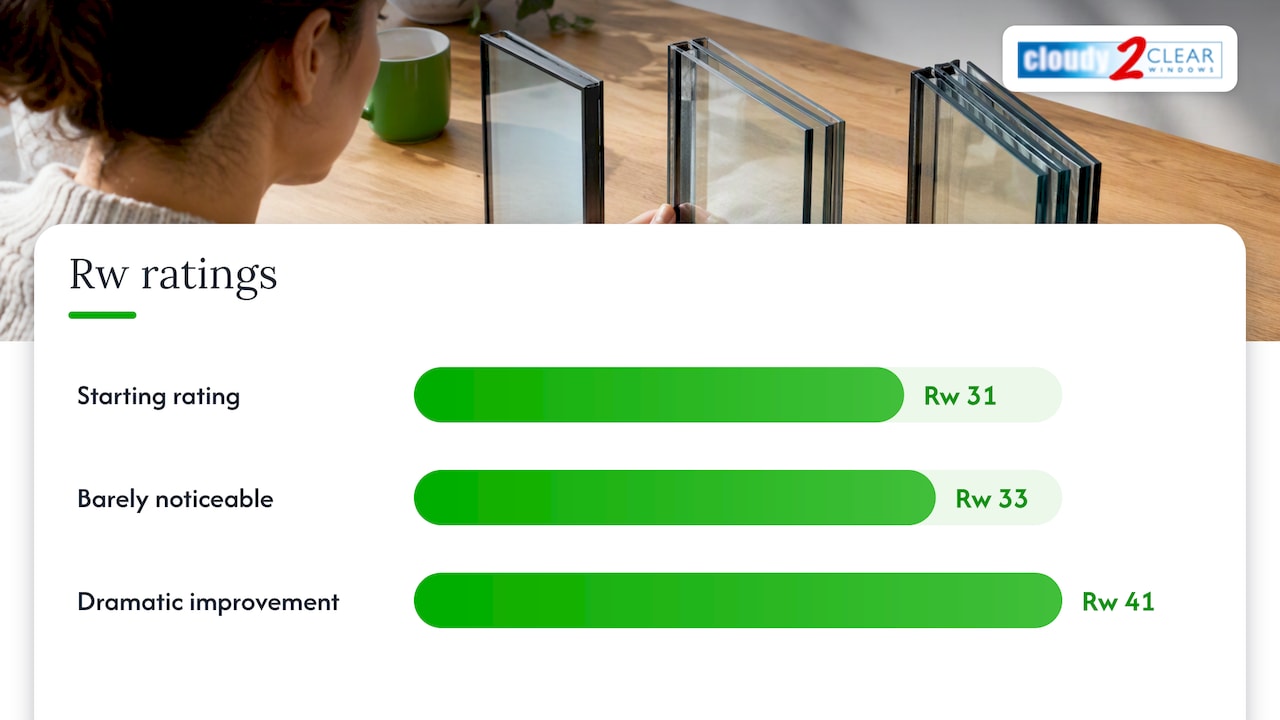
A 10 dB reduction is generally heard as roughly halving the loudness. That means going from Rw 31 to Rw 41 is a dramatic improvement, while going from 31 to 33 is barely noticeable.
You can estimate the result with simple subtraction. A double-glazed unit with an Rw of 30 would reduce a 60 dB external noise level to 30 dB immediately behind the glass, before any flanking sound through other routes is counted. The World Health Organization recommends a maximum of 30 dB in a sleeping area during sleeping hours, so bedrooms facing a busy road are the rooms where a higher rating pays off first.
A practical way to use this:
- Estimate the outdoor noise level at the window, in the loudest typical period.
- Decide the target indoors for the room, quieter for bedrooms, a little higher for living areas.
- Subtract to find the reduction you need, using Rw + Ctr for road traffic.
- Add a margin, because installation and other routes reduce the real result.
Which rooms need which glass
- Bedrooms on a main road: aim for the highest practical Rw + Ctr, with laminated acoustic glass in a sealed unit.
- Shopfronts and offices: speech privacy and street noise both matter, and laminated glass adds security too. Our piece on a shopfront acoustic glass upgrade shows how that works without a full refit.
- Conservatories and roof windows: large glazed areas make the glass choice decisive, and noise from rain or traffic is often more noticeable.
Our view on dB ratings
We see the same pattern on many surveys: the glass is the part that has failed or is underperforming, while the frame is still sound. In those cases, replacing only the glass is the quickest and least disruptive route to a quieter room, and it is how we work. We replace the glass units, not the whole window.
Our advice on ratings is simple. Ask which measure the number refers to, ask whether it is a lab figure for glass alone or for the whole window, and ask what the realistic result will be at your property. A reputable installer will answer all three. A rating without context is only a number.
We also like acoustic laminated glass because it brings noise reduction and added security in one unit. Our acoustic glass retrofit guide explains how to choose reversible glazing and check Rw claims before you commit.
How to check a supplier’s acoustic claims
Use this short checklist when a quote mentions a dB figure:
- Which measure? Rw, Rw + C or Rw + Ctr. For roads, ask for Ctr.
- Which test? Ask for the laboratory test report, and make sure it names the exact build-up: pane thicknesses, gap width and laminate type.
- Glass only or complete window? Both are legitimate, but they are not the same figure. Our own guide on checking Rw claims goes into more detail.
- Frame condition. Worn seals and warped sashes undermine any glass upgrade, so repair them at the same time.
If you are comparing the benefits more broadly, our overview of acoustic glazing and noise reduction walks through typical outcomes, and our article on reducing traffic noise through windows covers the extra steps that help on busy roads. Thickness also affects heat and security, which we cover in why glazing thickness matters.
Higher ratings have limits
Higher sound reduction requirements can limit window sizes and opening functions, as one manufacturer points out. For most homes, a balanced specification with a good rating, sound seals and professional fitting gives the best everyday result.
Quieter windows from Cloudy2Clear Windows
We have been installing, replacing and repairing double glazed windows for homes and businesses since 2005. Our soundproofing and noise reduction service focuses on the glass, so you get a quieter, clearer window without replacing the frame. That means less disruption and a faster job, and our work comes with a 25-year guarantee.
Take a look at our soundproofing and noise reduction service, or see our double glazing replacement page if your sealed units have already misted or failed. Our lines are open Monday to Friday, 8:30am to 6:30pm.
For commercial premises and housing associations, we also offer inspection and full replacement services, and our commercial window repair team can assess noise problems on shopfronts and offices.
FAQ
Is acoustic glass any good?
Yes, when it is specified and fitted well. Acoustic laminated glass has a damping interlayer that tackles the frequencies where plain glass performs worst. Its benefit is greatest when the frame and seals are in good condition and other noise routes are dealt with.
What type of glass is best for soundproofing?
Laminated acoustic glass in a sealed unit is the usual choice. For road noise, choose by the Rw + Ctr figure rather than Rw alone.
What is an STC rating for glass?
STC stands for Sound Transmission Class and is the US way of rating how well a building element blocks sound. It is similar in purpose to Rw but is not identical, so you should not convert it by hand. In the UK, ask for Rw, C and Ctr values from a test report.
Is glass good at soundproofing?
Ordinary single glass is not, and standard double glazing is only moderate. Laminated acoustic glass improves matters noticeably, but windows are still weaker than solid walls. The best results come from the complete window: glass, frame, seals and fitting.
Sources
- Determining the sound reduction performance of glazing, Saint-Gobain Glass UK
- Acoustic control windows: facts and advice, VELFAC
- Noise control FAQ, Pilkington
- Technical bulletin: glass acoustics, AGG
- Glass and acoustic insulation, Dualseal
- Sound insulation glass, Bundesverband Flachglas
- Glass acoustic performance, Guardian Glass