Most uPVC door lock problems come from the door, not the lock. A door that has dropped or shifted with the weather stops the bolts meeting the keeps in the frame, so the handle feels stiff or the key will not turn. A worn gearbox or a tired cylinder causes the rest. This guide shows you how to tell which fault you have, what is safe to check yourself and when it is time to call us.
If your door will not lock at all, skip to the section on securing it temporarily. If you want an expert to look at it, you can call Cloudy2Clear Windows 24 hours a day, 7 days a week to book a quote. Our operating hours are 8.30am to 6.30pm.
How a uPVC door lock works
Most modern uPVC doors use a multipoint lock. Lifting the handle drives a long strip up the edge of the door, and several bolts, hooks or rollers engage with keeps in the frame. Turning the key then throws the deadbolts. This is why one small fault can affect the whole door. A multipoint lock engages several bolt points into the frame when you operate the handle, and it is near-universal on modern uPVC openings.
There are four parts that tend to cause trouble:
- The door and hinges. If the door has dropped or shifted, the bolts no longer line up with the keeps.
- The keeps. These are the metal plates in the frame that receive the bolts. If they are out of line, the lock catches or jams.
- The gearbox. This is the central mechanism the handle connects to. It moves the multipoint strip.
- The cylinder. This is the part the key goes into. It operates a cam that throws the deadbolts.
Knowing which part is at fault saves time. It also means you only pay for the repair you need, rather than a whole new lock.
The most common uPVC door lock problems
The handle will not lift, or feels very stiff
This is the problem most people search for first. A uPVC handle that will not lift to lock is usually down to door misalignment, a worn locking mechanism, a dropped door or a fault with the handle. A stiff handle often means the bolts are pressing against the frame instead of sliding into the keeps.
The key turns but nothing happens
If the key turns freely and the bolts do not move, the cam or the gearbox has usually failed. The cylinder may be spinning without engaging the mechanism. This needs a proper repair and cannot be fixed by lubricating the lock.
The handle is floppy or spins
A floppy handle that does not spring back usually points to a worn handle spindle or a failed gearbox. Typical gearbox symptoms are a handle that is floppy or will not lift with the door open, or a handle that lifts while nothing moves on the multipoint strip. If the handle only feels loose on the door, our guide to fixing a loose uPVC door handle covers the causes.
The key will not go in or turns only part way
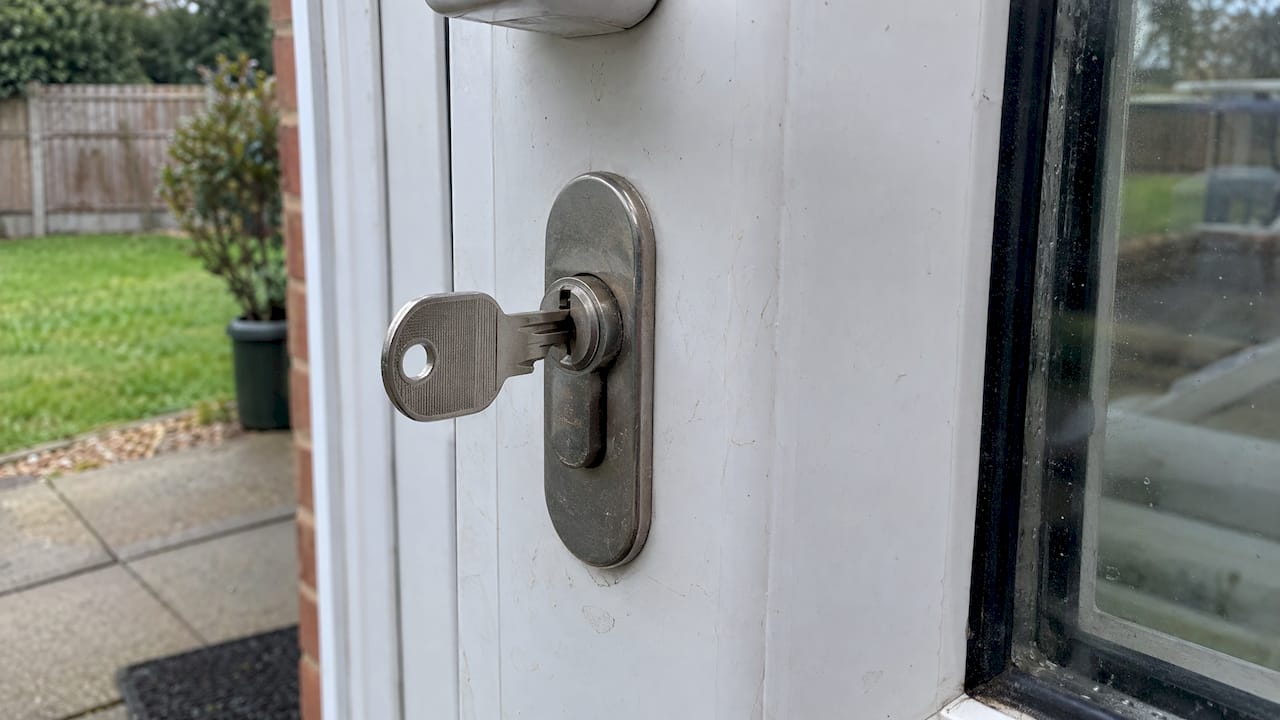
A key that will not insert fully, or sticks halfway, often means a worn, dirty or damaged cylinder. A bent or worn key can also be the cause, so try the spare key before you decide.
The door will not lock in hot weather
If your door locks fine in the morning and sticks in the afternoon sun, heat is a likely cause. A uPVC door that will not lock in hot weather is usually suffering from thermal expansion and misalignment rather than a failed lock. The daily pattern of sticking when hot and working when cool is the giveaway. Our article on why uPVC doors in UK homes stick explains the movement in more detail.
The door drops or catches on the frame
Over the years, hinges loosen and the door sags slightly. One UK guide, citing Master Locksmiths Association member surveys, reports that sagging doors account for over 60% of uPVC lock call-outs. If you can see a gap at the top corner on the lock side, or the door scrapes the threshold, read our guide to a dropped uPVC door. If the door will not close properly, uPVC door not closing is also worth a look.
A quick way to find the fault: the open-door test
This check takes a minute and tells you where to look. It needs no tools.
- Open the door and keep it open.
- Lift the handle and lower it again. Notice whether it moves smoothly and the bolts extend and retract.
- Turn the key with the door open, if your lock allows it, and watch the deadbolts.
- Close the door and try again.
Here is how to read the result.
| What you notice | What it usually means |
|---|---|
| Everything works with the door open but struggles when closed | Alignment between door, hinges and keeps |
| The handle is stiff or fails even with the door open | The handle or the locking mechanism |
| The handle works but the key fails | The cylinder or the cam |
| The key turns but the bolts do not move | A worn or stripped gearbox |
The open-door test is a practical first diagnostic: if the mechanism works normally with the door open, the fault is likely alignment rather than a failed lock. The Master Locksmiths Association recommends adjusting the hinges before replacing any lock part, which fits the same logic: fix the door position first.
Safe checks before you call anyone
You can do a few simple things without risk to the lock. Stop if any of them feels forced.
- Look at the keeps. With the door closed, check whether the bolts line up with the holes in the frame plates. Marks on the frame show where a bolt is hitting.
- Check the hinges. Look for loose screws or a door that has visibly dropped on one side.
- Clear the cylinder. Dust and grit can make a key stiff. A short spray of a suitable lock lubricant, not general-purpose oil, is the usual approach.
- Try the spare key. A worn key is a common and easily overlooked cause.
- Clear the frame. Check the bolt channels for debris, paint or anything in the way.
The most important rule is not to force it. Forcing a heat-bound door strains the multipoint gearbox, which is described as the component most likely to fail under that stress. A small alignment fault can then become a mechanical breakdown. If the door needs a hard shove to lock, leave it and call us.
When to call a professional
Some faults are beyond a quick adjustment. Call for help if:
- The door binds badly or does not sit squarely in the frame.
- The handle has become very heavy to lift.
- You can hear or feel the gearbox struggling.
- The lock is completely jammed and you cannot open the door to reach the fixing screws.
- The lock system is a complex multipoint one that needs specialist realignment.
This matches the guidance in advice on how to tell a DIY tweak from a professional job. Wickes advises calling a professional if a lock is jammed shut or a multipoint system needs specialist realignment.
Our team repairs and replaces locks, handles and hinges on uPVC doors and windows. See our locks, handles and hinges repairs page for what we cover.
Patio door lock problems
Patio doors share many faults with hinged uPVC doors, but they move differently. Sliding doors run on rollers along a track, and the lock is a hook or latch that catches a keep on the frame. Many patio doors also use a multipoint system on the handle side.
The usual causes are:
- Worn or dirty rollers. The door sits lower on the track, so the hook no longer meets its keep.
- Debris in the track. Grit stops the door from closing fully, so the lock cannot engage.
- A misaligned keep. The door has moved slightly and the hook misses the receiving plate.
- A worn handle or gearbox. The handle turns but the hooks do not move.
The same open-door logic applies. Slide the door to the closed position and see whether it reaches the frame squarely. Then check whether the handle operates smoothly while the door is away from the frame. If the door is heavy to slide or drops on its rollers, the rollers need attention before the lock does. Look after the track by clearing visible dirt, but leave roller and keep adjustments to a professional, since a heavy glazed door can be dangerous to lift.
If the glass on a door or patio panel is misted or cracked at the same time, we can replace the glass unit without changing the frame. Our double glazed door repairs page explains how this works.
Securing a uPVC or patio door when the lock will not engage
A door that will not lock is a security problem, so deal with it the same day. These steps are stopgaps until a repair is done.
- Try lifting the handle fully, then turning the key. On many multipoint locks the key only works if the handle is lifted first.
- Check for obvious obstructions. Look at the threshold, the keeps and the bolt channels.
- Use the door’s other fixings. If the door has a separate night latch, security bolts or a chain, use them.
- Add a temporary barrier on the inside. For a patio door, a bar or wedge in the track stops it being slid open from outside. Make sure it can be removed quickly, so nobody is trapped in an emergency.
- Do not leave the home empty with a door that will not lock. If possible, arrange a repair before you go out.
- Tell your insurer if the problem persists. Policies often have conditions about locks, so check yours.
If the door is jammed shut and you cannot open it, do not use force. Call us and describe what is happening.
Lock security standards worth knowing
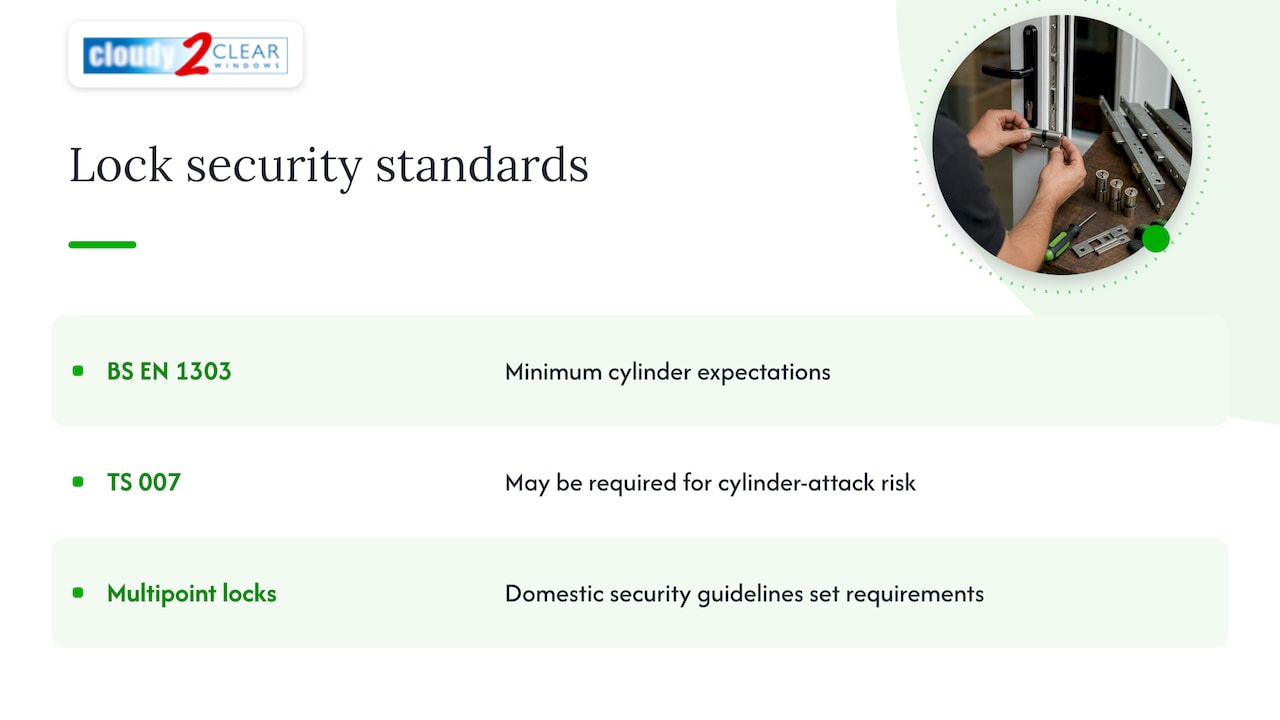
When a lock or cylinder is replaced, the quality of the new part matters. Master Locksmiths Association guidance sets minimum cylinder expectations under BS EN 1303 and notes that standards such as TS 007 may be required where doors are at risk of cylinder attack. The Association’s minimum security guidelines for domestic property also set requirements for multipoint locks. If you are replacing parts, ask which standards the new components meet.
Weak points are not only the lock. If your door has a glazed panel beside or within it, the glass is part of the security picture. Our article on door glass security with P1A laminated glass explains the option. Once the lock works properly, it also makes sense to look at other entry points around the home, as these home proofing tips for autumn show.
Our perspective
We see the same pattern again and again: a homeowner assumes the lock has failed, and the real cause is a door that has moved a few millimetres. That is why we start with the door position and the keeps before we recommend a new part.
When a lock part does need replacing, a proper repair is more sensible than living with a door that is hard to lock. A struggling mechanism gets worse, and the strain can spread to the handle and the frame.
Lock faults also show up alongside glazing faults. A door with a misted or cracked glass unit often has tired seals or hardware too. Because we replace only the glass and not the frame, we can deal with both in one visit where needed, with less disruption than a full door replacement. Our work is backed by a 25-year guarantee.
If you are unsure what is wrong, describe the symptoms to us. We would rather diagnose it properly than have you force a door that is already under strain.
Door lock repairs near you
We work across the UK through local branches, so the engineer who visits knows the area. Here are some of the places we cover:
- Double glazing repairs in Coventry
- Double glazing repairs in Milton Keynes
- Double glazing repairs in Stockport
- Double glazing repairs in Watford
- Double glazing repairs in Oxford
- Double glazing repairs in Norwich
If you manage a block, a housing association property or a business premises, the same applies. We also offer commercial window repair and inspection services for those sites.
Get your door locking properly again
Cloudy2Clear Windows has been installing, replacing and repairing double glazed windows and doors for homes and businesses since 2005. We repair the parts that have failed rather than replacing a whole door, which keeps the work quicker and less disruptive. You can call us 24 hours a day, 7 days a week to book a quote, and our operating hours are 8.30am to 6.30pm.
Start with our locks, handles and hinges repairs page, or visit the Cloudy2Clear Windows homepage to see everything we offer.
FAQ
Why is my door handle not locking?
The most common reason is that the door has dropped or moved, so the bolts no longer line up with the keeps. A worn gearbox or handle can also stop the handle from lifting. Try the open-door test: if the handle works freely with the door open, alignment is the likely cause.
What should I do if my uPVC door will not lock or open?
Do not force it, as that can break the gearbox. Check the keeps and hinges, try the spare key, and make sure the handle is fully lifted before turning the key. If the lock is jammed shut or the handle is heavy, call a professional.
How can I secure a uPVC door that will not lock?
Use any extra fixings the door has, such as a night latch or security bolts, and add a removable barrier inside. Avoid leaving the home empty until it is fixed. Arrange a repair as soon as you can.
Can a patio door lock be repaired without replacing the door?
In most cases, yes. Faults usually lie in the rollers, the keep, the handle or the lock mechanism, and these can be repaired or replaced individually. Our engineers can assess it on site.
What is the average lifespan of a door lock?
It depends on use, the quality of the lock and how well the door is aligned. A door that is out of line puts extra strain on the mechanism and can shorten its life. Regular checks on hinges and keeps help it last.
Sources
- Why your uPVC door won’t lock (common fixes), Axiom
- Why won’t my uPVC door lock? Alignment, hinge and gearbox, squote
- Door security hardware: PAS 24 and BS 3621 standards, squote
- Why your uPVC door won’t lock when it’s hot, Breaking AC News
- How to fix and replace door locks, Wickes
- Master Locksmiths Association handbook, 2015
- Guidelines for minimum security for domestic property, Master Locksmiths Association, 2025