Most people assume a cloudy window just needs a good clean. In reality, windows become cloudy primarily due to seal failure in double-glazed units, a problem no amount of scrubbing will fix. Whether you own a home or run a business, cloudy glass does more than look unsightly. It quietly drains warmth from your rooms, pushes up energy bills, and leaves a poor impression on anyone who walks through your door. In this guide, we will walk you through the real causes of window cloudiness, how to spot the signs early, and what your practical options are to restore full clarity.
What makes windows become cloudy: real causes explained
Now that you know cloudy windows are a deeper issue than grime, let us break down exactly why it happens.
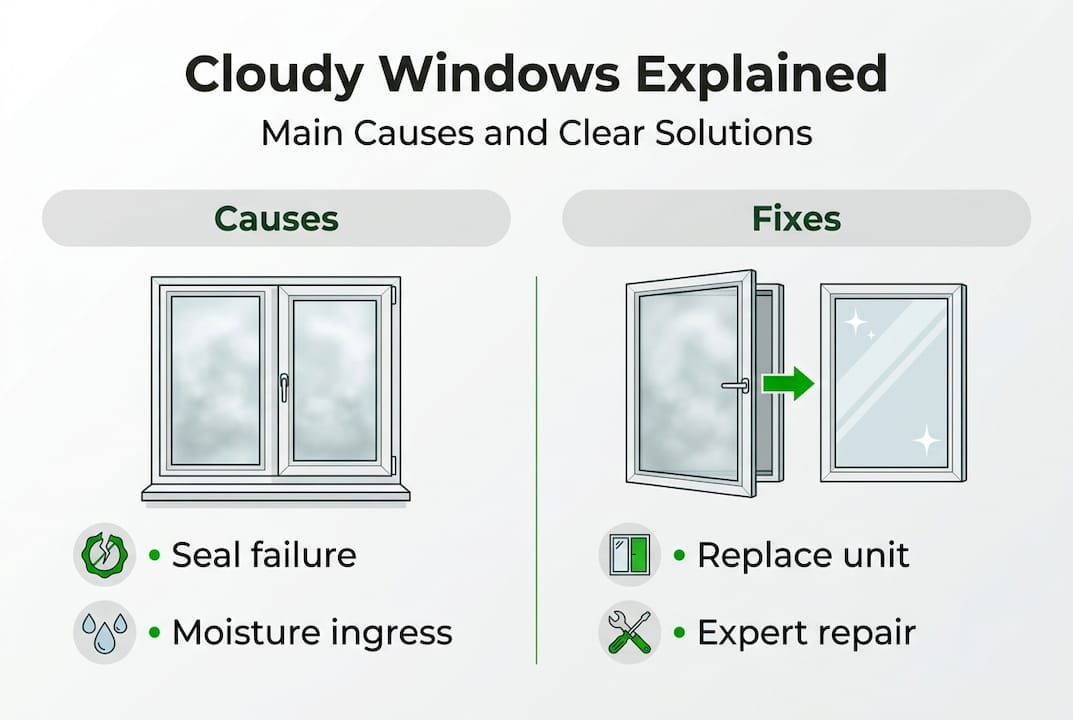
Double-glazed windows work by trapping a layer of inert gas, usually argon, between two panes of glass. This gas acts as insulation. A rubber or silicone seal around the edge of the unit keeps that gas in and moisture out. When that seal fails, the insulating gas escapes and humid air rushes in. As temperatures change throughout the day, that moisture condenses on the inner surfaces of the glass, creating the familiar foggy or milky appearance that no cloth can reach.
It is important to distinguish inter-pane cloudiness from surface condensation. Surface condensation appears on the outside of the glass on cold mornings or on the inside face during cold spells, and it clears on its own as temperatures rise. Inter-pane misting sits permanently between the two sheets of glass and cannot be wiped away. That is the tell-tale sign of a failed seal.
Here are the key signs to look out for:
- A persistent foggy or hazy appearance that does not clear throughout the day
- White or grey mineral deposits (limescale) forming on the inner glass surfaces
- Areas of the glass that appear darker or streaked, especially in corners
- Visible water droplets trapped between the panes after rain or temperature changes
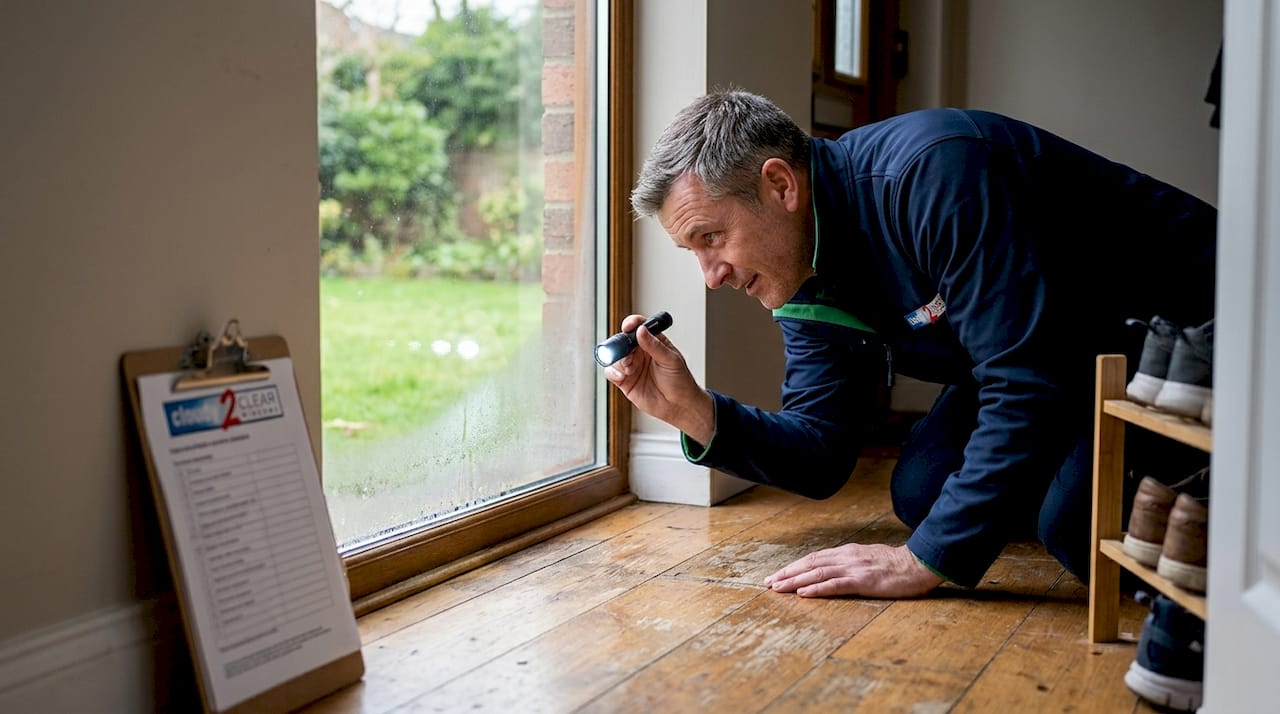
Pro Tip: Hold a torch against the glass at night and look for internal streaks or droplet patterns. If you can see marks that are clearly between the panes rather than on the surface, your seal has almost certainly failed. For professional assessment, our team handling window repairs in Gloucester can confirm the diagnosis quickly.
A failed window seal does not just look bad. It means the insulating barrier between you and the outside world is gone, and your heating system is working harder to compensate every single day.
Main factors causing cloudiness and early seal failure
Understanding the different technical causes, let us look at what makes some windows cloud up sooner than others.
Age is the most straightforward factor. Seal lifespan typically ranges from 10 to 25 years, but that figure drops significantly when windows face harsh conditions. In the UK, the combination of wet winters, frosty mornings, and periods of strong summer sun puts seals under constant stress. Each temperature cycle causes the frame and glass to expand and contract slightly, gradually weakening the bond between the seal and the unit.
Several specific factors accelerate this process:
- Sun exposure: South-facing windows absorb more heat, speeding up a process called solar pumping, where the gas inside the unit repeatedly expands and contracts, stressing the seal from within
- Frost and freeze-thaw cycles: Water that seeps into tiny frame gaps freezes, expands, and widens those gaps over time
- Coastal salt air: Salt particles carried on sea breezes corrode seals and frames faster than inland conditions
- Building movement: New builds in particular can settle unevenly in their first few years, placing unexpected stress on window frames and their seals
- Manufacturing defects: A poorly fitted or substandard seal at installation can fail years ahead of schedule
Coastal salt, manufacturing defects, and building movement all influence failure rates in ways that standard age estimates do not account for.
| Condition | Typical seal lifespan | Risk level |
|---|---|---|
| Inland, sheltered location | 20 to 25 years | Low |
| Urban or suburban setting | 15 to 20 years | Moderate |
| Coastal or exposed location | 10 to 15 years | High |
| South-facing, high sun exposure | 10 to 15 years | High |
| New build with movement issues | Variable, sometimes under 10 years | Very high |
If you live near the coast, our teams covering window repairs in Wigan and window repairs in Southport regularly see accelerated seal failure in properties exposed to North West weather and salt-laden air.
How cloudy windows affect your comfort and costs
So, after seeing what causes the problem, why does it actually matter if your window mist is left untreated?
The answer comes down to insulation. A healthy double-glazed unit traps gas between its panes, and that gas is a poor conductor of heat, which is exactly what you want. Once the seal fails and air replaces the gas, the window’s thermal performance collapses. Failed seals can cause up to 30% more heat loss through the affected unit, which translates directly into higher heating bills and colder rooms.
The technical measure here is the U-value, which rates how much heat passes through a material. A lower U-value means better insulation. A failed unit’s U-value rises noticeably, meaning your home or premises loses warmth far more quickly than it should.
| Window condition | Approximate U-value | Relative heat loss |
|---|---|---|
| Healthy double-glazed unit | 1.2 to 1.6 W/m²K | Baseline |
| Failed seal unit | 2.0 to 2.8 W/m²K | Up to 30% higher |
| Single glazing (for comparison) | 4.8 to 5.8 W/m²K | Significantly higher |
Beyond the numbers, there are real-world consequences:
- Rooms feel draughty even when there is no obvious gap
- Condensation on walls near windows, which can lead to damp and mould
- A visibly unkempt appearance that affects your home’s kerb appeal or your business’s professional image
- Reduced property value if multiple units are affected
Pro Tip: If you notice your heating cycling on more frequently in winter without any change in thermostat settings, failed window seals could be a contributing factor. Getting window repairs in Chesterfield or your local area assessed sooner rather than later can prevent months of unnecessarily high energy spend.
What you can do: diagnosing, fixing, and preventing cloudy windows
Now that the risks are clear, let us move from understanding to action and see how you can restore or protect your window clarity.
Step-by-step self-check to confirm internal cloudiness:
- Clean the outer surface of the glass thoroughly so you are not misled by dirt
- Check whether the haze clears at any point during the day or in different weather conditions
- Press a finger against the glass and look for any reaction in the misting pattern
- Use a torch at night to look for internal streaks, droplets, or mineral deposits
- Check the corners and edges of the unit for any visible cracking, discolouration, or deterioration of the seal
If the cloudiness persists through all of these checks and sits clearly between the panes, you have confirmed a seal failure.
Your options at that point:
- Repair: Some specialists offer a drilling and desiccant injection service to temporarily reduce moisture inside the unit. This can reduce the appearance of misting but does not restore the original insulation or seal integrity
- Replacement: Replacement restores full insulation and is the only option that genuinely resolves the problem at its root. A new sealed unit fitted into your existing frame is often more cost-effective than replacing the entire window
- Professional assessment: If you are unsure, a qualified glazier can confirm the cause and advise on the most suitable and cost-effective route
For ongoing prevention, keep these habits in mind:
- Ventilate rooms regularly to reduce internal condensation pressure on seals
- Avoid abrasive or chemical cleaners near window frames and seals
- Check frames annually for signs of cracking, warping, or seal deterioration
- Address any frame damage promptly before it compromises the sealed unit
Pro Tip: Many DIY fixes you will find online, such as drilling holes to let moisture escape, offer only a cosmetic improvement. They do not restore the gas fill or the insulating performance. Our teams for window repairs in Bristol and window repairs in Derby frequently see units that have been temporarily patched, only to worsen within months.
A fresh perspective: addressing cloudy windows smarter in the UK
With practical solutions in hand, let us look at why addressing window clarity the right way pays off in the long run.
After nearly two decades working across England and Scotland, we have seen one pattern repeat itself more than any other. Homeowners and business owners spot a cloudy window, search for the cheapest possible fix, and choose a short-term remedy that leaves the underlying problem completely untouched. Six months later, the misting is back, the energy bills are still climbing, and now they need a proper solution anyway, having already spent money on something that did not work.
The regions with the highest recurrence rates are almost always coastal or heavily exposed areas. Properties near the sea in places like window repairs in Nottingham and beyond show us that environmental stress on seals is relentless. A temporary patch in those conditions is not a strategy. It is a delay.
The smarter approach is accurate diagnosis first, then a proportionate response. If one unit has failed, replace that unit. If several are failing, it is worth considering whether a broader programme of replacement makes more financial sense. Prevention through proper ventilation, frame care, and timely action genuinely extends window life. Spending a little attention now is almost always cheaper than spending a lot on repeated fixes later.
Restore your window clarity with specialist help
If you are ready to reclaim your view and efficiency, here is how to connect with proven experts across England and Scotland.
At Cloudy2Clear Windows, we have been restoring clarity to homes and businesses since 2005. Whether you need a single misted unit replaced or a full assessment of your property’s glazing, our local teams are ready to help.

We offer double glazing replacement that fits into your existing frames, keeping costs down without compromising on performance. For business owners, our commercial window services cover everything from offices to retail premises across the UK. Local specialists, including our team for window repairs in Milton Keynes, are available for prompt assessments with work backed by our guarantee. Get in touch today and let us bring your windows back to their best.
Frequently asked questions
How can I tell if my window cloudiness is due to seal failure or just condensation?
If the mist sits between the panes and cannot be wiped away, it is almost certainly seal failure rather than surface condensation. Surface condensation clears on its own as the temperature rises.
Is it possible to repair a cloudy window without replacing the entire unit?
Some repairs can reduce the visible misting temporarily, but full clarity and insulation are only properly restored through complete unit replacement.
How long should double glazing or window seals last before cloudiness appears?
Window seals typically last 10 to 25 years, though harsh weather and coastal conditions can significantly shorten that lifespan.
Does a cloudy window really impact my energy bills?
Yes. Failed seals increase heat loss by up to 30%, which pushes up your heating costs and makes rooms feel colder than they should.