An acoustic glass upgrade means swapping the glass in your existing windows for laminated glass with a sound-damping layer, so traffic, voices and machinery are less audible indoors. In most cases the frame can stay. What matters is the glass build-up, the Rw + Ctr rating on the paperwork and an honest check of what kind of noise you are trying to block. This guide covers all three for homes, offices and shops across the UK.
What acoustic glass actually is
Acoustic glass is glass built to slow the passage of sound. The usual version is laminated: two sheets of glass bonded to a thin plastic interlayer, normally PVB. The interlayer decouples the panes and damps the vibrations that sound waves create, which a single sheet of ordinary glass cannot do.
Sound reduction in a window depends on several things working together: overall glass thickness, the relative thickness of each pane, the glass type, the cavity width and the gas fill. That is why a window can look substantial and still perform poorly.
Why thicker glass alone does not fix it
A common assumption is that thicker glass means a quieter room. Glass has a critical frequency, a resonance point where its insulation drops sharply. Acoustic laminated glass with a damping PVB interlayer is the dependable way to counter that dip and keep reduction more even across the frequency range.
A typical acoustic double glazed unit therefore combines:
- One laminated pane with a damping interlayer.
- A second pane of a different thickness, so the two do not resonate at the same pitch.
- A sealed cavity, which also keeps the thermal benefits of double glazing.
Acoustic glass, standard double glazing and triple glazing
These three are often confused. Standard double glazing reduces noise a little because of the air gap and the two panes. Triple glazing is chosen mainly for heat. Acoustic design guidance points out that triple glazing does not automatically beat good acoustic double glazing for sound, because acoustic performance relies on laminated glass and asymmetric panes, while thermal performance relies on cavity width and gas fills.
| Glazing type | Main strength | Sound performance |
|---|---|---|
| Standard double glazing | Heat retention, draught reduction | Modest improvement over single glazing |
| Triple glazing | Highest thermal performance | Not guaranteed to beat acoustic double glazing |
| Acoustic laminated double glazing | Noise reduction with good thermal performance | Designed specifically for sound |
If you are weighing heat against noise, our guide on whether triple glazing is right for you sets out the thermal side. Often the best answer is acoustic laminated glass in a unit that also has a low-emissivity coating and gas fill, so you do not have to choose.
Start with the noise you actually have
Before you specify anything, work out what you are hearing. Professional noise consultants advise establishing your baseline noise environment first. Ask yourself:
- Is the noise mostly high-frequency, such as voices, children playing or birdsong?
- Is it low-frequency, such as heavy lorries, buses, trains or plant machinery?
- Is it constant, or does it come in bursts at certain times of day?
- Which rooms are affected, and which side of the building do they face?
The answers decide which rating matters. Fixing severe low-frequency traffic noise with standard double glazing is a common point of failure, and it wastes the investment.
Reading the numbers: Rw and Rw + Ctr
Two ratings appear on acoustic glazing paperwork.
- Rw is the weighted sound reduction index, a baseline figure in decibels for general sound reduction.
- Ctr is a correction term for traffic-type noise. Combined as Rw + Ctr, the figure is a better indicator for roadside properties because it accounts for low-frequency noise.
Noise consultants working on UK planning applications routinely specify glazing in these terms. One example is a noise report that sets facade glazing performance using Rw + Ctr against BS 8233:2014 guideline values.
When you compare quotes, ask for the Rw + Ctr figure of the whole glazed unit, not just the pane. The sound performance of a unit depends on its complete build-up. We cover how to check performance claims in our guide to acoustic glass retrofit and Rw claims.
How to tell whether you already have acoustic glass
There is no simple visual mark that proves a unit is acoustic, because the damping happens inside the laminated interlayer. Documentation is the only reliable check: CE marking labels or the original manufacturer data sheet. A unit that looks thick or has several panes is not necessarily acoustic. If you have no paperwork, an installer can inspect the unit on site and tell you what is fitted.
Standards and building regulations
Several documents shape what is expected, and they differ by nation.
- England: Approved Document E covers resistance to the passage of sound. It focuses on sound between dwellings rather than external noise in existing private homes.
- Scotland: Section 5 of the building standards deals with noise in a similar way. Scottish Government guidance on improving sound insulation in existing attached dwellings is useful for flats and terraces.
- Across the UK: BS 8233:2014 is the code of practice for designing internal acoustic environments, including control of noise from outside. Planning conditions often point to it, so check whether yours does before you choose a rating. The dB figure you need to hit comes from that condition, not from a sales brochure.
If your upgrade is part of an extension or conversion, a measured building survey gives you accurate drawings of existing openings, which helps when glazing specifications are submitted alongside plans.
Our own guide to building regulations for windows covers the thermal side of compliance, which applies when whole windows are replaced.
Glass-only upgrade or full window replacement
Many people assume that quieter windows means new frames. Often it does not. If your frames are sound, the glass can be replaced on its own. Compared with a full replacement, a glass-only upgrade usually means:
- Less disruption, because the frame, trims and plaster stay in place.
- A faster installation, since there is less to remove and make good.
- Less waste, since sound frames are kept.
There is a limit, and we will tell you when we reach it. Acoustic glass cannot compensate for gaps. If a frame is warped, its seals have failed or the opening vents leak air, sound will travel through those routes and the glass upgrade will underperform. In those cases we will say so and look at the frame, the seals or a full replacement instead.
Our acoustic glass retrofit guide explains why reversible glazing choices are worth considering. For older properties, secondary glazing is another route, and Historic England guidance covers where it suits.
Where an acoustic upgrade makes sense
Homes on busy roads
Front bedrooms and living rooms facing a main road gain most. Our piece on reducing traffic noise through windows goes into what works and what does not, and our overview of double glazing against outside noise is a good place to start.
Offices and meeting rooms
For office noise reduction, glass is often the weakest point of the facade. Street noise reaches desks and calls through ordinary glazing, and in glazed internal partitions speech carries between rooms. Upgrading the external glass cuts street noise; for privacy between rooms the partition glazing matters too. Because the work is glass-only, it can usually be planned around working hours with limited interruption to staff.
Shops and hospitality
Retail units have large glazed fronts that let in a lot of noise. See our guide to a shopfront acoustic glass upgrade without a full refit.
Flats and housing association properties
In multi-occupancy buildings, noise complaints can cause real distress. Scottish Government guidance notes that sound transmission can lead to frustration, anger and stress for occupants. Where the noise comes from outside, such as a main road, railway or commercial neighbour, upgraded glazing is a practical, contained fix. Housing associations can also use our inspection service to survey a block’s glazing before deciding which units need work.
Our view: what we have learned about acoustic upgrades
At Cloudy2Clear Windows we have repaired and replaced double glazing for homes and businesses since 2005, and the same lessons come up again and again.
First, the cheapest mistake to avoid is guessing. Customers often tell us their glazing is “thick” and so must be acoustic. Without documentation, you cannot know. We would rather check the unit and the frame than sell glass you do not need.
Second, match the glass to the noise. A road, a railway and a noisy neighbour are different problems, and the rating that matters differs with each.
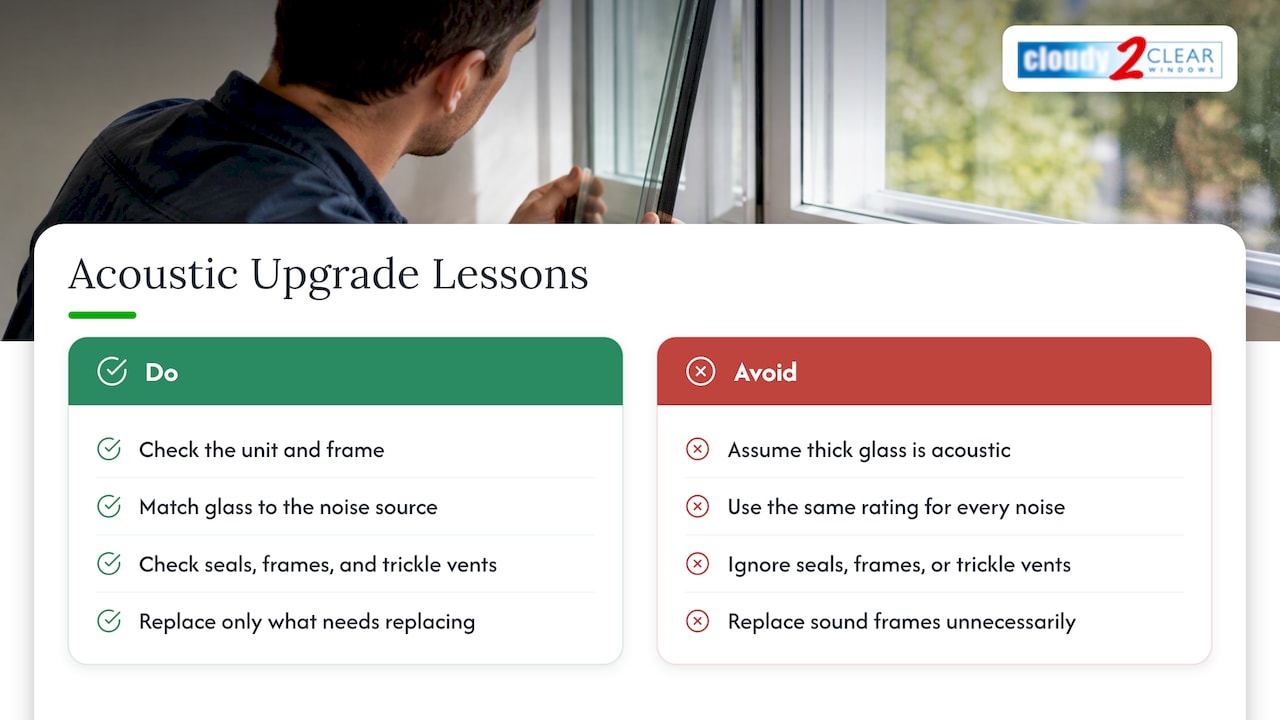
Third, glass is only part of the system. Seals, frames and trickle vents decide whether the upgrade delivers what the data sheet promises.
Fourth, replace only what has to be replaced. Because we replace the glass rather than the whole window, there is less mess, less time on site and fewer materials thrown away. We also offer a 25-year guarantee, and insulated glass options that improve energy efficiency as well as sound.
A sensible order of work
- Identify the noise. Note the source, the time of day and the affected rooms.
- Check what you have. Look for manufacturer documents or CE labels, or ask us to inspect the units.
- Check the frames and seals. Fix failed seals, loose beading or warped frames first.
- Set a target. If a planning condition or BS 8233:2014 applies, take the required figure from it.
- Specify the glass. Ask for laminated acoustic glass with the Rw + Ctr value stated for the full unit.
- Review ventilation. Closed windows block more noise, so make sure rooms still have a way to ventilate.
- Install and test. Check the result in the room that bothered you most.
Talk to Cloudy2Clear Windows
If you are considering an acoustic upgrade, our double glazing for sound proofing service replaces the glass in your existing frames with noise-reducing units. For failed units, see double glazing replacement, and for business premises our commercial window repair and inspection service cover offices, shops and housing blocks. We work with customers in England and Scotland, and our lines are open Monday to Friday, 8:30am to 6:30pm. Start from our home page to get in touch.
Frequently asked questions
Can you soundproof glass?
You cannot make glass completely soundproof, but you can reduce how much sound passes through it. Laminated acoustic glass in a sealed double glazed unit, with good seals and frames, cuts a significant amount of noise. The result depends on the type of noise and the condition of the whole window.
What is the difference between triple glazing and acoustic glass?
Triple glazing adds a third pane mainly to improve heat retention. Acoustic glass uses laminated panes with a damping interlayer, often of different thicknesses, to reduce sound. A well-specified acoustic double glazed unit can outperform a standard triple glazed one for noise.
How do I tell if I have acoustic glass?
There is no reliable visual sign, because the damping layer is inside the laminated pane. Check the CE label or the manufacturer’s data sheet for the Rw rating. If you do not have either, an installer can inspect the unit and confirm what is fitted.
Do I need new frames for an acoustic glass upgrade?
Not usually. If the frames are sound and the seals are in good order, the glass can be replaced on its own. If the frame is warped or leaking air, it will limit the benefit, so we check it first.
Sources
- Saint-Gobain Glass: factors influencing glazing performance
- BSI: glazing and airborne sound insulation
- Historic England secondary glazing guidance summary
- Planning noise assessment document
- Rw + Ctr and CE marking overview
- Noise report using BS 8233:2014 (Cherwell planning register)
- Approved Document E: resistance to sound (GOV.UK)
- Scottish Government: housing and sound insulation
- BS 8233:2014 guidance on sound insulation