Double glazed windows are one of the best investments you can make in your home, but knowing how to clean double glazing properly is a skill most people never fully develop. The result? Streaky glass, grimy frames, and the creeping suspicion that the view through your windows should look better than it does. Whether you are dealing with stubborn external dirt, condensation sitting between the panes, or frames that have seen better days, this guide walks you through the right techniques, the right materials, and how to spot when a problem goes beyond what a cloth and a bucket can fix.
What you need before you start cleaning
Getting the right materials together before you begin makes the difference between a clean window and a smeared one. Many people reach for whatever is under the sink, and that is where things go wrong.
Here is what you actually need:
- Microfibre cloths (at least two: one for applying solution, one for buffing dry). Microfibre cloths trap dirt and moisture without leaving lint or scratches, which paper towels simply cannot match.
- A squeegee with a clean, unscratched rubber blade.
- A spray bottle for applying solution in a controlled, even mist.
- A soft-bristled brush or vacuum with a narrow attachment for frames and tracks.
- Distilled water or cooled boiled water, which avoids the mineral deposits that tap water leaves behind.
- White vinegar (diluted: one part vinegar to four parts water) or a small amount of mild washing-up liquid in water.
What you should avoid is just as important. Ammonia-based products can damage tinted glass or window films over time, causing discolouration. Abrasive pads and scourers will scratch glass permanently. And whilst vinegar is useful, using too much or failing to rinse it off properly can leave a residue that actually attracts more dust.
Pro Tip: If you want to remove dirt from double glazing without any risk of residue, distilled water alone is often enough for light soiling and is the safest option for rubber seals around the glass.
Professional window cleaners take this even further. Pure water fed-pole systems use water filtered to remove all dissolved solids, leaving no mineral residue whatsoever. It is an option worth knowing about if your windows are particularly large or difficult to reach.
How to clean double glazing step by step
Cleaning a standard double-glazed window takes around 20 to 30 minutes when done properly. Rushing it is the main reason people end up with streaks.
Timing matters more than most people realise. Cleaning in direct sunlight causes your solution to evaporate before you can wipe it away, leaving streaks baked onto the glass. Early morning or overcast conditions give you the working time you need. This single change will improve your results immediately.
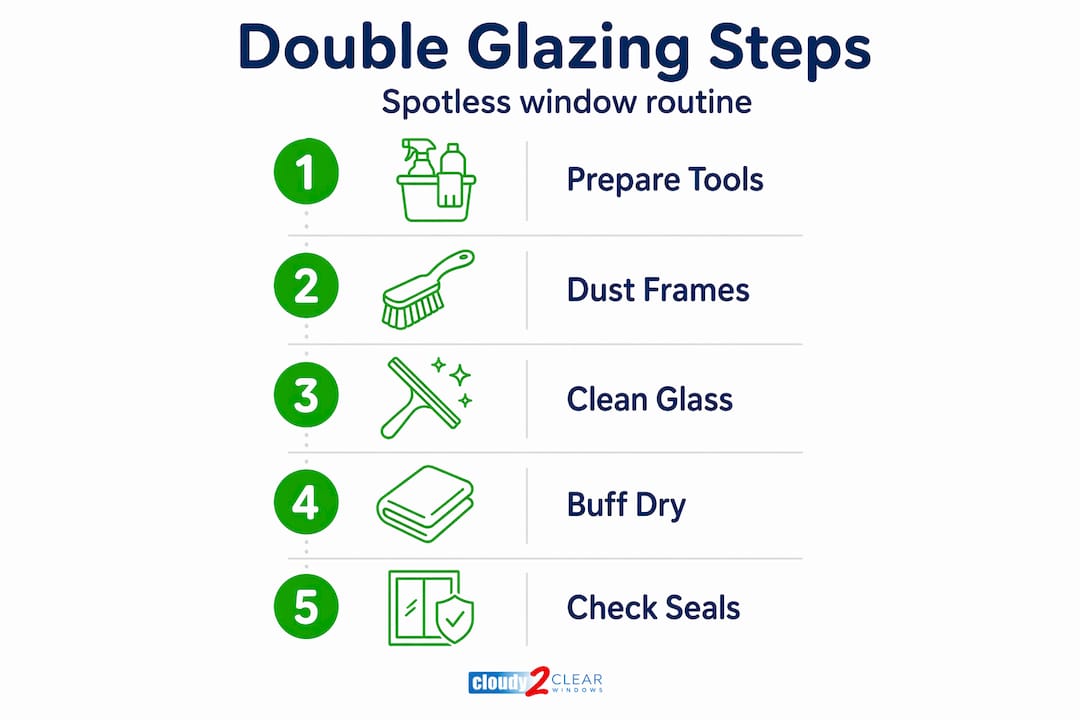
Follow these steps for both interior and exterior glass surfaces:
- Vacuum the frames and tracks first. Before you touch the glass, remove loose dust and debris from the surrounding frame and track with a soft brush or vacuum attachment. If you skip this, dirt will transfer back onto the glass the moment you open or close the window.
- Lightly mist the glass with your cleaning solution. Do not saturate the glass. A light, even spray is enough. Too much liquid runs into the frame seals and can cause long-term problems.
- Wipe with a microfibre cloth in straight horizontal strokes from top to bottom to lift the initial layer of dirt.
- Apply a second light mist and use your squeegee in an overlapping S-pattern, working from top to bottom. Wipe the squeegee blade with a clean cloth after each stroke.
- Buff the glass dry with a clean, dry microfibre cloth, paying attention to the edges where solution tends to pool.
- Check from an angle in natural light to catch any remaining streaks before they dry.
Pro Tip: For interior glass, a dry microfibre buff at the very end, using circular motions on any stubborn spots, will clear the last traces of streakiness without adding more liquid.
For upper-floor windows, many double-hung windows allow the sashes to tilt inward so you can clean the exterior glass safely from inside the room. Check whether your windows have this feature before considering ladders. If they do, press the tilt latch and bring the sash gently inward to access the outer surface.
These double glazing cleaning steps are worth bookmarking for your regular cleaning routine.
How to clean window frames and tracks
Glass cleaning alone is not the best way to clean double glazing. Your frames and tracks do as much work visually and functionally, and neglecting them means dirt migrates back onto the glass almost immediately. If tracks and frames are not cleaned first, dirt gets redeposited onto glass during opening and closing, undoing your efforts quickly.
Different frame materials need slightly different approaches:
- uPVC frames respond well to a solution of warm water and a small amount of washing-up liquid. Wipe with a soft cloth and rinse with clean water. Do not use cream cleaners or solvent-based products, as these cause surface dulling over time.
- Timber frames need more care. Use a damp cloth rather than a wet one, and dry the frame promptly to prevent moisture from working into the wood grain. Inspect the paintwork or stain at the same time, as bare patches on timber frames are entry points for damp.
- Aluminium frames are the most straightforward. Warm soapy water works well, and a dry buff at the end prevents water spotting.
For all frame types, the rubber seals around the glass deserve attention. Wipe them gently with a damp cloth to remove grime, and inspect them closely for cracking or hardening. A compromised seal is the first stage of a failing unit, and catching it early matters. For more on keeping your windows performing well over time, Cloudy2Clear Windows has guidance on maintaining double-glazed windows that goes further than cleaning alone.
When cleaning is not the answer
This is where homeowners most commonly get caught out. You clean the glass thoroughly, but the cloudiness or misting remains. That is because it is not on the surface at all.
Seal failure causes condensation and trapped dirt between the two panes of glass inside the sealed unit. No cloth, no spray, and no amount of scrubbing will reach it. The sealed unit is precisely that: sealed. The space between the panes contains an inert gas (typically argon) that provides the insulating effect, and once the seal fails, that gas escapes and moisture enters.
Here is a quick reference to help you identify what you are dealing with:
| What you see | Likely cause | What to do |
|---|---|---|
| Streaks on surface | Cleaning residue or technique | Re-clean with correct method |
| Dirt on glass surface | External soiling | Clean with steps above |
| Misting between panes | Seal failure | Professional assessment needed |
| Permanent cloudiness inside panes | Mineral or moisture deposit between glass | Unit repair or replacement |
| Condensation on inside surface | Poor ventilation in room | Improve room ventilation |
Some homeowners attempt to drill small holes into the sealed unit to dry it out or clean inside. This does not work and causes irreversible damage to the unit. The only genuine solutions to internal condensation are professional resealing, glass unit replacement, or full window replacement depending on the extent of the damage.
If you suspect seal failure, the right move is to get a professional assessment. Cloudy2Clear Windows has been diagnosing and repairing double glazing since 2005, and in many cases a unit replacement is far more affordable than a full window replacement. You can read more about realistic double glazing care tips to help extend the life of your units between professional checks.
Our take: technique beats products every time
Over the years, I have seen homeowners spend good money on specialist window cleaning sprays, only to get worse results than a bucket of diluted washing-up liquid and a proper squeegee technique. The routine maintenance with simple solutions consistently outperforms expensive chemical cleaners when the technique is sound.
The most common mistake I see is cleaning in the wrong conditions. People tackle windows on a sunny Saturday afternoon, and the solution dries faster than they can work. The resulting streaks look worse than the original dirt, and the instinct is to blame the product. Change the timing and the same cheap solution produces brilliant results.
The other misconception worth addressing is the idea that you can clean “inside” double glazing at home. I understand why people search for it. When you see misting or grime between the panes, the urge to fix it yourself is strong. But the physics of a sealed unit make DIY intervention impossible without causing further damage. Recognising that distinction early saves a lot of wasted effort and frustration.
My honest advice: build a simple cleaning routine every four to six weeks, use the right cloths and a squeegee, and do it on an overcast morning. You will be surprised how much better your windows look year-round. And when the problem is between the panes rather than on them, call someone who can actually fix it.
— Cloudy2Clear
Need professional help with your double glazing?
Even the best cleaning routine has limits. If you are dealing with persistent misting, failed seals, or damage that goes beyond surface dirt, Cloudy2Clear Windows can help.

Since 2005, Cloudy2Clear Windows has been repairing and replacing double glazed units for homeowners and property managers across the UK. Rather than replacing entire windows unnecessarily, the team identifies whether a unit repair is possible, which is typically faster and more cost-effective. Cloudy2Clear Windows serves a wide range of areas, including Oxford double glazing repairs, Milton Keynes, Watford, and Leicester. Commercial property managers are also welcome. If your windows need attention beyond a clean, get in touch with the team for an assessment.
Frequently asked questions
What is the best way to clean double glazing without streaks?
Clean on an overcast day or in the early morning to prevent solution from drying too fast. Use a squeegee in an overlapping S-pattern, then buff dry with a clean microfibre cloth.
Can I clean inside double glazed units at home?
No. The space between double glazed panes is sealed. Misting or dirt inside the unit is caused by seal failure and requires professional repair or unit replacement.
How often should I clean double glazed windows?
Every four to six weeks is a good general routine for most UK homes. Frames and tracks benefit from a light clean at the same time to prevent dirt transferring back onto the glass.
What should I avoid when cleaning uPVC window frames?
Avoid cream cleaners, solvent-based products, and abrasive pads. These dull and scratch the uPVC surface. Warm soapy water and a soft cloth are sufficient for routine cleaning.
How do I know if my double glazing needs repairing rather than cleaning?
If you see misting, cloudiness, or dirt sitting between the two panes of glass rather than on the surface, that is a sign of seal failure. Cleaning will not resolve it; a professional assessment is needed.