Your windows are doing more work than you probably realise. They shape how tenants, clients, and passers-by perceive your building, directly influencing lease rates and occupancy. Yet for many commercial property owners, windows sit at the bottom of the maintenance list until something goes visibly wrong. These practical commercial property window tips will help you stay ahead of compliance requirements, reduce long-term repair costs, and make your building genuinely more attractive to the tenants who matter.
1. Understand your compliance obligations first
Before you clean, upgrade, or replace a single pane, you need to know where you stand legally. UK Building Regulations require safety glazing in critical locations, including low-level glazing below 800mm from floor level and panels within 300mm of a door. These zones mandate BS EN 12600 Class 1 or Class 2 glass as a minimum.
Many property managers confuse toughened and laminated glass, assuming they are interchangeable. They are not. Toughened glass shatters into small granules on impact, while laminated glass holds together thanks to an interlayer. Each has its correct application depending on location and risk. Misunderstanding these differences leads to non-compliance and potential liability.
Two other compliance points that often get overlooked:
- Critical location mapping. Before ordering replacement glass during any refurbishment, audit every window and door surround against Part K and Part N thresholds. Ordering standard glass for a critical location is a costly mistake.
- Manifestation requirements. Large glazed areas in commercial buildings must have manifestation marks at 850–1000mm and 1400–1600mm above floor level to prevent people walking into them. The marks must meet minimum size and contrast standards.
Pro Tip: Commission a glazing compliance audit before any refurbishment project, not during it. Identifying critical locations in advance saves both money and programme time.
2. Set up a planned commercial window cleaning schedule
Reactive cleaning, waiting until windows look dirty before doing anything, costs you more in the long run. Scheduled cleaning reduces chemical and sealant damage by preventing long-term dirt bonding, and predictive maintenance programmes can deliver up to 40% cost savings compared to reactive approaches.
For upper-floor windows, the method matters enormously. Here is what a sound cleaning programme looks like:
- Assess access requirements. Determine which floors require water-fed pole equipment and which can be safely cleaned at ground level.
- Schedule by season. Ground-floor retail and office windows typically need cleaning every four to six weeks. Upper floors may be quarterly, depending on location and pollution levels.
- Use purified water systems. Water-fed pole cleaning from ground level eliminates ladder risks and delivers a streak-free finish by removing minerals that cause residue.
- Avoid harsh chemicals. Abrasive cleaners and strong solvents degrade frame finishes and can void manufacturers’ warranties. Use non-abrasive, pH-neutral solutions.
- Document each visit. A cleaning log creates accountability and provides a paper trail that supports insurance claims if water ingress or damage is later disputed.
Pro Tip: Ask your cleaning contractor to report any visible defects, cracked seals, or drainage issues during each visit. The real saving comes from spotting defects early before they turn into water ingress or mould problems.
3. Build routine inspections into your maintenance budget
Cleaning keeps windows looking good. Inspection keeps them functioning correctly. The two are not the same, and confusing them is one of the most common mistakes commercial property managers make.
Annual inspections should cover:
- Seals and gaskets. Sealant failure is a leading cause of water ingress in commercial buildings. Check for shrinkage, cracking, or adhesion loss around every frame perimeter.
- Drainage channels. Blocked drainage allows water to pool at the sill and forces its way into the structure. Clear channels take minutes to inspect but prevent expensive envelope repairs.
- Frame condition. Look for micro-fractures, paint or powder-coat failure, and any signs of corrosion on metal frames.
- Glass integrity. Edge chips and hairline cracks in the glass unit can develop over time and compromise thermal and structural performance.
Preventative re-caulking should be treated as a budgeted line item, not an emergency expense. Early detection of seal failures and drainage blockages reduces mould risk and avoids the kind of structural water damage that runs into thousands of pounds to fix. Pair your inspection schedule with your cleaning visits where possible, since a contractor already on site can triage visible issues at no extra mobilisation cost.
For selecting inspection contractors, look for those with experience in commercial glazing specifically. Domestic window companies and commercial glazing specialists operate in quite different territory. Cloudy2Clear Windows, for example, has been working across the commercial sector since 2005 and understands the compliance and performance requirements that come with it.
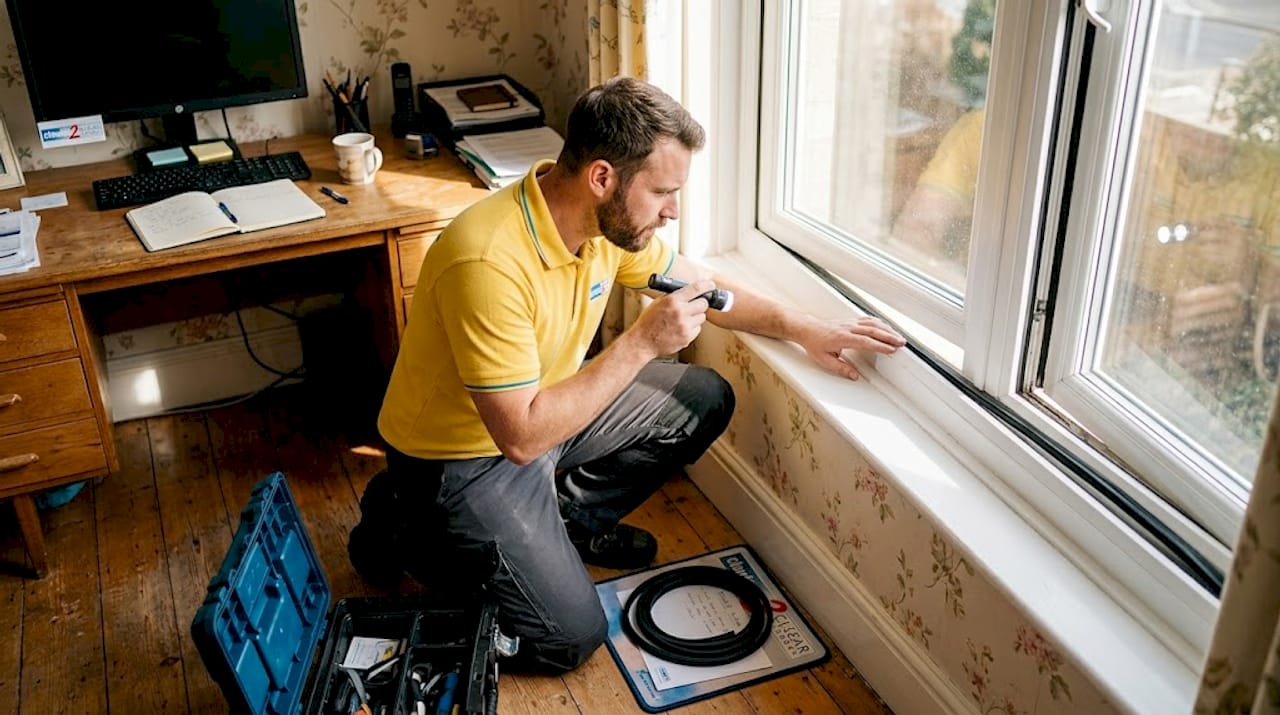
4. Upgrade glazing to improve energy efficiency and tenant appeal
Modern glazing technology offers genuine returns for commercial landlords, and it does not always require a full window replacement to benefit. The options worth knowing about fall into two categories: upgrades to the glass unit itself, and upgrades to the frame.
| Upgrade type | What it does | Best suited for |
|---|---|---|
| Low-emissivity (low-e) coating | Reflects heat back into the building in winter, reducing heating bills | Offices and retail units with high glazing ratios |
| Inert gas fill (argon or krypton) | Improves thermal insulation between panes | Any double or triple glazed unit due for replacement |
| Thermally broken frames | Breaks the conductive path through metal frames, preventing heat loss | Aluminium-framed commercial buildings |
| Window film | Reduces glare, adds privacy or branding, improves shatter resistance | Offices, retail fronts, reception areas |
| Anti-shatter security film | Holds glass together on impact without full replacement | Ground-floor or high-risk glazed areas |
Thermally broken frames are particularly important in aluminium-framed buildings. Without a thermal break, the aluminium itself conducts cold directly through the frame, undermining even the best glass specification. This is a detail that catches many property owners off guard.
Pristine, energy-efficient facades with advanced glazing command higher lease rates and attract quality tenants. Window film, in particular, offers a cost-effective way to refresh a building’s appearance and add functionality without the disruption of a full glazing replacement. You can explore the benefits of commercial glazing in more detail to understand which upgrades give the best return for your building type.
5. Compare your maintenance and upgrade options
Not every commercial property has the same needs or budget. The table below gives you a practical overview of the main approaches, so you can prioritise where your spend goes.
| Approach | Typical cost | Compliance impact | Lifespan benefit | Best for |
|---|---|---|---|---|
| Planned cleaning programme | Low (ongoing) | Maintains existing compliance | Extends seal and frame life | All property types |
| Annual inspection and re-caulking | Low to medium | Identifies non-compliance early | Prevents costly repairs | All property types |
| Window film application | Medium (one-off) | Can improve manifestation compliance | 10+ years with care | Retail, offices |
| Double glazed unit replacement | Medium to high | Full compliance opportunity | 20+ years | Units with failed seals or old glass |
| Full window replacement with upgrades | High | Full compliance achieved | 25+ years | Ageing or non-compliant buildings |
A few points worth highlighting from this comparison:
- Window film is often the most overlooked low-cost win. It improves aesthetics, adds privacy or branding, and can help meet manifestation requirements simultaneously.
- Phased upgrades, replacing windows floor by floor or zone by zone, spread capital expenditure while delivering compliance and performance improvements progressively.
- Regular professional cleaning protects manufacturers’ warranties and preserves curb appeal year-round, making it one of the highest-return ongoing investments you can make.
For a more detailed look at commercial window maintenance strategies, including how to structure a full maintenance plan, the Cloudy2Clear Windows resource covers the practical steps in depth.
Our perspective on commercial window maintenance
In my experience working with commercial properties across the UK, the most common mistake is treating window maintenance as a reactive task. A frame looks tired, a seal fails, a tenant complains about condensation, and then work gets commissioned. By that point, the cost is always higher than it needed to be.
What I have seen work consistently well is integrating cleaning and inspection into a single scheduled programme. When the same contractor cleans and inspects, small issues get flagged before they become expensive. It sounds straightforward, but the majority of commercial landlords I encounter still separate the two entirely.
I would also challenge the assumption that full window replacement is the only way to meaningfully improve a building’s performance or appearance. Window films, re-caulking, and unit-level replacements, where just the sealed glass unit is swapped rather than the entire frame, can deliver significant gains at a fraction of the cost. The key is understanding why window seals matter and addressing them before they fail completely.
My advice on contractors: ask specifically about their commercial glazing experience and their familiarity with Part K and Part N. A contractor who cannot speak fluently about critical locations and BS EN classifications is not the right choice for a commercial property, regardless of how competitive their price is.
— Cloudy2Clear Windows
How Cloudy2Clear Windows can help with your commercial glazing
Whether you manage a single commercial unit or a portfolio of properties, getting the right support makes the difference between proactive, cost-controlled maintenance and expensive reactive repairs.

Cloudy2Clear Windows has been working with commercial property owners across the UK since 2005, offering expert commercial window repair and replacement services that cover everything from compliance assessments to full glazing upgrades. If you have failed sealed units, ageing frames, or glazing that no longer meets current regulations, the team can advise on the most cost-effective route forward. For properties requiring full unit renewal, the double glazing replacement service covers both compliance and performance in a single installation. Get in touch to discuss a maintenance plan tailored to your property.
FAQ
What are the key legal requirements for commercial window glazing in the UK?
UK Building Regulations require safety glass in critical locations, including low-level glazing below 800mm and panels near doors, using BS EN 12600 Class 1 or 2 glass. Large glazed areas also require manifestation marks at specified heights to prevent accidents.
How often should commercial windows be professionally cleaned?
Ground-floor commercial windows typically need cleaning every four to six weeks, while upper floors may require quarterly visits. Planned cleaning schedules extend window lifespan and protect sealant integrity more effectively than reactive cleaning.
What is the most cost-effective upgrade for commercial windows?
Window film is one of the most cost-effective upgrades, improving aesthetics, adding glare control or privacy, and contributing to manifestation compliance, all without requiring full glazing replacement.
How do I know if my commercial window seals need replacing?
Visible condensation between panes, water staining on frames, or draughts near closed windows are clear signs of seal failure. Annual inspections with preventative re-caulking are the most reliable way to catch seal deterioration before it causes water ingress.
What is a thermally broken frame and why does it matter?
A thermally broken frame includes a non-conductive barrier within the frame profile to prevent heat transfer. In aluminium-framed commercial buildings, frames without this break act as thermal bridges, significantly undermining the energy performance of even high-specification glazing.