A window survey is a formal assessment that captures precise measurements and condition details of your window openings and existing frames. It forms the foundation for any successful repair, replacement, or upgrade project. Without one, you risk ordering windows that do not fit, facing costly delays, or falling short of building regulations. For homeowners and property managers across England and Scotland, understanding what a window survey involves puts you in control of the entire process from the start.
What is a window survey and why does it matter?
A window survey is defined as a structured process of measuring, inspecting, and recording the condition of window openings and frames across a property. The industry also refers to this as a window installation survey or a window measurement survey, depending on its purpose. Both terms describe the same core activity: gathering accurate data so that windows can be specified, ordered, and fitted correctly.
The purpose of a window survey goes well beyond taking a quick tape measure reading. Surveyors assess the physical condition of frames, identify structural issues, note sill depth, and record window type and configuration. Comprehensive data capture includes not only measurements but critical details that directly affect installation success. Skipping this step is one of the most common reasons window projects run over budget or require rework.
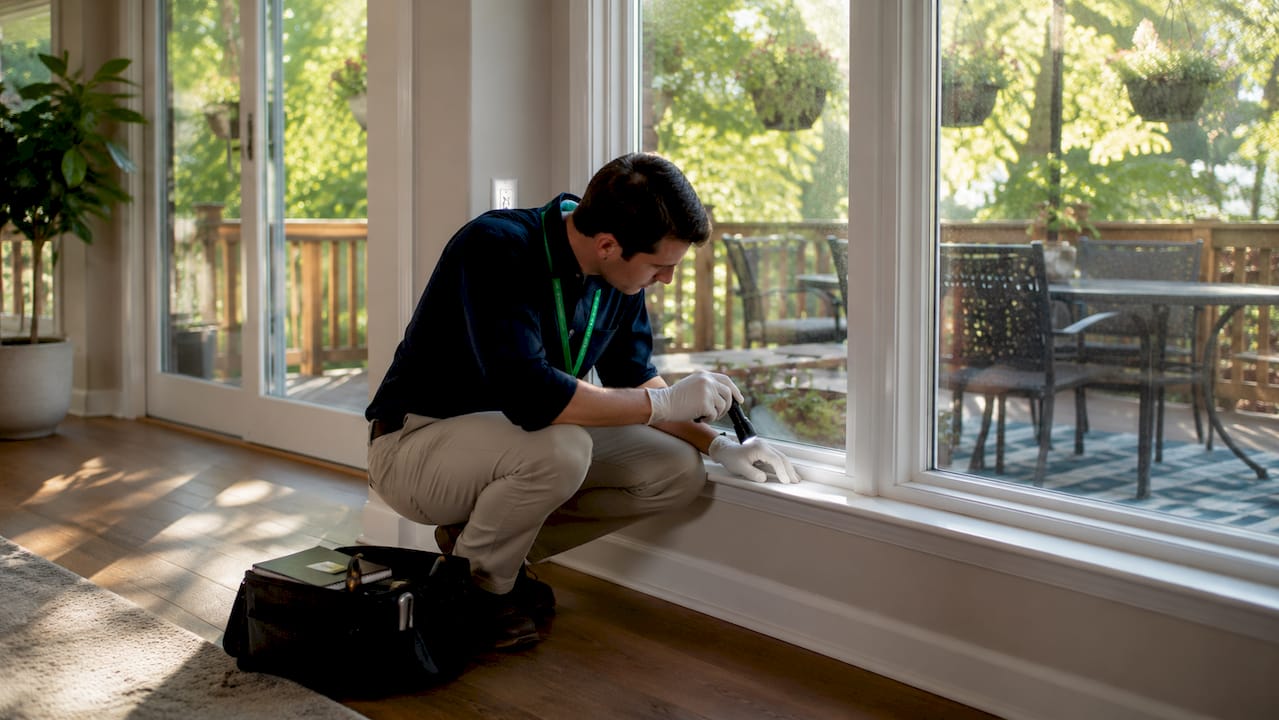
For property managers overseeing multiple units, the survey also creates a reliable record of window condition across a building. That record supports planned maintenance schedules and helps prioritise spend where it is most needed.
What measurements and details are recorded during a survey?
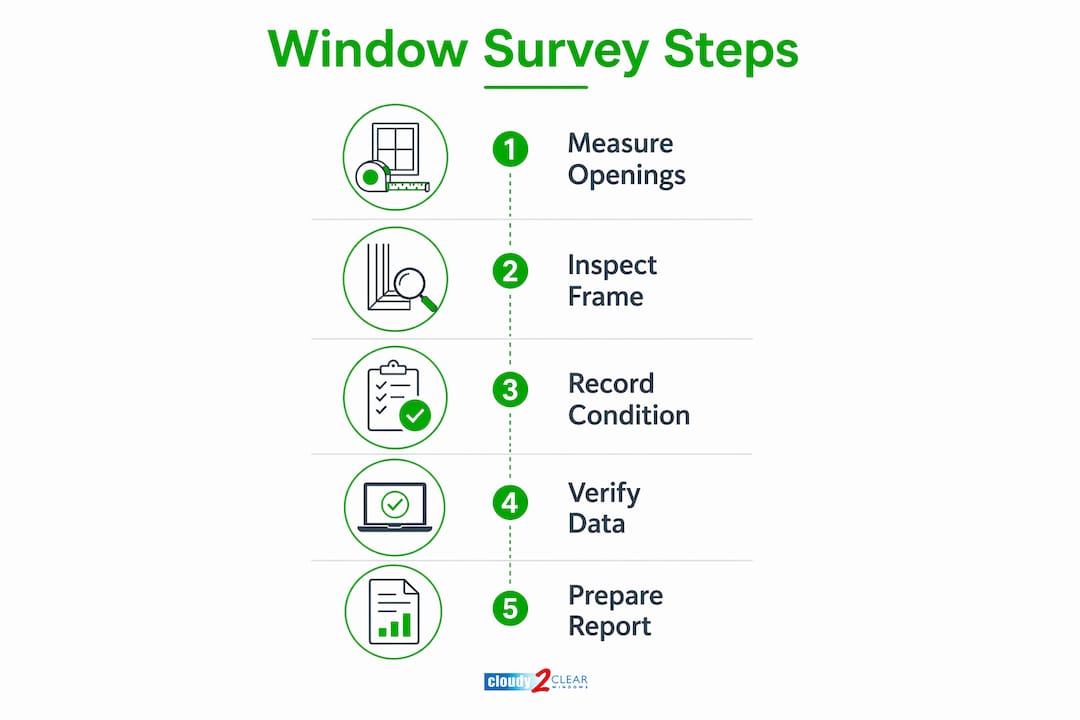
Accurate measurement is the technical core of any window survey. A trained surveyor follows a systematic process to capture every dimension needed for manufacturing and fitting. Here is what that process typically involves:
- Width measurement at three points. The surveyor measures the width of the opening at the top, middle, and bottom. Walls are rarely perfectly straight, so three readings reveal any variation.
- Height measurement at three points. The same approach applies vertically, measuring left, centre, and right to identify any taper or bow in the opening.
- Applying the 10mm deduction. The smallest measurement minus 10mm is used to specify the window size. This deduction allows for expansion and creates the clearance needed for a secure, weathertight fit.
- Diagonal measurement for squareness. The surveyor measures corner to corner in both directions. Discrepancies over 10mm indicate an out-of-square opening that requires specialist fitting techniques.
- Recording window type and configuration. The surveyor notes whether the window is casement, sash, tilt-and-turn, or another type, along with the number of panes, opening direction, and any glazing bars.
- Noting frame condition and sill depth. Existing frame material, signs of rot or damage, and sill dimensions are all recorded to inform product selection and fitting method.
Pro Tip: If you are measuring windows yourself for a rough estimate, always use the smallest reading from your three measurements. For manufacturing purposes, leave this to a professional. Expert advice warns against DIY survey attempts due to the complexity and the risk of inaccurate data causing fit issues and non-compliance.
Digital survey templates have changed how this data is captured and shared. Switching from paper to digital forms has improved consistency, reduced errors, and allowed photos to be linked directly to specific openings. This makes the handover between surveyor and installer far cleaner.
What types of window surveys are there?
Not every survey serves the same purpose. The type of survey you need depends on the condition of your windows and what you plan to do with them. The three main types are:
- Replacement survey. This focuses on precise measurements and fitting details for new windows. The surveyor records everything a manufacturer needs to produce a correctly sized unit. This is the most common type for homeowners planning a full window upgrade.
- Condition survey. This assesses the current state of your windows without necessarily planning for replacement. It identifies faults such as failed seals, rotting frames, draughts, or signs you need new windows and prioritises remedial work. Property managers use this type regularly to plan maintenance budgets.
- Installation survey. This takes place before a fitting team arrives on site. It confirms that the openings match the ordered windows, checks access routes, and identifies any site-specific factors that could affect the installation day.
A professional survey is recommended whenever you are ordering bespoke or manufactured windows, dealing with older properties where openings may have shifted, or managing a commercial building with multiple window types. A surveyor can also guide you on energy-efficient glazing options and suitable frame materials based on your property type and location. DIY measurement is acceptable for rough planning, but never for manufacturing specifications.
Why is a professional window survey critical for your project?
A professional survey reduces the two biggest risks in any window project: incorrect sizing and non-compliance with building regulations. Both problems are expensive to fix after the fact.
“Surveyors act as consultants rather than mere measurers, supporting client decisions with tailored recommendations on product suitability, thermal performance, and design.”
Professional surveys significantly reduce costly installation errors and project delays by ensuring data accuracy. Ordering a window even a few millimetres too wide means it cannot be fitted without modification, which adds time and cost to every unit affected. For a property manager overseeing a block of flats, that error multiplied across twenty windows becomes a serious financial problem.
The surveyor’s role extends well beyond holding a tape measure. A qualified surveyor advises on product suitability and performance, helping you choose between uPVC, aluminium, and timber frames based on your property’s age, style, and thermal requirements. They also check that your planned windows meet the requirements set out in Approved Document L of the Building Regulations, which governs energy efficiency in England, and the equivalent standards in Scotland under Section 6 of the Technical Handbooks.
Surveys also protect you from hidden structural issues. A surveyor who identifies a lintel problem or a damp reveal before work begins gives you the chance to address it without disrupting the installation. Skipping the survey means those problems surface mid-project, when they are far more disruptive and costly to resolve.
Pro Tip: Ask your surveyor to walk you through the findings before they leave. Understanding the window installation standards that apply to your property helps you ask better questions and make more confident decisions about your next steps.
How to prepare for and engage with a window survey
Preparation makes a survey appointment more productive and helps you get the most from the surveyor’s visit. Here is what to do before and during the appointment:
- Note existing problems before the surveyor arrives. Walk around your property and record any draughts, condensation between panes, stiff handles, or visible frame damage. This gives the surveyor a starting point and helps them focus on areas of concern. You can also review common window faults to know what to look for.
- Clear access to all windows. Move furniture, blinds, and curtains away from window openings. Surveyors need unobstructed access to measure accurately and inspect frames from the inside.
- Gather any existing documentation. If you have previous survey reports, planning permissions, or records of past repairs, share these with the surveyor. They provide useful context, particularly for older properties.
- Prepare questions in advance. Ask about frame material options, expected lead times, energy performance ratings, and whether any structural work is likely to be needed. A good surveyor welcomes these questions.
- Review the survey report carefully. Once you receive the written report, check that every window opening is listed, that measurements look consistent, and that any flagged issues are clearly explained. If anything is unclear, ask for clarification before approving any order.
Using the survey data well is just as important as the survey itself. The report should inform your decisions about choosing the right windows for your property, not just confirm sizes. A thorough report gives you the evidence to compare quotes fairly and hold installers accountable to the agreed specification.
What we have learned from two decades of window surveys
At Cloudy2Clear Windows, we have been conducting surveys since 2005, and the most consistent mistake we see is homeowners underestimating what a survey actually involves. Many people assume it is just a case of measuring the width and height once and writing it down. The reality is that a proper survey requires multiple readings, diagonal checks, condition assessments, and a working knowledge of building regulations.
The second most common misconception is that a survey is only needed when replacing windows. Condition surveys are equally valuable for properties where windows are ageing but not yet failing. Catching a deteriorating seal or a window leak risk early costs far less to fix than waiting until the frame has rotted or water has penetrated the wall.
My honest recommendation is to treat the survey as the most important part of any window project, not an administrative step before the real work begins. The data it produces determines everything that follows. A well-conducted survey saves money, prevents delays, and gives you a clear picture of your property’s window condition that you can act on with confidence.
Window surveys and repairs with Cloudy2Clear Windows
Cloudy2Clear Windows has provided professional window surveys, repairs, and replacements across England and Scotland since 2005. Whether you manage a single home or a portfolio of commercial properties, our experienced surveyors deliver accurate assessments and clear, practical recommendations.

Our teams cover a wide range of locations, including double glazing repairs in Oxford, Milton Keynes, and Watford, as well as double glazing replacement services nationwide. Every survey we conduct follows a consistent, thorough process so that you receive reliable data and honest advice. Contact Cloudy2Clear Windows today to arrange a no-obligation survey appointment and take the first step towards windows that fit, perform, and last.
FAQ
What is the window survey definition in simple terms?
A window survey is a professional assessment that measures window openings and records frame conditions to ensure accurate fitting and compliance. It is the essential first step before any window repair, replacement, or upgrade.
How to conduct a window survey correctly?
A surveyor measures width and height at three points each, applies a 10mm deduction to the smallest reading, checks diagonals for squareness, and records frame type and condition. This process should be carried out by a qualified professional for manufacturing purposes.
What are the main types of window surveys?
The three main types are replacement surveys, condition surveys, and installation surveys. Each serves a different purpose, from specifying new windows to assessing maintenance needs or confirming site readiness before fitting.
Why should I not measure my own windows for replacement?
DIY measurements for manufacturing purposes carry a high risk of errors that cause poor fits, failed compliance checks, and costly rework. A professional surveyor has the training and tools to capture the precise data that manufacturers and installers require.
How does a window survey support energy efficiency?
Surveyors provide guidance on energy-efficient glazing and frame materials suited to your property type, helping you meet building regulation requirements and reduce heat loss. This advice is based on the specific conditions found during the survey.