Upgrading to modern double or triple glazing with low-E coatings and argon gas fill is an effective way to significantly reduce window heat loss compared to single glazing. Beyond full replacement, several high-impact steps can make a real difference straight away:
- Repair failed seals — persistent internal condensation means the sealed unit has failed and must be replaced, not re-gassed.
- Draught-proof frames — small gaps around frames cause disproportionate heat loss through air leakage.
- Fit heavy lined curtains or secondary glazing — secondary glazing can reduce heat loss by 40–60%; heavy curtains can reduce heat loss by 25–40%.
- Manage ventilation — keep trickle vents clear to prevent condensation while reducing draughts elsewhere.
Pro Tip: If you can see fogging or moisture trapped between the panes, the sealed unit has failed. No amount of cleaning or re-gassing will fix it. The unit needs replacing.
Should you repair, replace, or use a temporary fix?
Start with a simple inspection before spending anything. Look for inter-pane condensation, draughts at the frame perimeter, warped or rotting frames, and failed rubber seals. What you find will point you towards the right route.
Persistent internal condensation or cracked glass means the sealed unit needs replacing. The inert argon gas has escaped and ambient air has taken its place; a failed seal cannot be restored and the unit will never regain its original insulating performance.
Draughts with intact glass often point to the frame rather than the glazing. Rotting timber, warped uPVC, or failed perimeter seals are common culprits. Replacing the glass alone will not cure a draughty window if the frame is compromised, so factor frame repairs into your decision.
Budget or conservation constraints may mean deferring full replacement. In that case, secondary glazing, window film, or heavy curtains are practical interim measures. Prioritise by room: north-facing bedrooms and commercial spaces with comfort requirements deserve attention before south-facing rooms that benefit from passive solar gain.
What do glazing upgrades actually cost, and what will you save?
Realistic cost and savings figures help you plan. The table below shows typical UK ranges based on current practice.
| Glazing type | Typical U-value (W/m²K) | Approx. cost per window | Estimated annual saving vs single glazing |
|---|---|---|---|
| Single glazing (existing) | 4.8–5.8 | — | Baseline |
| Double glazing, low-E/argon | 1.3–1.8 | — | Up to £140/yr (semi-detached) |
| Triple glazing | Below 1.0 | — | Higher, varies by property |
| Secondary glazing (retrofit) | Varies | — | Moderate; best for listed buildings |
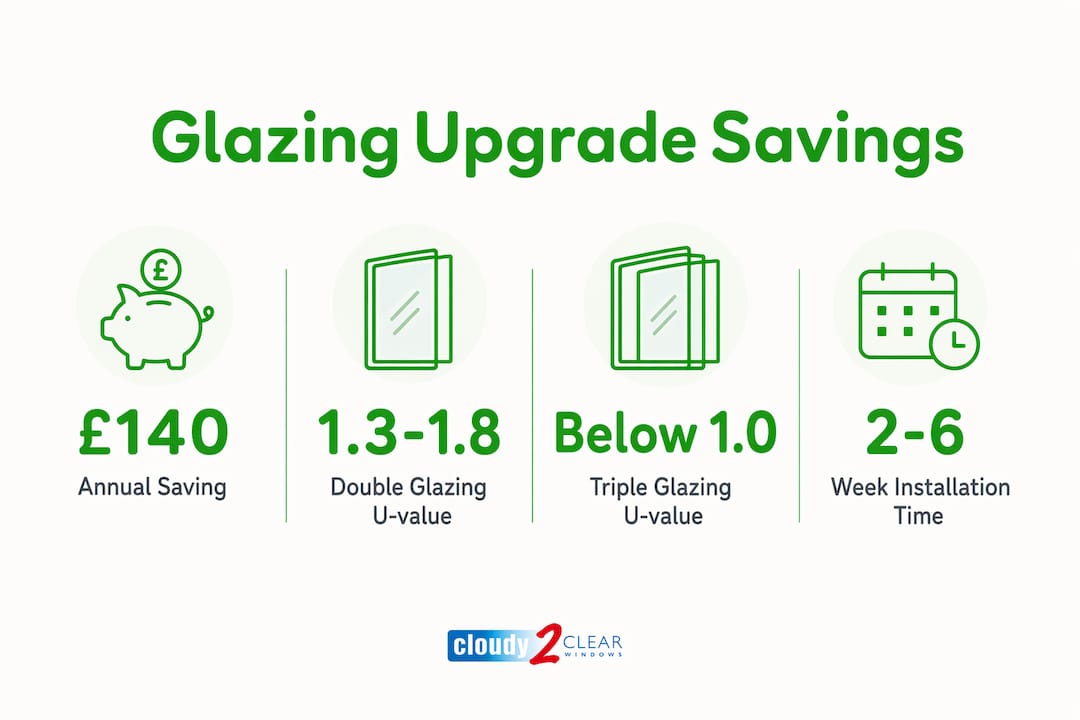
The Energy Saving Trust estimates that installing A-rated double glazing throughout a fully single-glazed semi-detached home can save around £140 a year on energy bills. For a property with ten windows at roughly £400 each, that puts simple payback at around 28 years on glazing alone — though comfort, noise reduction, and property value all factor into the real-world case.
Costs vary with window size, frame condition, installation complexity, and local labour rates. A glass-only sealed unit swap on an intact frame costs considerably less than a full frame replacement, which is why understanding what affects window efficiency before you get quotes is worth the time.
How does modern glazing actually reduce heat loss?
The performance of a window comes down to four selectable features. Knowing what they are helps you compare quotes with confidence.
- Low-E coatings — a microscopically thin metallic layer applied to the glass surface that reflects radiated heat back into the room while letting light through. The coating must face the correct direction; ask your installer to confirm orientation.
- Argon gas fill — argon between the panes conducts heat roughly 34% less efficiently than air, reducing conductive and convective losses across the cavity.
- Warm-edge spacers — the bar that separates the two panes. Aluminium spacers conduct heat readily at the edge, raising condensation risk. Non-metallic warm-edge spacers reduce thermal bridging at the perimeter and lower the chance of edge condensation.
- Frame material — uPVC offers good thermal performance and low maintenance; timber is excellent when well-maintained and suits conservation areas; aluminium conducts heat readily unless it incorporates a thermal break. Your choice should balance insulation, durability, and any planning constraints.
Double glazing with low-E and argon typically achieves U-values of 1.3–1.8 W/m²K; triple glazing can fall below 1.0 W/m²K in high-specification units. Single glazing sits at roughly 4.8–5.8 W/m²K, so the improvement is substantial.
Pro Tip: Always ask for written U-value evidence when comparing quotes. A lower U-value number means better insulation. If an installer cannot provide product data, treat that as a red flag.
No-cost to low-cost steps you can take today
Full replacement is not always the first step. Several measures cut heat loss immediately and cost very little.
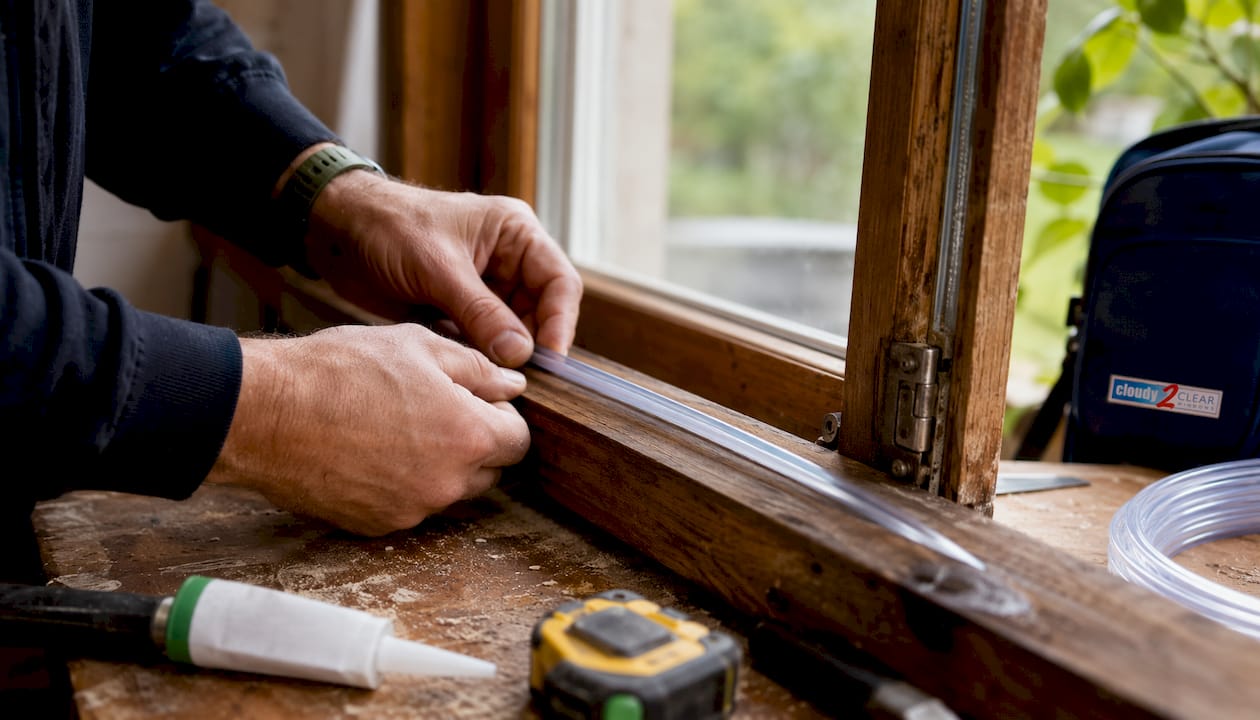
Draught-proofing is the quickest win. Fit compression seals or brush strips to opening sashes, and use flexible silicone caulk to seal any gaps between the frame and the surrounding wall. Draughts from gaps can increase convective losses significantly, making this one of the highest-return low-cost measures available.
Thermal coverings work best when used consistently. Close heavy lined curtains at dusk and open them on sunny winter days to capture passive solar heat. Fitting a pelmet above the curtain rail stops warm air circulating behind the fabric and escaping upwards. Cellular blinds and removable window quilts add further insulation without permanent alteration.
Secondary glazing and window film suit properties where full replacement is restricted. Secondary glazing panels fitted inside the existing frame can reduce heat loss by 40–60% and are reversible. Self-adhesive insulating film is a cheaper short-term option, though it typically lasts one to three seasons before needing replacement.
One practical note: avoid blocking trickle vents permanently. They exist to provide background ventilation and prevent condensation. Use extractor fans after cooking or showering to manage moisture without sealing the building too tightly. For more on balancing airtightness with comfort, the guide to improving window insulation covers this in detail.
What does a professional glazing inspection cover?
A professional inspection goes well beyond looking at the glass. A qualified glazier will check:
- Sealed unit condition — fogging, cracking, or visible seal failure between panes.
- Frame integrity — rot in timber, warping in uPVC, corrosion in aluminium, and whether the frame is still square.
- Perimeter sealing — gaps between frame and wall that allow air infiltration.
- Hardware — hinges, handles, and locking mechanisms that affect how tightly the window closes.
- Ventilation provision — whether trickle vents are present, clear, and correctly sized.
Factory-glazed units with correctly sealed perimeters perform significantly better than poorly installed equivalents, so installation quality matters as much as the product specification.
Cloudy2Clear Windows handles glass-only sealed unit replacements where frames are sound, and full frame replacements where the frame itself is beyond repair. The service extends to conservatory and Velux glazing, commercial fenestration, and caravan windows. For housing associations and commercial clients, compliance checks and documented U-value evidence are part of the whole-opening improvements recommended for better energy efficiency. Installers should always provide FENSA registration or equivalent certification on completion.
How long does repair or replacement take?
Planning around timescales avoids unnecessary disruption.
Inspection and quote typically takes 1–5 working days, depending on access and whether a survey is needed for bespoke or conservation work.
Glass-only sealed unit replacement usually completes within 1–3 weeks. The unit is manufactured to the exact size of your existing frame, and on-site fitting for a standard window takes a few hours. Four standard house windows replaced with argon-filled low-E double glazing can realistically be completed in a single day once the units arrive, with minimal disruption to the household.
Full window replacement requires more lead time: allow 2–6 weeks for ordering, manufacture, and installation. Bespoke frames, heritage profiles, or conservation area requirements push timescales towards the longer end.
What Cloudy2Clear Windows has learnt from 20 years of glazing work
Most customers contact us after noticing draughts or condensation, often assuming the glass is the problem. In practice, our inspections frequently reveal that the frame is the primary issue: failed rubber gaskets, hairline gaps at the perimeter, or hinges that no longer pull the sash tight. Replacing the glass in a compromised frame is money spent twice.
Our recommendation is consistent: start with the rooms you use most and combine any glazing upgrade with draught-proofing for the best value. A well-sealed frame around a new low-E unit outperforms a premium triple-glazed unit sitting in a draughty frame. The double glazing benefits are real, but they depend on the whole installation being right.
Cloudy2Clear Windows can help you get this right
Misted panes, draughty frames, and failed seals are exactly what Cloudy2Clear Windows has been fixing since 2005. Rather than quoting for a full window replacement when only the glass has failed, we specialise in glass-only sealed unit replacement — a faster, lower-cost route that restores insulation without disturbing sound frames.

For commercial properties and housing associations, our commercial fenestration service covers compliance inspections, documented U-value evidence, and FENSA-registered installation across multiple sites. All work comes with guarantees, and we handle conservatory, Velux, and caravan glazing alongside standard residential windows.
To book an inspection or get a quote for a misted or failed unit, contact your local Cloudy2Clear Windows branch or visit the website to find the team nearest to you.
Useful sources
- Energy Saving Trust — energy-efficient windows and doors: practical homeowner guidance on savings estimates and glazing ratings.
- Centre for Alternative Technology — windows: holistic renovation guidance covering U-values, secondary glazing, and ventilation management.
- GreenSpec — windows: heat loss and heat gain: technical reference for U-values, spacer types, and glazing performance data.
FAQ
What is the most effective way to reduce heat loss through windows?
Upgrading to double or triple glazing with low-E coatings and argon fill is the single most effective measure, significantly reducing heat loss compared to single glazing.
Can a misted double-glazed unit be re-gassed or repaired?
No. Once the seal fails and internal condensation appears, the unit cannot be restored by re-gassing. The sealed unit must be replaced to recover its insulating performance.
How much can I save by upgrading to A-rated double glazing?
The Energy Saving Trust estimates savings of around £140 a year for a typical semi-detached home previously fitted entirely with single glazing.
Do I always need to replace the whole window, or just the glass?
If the frame is sound, a glass-only sealed unit replacement is usually sufficient and costs considerably less than a full frame replacement. A professional inspection will confirm which is appropriate.
How quickly can a failed sealed unit be replaced?
Glass-only replacements typically complete within 1–3 weeks from inspection to fitting, with on-site work for a standard window taking just a few hours.