Yes, mild uPVC door swelling in hot weather is normal, and it almost never signals a serious fault. Try waiting for the temperature to drop, brushing away debris from the frame, and lubricating the hinges and lock before you do anything else. Never force the handle or key. If the door still sticks once it cools, or the lock turns without releasing, that points to a mechanical problem rather than heat, and it’s time to call a professional.
Why uPVC doors swell: thermal expansion explained in plain terms
uPVC doesn’t swell in the way a wooden door absorbs moisture and puffs up. What happens is thermal expansion, a straightforward physical response to heat. The plastic profile gets warmer, its molecules spread out very slightly, and the frame grows by a small but measurable amount along its length.
The numbers are smaller than most homeowners expect. According to thermal expansion guidance for PVC‑U profiles, a 1,000mm length of unrestrained uPVC can grow by roughly 1.2mm for every 20°C rise in temperature. That doesn’t sound like much, but a door frame doesn’t need to move far before a multipoint lock’s hooks and cams stop lining up cleanly with their keeps.
Several factors decide how noticeable this becomes on your particular door:
- Colour: darker doors absorb more solar energy, so their surface temperature can run well above the surrounding air temperature, increasing the scale of movement compared with lighter finishes.
- Direct sun exposure: a door facing south or west with no shade will flex more through the afternoon than one tucked under a porch.
- Installation quality: manufacturers build in expansion gaps and steel reinforcement specifically to absorb this movement, so a door fitted correctly should cope with a typical British summer without drama.
When those margins are tight, or the reinforcement has degraded, the expansion becomes something you can feel through the handle.
Common symptoms that a swollen or expanded uPVC door is causing
The tell is usually mechanical resistance rather than anything visible. You’ll notice the door needs an extra push to close, or the handle feels stiffer than usual, and the key seems to catch part way through the lock. According to locksmith and installer guidance on heat-related door problems, the classic signs are:
- Sticking or scraping along the top or side of the frame.
- A stiff or heavy-feeling handle that needs more effort to lift.
- Having to lift and hold the handle up before the key will turn.
- The key catching, sticking, or needing extra wiggling to engage.
- Locking points that no longer line up smoothly with their keeps.
Timing is the giveaway. Thermal swelling tends to peak in the hottest part of the afternoon and ease off by evening or overnight. If your door behaves perfectly at 8am and badly by 4pm, heat is almost certainly the cause. If it’s just as stiff first thing in the morning, something else, like worn hinges or grit in the seals, is likely contributing too.
Short-term homeowner checks and safe fixes to try now
Before you touch a tool, observe. Try the door at a cooler time of day, ideally morning or evening, and see whether the problem disappears entirely. If it does, you’re dealing with thermal expansion, and the following steps should sort it out for the rest of the season.
- Clear the frame edges. Brush out dust, grit, and old paint flakes from the seal and frame junction; debris takes up space that the expanding profile needs.
- Lubricate the moving parts. Apply a silicone-based spray or PTFE lubricant to the hinges and the lock mechanism. Avoid household oils like WD-40 on the lock itself, as they can attract grit and gum up the internal gearbox over time, though it’s fine as an occasional hinge freshener.
- Lift, don’t force, the handle. Many multipoint locks need the handle lifted slightly before the key will turn cleanly. A gentle lift and turn is normal operation, not forcing.
- Test after cooling. Shade the door with a temporary awning or simply try it again once the sun has moved off that side of the house. If it operates smoothly, thermal expansion was the whole story.
If lubrication and timing solve it, you’re done, at least until the next heatwave. If the door still won’t lock cleanly once it’s cool, that’s a sign of misalignment rather than heat, and pushing harder will only make things worse.
Pro Tip: Keep a small tube of PTFE lock lubricant by the door during summer. A ten-second squirt into the keyway every few weeks does more to prevent sticking than any amount of forcing ever will.
For handles that feel loose rather than just stiff, this guide to fixing a loose uPVC door handle covers the difference between wear and heat-related stiffness.
When to call a professional for door adjustment or repair
Some symptoms aren’t heat, and no amount of waiting or lubricant will fix them. According to common-fault guidance from professional locksmiths, these are the red flags that mean it’s time to book a repair rather than keep troubleshooting:
- The key turns fully but the door won’t unlock or open.
- The handle feels loose, floppy, or drops without springing back.
- Locking hooks fail to retract even when the key turns smoothly.
- The door has jammed shut and won’t budge in either direction.
- Symptoms persist even once the door has cooled overnight.
Repeated forcing is the real danger here. Pushing a stiff handle or wrenching a key that won’t turn puts direct strain on the internal gearbox, and locksmiths warn that forced operation is one of the most common routes to gearbox failure, turning a five-minute adjustment into a full mechanism replacement. A technician visiting for this kind of fault will typically check hinge alignment, examine the keeps for wear, inspect the multipoint gearbox, and look at the reinforcement and seals before recommending a fix.
Preventing seasonal swelling with maintenance and simple choices
Most swelling problems that turn into repair bills started as a small, ignored stiffness the previous summer. A few minutes of routine maintenance each season keeps thermal movement from ever becoming a real fault:
- Lubricate hinges and lock mechanisms at the start of spring and again mid summer.
- Clean seals and frame edges to remove grit, old paint, and debris that restricts natural movement.
- Check hinge screws and keeps for play, tightening or adjusting before the hot weather arrives.
- Keep frames clean using methods that won’t damage the surface finish; proper uPVC frame cleaning avoids abrasive products that strip protective coatings.
Design choices matter too. Lighter-coloured doors run cooler in direct sun, and a canopy or overhang shading the door through the afternoon reduces the surface temperature swing considerably. If you’re replacing a door rather than repairing one, correct installation with proper expansion gaps and steel reinforcement, as outlined in industry glazing guidance, makes a bigger long-term difference than any aftercare routine.
Pro Tip: A five-minute hinge check every spring costs nothing and almost always catches the small misalignment that would otherwise turn into a jammed door in July.
What Cloudy2Clear Windows checks during a door inspection
When a technician arrives for a sticking or misaligned uPVC door, the process is methodical rather than guesswork. Checks typically start with hinge alignment, sometimes using a temporary prop to take weight off the lock while testing operation, then move to incremental adjustments of hinge screws and keeps to bring the multipoint mechanism back into true alignment, as described in our guide to fixing a dropped uPVC door.
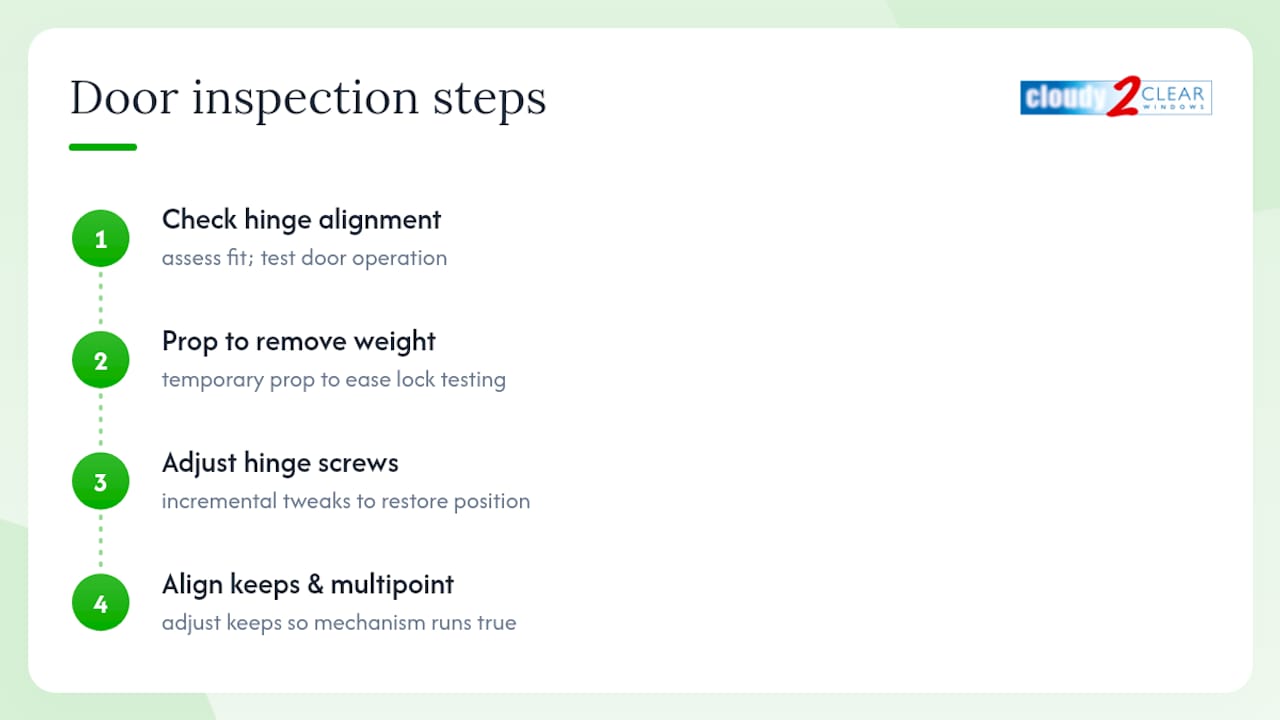
Most heat-related sticking resolves at this stage, through adjustment rather than replacement. Gearbox or mechanism replacement only becomes necessary where forcing has already caused internal damage, which is exactly why catching the problem early, before repeated forcing, keeps the job simple and the bill low.
Your next hot day checklist
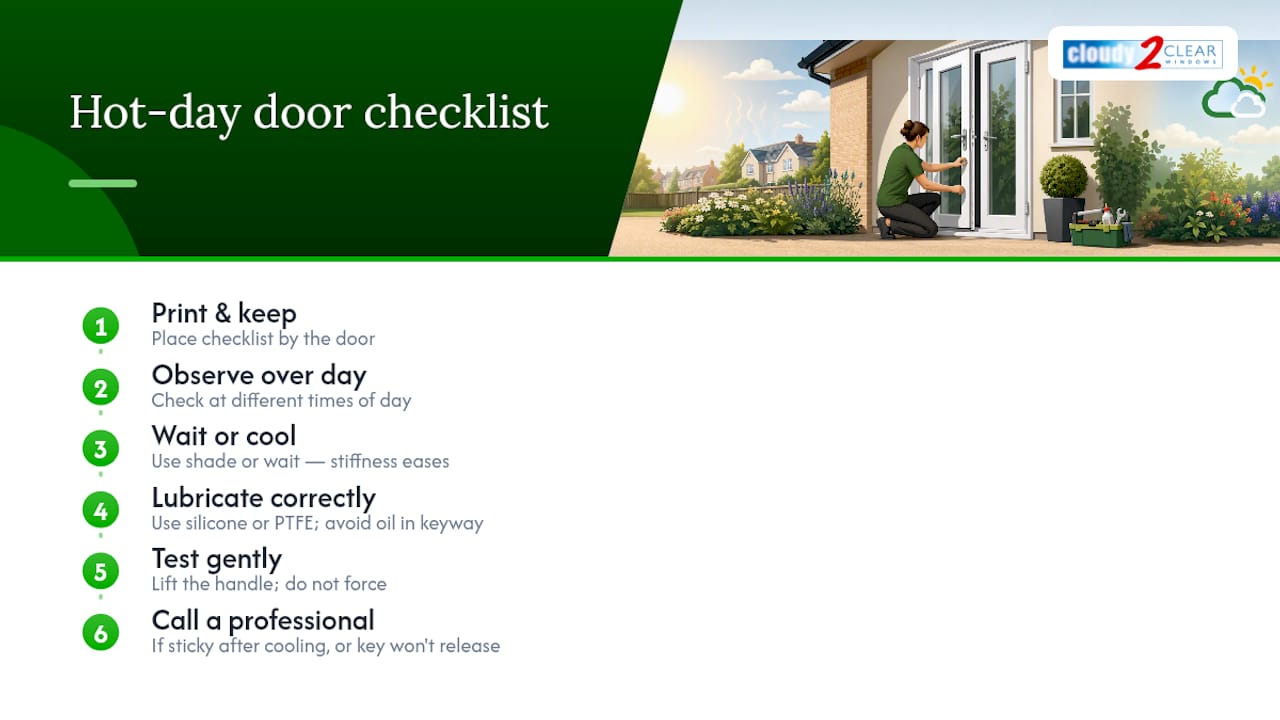
Print this and keep it near the door. Observe the door at different times of day before assuming it’s broken. Wait or cool it with shade if you can, since most stiffness eases within a few degrees. Lubricate hinges and lock with a silicone or PTFE product, never household oil in the keyway. Test gently, lifting the handle rather than forcing it. Call a professional if the problem persists once the door has cooled, or if the key turns without releasing the lock.
Skipping straight to force is the one habit that turns a free fix into an expensive one. A brief, sequenced checklist like this reduces unnecessary call-outs and, more importantly, protects the gearbox from damage that no amount of lubricant can undo.
Book a door repair with Cloudy2Clear Windows
Cloudy2Clear Windows fixes exactly the faults this article covers: sticking multipoint locks, worn hinges, stiff handles, and the gearbox damage that follows months of forcing a swollen door. Where a DIY lubricant fix doesn’t hold, technicians adjust hinges and keeps on-site rather than defaulting to a full replacement, which keeps the job faster and the cost lower for straightforward cases.
Booking works the same way every time: a technician inspects the door, quotes the adjustment or repair on the spot, and most jobs are completed in a single visit. Our lock, hinge and handle repair service covers the full range of multipoint mechanism issues, and if you’re near Milton Keynes, you can check availability directly through our Milton Keynes branch page to get a repair booked before the next heatwave puts the door out of action again.
Sources
This guide draws on PVC‑U thermal expansion calculations, locksmith guidance on common uPVC door faults, and installer advice on heat-related expansion problems. Readers weighing repair against replacement may also find this overview of door replacement pitfalls useful background.
- Window and glazing topics – thermal expansion of PVC‑U
- uPVC door won’t open? Common causes, DIY fixes, Repair costs
- Why uPVC doors expand in heat and common problems | 110SS
FAQ
Will a swollen door go back to normal?
Yes. Thermal expansion reverses as the uPVC cools, so a door that sticks in afternoon heat typically operates normally again by evening or the next cool morning.
Will WD-40 help a swollen door?
It can help hinges but isn’t ideal for the lock itself, since it attracts grit that clogs the gearbox over time. A silicone or PTFE-based lubricant is the safer choice for the keyway and lock mechanism.
What time of year do doors swell?
Swelling is most common during summer heatwaves and on hot, sunny afternoons, when direct sunlight raises the door’s surface temperature well above the surrounding air.
What are the common problems with uPVC doors?
Beyond heat-related sticking, the most frequent issues are worn hinges, misaligned keeps, dropped doors, and gearbox wear from repeated forcing, all of which a locksmith or repair technician can typically adjust without a full door replacement.