Rain sounds loud in a conservatory because the roof is thin and light, so each drop makes it vibrate like a drum skin. The fix depends on what is overhead: soft furnishings and blinds take the edge off, while upgrading the glazing itself is the only way to cut the noise at source. Below we explain what causes the din, which options work, and when a glazing upgrade is worth considering.
What makes a conservatory so loud when it rains
A brick-and-tile roof is heavy and layered, so raindrops barely register indoors. A conservatory roof is the opposite. It is light, mostly hollow or very thin, and fixed to a lightweight frame that carries every impact into the room.
Three things usually combine:
- Thin multiwall polycarbonate. Many older conservatories were fitted with thin twin-wall sheets. They flex slightly under every drop, and the hollow channels amplify the sound, much as a drum body does.
- Thin single glazing or basic double glazing. Standard glass in a light frame still vibrates, and a small air gap and thin panes do little to damp it.
- Large, unbroken surfaces. A big roof area collects more rain and gives the sound more surface to radiate from. Lean-to and Victorian styles, with their large glazed pitches, tend to feel it most.
Hard surfaces inside make it worse, because tiled floors and bare walls bounce the sound around.
Heavy rain is not the only culprit: light, steady rain on thin polycarbonate can produce a high, irritating pattering.
Quick improvements you can make inside
If the noise is an occasional annoyance, start with the room itself. These steps do not change the roof, so expect a modest improvement rather than a transformation.
- Add blinds. Roof blinds create a pocket of still air under the glazing and soften what reaches your ears. They also help with glare and heat, which many conservatory owners want sorted anyway.
- Lay rugs and carpet. Soft flooring absorbs the reflected sound that makes a tiled or laminate floor echo.
- Use heavy curtains and soft furnishings. Thick fabrics, upholstered seating and bookshelves break up reflections.
- Seal gaps. Worn roof seals and loose glazing beads rattle in the rain and let in draughts. A tired seal is a fault worth fixing in its own right.
Treat these as the first rung. If you work or relax in the room and the noise still gets in the way, you are dealing with the roof itself.
Why a failing seal can make things worse
A conservatory that is noisy and also misted, damp or leaking is telling you something. When a sealed unit fails, moisture gets between the panes and the insulating performance drops. Loose or perished gaskets and bars can also tap and buzz as rain and wind move the glazing.
If you see fogging between the panes, that unit has lost its seal and will not perform as it should. Our guide to preventing condensation in a conservatory explains how to tell surface condensation from a failed unit.
For a roof that leaks as well as drums, it helps to understand what happens when water gets in. A general guide to spotting and documenting roof leaks in rain covers drying and record keeping, although it comes from a US restoration firm, so check local rules and your own insurer’s requirements.
Roof options compared
When soft furnishings are not enough, the roof covering is the real decision. The table sets out the main choices in general terms.
| Roof type | Rain noise | Heat and cold | Notes |
|---|---|---|---|
| Thin twin-wall polycarbonate | Loudest | Poor in both summer and winter | Common on older builds |
| Thicker multiwall polycarbonate | Quieter than thin sheets | Better insulation | Still audible in heavy rain |
| Standard glass roof | Noticeably quieter than thin polycarbonate | Depends on coating and unit | Clearer view, can overheat without solar control |
| Acoustic or laminated glass roof | Quietest of the glazed options | Good with the right coatings | Heavier, so the frame must be able to carry it |
| Solid (tiled-effect) roof | Closest to the rest of the house | Best insulation | Different look and structural requirements |
Treat the table as a guide, not a promise. Real results vary with the frame, the pitch, the build quality and how loud the rain is where you live.
Why glass helps
Glass is denser than plastic, so raindrops move it far less. Laminated glass goes further: a plastic interlayer between two panes damps vibration instead of passing it on. Thicker units and a wider air gap also help. Conservatory owners often report a large drop in noise after replacing polycarbonate with glass, but figures vary from home to home, so we would not quote a fixed percentage.
You can see the same principle in roof windows. Manufacturers build rain noise reduction into some premium products. The VELUX GGL data sheet lists unique rain noise reduction among the glazing features of that range. If your property has roof windows that are noisy in the rain, the glazing specification is a good place to start.
Solid roofs
A solid roof is built more like the rest of the house, so it is the closest to a normal roof for sound. It is also the biggest job. Local authority building control guidance from LABC on solid roofs for conservatories and porches points to the roof’s structural design, how loads pass through the existing structure, and the adequacy of foundations as key points to assess. That is a reason to take professional advice before you commit.
Does a roof change affect Building Regulations?
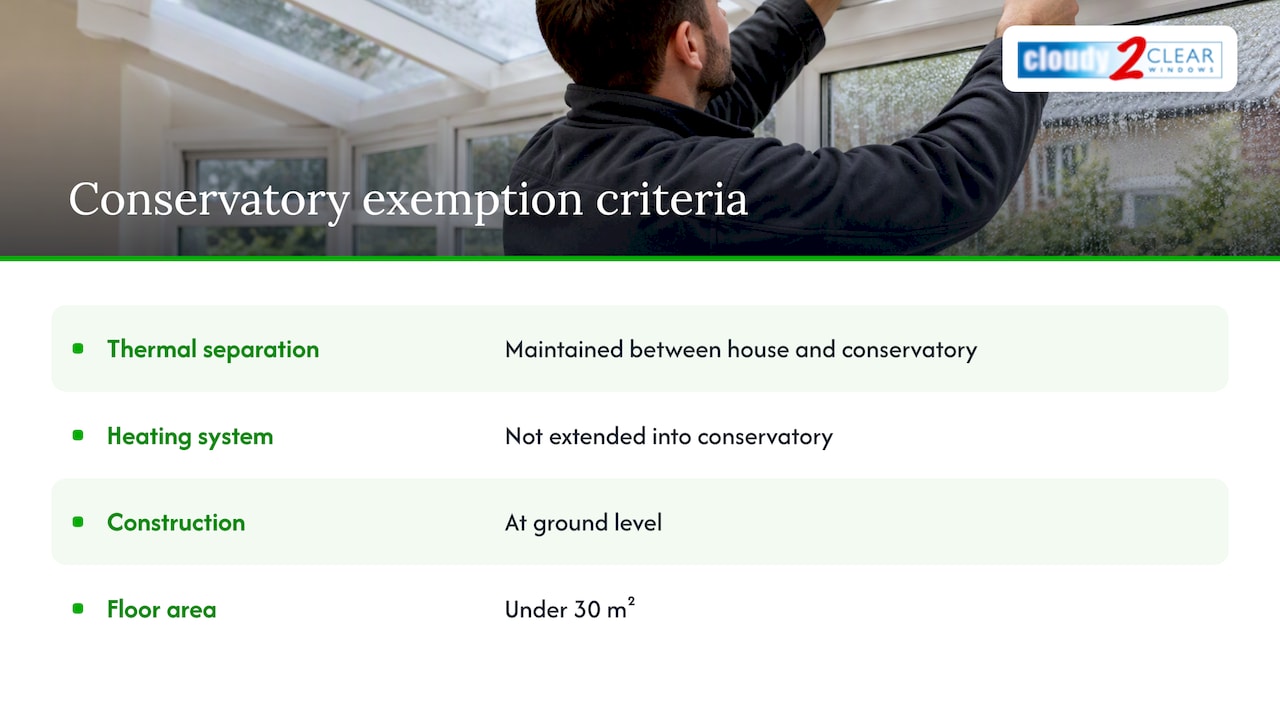
Possibly, and this matters before you order anything. Many conservatories are exempt from Building Regulations, but only when they meet set conditions. According to the government’s circular letter on conservatories and porches, the thermal separation between the house and the conservatory must be maintained, and the home’s heating system must not be extended into it. The usual exemption criteria also include ground-level construction and a floor area under 30 square metres.
A change that alters the glazed proportion of the roof or walls, such as swapping a largely glazed roof for a solid one, can take a conservatory outside those conditions. If it does, the work is generally treated as a building project with full requirements for glazing safety and energy performance. Your local authority building control team or an approved inspector can confirm where you stand. Our own guide to Building Regulations for windows covers the glazing side in more detail.
Listed buildings and conservation areas bring extra controls, so check before changing the roof or glass on a protected property.
Comfort beyond noise: heat, cold and glare
A quieter roof is often a warmer or cooler one too, and it is worth deciding on both at once. Replacing thin polycarbonate with a better unit tends to improve insulation, but a heavier or more insulated roof can change how the room behaves in summer.
Our checklist on reducing conservatory heat before a roof upgrade walks through solar control coatings, ventilation and shading. If summer heat becomes the next problem, a guide to conservatory air conditioning in the UK explains the cooling options and what to consider.
For the wider picture on glazing performance, see how windows affect insulation in UK homes and businesses and how to select glazing options for energy efficiency.
Our view: replace the glass, not the whole structure
Our perspective at Cloudy2Clear Windows
We have been repairing and replacing double glazing across the UK since 2005, and conservatories come up often. When someone tells us their conservatory is unbearable in the rain, we start by asking what is actually overhead and what condition the units are in.
Our approach is glass-only. We replace the glass units, not the frame, which means less disruption, a quicker job and a lower bill than replacing a whole structure. Where the frame is sound and the problem is failed, thin or poorly performing glazing, that is usually the sensible route. We also offer soundproofing and noise reduction glass, and insulated glass options with better energy performance.
We will also be straight with you. If the real problem is a very thin polycarbonate roof on a frame that cannot carry heavier glazing, or a roof that needs structural work, a glass swap alone may not solve it. Then it is better to hear that at the start than to find out after the work. The right answer depends on your frame, your roof and what you want from the room.
We offer a 25-year guarantee, and we would rather fit one well-chosen unit than several that do not suit the room.
How we can help
If the noise comes from glazing in the conservatory walls, doors or roof lights, our conservatory window repair service covers misted, cracked and failed units. For noise reduction specifically, see our soundproofing glazing page. If you are weighing the costs of a roof glass change, our article on conservatory roof glass costs sets out what affects a quote.
Our hours are Monday to Friday, 8:30am to 6:30pm. Tell us what your conservatory is made of, what noise bothers you and when, and we will explain what is realistic. We work nationwide, for homes, businesses and housing associations.
What to tell any installer before you decide
A good survey starts with good information. Whoever you ask, have these details ready:
- The age of the conservatory and its roof material
- Whether the roof is polycarbonate, glass or something else, and its thickness if you know it
- Whether any units are misted, cracked or leaking
- Where the noise is worst, and in what kind of weather
- Whether the building is listed or in a conservation area
- What you use the room for: dining, office, play room or storage
Ask each installer how the new glazing will affect the weight on the frame, whether the frame needs checking, and what guarantee comes with the work. Ask for the specification in writing.
Frequently asked questions
Will a glass roof stop rain noise completely?
No roof silences rain entirely. A glass roof, especially a laminated or acoustic unit, is generally much quieter than thin polycarbonate, and many owners find it comfortable for working and relaxing. Results depend on the glass specification, the frame and how heavy the rain is.
Can I reduce rain noise without replacing the roof?
Yes, to a degree. Blinds, rugs, curtains and soft furnishings absorb some of the sound inside the room, and fixing loose seals removes rattles. These steps help with comfort, but they do not remove the vibration at its source.
Do I need Building Regulations approval to change my conservatory roof?
It depends. Many conservatories are exempt if they meet conditions on size, ground level, thermal separation and glazing, but a change that takes the structure outside those conditions can bring it under the regulations. Check with your local authority building control before you start.
Is the noise coming from a failed double glazed unit?
It can be. A unit that has lost its seal often shows fogging between the panes, and loose glazing components can rattle in wind and rain. A glazing specialist can inspect the units and tell you whether a repair or replacement will help.
Can you fit quieter glass without replacing my frames?
For many conservatories, yes: we replace the glass only and keep the existing frame where it is sound. A survey is needed to confirm that the frame can carry the chosen glass.