Foggy double-glazed windows can leave your home feeling chilly and looking worn, especially during unpredictable British weather. Damaged seals let in moisture and air, which undermines insulation and leads to higher energy bills as your heating system struggles to keep up. By understanding the critical role of window seals and recognising the signs of failure, you can restore both the visual appeal and comfort of your home. Discover why replacing seals is key to improved energy efficiency and lasting aesthetics.
Table of Contents
- What Window Seals Do In Double Glazing
- Types Of Window Seals And Common Failures
- How Damaged Seals Affect Home Efficiency
- Signs You Should Replace Window Seals
- Cost, Process And DIY Versus Professional Choice
Key Takeaways
| Point | Details |
|---|---|
| Importance of Window Seals | Window seals are crucial for maintaining insulation, preventing heat loss, and avoiding condensation between double-glazed panes. |
| Signs of Seal Failure | Key indicators of failing seals include condensation between panes, drafts, and visible mould or discoloration. |
| Cost of Replacement | Professional window seal replacement typically costs between £150 and £500 per window, dependent on size and location. |
| DIY vs Professional Help | While minor repairs can be DIY, full seal replacements are best handled by professionals to ensure proper installation and warranty protection. |
What Window Seals Do In Double Glazing
Window seals are the unsung heroes of your double-glazed windows. They sit at the edges where the two glass panes meet and work tirelessly to keep your home insulated and your windows in good condition.
Think of window seals as the guardians of your double glazing unit. They perform several critical functions that directly affect your home’s comfort and energy bills.
The core job of window seals:
- Keep the insulating gas trapped between the glass panes (usually argon)
- Maintain airtightness to prevent drafts and heat loss
- Block water and moisture from entering the unit
- Prevent condensation from forming between the panes
- Sustain the overall thermal performance of your windows
Double-glazed windows work by trapping insulating gas between glass panes, and your seals are what keep that gas from escaping. Without proper seals, the argon gas gradually leaks out, and your windows lose their ability to insulate effectively.
Without intact seals, your double glazing becomes single glazing—and you lose roughly 30% of its insulating value.
Moisture and water are the biggest threats to window seals. When seals fail, water can seep into the gap between panes, creating that foggy appearance you might already be noticing. This condensation forms because the airtight unit is no longer sealed, allowing moisture-laden air to contact the colder glass surfaces.
Your seals also prevent air leaks around the window frame. A failing seal means cold air can slip past, creating draughts and uncomfortable temperature variations near your windows. You’ll notice this especially on winter mornings.
The lifespan of window seals typically ranges from 10 to 20 years, depending on climate, window maintenance, and installation quality. British weather—with its temperature fluctuations and moisture—puts real stress on seals, causing them to become brittle and fail more quickly than in drier climates.
When seals deteriorate, you lose both comfort and money. Your heating system works harder to compensate for heat loss, and you might find yourself adjusting the thermostat more often. Over time, this costs considerably more than replacing the seals.
Damaged seals can sometimes be repaired depending on the extent of the failure, though replacement is often the more practical solution for failed double glazing.
Pro tip: Check your windows on a cold morning—if you spot condensation or fogging between the panes, your seals have likely failed and should be assessed by a professional.
Types Of Window Seals And Common Failures
Not all window seals are created equal. Your double-glazed windows rely on specific seal types, each designed to do different jobs. Understanding what you have—and what can go wrong—helps you spot problems early.
Double glazing uses several seal types working together to keep your windows performing well. The main categories include primary seals and secondary seals, each with distinct purposes.
Types of window seals:
- Primary seals sit between the glass panes and the spacer bar, trapping the insulating gas
- Secondary seals form the outer edge of the unit, blocking moisture and air from entering
- Intumescent seals expand when exposed to heat, providing fire resistance and airtightness
- Compound seals combine materials to protect against both thermal and fire risks
The primary seal is your first line of defence against gas leakage. Without it, argon escapes and your insulation collapses. The secondary seal acts as a backup, preventing water and air infiltration when the primary seal weakens.
Here is a summary of common double glazing window seal types and their unique characteristics:
| Seal Type | Location & Function | Key Benefit |
|---|---|---|
| Primary seal | Between panes and spacer bar | Retains insulating gas |
| Secondary seal | Around outer edge of the unit | Blocks moisture and air |
| Intumescent seal | Within glazing or frame | Provides fire resistance |
| Compound seal | Combination inside and around glazing area | Combines protection types |
Intumescent fire seals and other glazing seals are particularly important in newer buildings or where building regulations demand extra safety. These expand under heat to block smoke and flames, adding layers of protection beyond simple insulation.
Common seal failures happen because they lose flexibility over time, crack from temperature swings, or get damaged during installation.
British weather creates harsh conditions for seals. Temperature fluctuations cause expansion and contraction, which gradually weakens the seal material. UV exposure from sunlight makes seals brittle, especially on south-facing windows.
Moisture is another culprit. When seals fail, water enters the gap between panes and creates that foggy condensation you notice. This usually appears first at the bottom corners where moisture accumulates.
Poor installation also causes premature failure. If seals aren’t applied correctly or the frames aren’t properly prepared, they can fail within just a few years instead of their normal 10 to 20-year lifespan.
You might also see common window and door faults that indicate seal problems: visible condensation between panes, cold spots on glass, or water pooling on the windowsill.
Seal failure doesn’t happen overnight. Signs develop gradually—first you might notice a slight haze, then thicker condensation. By the time fogging becomes obvious, the seal has typically been failing for weeks or months.
Pro tip: Inspect your window seals annually in spring and autumn when temperatures fluctuate—these seasons stress seals most and make problems visible.
How Damaged Seals Affect Home Efficiency
When window seals fail, your home’s energy performance suffers immediately. The impact ripples through your comfort, your utility bills, and your wallet. Understanding what happens inside a failed unit helps explain why seal replacement matters so much.
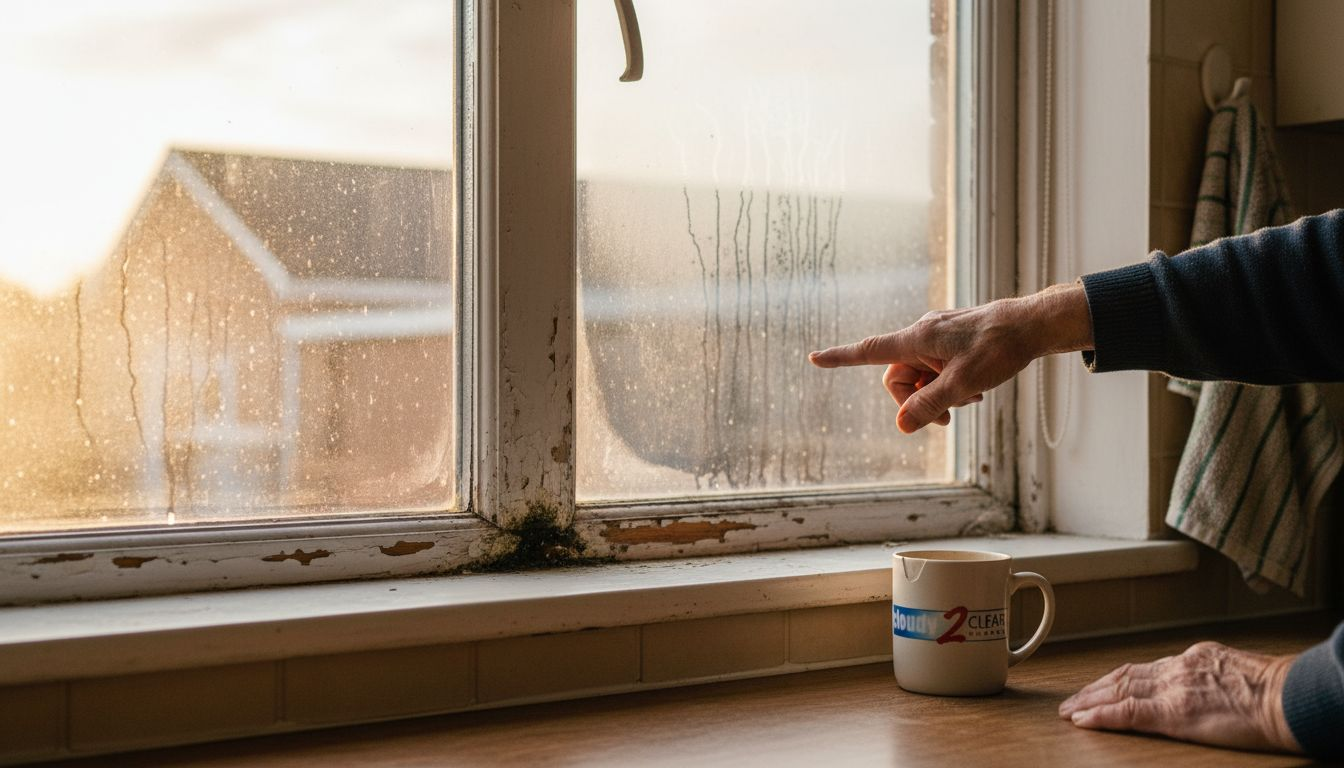
Your heating system becomes your biggest enemy when seals fail. Once seals break, damaged or failed window seals cause loss of inert gas like argon, which significantly reduces the unit’s insulation properties. Without that protective argon layer, your double glazing performs almost like single glazing.
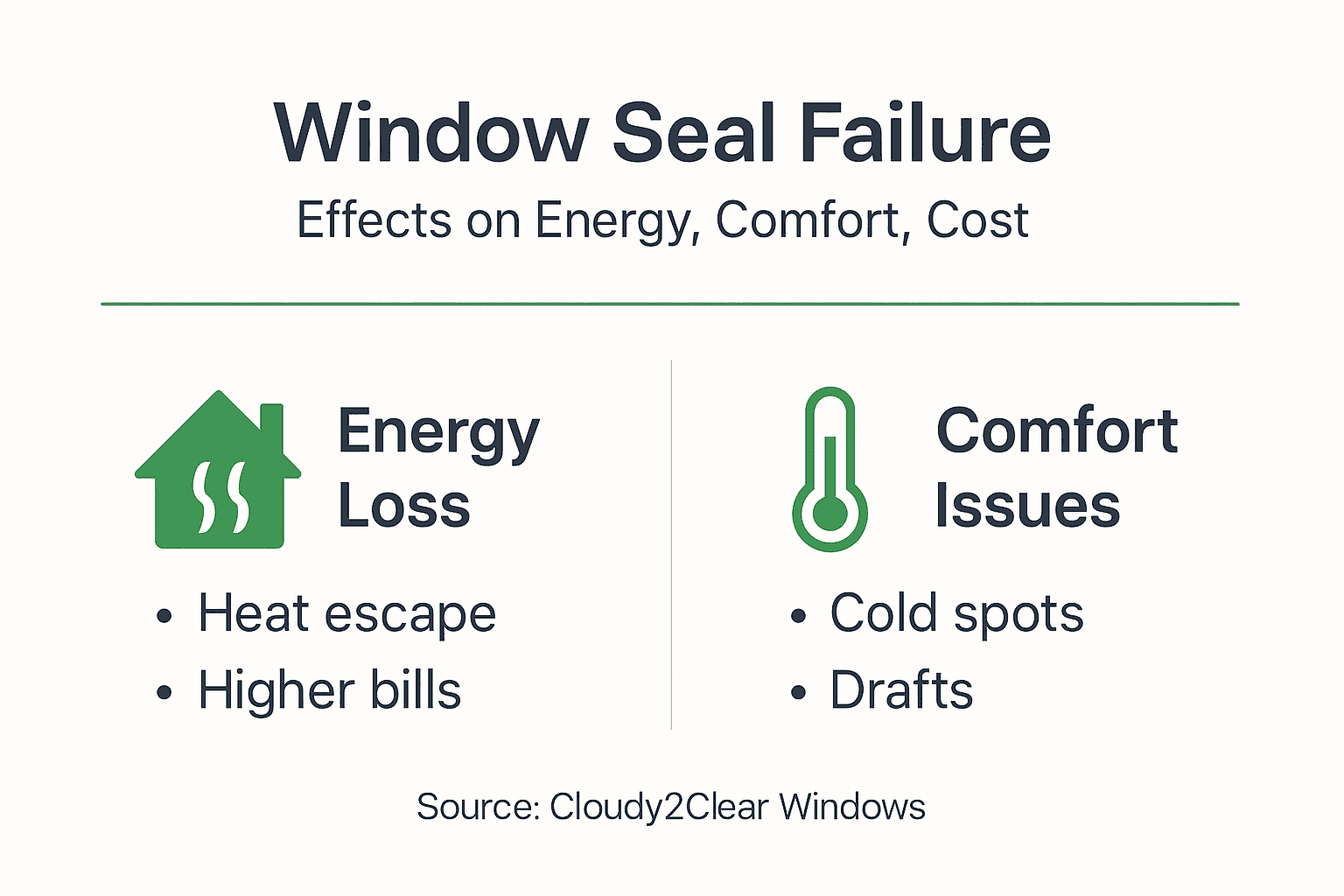
Heat loss accelerates dramatically. The gap between panes that once trapped warm air now allows it to escape freely. Your boiler works overtime trying to maintain comfortable temperatures, burning more fuel and driving up your energy bills considerably.
What happens when seals fail:
- Argon gas leaks out, stripping away most of the window’s insulating value
- Cold draughts develop around window frames, creating uncomfortable temperature zones
- Condensation forms between the panes, creating that foggy, misted appearance
- Heat loss increases by roughly 30 per cent or more
- Energy bills rise as your heating system compensates for lost insulation
Condensation between panes is the visible sign of seal failure. When seals let moisture in, water vapour condenses on the cold inner glass surfaces. Unlike condensation on the outside of windows, this interior misting cannot be wiped away because it sits inside the sealed unit.
Failed seals don’t just waste energy—they compromise your comfort and the structural integrity of your home.
Moisture infiltration creates additional problems beyond aesthetics. Water trapped between panes can cause mineral deposits on glass, reducing visibility and light transmission. Over time, moisture can also affect window frame materials, potentially causing rot in wooden frames or corrosion in metal components.
Your home’s thermal comfort suffers noticeably. Cold spots develop near windows on winter days, making nearby rooms feel drafty despite central heating running. You’ll find yourself adjusting the thermostat upward to compensate, which compounds the energy waste.
Air infiltration is another consequence. Compromised seals reduce airtightness and increase heat loss, which directly impacts your ability to maintain stable indoor temperatures. This also allows external pollutants and noise to enter more easily.
The longer you delay replacement, the worse it becomes. Small seal failures progress to larger ones, and energy waste compounds. A window that loses 30 per cent of its efficiency initially may lose 50 per cent within a couple of years.
Replacing failed seals with new ones restores how double glazing reduces heat loss through proper gas retention and airtightness. This brings your energy consumption and comfort levels back to where they should be.
Pro tip: Calculate your potential savings by comparing energy bills from the past two winters—a spike often coincides with when seals begin failing, making the case for replacement financially clear.
Signs You Should Replace Window Seals
Your windows send clear signals when seals are failing. Learning to recognise these warning signs means you can act before damage spreads throughout the unit. Most people miss early indicators, only noticing problems when they become severe.
The most obvious sign is condensation or misting between the glass panes. This fog appears on the inner surfaces where you cannot wipe it away. It forms because moisture has penetrated the failed seal and condenses on the cold glass inside the unit.
Signs that window seals need replacing include condensation or misting between the glass panes, spot discoloration or mould growth on seals, drafts felt near the window, or difficulty opening and closing the window. These indicators show the sealed unit is compromised.
Key warning signs to watch for:
- Condensation between panes that appears on cold mornings
- Visible mould or discoloration on the window frame or seal edges
- Cold draughts near windows despite doors being closed
- Difficulty opening or closing windows smoothly
- Water pooling on windowsills or frames
- Reduced visibility from mineral deposits on interior glass
- Visible cracks or brittleness in the sealant material
Drafts are another telltale sign. Feel around the window frame on a winter day—cold air flowing in indicates the seal has failed. You might also notice uneven heating in rooms with compromised windows.
If you spot condensation between panes, your seal has already failed and replacement cannot wait.
Mould or discoloration on seals suggests moisture has been infiltrating for some time. This fungal growth appears as dark spots or streaks along the seal edges. Once mould appears, structural damage may already be occurring in the frame.
Difficulty opening or closing windows often accompanies seal failure. Moisture absorption causes frames to swell slightly, creating friction. If windows suddenly feel sticky or stiff, this warrants investigation.
Water seeping into the windowsill is a serious sign. Puddles or dampness around the base of the frame indicate water is no longer being blocked by the seal. This can lead to wood rot or other structural problems if ignored.
Mineral deposits on the interior glass create a hazy, streaked appearance that differs from regular dust. These deposits form when water trapped between panes evaporates, leaving minerals behind. This usually indicates long-term moisture exposure.
Spots of deteriorating sealant material indicate physical breakdown. Common indicators for replacing window seals include visual deterioration, such as cracked or brittle sealant or water ingress. Cracked sealant cannot provide effective protection.
Don’t wait for all signs to appear before acting. Even one warning sign warrants professional assessment. Early replacement prevents secondary damage and keeps your home more comfortable and efficient.
Pro tip: Create a simple inspection checklist and test your windows quarterly—condensation in autumn usually means seals failed during summer, giving you time to schedule replacement before winter heating costs spike.
Cost, Process And DIY Versus Professional Choice
Window seal replacement involves real money and important decisions. Understanding the actual costs, what the process involves, and whether DIY makes sense helps you make the right choice for your home. Most homeowners find professional replacement the safer route despite the upfront cost.
Costs vary significantly based on several factors. Window size, frame material, seal type, and whether you need one unit or multiple windows all affect pricing. On average, professional seal replacement costs between £150 and £500 per window in England, though larger units or complex jobs cost more.
Factors affecting seal replacement costs:
- Window size (larger units cost considerably more)
- Number of windows needing replacement
- Frame material (aluminium, timber, UPVC)
- Seal type and materials used
- Access difficulty (ground floor versus upper floors)
- Geographic location in England
- Labour rates of your local glazier
The replacement process itself is relatively straightforward when handled professionally. A glazier removes the sealed unit from the frame, measures precisely for a replacement, and installs the new unit with fresh seals. The entire job typically takes 30 minutes to 2 hours per window depending on complications.
Professional seal replacement costs more upfront but protects your warranty and guarantees proper installation.
DIY possibilities exist but come with real limitations. Repairing or replacing window seals involves assessing the condition of existing seals, carefully removing damaged seals without harming glazing or frame, and fitting new seals or sealant. Minor repairs or draft-proofing work suit DIY approaches.
Full seal replacement is another matter entirely. Replacing window seals on double glazed units typically involves removing the sealed unit from the frame, measuring precisely for a replacement, and installing a new sealed unit, which demands precision and specialised tools. Most homeowners lack the equipment and experience to do this safely.
DIY risks include damaging the window frame during removal, installing units incorrectly (compromising seals), misaligning the glazing, or voiding your window warranty. A botched job often costs more to fix professionally than hiring someone initially would have.
Professional benefits extend beyond just installation. Glaziers guarantee their work, provide warranties on replacement units, have proper tools and experience, and often spot additional problems you might miss. Reducing the cost of double glazing installation and repair is possible through professional consultation and proper planning.
Cloudy2Clear Windows offers professional seal replacement with decades of installation experience. You receive quality workmanship, proper warranties, and peace of mind knowing your windows are restored correctly.
Minor repairs like applying fresh sealant around frame edges can be DIY projects. Major seal replacement inside the unit absolutely warrants professional help.
To help you gauge the most cost-effective window seal replacement path, here is a comparison of DIY and professional approaches:
| Aspect | DIY Replacement | Professional Replacement |
|---|---|---|
| Cost Range | Lower upfront, possible extra costs | £150–£500 per window (England) |
| Skill Required | Advanced skills & precision needed | No skills required by homeowner |
| Typical Risks | Frame/glass damage, misalignment | Minimal, work is guaranteed |
| Warranty Impact | Usually voids window warranty | Warranty typically preserved |
| Time Investment | Several hours, may require repeats | Typically 30 minutes–2 hours |
Pro tip: Get quotes from three different glaziers before committing—prices vary significantly, but cheapest often means corner-cutting, so compare warranties and guarantees alongside cost.
Restore Comfort and Cut Costs with Expert Window Seal Replacement
If you have noticed condensation between your double-glazed window panes or are struggling with cold draughts and rising energy bills, your window seals may be failing. These seals are vital for keeping insulating gas trapped, blocking moisture, and maintaining your home’s thermal efficiency. Ignoring failing seals means discomfort and higher heating costs.

At Cloudy2Clear Windows, we combine decades of experience with expert craftsmanship to restore your windows’ performance and your home’s comfort. Whether you need full double glazing replacement or professional window seal repairs, our team offers reliable solutions tailored to your specific needs. Don’t let damaged seals ruin your home’s energy efficiency and peace of mind. Visit Cloudy2Clear Windows to learn more or arrange a consultation today. Your home deserves the best protection against energy loss and damp.
Find out how replacing window seals can reduce heat loss and why professional repair beats DIY every time to safeguard your investment.
Frequently Asked Questions
Why is it important to replace window seals?
Replacing window seals is crucial because failing seals lead to significant heat loss, drafts, and increased energy costs. They also compromise your home’s comfort and can lead to condensation issues between glass panes.
How can I tell if my window seals need replacing?
Signs that window seals need replacing include condensation or misting between glass panes, visible mould on the seals, cold drafts near windows, and difficulty in opening or closing the windows smoothly.
What is the cost of replacing window seals?
The cost for professional window seal replacement typically ranges between £150 and £500 per window, depending on factors such as window size, frame material, and the number of windows needing attention.
Can I replace window seals myself, or should I hire a professional?
While minor repairs may be suitable for DIY, full seal replacement is best handled by professionals due to the precision required and risks of damaging the window frame. A professional guarantees their work, ensuring proper installation and preservation of warranties.
Recommended
- How Energy Efficient are Your Windows? – Cloudy2Clear Windows
- Can You Replace The Glass In Double Glazed Windows?
- Reducing the Cost of Double Glazing Installation and Repair – Cloudy2Clear Windows
- Is insulating window film worth it? Pros & costs explained
- Funding Summer Home Projects with Loans | Mortgage Managers