Most home and business owners in England and Scotland think about glazing in terms of warmth, noise, and appearance. Very few think about insurance. Yet the type of glazing you have, and whether it meets current regulations, can directly affect whether your insurer pays out after a break-in, a storm, or an accident. Non-compliant glazing installations can lead to denied claims and higher premiums. This guide explains exactly which glazing factors matter most, what the rules are in England and Scotland, and how to keep your cover valid while managing costs sensibly.
Why glazing matters for insurance coverage
Insurers assess risk. Every element of your property that affects the likelihood or severity of a claim is factored into your policy. Glazing sits right at the centre of that calculation because windows are one of the most vulnerable points in any building.
Think about the three most common claim triggers for homes and businesses:
- Break-ins: Windows are the primary entry point for burglars. Weak or poorly fitted glazing increases the risk rating on your property.
- Storm damage: Cracked, poorly sealed, or ageing glass is far more likely to fail under wind or impact, leading to water ingress and structural damage.
- Injury: Safety glazing requirements exist precisely because broken glass causes serious harm. If your glazing does not meet safety standards and someone is injured, your liability cover could be at risk.
Insurers do not just take your word for it that your windows are fine. When a claim is made, they investigate. If they find that your glazing does not comply with building regulations, whether that relates to safety glass in critical locations, inadequate thermal performance, or poor installation, they have grounds to reduce or refuse your payout.
“Non-compliant glazing installations, such as failing building regulations on safety glazing, U-values, or security, can lead to insurance claim denials, especially for water damage, injuries, or break-ins.”
Compliance is not just a box-ticking exercise. It is your first line of defence when something goes wrong. Proper window damage prevention starts with understanding what your insurer expects and making sure your glazing meets those expectations before a claim ever arises. Beyond claims, compliant glazing also supports the impact on property value, giving you better outcomes whether you are selling, remortgaging, or simply protecting your investment.
The peace of mind that comes from knowing your glazing is fully compliant is real and practical. It means fewer arguments with insurers, faster claim settlements, and a property that is genuinely better protected.
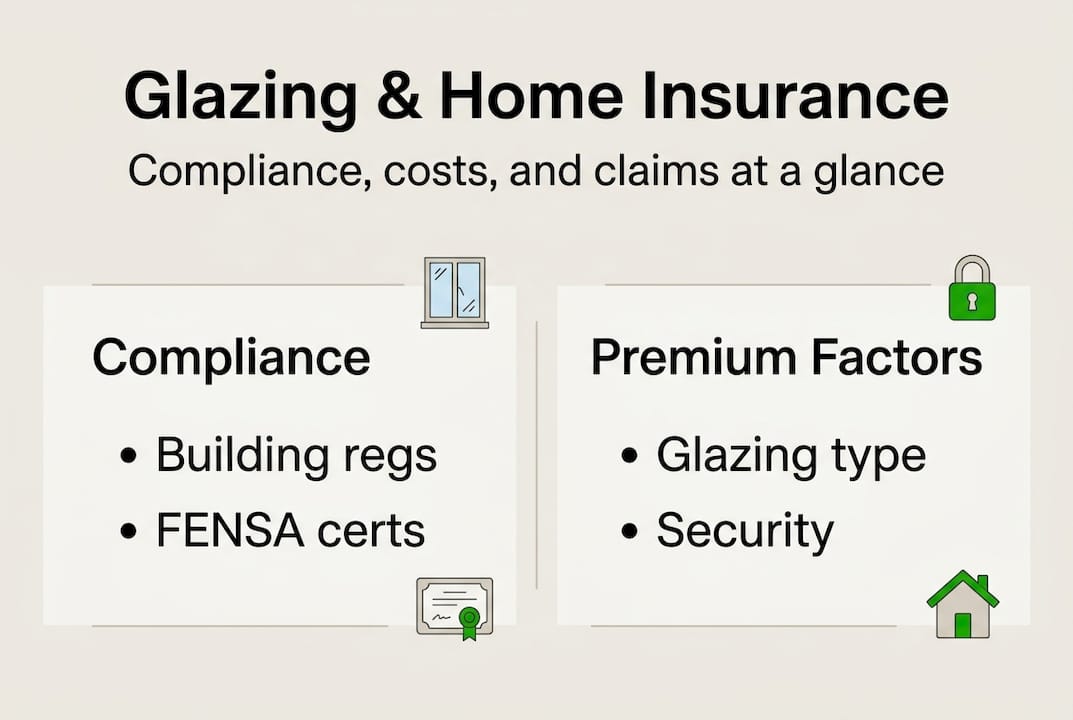
Compliance with regulations: the insurance hot-spot
Now we know compliance is essential, let us look at which specific laws and standards matter most for home and business owners in England and Scotland.
There are three key parts of the Building Regulations that apply to glazing:
| Regulation | What it covers | Why it matters for insurance |
|---|---|---|
| Part L | Energy efficiency and thermal performance (U-values) | Non-compliant U-values can affect EPC ratings and energy-related claims |
| Part F | Ventilation requirements when replacing windows | Poor ventilation leads to condensation, damp, and related claim disputes |
| Part Q | Security standards for doors and windows | Failing Part Q increases burglary risk and can invalidate theft claims |
Failing to meet any of these regulations is not just a paperwork problem. Compliance with Part L, Part F, and Part Q is critical in England and Scotland; non-compliance risks enforcement fines of between £2,500 and £5,000 and can invalidate your insurance coverage entirely.
Certification matters here too. When a registered installer completes your window work, they issue a FENSA certificate (or equivalent) that confirms the installation meets current building regulations. This certificate is your proof of compliance. Without it, you are relying on the word of an unregistered trader, and your insurer may not accept that.
Understanding building regulations for windows in detail will help you ask the right questions before any work begins. You should also familiarise yourself with the types of safety glass available, since using the correct glass in critical locations (near doors, at low levels, in bathrooms) is a specific regulatory requirement.
Pro Tip: Always ask your installer for their FENSA registration number before work starts. A legitimate, registered installer will provide this without hesitation, and it protects you from compliance issues down the line.
If you are making significant changes to your glazing, notify your insurer in writing before work begins. Some policies require this as a condition of cover. It takes five minutes and can save you thousands.
Types of glazing and their impact on premiums
Once you meet the regulations, you still face choices. The type of glazing you install does influence your insurance costs, though not always in the ways you might expect.

Here is a direct comparison of the main glazing options:
| Glazing type | Typical U-value | Security benefit | Premium impact |
|---|---|---|---|
| Single glazing | 4.8 W/m²K | Low | Higher risk, higher premiums |
| Standard double glazing | 1.4 to 1.6 W/m²K | Moderate | Meets baseline insurer expectations |
| High-performance double glazing | 1.0 to 1.2 W/m²K | Good | Positive effect on risk profile |
| Triple glazing | 0.6 to 0.9 W/m²K | Very good | Best performance, potential premium benefit |
Triple glazing achieves U-values of 0.6 to 0.9 W/m²K compared to standard double glazing at 1.4 to 1.6 W/m²K. The lower the U-value, the better the insulation. But the insurance benefit of triple glazing comes primarily from its security performance and its contribution to your EPC (Energy Performance Certificate) rating, not the insulation figure alone.
This matters because better glazing contributes to higher EPC ratings, and some insurers offer lower premiums for homes with strong EPC ratings due to the perceived lower risk profile. A well-insulated home is less likely to suffer from damp, condensation, or structural deterioration, all of which are common claim drivers.
Features that can actively reduce your premiums include:
- Laminated or toughened safety glass: Harder to break, reducing burglary and injury risk
- Multi-point locking systems: Directly addresses Part Q security requirements
- Thermally broken frames: Reduces condensation risk and associated damp claims
- Argon gas-filled units: Improves thermal performance without a large cost premium
Learn more about triple glazing explained and whether it suits your property, or explore energy efficient glazing options that balance performance with cost. The key takeaway is this: you do not need the highest specification on the market to benefit. You need glazing that meets regulations, performs well, and is properly certified.
Practical steps: keeping cover valid and costs down
Moving from options to action, here is how to get your cover working at its best and keep it that way.
- Check compliance before installation. Use a FENSA-registered installer and confirm in writing that all work will meet Parts L, F, and Q. Review the installation standards checklist before any work begins.
- Notify your insurer. Contact your insurer before significant glazing work. Explain what is being replaced, upgraded, or altered. Get confirmation in writing that your cover remains valid during and after the work.
- Collect and store documentation. Keep your FENSA certificate, installer invoices, and any product specifications in a safe place. Photograph your windows before and after installation. This evidence is invaluable if a claim is ever disputed.
- Understand your glazing unit. Knowing what you have installed, including the glass type, frame material, and gas fill, helps you answer insurer questions accurately. Our guide on understanding glazing units is a good starting point.
- Review your policy annually. Glazing upgrades can change your risk profile. When you renew, tell your insurer about any improvements you have made. Better glazing may qualify you for a lower premium.
Unnotified renovations including glazing can void your policy if they alter your risk profile. Always inform your insurer of structural changes.
Pro Tip: If your insurer cannot tell you clearly how glazing upgrades affect your premium, ask them to put it in writing. If they will not, it may be worth shopping around for a provider who values energy-efficient and compliant properties.
The most common pitfall we see is poor paperwork. Homeowners and business owners invest in good glazing but cannot prove it when it matters. Do not let that happen to you.
Why glazing and insurance is more nuanced than people think
Here is something we rarely hear discussed openly: most people assume that simply having double glazing is enough. It is not. Modern insurers are increasingly sophisticated. They look at installation quality, certification, and compliance, not just the presence of a double-glazed unit.
We have spoken with property owners who were genuinely shocked to discover that windows installed by an unregistered trader years ago were technically non-compliant. They had double glazing. They assumed they were covered. They were not.
The real compliance risks are not always obvious. A window can look perfectly fine and still fail on U-value, ventilation, or security grounds. And when a claim is made, that is exactly when the detail gets scrutinised.
Our view, built on over two decades of working with homes and businesses across England and Scotland, is that glazing and insurance should be reviewed together, not separately. When you change your windows, update your insurer. When you renew your policy, check your glazing documentation. Treat it as an ongoing relationship, not a one-off task. That mindset is what separates well-protected properties from those that face nasty surprises at claim time.
Check and upgrade your glazing for peace of mind
If reading this has raised questions about your current glazing, you are not alone. Many property owners discover gaps in their compliance or documentation only when they start looking. The good news is that addressing those gaps is straightforward with the right support.

At Cloudy2Clear Windows, we have been helping homeowners and businesses across England and Scotland install, repair, and upgrade glazing since 2005. Whether you need a repair to restore compliance, a full replacement to meet current regulations, or simply expert advice on your options, our team is ready to help. We also offer commercial fenestration services for business premises of all sizes. If you are based in the Milton Keynes area, our double glazing repairs Milton Keynes team can visit and assess your property directly. Get in touch today for a no-obligation conversation.
Frequently asked questions
Can non-compliant glazing void my home insurance in England or Scotland?
Yes, failing to meet building regulations for glazing can result in denied claims or even invalidate your policy. Non-compliant glazing installations such as those failing on safety glazing, U-values, or security are a known trigger for claim refusals.
Which glazing features most impact my insurance premium?
Features that improve security and energy performance, like double or triple glazing and safety glass, can lower premiums with some insurers. Better glazing contributes to higher EPC ratings, which some insurers reward with reduced premiums due to lower perceived risk.
Do I need to tell my insurer if I change my windows?
Yes, you should always inform your insurer if you install, replace, or significantly alter your glazing to protect your cover. Unnotified renovations including glazing changes can void your policy if they alter your risk profile.
Does triple glazing guarantee lower home insurance?
Triple glazing does not guarantee a lower premium, but its better insulation and security can help improve your risk profile. Triple glazing achieves U-values of 0.6 to 0.9 W/m²K, offering superior performance that insurers may view favourably alongside proper certification.