Many property owners assume installing double glazing automatically satisfies UK building regulations. This misconception leads to costly compliance failures, enforcement actions, and reduced property values. Window installation standards encompass far more than glass quality alone. They cover energy efficiency thresholds, safety glazing zones, ventilation requirements, and certification processes that protect occupants and preserve property investments. Understanding these standards ensures your windows meet legal requirements, reduce heat loss, and maintain resale value across England and Scotland.
Introduction to window installation standards
Window installation standards form the regulatory backbone ensuring safe, energy-efficient, and legally compliant installations across residential and commercial properties. In England and Scotland, building regulations covering energy efficiency, ventilation, safety, and security govern every window replacement or new installation. Parts L (energy conservation), F (ventilation), B (fire safety), and Q (security) create comprehensive requirements that installers and property owners must satisfy.
These standards exist to protect occupants from physical harm, reduce energy waste, prevent condensation and mould growth, and maintain property values. Compliance affects mortgage approvals, insurance validity, and resale potential. Ignoring standards invites enforcement actions, costly remedial work, and legal liabilities.
Key components include:
- Thermal performance measured through U-values that limit heat loss
- Adequate ventilation preventing damp and maintaining indoor air quality
- Safety glazing in critical zones near floors, doors, and potential impact areas
- Security measures for accessible windows meeting PAS 24 standards
- Proper documentation through FENSA or Building Control certification
Safety glazing is mandatory for windows within 800mm of floor level, doors up to 1500mm from floor level, and side panels near doors to prevent injuries from glass breakage. This requirement alone prevents thousands of accidents annually. Understanding these interconnected standards helps you navigate installation decisions confidently whilst avoiding compliance pitfalls that compromise safety and efficiency.
Energy efficiency standards in window installation
Energy efficiency forms the cornerstone of modern window installation standards, directly impacting heating costs and environmental sustainability. Building regulations Part L sets strict thermal performance requirements that vary between new builds and replacement installations. New constructions must achieve U-values of 1.2 W/m²K or lower, whilst replacement windows in existing properties require 1.4 W/m²K or better. These U-value thresholds measure how much heat escapes through window assemblies, with lower numbers indicating superior insulation.
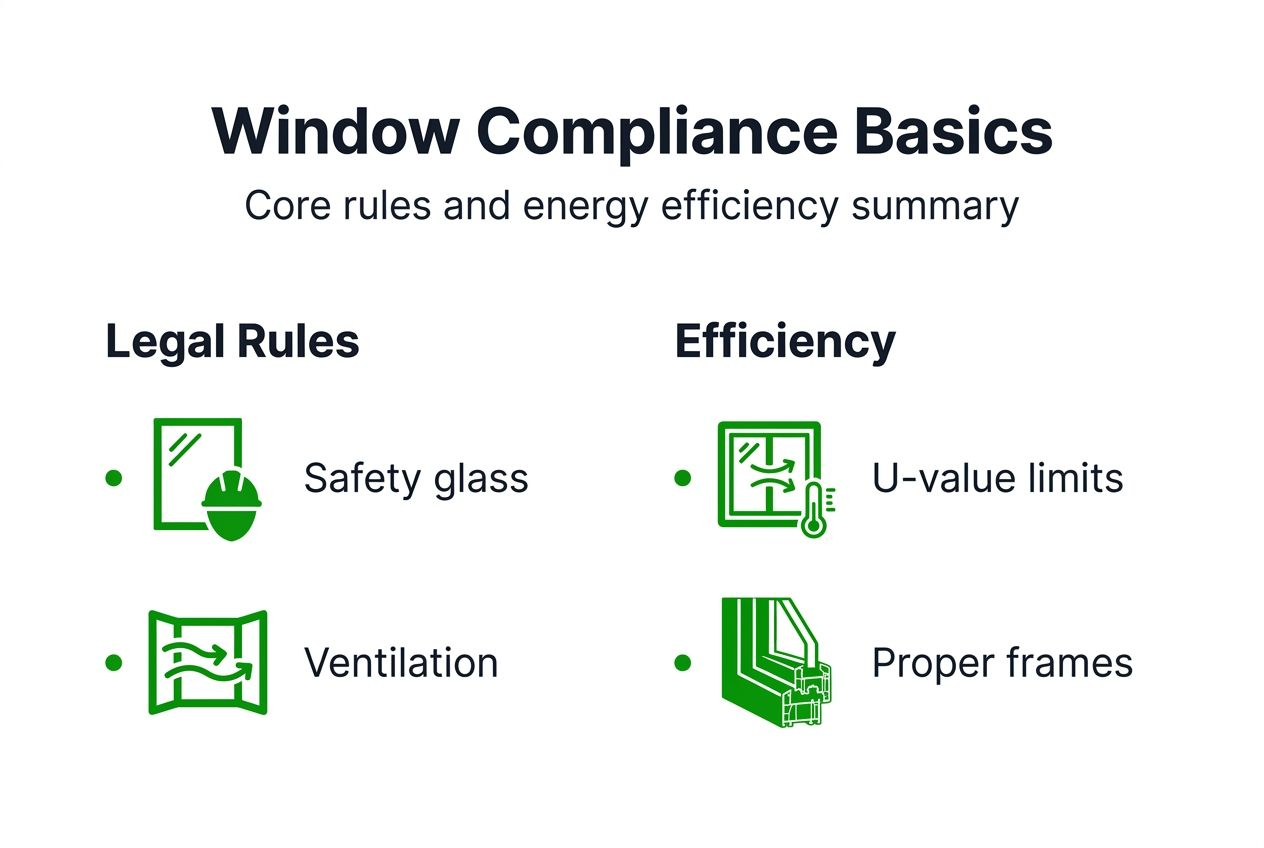
Double glazing typically achieves U-values between 1.2 and 1.6 W/m²K depending on glass spacing, gas fills, and frame materials. Triple glazing offers enhanced performance, reaching U-values as low as 0.8 W/m²K, though at higher installation costs. Installing energy-efficient windows with compliant U-values can reduce heating bills by upwards of 15%, making the initial investment financially attractive over the window’s 20 to 25 year lifespan.
| Glazing type | Typical U-value (W/m²K) | Compliance status |
|---|---|---|
| Single glazing | 4.5 to 5.0 | Non-compliant |
| Standard double glazing | 1.4 to 1.6 | Compliant for replacements |
| High-performance double glazing | 1.0 to 1.2 | Compliant for new builds |
| Triple glazing | 0.6 to 0.9 | Exceeds requirements |
Ventilation requirements under Part F mandate adequate fresh air circulation to prevent condensation, mould growth, and indoor air quality deterioration. Trickle vents installed in window frames or mechanical ventilation systems satisfy this requirement. Many property owners overlook ventilation requirements under Part F, creating damp problems that undermine the benefits of energy-efficient glazing.
Pro Tip: When selecting between double and triple glazing, consider your property’s orientation and exposure. South-facing windows benefit less from triple glazing than north-facing installations in exposed locations where heat loss is greatest.
Frame materials significantly influence overall thermal performance. Timber frames offer natural insulation properties, uPVC provides cost-effective thermal breaks, and aluminium requires thermal breaks to prevent cold bridging. The impact of glazing bars on efficiency also merits consideration, as decorative features can create thermal bridges that reduce overall U-values if not properly designed.
Safety and security regulations
Safety glazing regulations protect occupants from severe injuries caused by broken glass in high-risk locations. Building regulations Part B mandates toughened or laminated safety glass in specific zones where accidental impact is likely. Safety glazing is mandatory for glass within 800mm of floor level (windows) and 1500mm (doors) to prevent injuries from glass breakage. Side panels adjacent to doors also require safety glazing regardless of height.
These critical safety zones account for:
- Windows positioned low enough for children or adults to fall against during normal activities
- Door glazing within reach during entry and exit movements
- Bathroom and shower enclosure glazing exposed to wet, slippery conditions
- Conservatory roof glazing overhead where falling glass poses severe danger
- Patio door panels in high-traffic areas connecting indoor and outdoor spaces
Security standards under Part Q apply to new builds and certain extensions, requiring accessible windows on ground and first floors to meet PAS 24 enhanced security specifications. These standards mandate multi-point locking mechanisms, reinforced frames, and tested resistance to forced entry attempts. Properties in high-crime areas particularly benefit from exceeding minimum security requirements.
Fire safety and emergency escape considerations intersect with window standards in habitable rooms. Upper floor bedrooms require egress windows sized adequately for emergency evacuation, typically 450mm minimum width and 450mm minimum height with a minimum openable area of 0.33 square metres. The bottom of the openable area must not exceed 1100mm from floor level to allow accessible escape.
“Installing windows that fail safety glazing requirements in critical zones creates liability exposure and endangers occupants, particularly children and elderly residents vulnerable to fall-related injuries.”
Ignoring these building regulations covering safety and security exposes property owners to enforcement actions, insurance claim rejections, and potential personal injury liability. Installers must verify compliance through proper glazing specifications and positioning during the installation process.
Certification and compliance processes
Proper certification validates that window installations meet building regulations and provides legal protection essential for property transactions and insurance claims. FENSA (Fenestration Self-Assessment Scheme) registration allows approved installers to self-certify compliance without separate Building Control applications. FENSA-registered installers allow self-certification of compliance, providing homeowners certificates within 30 days critical for legal and resale purposes.
The certification process involves:
- Pre-installation assessment verifying planned work meets current building regulations
- Installation completion to approved standards covering energy, safety, and ventilation requirements
- Post-installation documentation including compliance certificates and warranty information
- Registration with local authority building control departments maintaining compliance records
Building Control inspection provides an alternative route when using non-FENSA registered installers. You must submit a building notice or full plans application before work commences, pay inspection fees, and arrange site visits at critical installation stages. Building Control officers verify compliance and issue completion certificates once satisfied that work meets regulatory standards.
Retaining compliance documentation proves vital for several reasons. Mortgage lenders require evidence of compliant installations when financing property purchases or remortgages. Insurance companies may refuse claims related to non-compliant windows causing water damage, security breaches, or injuries. Solicitors request certification during conveyancing to confirm the property meets current regulations.
Pro Tip: Always verify your installer holds current FENSA registration before signing contracts. Request written confirmation that compliance certificates will be issued within 30 days of installation completion, and follow up promptly if certificates do not arrive on schedule.
The importance of certification and compliance extends beyond initial installation. Certificates must be passed to subsequent property owners, creating an unbroken compliance chain that protects value and legal standing throughout the building’s life. Missing certificates can delay property sales, reduce asking prices, or require expensive retrospective applications to Building Control.
Common misconceptions and compliance challenges
Several persistent misconceptions about window installation standards lead property owners into compliance failures that prove costly to rectify. Understanding these myths helps you avoid common pitfalls and make informed decisions during window replacement projects.
The most prevalent myth suggests that simply installing double glazing guarantees compliance with building regulations. In reality, double glazing quality varies enormously. Older double-glazed units may have U-values exceeding 2.0 W/m²K, far above the 1.4 W/m²K threshold required for replacement installations. Understanding misconceptions about window compliance prevents expensive mistakes that compromise energy efficiency and legal standing.
Key misconceptions include:
- Believing all double glazing meets current thermal performance standards regardless of age or specification
- Assuming new build and replacement window requirements are identical when U-value thresholds actually differ
- Thinking ventilation is optional when Part F mandates adequate air circulation in habitable rooms
- Expecting safety glazing is unnecessary in older properties despite retrospective requirements applying to replacements
- Presuming any installer provides automatic compliance certification when only FENSA-registered or Building Control approved work qualifies
The difference between new build requirements (U-values ≤1.2 W/m²K) and replacement standards (U-values ≤1.4 W/m²K) creates confusion. This distinction recognises practical constraints in existing properties whilst maintaining robust energy efficiency standards. Failing to specify appropriate glazing for your project type leads to non-compliance even with quality products.
Ventilation requirements frequently get overlooked during window replacement projects. Removing old windows with natural air gaps and installing airtight modern units without compensating ventilation creates condensation problems, mould growth, and indoor air quality issues. Building regulations require trickle vents or equivalent mechanical ventilation to maintain healthy living environments.
Choosing uncertified installers represents another major compliance risk. Non-registered installers cannot self-certify work, requiring separate Building Control applications and inspections that many property owners fail to arrange. This oversight leaves installations legally non-compliant regardless of actual quality, creating problems during property sales or insurance claims.
Material and sustainability standards
Window frame materials significantly impact thermal performance, durability, and environmental sustainability whilst affecting compliance with building regulations. Understanding material characteristics helps you select frames that meet regulatory requirements and align with sustainability goals.
Timber frames offer excellent natural insulation properties with lower embodied carbon compared to uPVC or aluminium alternatives. Modern timber windows treated with preservatives and factory-finished coatings achieve U-values comparable to uPVC whilst providing renewable, biodegradable materials. Government incentives occasionally support sustainable timber frame installations, particularly in conservation areas where traditional aesthetics matter.
uPVC frames dominate the replacement window market due to cost-effectiveness, minimal maintenance requirements, and reliable thermal performance. Multi-chambered uPVC profiles create effective thermal breaks that limit heat loss. However, uPVC production involves fossil fuel extraction and manufacturing processes with higher environmental impacts than timber alternatives.
Aluminium frames suit commercial applications and contemporary residential designs requiring slim sightlines and large glazing areas. Thermal breaks within aluminium profiles prevent cold bridging that would otherwise compromise U-values. Aluminium’s high recyclability and durability offset initial embodied energy concerns over the frame’s long service life.
| Material | Typical U-value contribution | Sustainability advantages | Maintenance requirements |
|---|---|---|---|
| Timber | 1.0 to 1.4 W/m²K | Renewable, low embodied carbon, biodegradable | Regular painting or staining every 5 to 7 years |
| uPVC | 1.2 to 1.6 W/m²K | Durable, recyclable, minimal maintenance | Occasional cleaning, 20+ year lifespan |
| Aluminium | 1.4 to 1.8 W/m²K (with thermal breaks) | Highly recyclable, extremely durable | Minimal, 30+ year lifespan |
Material selection influences building regulation compliance through thermal performance contributions and weatherproofing capabilities. Choosing sustainable window materials balances regulatory compliance with environmental responsibility and long-term maintenance considerations.
Emerging trends favour composite frames combining timber interiors with aluminium or uPVC exteriors. These hybrid designs offer timber’s thermal properties and aesthetic appeal with minimal external maintenance. Vacuum glazing technology also advances, achieving exceptional U-values below 0.5 W/m²K in conventional frame thicknesses, though current costs limit widespread adoption.
Consequences of non-compliance
Failing to meet window installation standards creates serious legal, financial, and practical consequences that extend far beyond initial cost savings from cutting corners. Understanding these risks motivates proper compliance and informed installer selection.
Enforcement actions represent the most immediate legal consequence. Local authority building control departments possess powers to:
- Issue enforcement notices requiring remedial work to bring installations up to compliant standards
- Impose financial penalties for deliberate or persistent non-compliance with building regulations
- Prosecute serious violations resulting in court fines reaching several thousand pounds
- Order removal of non-compliant installations in extreme cases where remediation proves impossible
Property transactions suffer when compliance documentation is missing or installations fail to meet current standards. Solicitors conducting due diligence request building regulation certificates, and absent documentation triggers searches, indemnity insurance requirements, or price reductions. Mortgage lenders may refuse financing on properties with known building regulation breaches until compliance is demonstrated or remedial work completed.
Insurance implications prove equally serious. Many household insurance policies contain clauses voiding coverage for losses arising from non-compliant building work. Water damage from poorly installed windows, injuries from non-safety glazing, or security breaches through substandard installations may result in rejected claims. Commercial property insurance particularly scrutinises building regulation compliance given larger claim values.
“Property owners face average enforcement fines of £2,500 to £5,000 for serious building regulation breaches, plus remedial work costs often exceeding the original installation price when windows must be replaced entirely to achieve compliance.”
Increased energy costs from thermally inefficient windows compound financial impacts over time. Windows with U-values exceeding compliant thresholds by just 0.5 W/m²K can increase annual heating bills by 10% to 15% in typical properties. Over a 20 year window lifespan, this inefficiency costs thousands in unnecessary energy expenditure whilst contributing excess carbon emissions.
Property value reduction represents the final consequence. Estate agents report that non-compliant installations reduce property values by 2% to 5% due to buyer concerns about remedial costs and legal complications. This depreciation often exceeds any savings achieved through non-compliant installations, making compliance failures economically irrational even from purely financial perspectives.
Implementation considerations for compliance
Ensuring compliant window installations requires attention to structural integrity, installer qualifications, proper documentation, and common pitfall avoidance throughout the project lifecycle. These practical considerations transform regulatory knowledge into successful outcomes.
Structural integrity and weatherproofing form the foundation of compliant installations. Installing windows without ensuring proper structural integrity can lead to weatherproofing failures and long-term property damage, violating building regulations. Window openings require adequate lintels supporting structural loads above, proper damp-proof courses preventing moisture ingress, and sealed joints preventing air and water infiltration.
Selecting qualified professional installers provides the most reliable compliance route. FENSA-registered installers undergo regular auditing, maintain insurance coverage, and provide automatic compliance certification. Alternative competent person schemes including CERTASS and BFRC offer similar self-certification benefits. When using non-registered installers, arrange Building Control approval before work commences to avoid retrospective complications.
Key implementation steps include:
- Obtaining detailed quotations specifying glazing U-values, frame materials, ventilation provisions, and compliance certification arrangements
- Verifying installer registration status through official scheme websites before signing contracts
- Confirming installation schedules allow adequate time for proper fitting without rushed workmanship
- Inspecting completed installations for visible defects including gaps, damaged seals, or improper glazing before final payment
- Retaining all compliance certificates, warranties, and installation documentation in property files
Pro Tip: Photograph each stage of window installation including structural openings, weatherproofing details, and finished installations. These images provide valuable evidence if disputes arise and help future contractors understand existing installations during subsequent work.
Common pitfalls to avoid include accepting verbal assurances about compliance without written confirmation, proceeding with installations before planning permission is secured where required, and failing to verify that ordered glazing specifications match quoted U-values. Avoiding common installation faults requires vigilance throughout procurement and installation processes.
Weather conditions during installation significantly affect outcomes. Installing windows during heavy rain or freezing temperatures compromises sealant effectiveness and weatherproofing integrity. Schedule installations during suitable weather windows and allow adequate curing time for sealants and expanding foams before exposing installations to extreme conditions.
Discover compliant window solutions at Cloudy2Clear Windows
Navigating window installation standards, building regulations, and compliance requirements can feel overwhelming when undertaking property improvements. Cloudy2Clear Windows simplifies this journey with certified installations meeting all UK building regulations, backed by decades of experience serving residential and commercial clients across England and Scotland since 2005.

Our comprehensive double glazing options include high-performance units achieving U-values well within current requirements for both new builds and replacement installations. We guide you through material selections spanning timber, uPVC, and aluminium frames, ensuring thermal efficiency, aesthetic preferences, and budget constraints align perfectly. Every installation includes proper ventilation provisions, safety glazing where required, and complete compliance documentation providing peace of mind and legal protection.
Our energy-saving window installations reduce heating costs whilst enhancing comfort and property value. We help you understand sustainable window materials and make informed choices balancing environmental responsibility with practical performance. Whether upgrading a single window or replacing entire property installations, Cloudy2Clear Windows delivers compliant solutions that protect your investment for decades to come.
What are window installation standards and why are they important?
Window installation standards comprise regulatory requirements covering thermal performance, ventilation, safety glazing, security measures, and proper certification. They protect occupants from injuries, reduce energy waste, prevent damp and mould growth, and maintain property values. Compliance proves essential for mortgage approvals, insurance validity, and successful property sales.
How do U-values affect window compliance?
U-values measure heat loss through window assemblies, with lower numbers indicating better insulation. Building regulations require U-values of 1.2 W/m²K or lower for new builds and 1.4 W/m²K or better for replacement windows. Exceeding these thresholds results in non-compliance, enforcement actions, and increased heating costs over the window’s lifespan.
What certification do I need after window installation?
FENSA-registered installers provide compliance certificates within 30 days proving installations meet building regulations. These certificates are essential for legal protection, property sales, and insurance claims. Alternatively, Building Control inspection and approval provides certification when using non-registered installers if arranged before installation commences.
Can I install windows myself and still meet regulations?
DIY window installations rarely achieve compliance due to complex technical requirements covering thermal performance, weatherproofing, structural integrity, and safety glazing. Without FENSA registration or Building Control approval, self-installed windows lack compliance certification essential for legal protection and property transactions. Using registered installers is strongly advised for safety and regulatory reasons.
What happens if my windows don’t comply with installation standards?
Non-compliant windows trigger enforcement actions including fines ranging from £2,500 to £5,000, mandatory remedial work, and potential prosecution. Insurance policies may void coverage for losses arising from non-compliant installations. Property sales face delays, price reductions, or mortgage approval rejections until compliance is demonstrated or costly remediation completed.
Recommended
- Building Regulations for Windows: 15% Energy Savings Guide
- Window Installation UK: 15% Energy Savings & Value Boost
- Glazing Bars: Impact on Window Style and Efficiency
- How Energy Efficient Are Your Windows? Double Glazing Guide – Cloudy2Clear Windows
- Energieprestatie Aluminium Deuren: Complete Gids NL/BE