A stiff key that won’t turn, a handle that wobbles, or a lock that simply refuses to engage. These small frustrations are easy to ignore, but a faulty window lock is a genuine security risk. Burglars look for the path of least resistance, and a compromised lock can be exactly that. The good news is that many window lock problems are well within the reach of a confident DIYer. This guide walks you through everything you need: the warning signs to watch for, the right tools, a clear step-by-step repair process, and honest advice on when it is smarter to call in a professional.
How faulty locks threaten home security
To understand why window lock repair matters, it helps to look at the security and safety implications first. A window with a broken or poorly functioning lock is not just an inconvenience. It is an open invitation. Intruders assess properties quickly, and a window that does not latch properly or has a loose handle can be forced open in seconds.
In the UK, home insurance policies often require that your locks meet certain standards. The two most relevant are BS3621 and PAS24. BS3621 covers key-operated locks, while PAS24 is a broader enhanced security standard for windows and doors. If your locks do not meet these standards and you suffer a break-in, your insurer may refuse to pay out. That is a costly lesson nobody wants to learn the hard way.
Knowing the early warning signs is just as important as knowing what to do when things go wrong. Common lock failure signs include:
- A key that feels stiff or catches when turning
- A handle that feels loose or has visible play
- The lock engaging only partially, or not at all
- Visible misalignment between the locking point and the keep (the metal plate it slots into)
- Grinding or scraping noises when operating the handle
These signs rarely appear overnight. They develop gradually, which is actually useful because it gives you time to act before a complete failure. Waiting until the lock stops working entirely means you could be left with a window that will not close securely.
Addressing a stiff or misaligned lock early is almost always cheaper and simpler than replacing the entire mechanism after it seizes completely.
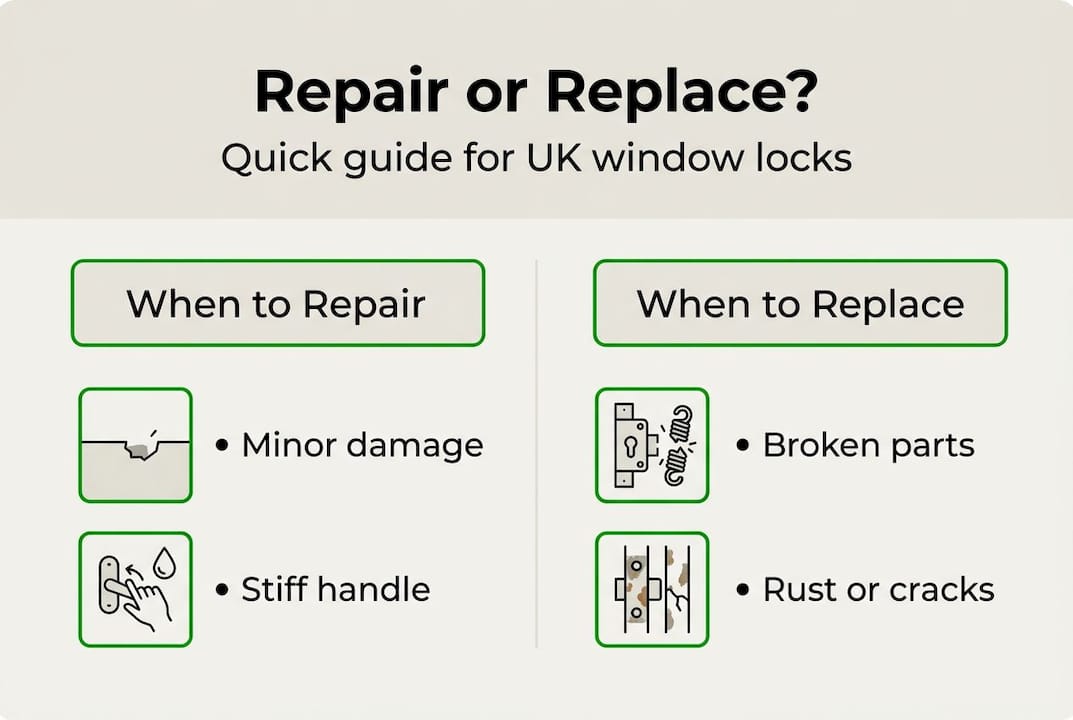
For most homeowners, the decision comes down to repair versus replace. A repair is usually the right call when the mechanism is fundamentally sound but has worn, shifted, or needs cleaning. Replacement makes more sense when the lock is old, visibly damaged, or no longer meets current security standards. Our lock and handle repair advice can help you work out which route is right for your situation.
Essential tools and materials for window lock repair
Once the importance is clear, ensure you have the right kit ready before starting repairs. Going in without the right tools is one of the most common reasons a simple job turns into a bigger problem.
For most window lock repairs, you will need:
- Flat-head and cross-head screwdrivers (various sizes)
- Allen keys, with a 4mm size being particularly common for uPVC hardware
- A silicone-based lubricant spray
- A soft cloth and mild cleaning solution
- Replacement screws (stainless steel where possible to resist corrosion)
- A small torch for inspecting tight spaces
- Safety glasses, particularly when working at height or with older frames
The right repair tools vary depending on your window frame material, and so do the cleaning and lubrication products you should use. Getting this wrong can cause more damage than the original fault.
Here is a quick reference table to help you match materials to frame type:
| Frame type | Cleaning product | Lubricant | Additional materials |
|---|---|---|---|
| uPVC | Mild detergent, warm water | Silicone spray | Replacement gaskets if needed |
| Aluminium | Metal cleaner, rust treatment | Silicone or light machine oil | Anti-corrosion primer |
| Timber | Damp cloth, wood cleaner | Wood treatment oil | Sandpaper (fine grade) |
For material-specific repair tips, the approach differs meaningfully. uPVC frames respond well to silicone spray and rarely need anything more aggressive. Aluminium frames can develop surface corrosion around the lock housing, so a metal cleaner applied before lubricating makes a real difference. Timber frames are the most variable. If the wood has swollen due to moisture, you may need to sand the edges lightly before the lock will seat properly again.
Our window materials guide covers the characteristics of each frame type in more detail, and our window maintenance tips offer broader advice on keeping your frames in good condition year-round.
Pro Tip: Avoid using WD-40 as a long-term lubricant on uPVC locks. It is a water displacer, not a true lubricant, and it can attract dirt and degrade plastic components over time. Silicone spray is the correct choice for uPVC and lasts far longer.
Step-by-step: how to repair window locks yourself
With your tools ready, move into the step-by-step repair process for window locks. The sequence below works for most frame types, with material-specific notes where relevant.
- Clean the lock and surrounding area. Remove dirt, dust, and old lubricant from the lock body, handle spindle, and keep. Use a soft cloth and appropriate cleaner for your frame type.
- Inspect for visible damage. Look for cracked plastic, bent metal, or stripped screws. If the lock body itself is cracked, replacement is the better option.
- Tighten all visible screws. Handle screws, backplate screws, and hinge bolts all loosen over time. A 4mm Allen key handles most uPVC handle fixings. Do not overtighten, as this can strip the thread.
- Lubricate the mechanism. Apply silicone spray to the lock body, the handle spindle, and the locking points. Work the handle several times to distribute the lubricant evenly.
- Check alignment. Close the window and observe whether the locking points meet the keeps cleanly. Misalignment is a common cause of stiff or incomplete locking.
- Adjust the keep if needed. Most keeps are held by two screws and can be shifted slightly up or down to improve alignment. Loosen, reposition, and retighten.
- Test thoroughly. Lock and unlock the window multiple times. The action should feel smooth and the lock should engage fully without forcing.
Here is a summary of when a quick fix is enough versus when a full repair is needed:
| Symptom | Quick fix | Full repair needed |
|---|---|---|
| Stiff handle | Lubricate spindle and lock body | No, unless persists after lubrication |
| Loose handle | Tighten Allen key screws | Only if thread is stripped |
| Lock not engaging fully | Adjust keep position | Replace gearbox if mechanism is worn |
| Key difficult to turn | Clean and lubricate barrel | Replace barrel if key still stiff |
| Window will not close flush | Sand timber or adjust hinges | Replace hinges if seized |
For different window materials, the DIY repair steps follow the same general sequence, but timber frames may need sanding at swollen edges before closing properly, and aluminium frames benefit from a rust treatment step if corrosion is present. For stuck window fixes, try releasing the cam or latch manually before assuming the mechanism has failed.
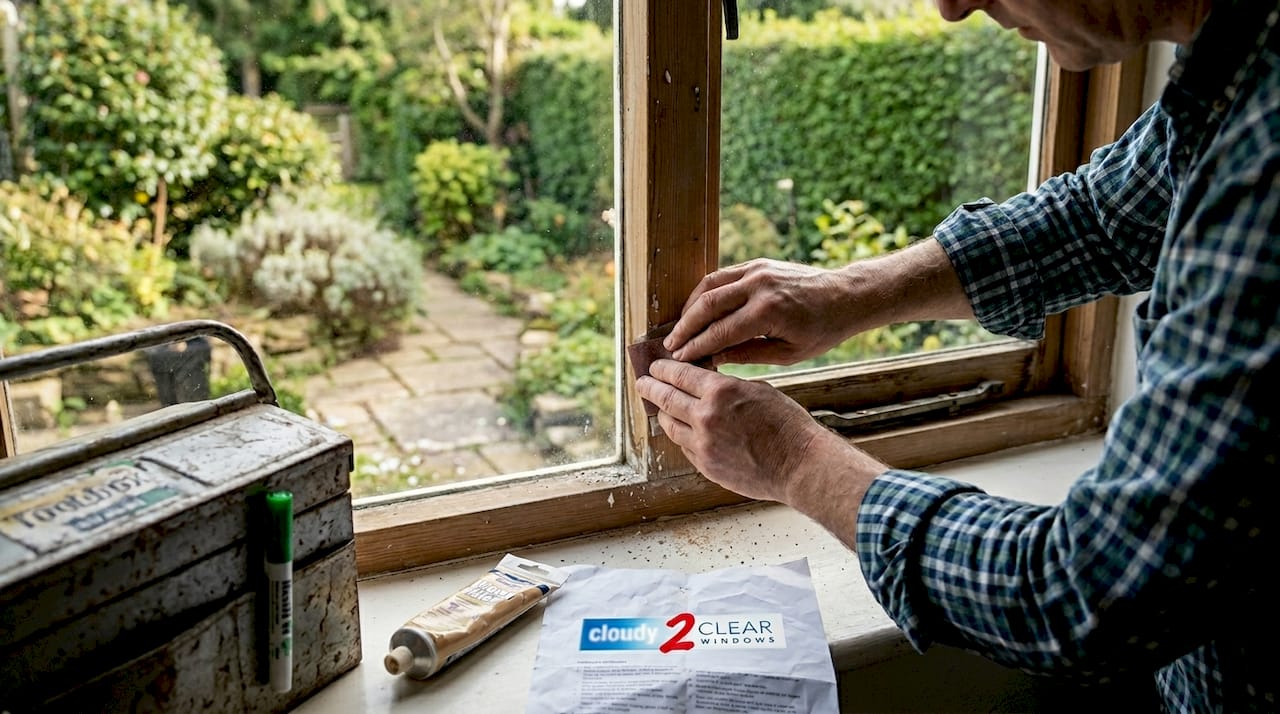
Pro Tip: If a handle feels completely seized, do not force it. Apply lubricant, leave it to penetrate for ten minutes, then try again with gentle, steady pressure. Forcing a seized handle can snap the spindle, turning a simple repair into a full mechanism replacement.
Troubleshooting, common mistakes and when to call in a professional
Even with good preparation, challenges can arise. Here is how to troubleshoot problems and recognise when DIY has reached its limit.
The most common mistakes people make during window lock repair are:
- Using the wrong lubricant (WD-40 on uPVC, or oil-based products on plastic components)
- Overtightening screws, which strips threads and makes future repairs harder
- Forcing a stuck lock or handle, which risks breaking the spindle or gearbox
- Ignoring alignment issues and just lubricating, which only delays the problem
- Replacing the handle without checking whether the underlying gearbox is also worn
If you have followed the steps above and the lock still does not work correctly, it is worth pausing before going further. Some faults genuinely require specialist tools or knowledge. Professional repair services are the sensible choice for complex multipoint locking systems, upper-floor windows where working safely is difficult, or any situation where the window cannot be secured overnight.
Signs you should stop and call a professional:
- The gearbox (the internal mechanism inside the frame) is visibly damaged or will not engage at all
- You have lost the key to a key-operated lock and cannot open the window
- The hinges are seized and the window cannot be opened safely
- The frame itself is warped or damaged, preventing proper closure
- You are working above ground floor level without safe access equipment
Understanding the window lock repair costs for 2026 helps you budget realistically. Handle replacement typically costs £60 to £150, a full mechanism replacement runs from £80 to £300, and fixing a jammed window generally falls between £80 and £180. These figures include labour, so a professional repair is often better value than it first appears, particularly when you factor in the cost of getting it wrong.
For broken window repairs or persistent lock faults, our professional lock repair team covers homes and businesses across the country. If you are based in the north west, our repair team in East Lancashire is well placed to help.
Pro Tip: If you are unsure whether the gearbox needs replacing, do not attempt to dismantle it yourself. Modern multipoint locking systems have many small components under spring tension. An incorrect reassembly can leave your window unsecurable.
What most guides miss about window lock repairs
Most DIY guides present window lock repair as a straightforward task with a clear outcome. In reality, the line between a job you can handle yourself and one that needs a professional is often blurry, and that ambiguity is worth addressing honestly.
The value of acting early is consistently underestimated. A stiff handle or a slightly misaligned keep costs almost nothing to fix if you catch it at the right moment. Leave it six months and the same fault can develop into a seized gearbox or a cracked spindle, both of which push you into the professional repair bracket.
There is also genuine debate about lubrication and DIY limits for different lock types. Some sources suggest that any homeowner can tackle any lock repair with the right video guide. We think that is too optimistic. Modern multipoint locking systems, which are standard on most double-glazed windows installed in the last two decades, are genuinely complex. Attempting to replace a gearbox without experience risks damaging the frame or leaving the window in a worse state.
Our view, shaped by nearly two decades of repairs across the UK, is simple. Try the basics confidently. Clean, lubricate, adjust, tighten. But know when to stop. Calling in an expert window lock repair specialist is not an admission of defeat. It is the right call when safety and security are on the line.
Let the experts help with complex repairs
Sometimes a window lock repair goes beyond what a screwdriver and silicone spray can fix. Whether it is a seized multipoint mechanism, a damaged gearbox, or a window that simply will not close securely, professional support is the fastest and most reliable route back to a secure home.

At Cloudy2Clear Windows, we have been repairing locks, handles, and hinges for homeowners and businesses across the UK since 2005. Our lock and handle specialists carry a wide range of replacement parts and can usually complete repairs in a single visit. If you also need broken window support, we handle that too. Our Milton Keynes repair team is just one example of our nationwide coverage. Get in touch today for transparent pricing and a fast, guaranteed repair.
Frequently asked questions
What are the first signs a window lock is starting to fail?
A stiff key or loose handle are usually the earliest indicators, often appearing well before the lock stops working completely. Catching these signs early makes repair far simpler and less costly.
Can I repair a jammed window lock myself?
Yes, in many cases cleaning, lubricating, and adjusting the alignment or screws resolves the fault. However, persistent or serious issues such as a damaged gearbox or seized mechanism are better handled by a professional.
How much does window lock repair cost in the UK in 2026?
According to current estimates, handle replacement costs typically run from £60 to £150, a mechanism replacement from £80 to £300, and fixing a jammed window from £80 to £180, all including labour.
Which lubricant is best for uPVC window locks?
Silicone spray is recommended for uPVC locks because it does not attract dirt, does not degrade plastic, and provides long-lasting lubrication. Avoid WD-40 as a substitute.