Double glazing offers excellent insulation and weather protection, but it is not immune to leaks. Many UK homeowners and business owners are caught off guard when water finds its way inside during a heavy downpour, despite having relatively modern windows installed. The truth is that most window leaks are not sudden failures; they are the result of gradual neglect and small issues that compound over time. This guide gives you a practical, expert-backed checklist to help you stay ahead of leaks, protect your property, and avoid the costly consequences of water damage working its way silently through your building.
Core checklist for preventing window leaks
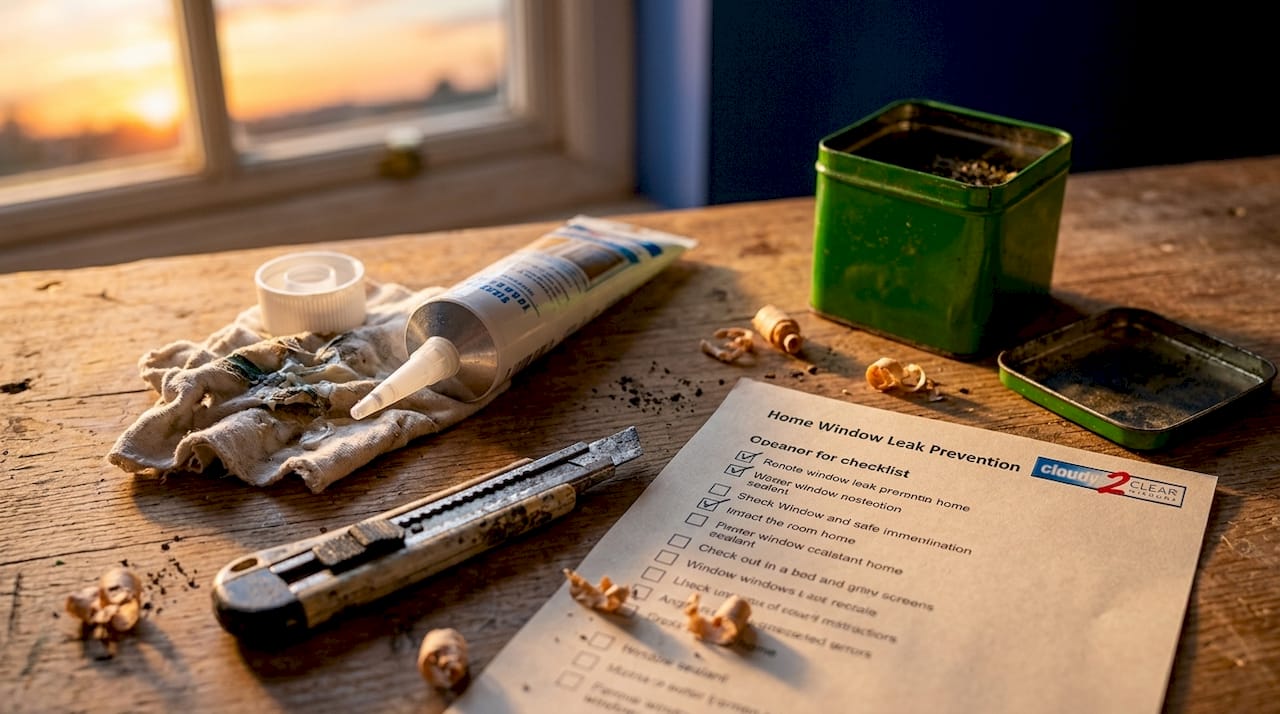
After introducing the need for a preventative mindset, let’s break down the essential steps into a practical checklist you can follow regularly. These steps are straightforward, require no specialist tools for the most part, and can genuinely save you hundreds or even thousands of pounds in repairs if followed consistently.
- Inspect your window seals twice a year. Regularly inspect seals for cracks, gaps, shrinkage, or brittleness every spring and autumn. Run your finger along the perimeter seal where the frame meets the wall and where the glass meets the frame. Any seal that feels hard, cracked, or has visible gaps needs attention. Soft, pliable, unbroken sealant is your first line of defence against rainwater entry.
- Clean drainage channels and weep holes. Weep holes are small openings built into uPVC and aluminium frames that allow rainwater to drain away rather than pool and seep inside. Clean drainage channels and weep holes one to two times per year. Use a thin tool such as a matchstick or cotton bud to clear compacted dirt. Pay particular attention after winter when debris can build up or after any exterior painting work, as paint is a common culprit for blocked weep holes.
- Lubricate moving parts annually. Hinges, locks, and handles that stiffen over time can stop your window from closing fully and creating a proper seal. Lubricate hinges and locks annually using a silicone-based lubricant rather than oil-based products, which can attract dirt and damage rubber seals. A few minutes with a can of silicone spray keeps everything moving smoothly and ensures your window closes snugly every time.
- Check frames for warping, paint failure, and loose hardware. Check for frame warping and peeling paint, and tighten any loose screws in hinges or handles. A warped frame, even slightly, can create a gap through which wind-driven rain enters. Wooden frames in particular can expand and contract with seasonal changes, making this check especially important for older properties.
- Test your windows for draughts. On a windy day, hold your hand around the window frame edge. Any cool air movement indicates a gap in the seal. You can also use a lit incense stick; if the smoke wavers near the frame, air is getting through. Where air gets in, water will follow.
- Examine the external mastic or silicone bead. The external bead is the thin line of sealant applied where the frame meets the brickwork or render. Over time, UV exposure and thermal movement cause this to crack or shrink away from the surface. Reapplying external sealant is a straightforward DIY task if the gap is small, but for larger failures, professional fixing window leaks may be necessary.
- Inspect for signs of water ingress internally. Look at walls and window boards below and around your windows for water staining, bubbling paint, or soft plasterboard. These are indicators that detecting water leaks may already be happening behind the surface, even if no puddle is visible.
Pro Tip: Add these checks to your spring cleaning and autumn maintenance routines so they become habits. Setting a recurring reminder on your phone takes seconds and could save you a significant repair bill down the line.
Recognising the warning signs of leaks
Once you know what to check, it is equally important to spot the symptoms of trouble in time. Many leaks give clear signals well before they become serious problems, and catching them early makes all the difference.
- Puddles or water trails near windows after rain. Even small amounts of water collecting on an internal window sill after heavy rain are not normal and warrant investigation.
- Condensation between the two panes of glass. This is a very specific symptom. If you see misting or droplets between the panes rather than on the surface, the sealed unit’s internal seal has failed. Read more about condensation and double glazing to understand what this means for your windows.
- Black mould, musty smells, or peeling paint around frames. These are signs of persistent moisture sitting in or around the frame. Mould is a health concern as well as a structural one.
- Whistling or draughts near windows during strong wind. A draught is essentially a seal failure. If your window whistles in the wind, it is not closing properly and is vulnerable to water entry.
- Apparent leaks that appear only after painting. This is a specific issue with uPVC and aluminium windows. Decorators sometimes inadvertently block weep holes with paint, causing water to back up and enter the frame. Blocked weep holes are common in the UK, and condensation between panes indicates a failed IGU (insulated glass unit) seal, not something you can fix with a tube of sealant.
Worth remembering: Many symptoms of window leaks look like general damp problems. Before spending money on damp-proofing treatments, always rule out window faults first. Addressing spotting window damage early is nearly always less expensive than treating the downstream effects.
Comparing maintenance priorities: what matters most?
Now that you know how to spot problems, you may wonder where to focus your efforts depending on the windows you have. The type of frame material and the age of your windows both affect how much maintenance attention they need. This table gives you a clear, practical guide.
| Window type | Seal inspection | Drainage cleaning | Paint or frame care | Lubrication | Inspection frequency |
|---|---|---|---|---|---|
| uPVC | High priority | Very high priority | Low (no paint needed) | Annual | Twice yearly |
| Aluminium | High priority | Very high priority | Low | Annual | Twice yearly |
| Timber | High priority | Medium priority | Very high priority | Annual | Three times yearly |
| Windows over 10 years old | Critical | Critical | High | Every 6 months | Three times yearly |
| Previously leaking units | Critical | Critical | High | Every 6 months | Quarterly |
Proper installation prevents leaks from poor sealing, but even well-installed windows need consistent upkeep to remain effective. uPVC and aluminium frames are low-maintenance in many respects, but their drainage channels collect debris efficiently and need clearing regularly. Timber frames require a more hands-on approach: paint or preservative must be kept intact to prevent moisture absorption into the wood, which leads to swelling, warping, and eventual seal breakdown.
Understanding window seal lifespan is also key. Most sealed glass units are designed to last between 10 and 25 years, but exposure to UV, temperature swings, and poor installation can significantly shorten this. If your windows are approaching or past the 10-year mark without any professional inspection, it is worth booking one. Similarly, learning about window seal failure causes helps you identify risks before they become repair jobs.
Pro Tip: If you have windows over 10 years old, or if you have had previous leaks, double up your inspection frequency. The cost of time spent checking is infinitely smaller than the cost of replacing a water-damaged window frame, subframe, or internal wall.
Maintenance checklist for businesses vs. homes
For business owners and managers, taking a commercial approach means considering a few additions to the core checklist. The fundamental principles of seal inspection, drainage cleaning, and lubrication apply equally, but commercial properties often present added complexity.
Commercial windows may have more complex hardware and cleaning regimes, but the fundamentals of seals and drainage remain the same. Here is how the priorities shift in a commercial context:
| Task | Residential | Commercial |
|---|---|---|
| Seal inspection | Twice yearly, owner-led | Twice yearly, assign to facilities staff |
| Drainage and weep hole cleaning | DIY with basic tools | May require professional cleaning for high or large windows |
| Lubrication of hardware | Annual, DIY | Annual, may need specialist hardware knowledge |
| Scheduled professional inspection | As needed | Annually or per compliance requirements |
| Record-keeping | Not essential | Strongly recommended for liability and insurance |
| Locking mechanism checks | Basic | May involve complex multi-point or access-control systems |
Key considerations for business owners:
- Assign responsibility clearly. Designate a member of building or facilities staff to carry out and log routine checks. Consistency matters far more than perfection.
- Consider your compliance obligations. Some commercial leases and insurance policies require evidence of regular maintenance. Keeping a simple log of inspections protects you in the event of a dispute.
- Arrange professional cleaning for inaccessible windows. High-level windows in commercial buildings often require specialist access equipment for proper cleaning and inspection.
- Do not delay repairs. A leaking window in a commercial premises can lead to stock damage, slip hazards, and reputational issues with customers or clients.
Protecting your commercial property from water damage is not just about windows. Reviewing guidance on preventing water damage gives useful broader context for how window maintenance fits into an overall property protection strategy. For tailored advice on keeping your business premises in good shape, our commercial maintenance tips cover the topic in detail.
Reviewing common window and door faults is also a useful habit for facility managers, as many faults that lead to leaks start as minor, easily corrected issues.
Why most window leaks go unnoticed — and what actually works long-term
We have covered the practical steps. But what do most people actually get wrong, and what is the honest picture of keeping windows dry year-round?
In our experience, the biggest mistake people make is waiting for a visible puddle before taking action. By the time water is sitting on your window sill, it has likely been travelling through a gap or degraded seal for weeks, possibly months. Water follows the path of least resistance, which means it moves slowly through gaps, along surfaces, and into cavities. The damage it causes in the meantime is silent: softening timber, corroding metal fixings, feeding mould, and degrading insulation.
The UK’s climate makes this worse. We do not have weeks of heavy, consistent rain that makes leaks immediately obvious. Instead, we have wind-driven drizzle, intermittent downpours, and freeze-thaw cycles in winter. This combination is particularly brutal on window seals and frames. A weep hole blocked by a summer’s worth of dust and pollen becomes a serious liability by November. And yet, clearing weep holes takes less than five minutes per window.
One misconception we encounter frequently is the idea that condensation between panes can be fixed by resealing the outside of the frame. It cannot. Condensation between panes means the full glass unit needs replacement, not just resealing. The sealed cavity between the panes has been compromised, and no amount of external sealant will restore its integrity. Recognising this distinction saves you from spending money on a repair that will not solve the problem. Understanding why window seals matter goes beyond just leak prevention; it connects directly to your heating costs and overall comfort.
The most effective approach is always the same: small, regular actions consistently applied. A twice-yearly inspection, annual lubrication, and keeping drainage clear will prevent the vast majority of leaks. This is not complicated advice, but it is the kind that makes a measurable difference over the life of your windows.
Get help with persistent leaks or repairs
If your own checks reveal deeper problems, or if you simply want peace of mind, professional assistance can make a significant difference. Preventative maintenance handles most issues, but there are times when a seal has failed completely, a unit has fogged internally, or a frame has warped beyond adjustment. In those cases, a professional repair or replacement is the right step.

At Cloudy2Clear Windows, we have been helping homeowners and business owners across England and Scotland resolve window problems since 2005. Whether you need a single failed glass unit replaced, a full seal repair, or a professional assessment of your entire property’s windows, our experienced team is ready to help. We specialise in replacing just the glass within existing frames where possible, saving you the cost and disruption of a full window replacement. Visit our website to find your nearest team and get the support your windows need before a small issue becomes an expensive problem.
Frequently asked questions
How often should I check window seals and drainage to prevent leaks?
You should inspect seals twice a year, ideally every spring and autumn, and clear drainage channels at the same time to prevent blockages from causing water ingress.
What does condensation inside double glazing mean?
Condensation between the panes indicates that the internal IGU seal has failed, meaning the sealed glass unit requires full replacement rather than external resealing.
Can blocked weep holes cause window leaks?
Yes, blocked weep holes from paint or accumulated dirt are a common cause of apparent leaks in the UK; clearing them regularly prevents water from pooling and backing up into the frame.
Do commercial windows require a different leak prevention approach?
The core steps are the same, but commercial windows may involve more complex hardware and benefit from scheduled professional inspections alongside assigned staff responsibility for routine checks.
Is annual lubrication necessary for all window types?
Yes, lubricating hinges and locks annually with a silicone-based product keeps all moving parts functioning correctly and ensures windows close fully to maintain a proper weather seal.