Neglecting your commercial double glazed windows is a slow drain on your budget, your building’s appearance, and your energy bills. Water ingress alone, resulting from delayed sealant inspection, can cost businesses between £6,000 and £20,000 to remediate once damage has taken hold. Most of those costs are entirely preventable. This guide walks you through a practical, expert-backed framework for maintaining commercial double glazed windows, covering everything from routine cleaning and inspection to dealing with failed seals and knowing when to bring in professional support.
Understanding double glazed window maintenance needs
Commercial double glazed windows face considerably more wear than their residential counterparts. Higher footfall, greater exposure to the elements, and stricter regulatory expectations all mean your maintenance requirements need to be planned, documented, and consistently executed. Getting a handle on what those requirements look like is the first step.
What standards actually require
In commercial settings, window maintenance is not simply a matter of aesthetics. Recognised standards such as those set by ASTM International and the American Architectural Manufacturers Association (AAMA) define the inspection cycles and materials required to keep glazing systems performing safely. For commercial properties, sealant reapplication every 3 to 5 years in harsher climates is recommended, with more frequent inspections where exposure is particularly severe. These are not optional guidelines; they inform building compliance and can affect insurance terms.
In the UK commercial context, this translates to regular inspection of structural silicone sealants, weather seals, weep holes, and frame integrity. Weep holes, the small drainage channels built into window frames, are easy to overlook but are critical for preventing water from pooling inside the frame cavity. A blocked weep hole can lead to water ingress inside your building fabric within weeks during a wet English winter.
Key risks for commercial buildings
Understanding risk helps you prioritise. Here are the main failure points to monitor:
- Failed insulating glass unit (IGU) seals: The sealed unit between double glazed panes contains either argon gas or dry air that provides thermal insulation. When the perimeter seal degrades, moisture infiltrates and fogging appears between the panes.
- Water ingress through sealant joints: Silicone and polyurethane sealants around frames degrade over time. Cracks allow water to track through the building envelope.
- Damaged or stiff hardware: Hinges, friction stays, and locking mechanisms need to operate freely. Faulty hardware puts stress on frames and seals.
- Condensation and mould: Persistent moisture on or around frames can lead to mould growth, which creates health risks and can trigger complaints.
| Risk factor | Likely cause | Potential impact |
|---|---|---|
| Fogged glass between panes | Failed IGU seal | Reduced thermal efficiency, poor appearance |
| Water stains on interior walls | Blocked weep holes or failed sealant | Structural damage, high remediation cost |
| Draught from closed windows | Worn weather seal | Higher heating bills, occupant discomfort |
| Difficult to open or close | Stiff or corroded hardware | Security risk, frame stress |
If you are already seeing signs of seal deterioration, understanding your options for repairing failed double glazing is an important next step before the problem escalates.
Tools and materials checklist for commercial window maintenance
With an understanding of what is required, it is time to look at the tools and supplies that make commercial maintenance both safe and effective. Having the right equipment on site before you start prevents interruption and ensures you work without causing accidental damage.
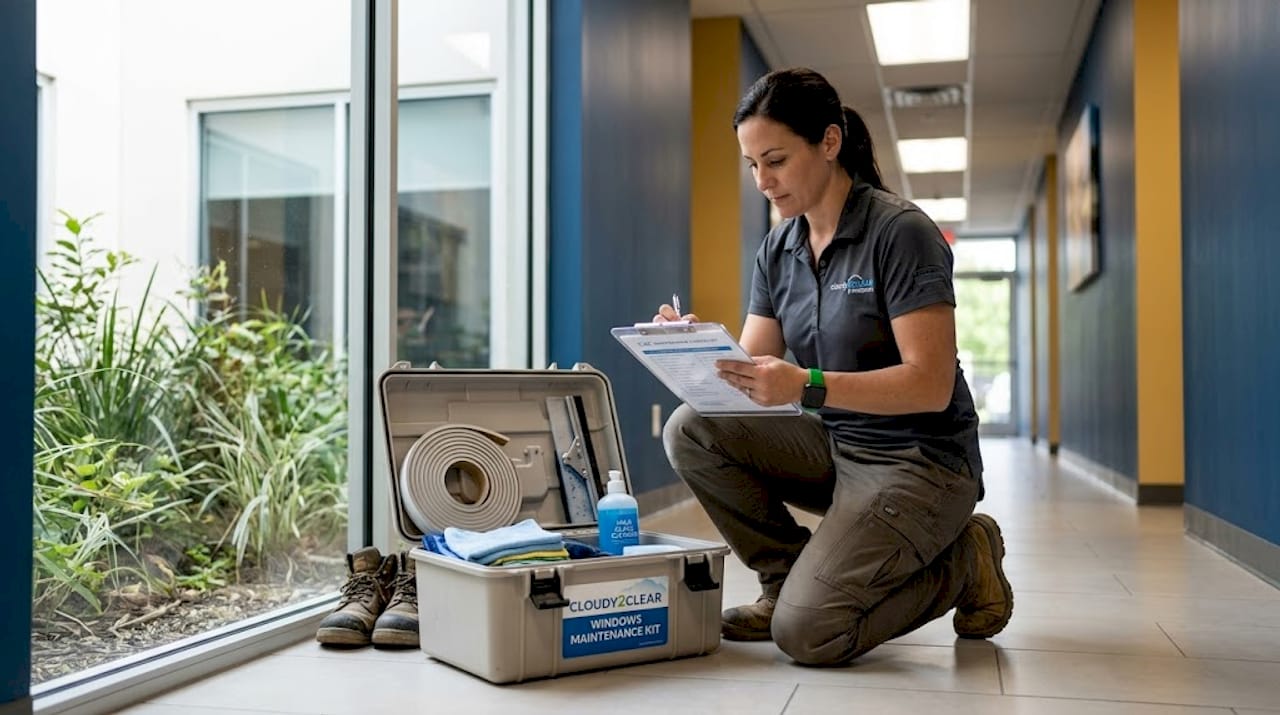
Essential tools and cleaning materials
Commercial window maintenance requires a more structured approach than simply grabbing a cloth and some spray cleaner. Here is a summary of what you will need:
| Category | Recommended items |
|---|---|
| Cleaning tools | Soft microfibre cloths, squeegee with rubber blade, soft-bristled brush |
| Cleaning agents | Warm soapy water (washing-up liquid), specialist uPVC cleaner, white vinegar solution for light mineral deposits |
| Inspection tools | Torch, mirror on an extendable handle, moisture meter |
| Safety equipment | Non-slip footwear, safety harness for high-level work, PPE gloves |
| Repair and maintenance supplies | Silicone lubricant for hinges, spare weather seal tape, masking tape for sealant work |
What you should never use on double glazed windows is just as important as what you should use. Avoid these at all costs:
- Abrasive cloths or scourers: These scratch glass and uPVC frames permanently.
- Solvent-based cleaners: Products containing acetone, white spirit, or bleach degrade rubber seals and discolour uPVC frames.
- Pressure washers: The high-pressure jet forces water past seals and into cavities, accelerating failure.
- Razor blades or sharp scrapers: Though tempting for stubborn residue, these leave micro-scratches that catch dirt and weaken glass surfaces over time.
All reputable commercial cleaning and maintenance sources agree on the same core principles: use mild cleaners and gentle tools, leave seal repairs to qualified professionals, and carry out regular visual checks for efficiency. This consensus is your baseline.
Pro Tip: Keep a maintenance kit stored in an accessible location on each floor of your building. Include spare weather seal tape, silicone spray, and a fresh microfibre cloth so that small issues, like a stiff hinge or a minor draught, can be addressed immediately without waiting for a scheduled visit.
Step-by-step: Routine commercial window inspection and cleaning
With your tools ready, here is how to carry out a robust inspection and cleaning routine for your commercial windows. Whether you manage a single office building or a portfolio of properties, this process should be standardised so that every window is treated consistently.
Your routine inspection process
- Start with a visual survey from the exterior. Walk the perimeter of the building and note any visible damage to frames, sealant, or glass. Look for cracks in sealant beads, discolouration of frames, or signs of water tracking down external walls below window openings.
- Inspect weep holes. Using a torch if necessary, confirm that each weep hole is clear of debris, dirt, and paint. A fine wire or compressed air can clear minor blockages. Blocked weep holes are among the most common and most avoidable causes of water ingress in commercial buildings.
- Check the perimeter sealant. Run a finger along the silicone bead where the frame meets the building fabric. Any cracking, shrinkage, or gaps are early warning signs. The mandatory annual inspection of structural silicone sealants exists precisely because a small gap that costs very little to reseal today can result in water infiltration costing tens of thousands to repair once damage spreads into wall fabric and insulation.
- Inspect the glazing unit itself. Look closely at the glass from inside and outside. Fogging, condensation, or a rainbow sheen between the panes signals a failing seal. Record the location and take a photograph.
- Test all hardware. Open, close, and lock every window. Friction stays should hold the sash in position. Locks should engage cleanly. Hinges should not squeak or bind. Apply silicone lubricant to hinges and pivot points where needed.
- Clean frames and glass. Use warm soapy water and a microfibre cloth for frames. For glass, use a squeegee and a clean rubber blade working from top to bottom. Rinse with clean water and buff with a dry cloth. For issues related to fixing condensation issues inside the unit, cleaning the surface will not resolve the underlying fault.
- Document everything. Record your findings in writing. Note the window reference, the condition found, any action taken, and any issues escalated for professional attention.
Good practice: A comparison table helps you track window condition across inspection cycles and spot gradual deterioration before it becomes a costly fault.
| Inspection item | Pass criteria | Fail criteria | Action required |
|---|---|---|---|
| Sealant bead | Continuous, flexible, no gaps | Cracking, shrinkage, gaps | Reseal or call specialist |
| Weep holes | Clear, unobstructed | Blocked or absent | Clear or report |
| Glass unit | Clear, no fogging | Condensation, rainbow sheen | Log and escalate |
| Hardware | Operates smoothly | Stiff, binding, or failing to lock | Lubricate or replace |
| Frame condition | Clean, no discolouration | Staining, swelling, or cracks | Monitor or repair |
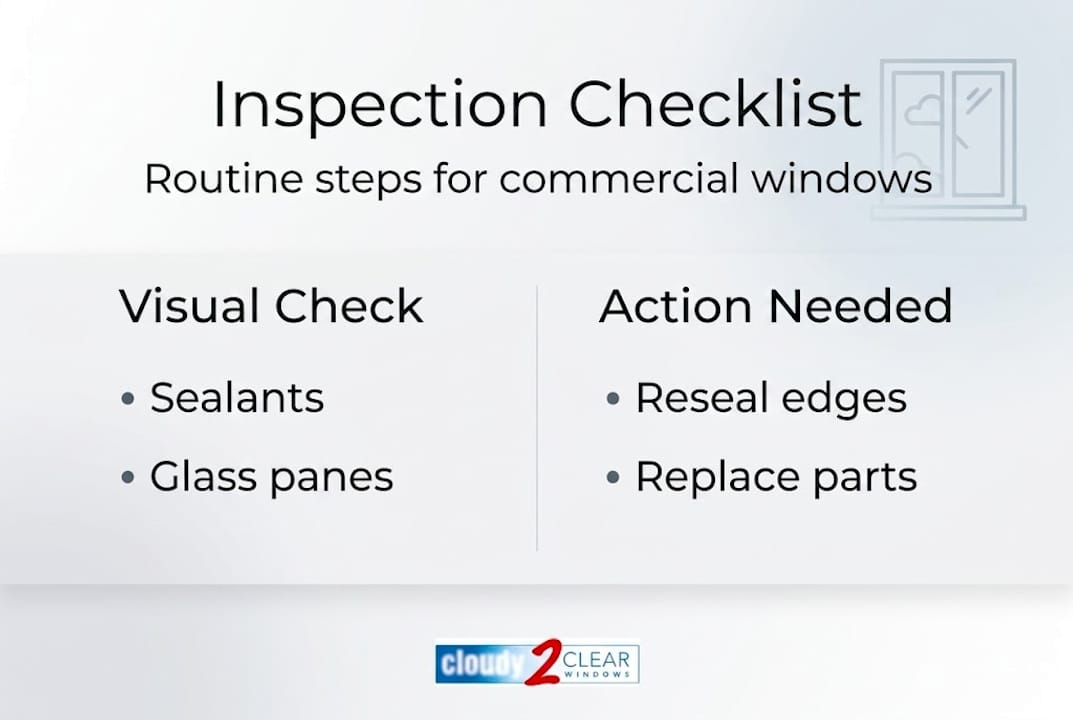
Pro Tip: Use a digital maintenance log, either a spreadsheet or a dedicated facilities management app, to record each inspection. A well-maintained log is invaluable during insurance assessments and provides evidence of compliance with your obligations as a property manager.
Dealing with common issues: Failed seals, condensation and damage
Even with strong maintenance habits, issues can and do arise. Knowing how to identify the most common faults quickly, and understanding when they require professional intervention, will save you time and money.
Surface condensation versus seal failure
This is a distinction that matters enormously. Surface condensation, which appears on the interior pane of a window, is usually caused by humidity inside the building. It is a ventilation issue, not a window fault. You can often resolve it by improving airflow, reducing humidity sources, or checking that your heating system maintains an even temperature near the window line.
Seal failure is entirely different. Condensation between the panes indicates a failed seal and argon gas loss within the insulating glass unit. This requires professional repair, not a cleaning exercise. Wiping the glass will not remove it because the moisture is trapped inside a sealed cavity that you cannot access without specialist equipment.
Signs that demand professional attention
Be alert to these specific warning signs in your properties:
- Persistent fogging between panes: Not temporary, not worsening with humidity, but a fixed, cloudy appearance inside the unit.
- Visible water inside the frame cavity: Water sitting in the frame channel even after dry weather signals a compromised seal or sealant joint.
- Cracks in the glass itself: Even hairline cracks compromise the unit’s thermal and acoustic performance, and in some positions represent a safety risk.
- Structural silicone failure on curtain walls: On larger commercial glazing systems, failed structural silicone is a serious matter that needs urgent professional assessment.
Remember: Delaying action on a failed seal does not simply mean living with a cloudy window. The loss of argon gas from a failed IGU significantly reduces your window’s thermal performance, raising heating costs across every affected unit. Over a large commercial building, this adds up to a meaningful increase in energy expenditure month on month.
For repairing commercial window seal failure, professional services can typically replace the failed IGU without replacing the entire frame, which is a far more cost-effective solution than full window replacement in most cases.
Establishing an escalation protocol
Not every issue requires the same response. Build a simple protocol into your maintenance programme:
- Minor issues (blocked weep holes, stiff hinges, minor sealant cracking): Resolve in-house at the next scheduled maintenance visit.
- Moderate issues (confirmed seal failure, persistent condensation, hardware breakage): Log, photograph, and schedule a professional inspection within 30 days.
- Urgent issues (cracked glass, water actively entering the building, structural silicone failure on curtain walls): Contact a specialist within 24 to 48 hours. If you are in the north west of England, local repair specialists can often attend quickly to assess urgent faults before they worsen.
Why proactive commercial window care pays for itself
Here is something that often surprises property managers when they review their maintenance records: the majority of serious window failures did not arrive without warning. There were signs, and those signs were either missed or noted but not acted upon promptly. The “fix it when it breaks” mindset is genuinely costly in the glazing world.
We have seen this pattern repeatedly since Cloudy2Clear Windows was established in 2005. A building manager notices a small patch of fogging in one window, makes a note, and moves on. Twelve months later, half the units on that elevation are showing seal failure, the heating bills have crept up noticeably, and the replacement programme now runs to tens of thousands of pounds.
Proactive maintenance changes that equation. When you inspect annually, reseal at the intervals your climate demands, and address small faults early, you extend the serviceable life of your windows significantly. You also protect your building’s appearance, which matters enormously if your premises are client-facing. A fogged, stained, or draughty window communicates poor upkeep to every visitor who sees it.
There is also a compliance dimension that is easy to overlook until it becomes urgent. Regulators and insurers take a much more favourable view of a property manager who can demonstrate consistent, documented maintenance than one who cannot. A clear record of annual inspections and timely repairs is genuine evidence of duty of care. That is not just good housekeeping; it can influence the outcome of an insurance claim or a building inspection significantly.
Expert commercial window repair and replacement
If your inspections reveal more than you want to handle in-house, specialist support is closer than you might think.

At Cloudy2Clear Windows, we have been helping commercial property managers across England keep their windows performing at their best since 2005. From single IGU replacements to full planned maintenance programmes, our commercial window repair services are designed to fit around your building’s schedule and your budget. Whether you need urgent attention for a failed seal or want to put a structured maintenance plan in place, our team of commercial fenestration experts is ready to help. Get in touch today and we will assess your windows and provide straightforward, no-obligation advice on the best route forward.
Frequently asked questions
How often should commercial double glazed windows be inspected?
At minimum, windows should be inspected annually per ASTM standards to prevent costly water ingress and compliance issues, with more frequent checks in harsher or more exposed locations.
What does condensation between panes mean?
Condensation between panes signals a failed seal and argon gas loss within the insulating glass unit, which requires professional repair rather than surface cleaning.
Can you fix failed window seals in-house?
Failed double glazing seals should be handled by qualified professionals to ensure lasting results and maintain compliance; attempting DIY repairs typically worsens the problem and may void any remaining warranty.
What are the most common causes of window leaks in commercial properties?
The most common causes are deteriorated sealants and blocked weep holes, both of which can be identified and addressed through routine annual inspections before they cause significant water damage.
Is regular cleaning enough to prevent window problems?
Regular cleaning supports good window condition, but professional seal inspections and repairs must accompany it to provide effective, long-term protection for commercial double glazed windows.