Removing broken glass safely means protecting yourself first, then cleaning methodically, and disposing of it correctly under UK regulations. Put on heavy-duty, puncture-resistant gloves and closed-toe shoes before you touch anything. Secure the area so no one else walks in. Collect large shards using a dustpan and broom or tongs, never your bare hands. Pick up tiny fragments with damp paper towels, adhesive tape, or a vacuum cleaner. Finally, place everything in a puncture-proof container, label it clearly as DANGER: BROKEN GLASS, and dispose of it following 2026 UK waste guidance, which means general residual waste or a Household Waste and Recycling Centre, not your kerbside recycling bin.
- Wear heavy-duty, puncture-resistant gloves and closed-toe shoes
- Secure the area from people and pets before starting
- Collect large shards with a dustpan and broom or tongs
- Use damp paper towels, adhesive tape, or a vacuum for small fragments
- Contain all glass in a puncture-proof, labelled container
- Dispose via general waste or a Household Waste and Recycling Centre
How to remove broken glass safely: step-by-step
A calm, methodical approach is the single most effective way to avoid injury. Rushing is the most common mistake that leads to cuts, so work through each stage deliberately.
Step 1: Put on your PPE. Standard household rubber or nitrile gloves will not protect you. You need thick, heavy-duty leather or puncture-resistant work gloves. Add safety goggles if there is any risk of fragments flying upward, and wear sturdy closed-toe shoes throughout.
Step 2: Secure the area. Remove children and pets from the room immediately. Close doors and, if you are in a commercial setting, use barriers or signage to prevent colleagues from entering.
Step 3: Remove large shards first. Use a dustpan and broom, tongs, or tweezers to collect the biggest pieces. Place them directly onto a thick layer of newspaper or kitchen roll spread nearby. Avoid using a broom as your primary tool if possible, as glass fragments can lodge in the bristles and be difficult to dislodge safely.
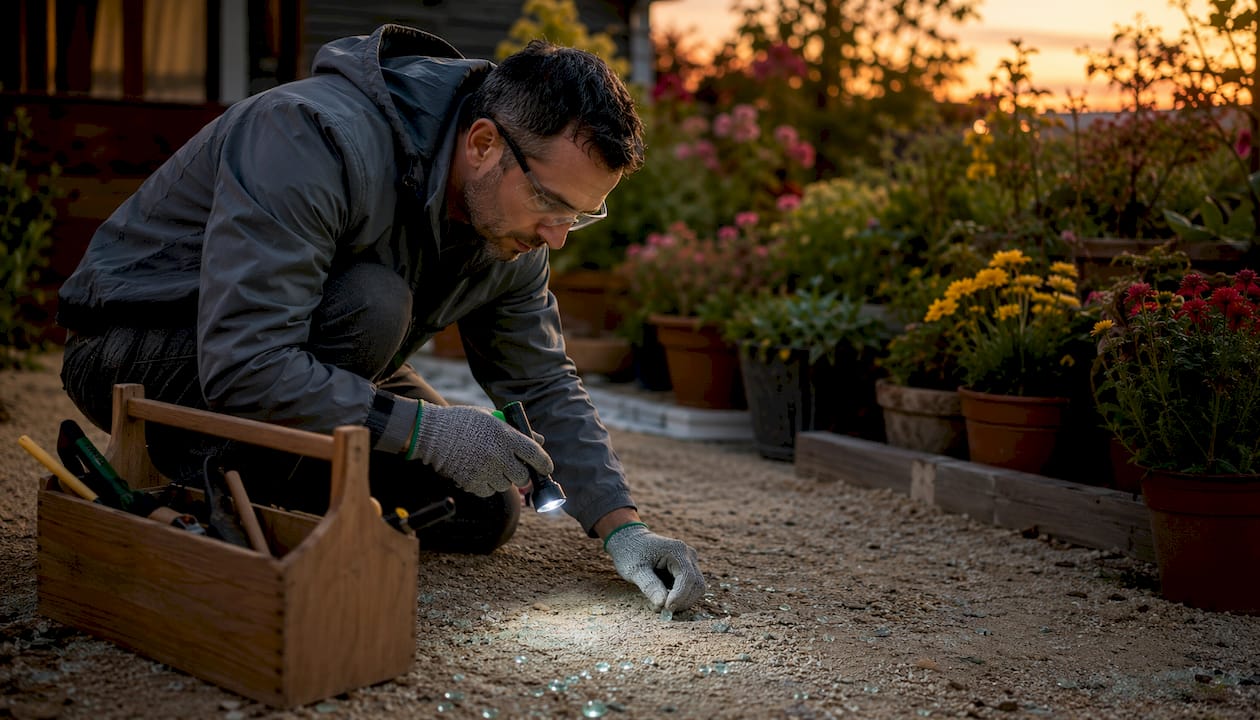
Step 4: Tackle tiny fragments. Press a folded damp paper towel gently over the affected area. The smallest shards will cling to it. Adhesive tape wrapped sticky-side-out around your gloved hand works equally well. A vacuum cleaner handles any remaining dust-sized splinters.
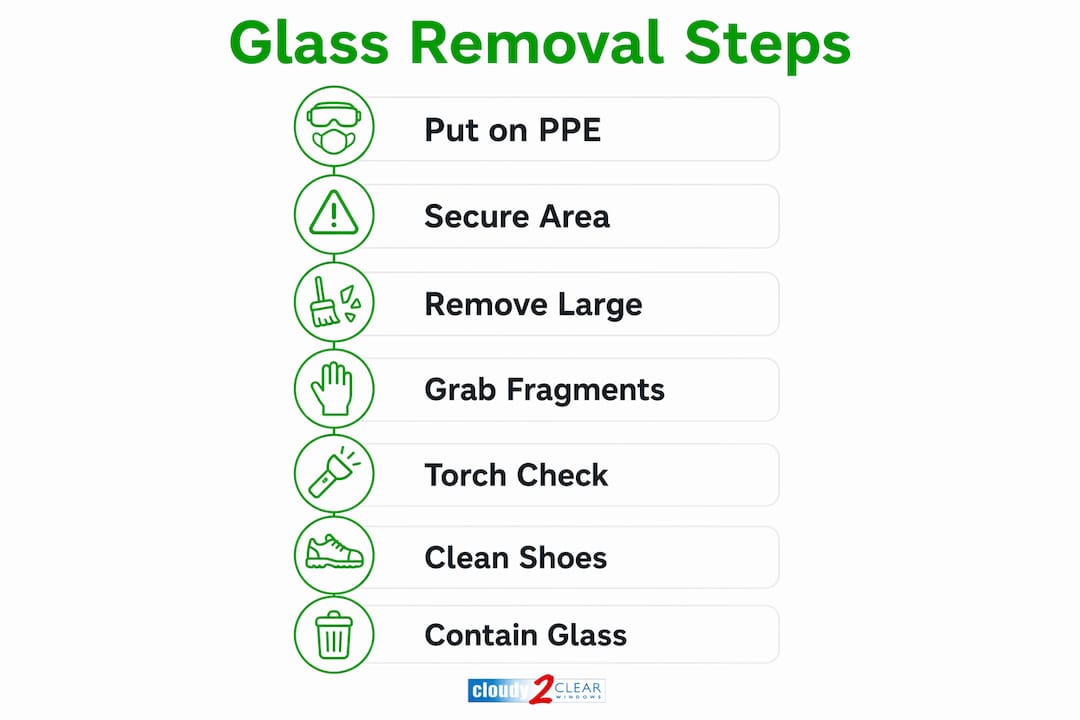
Step 5: Inspect with a torch. Hold a torch at a low angle across the floor. The light catches the edges of any missed slivers, making them visible before you stand up and move around.
Step 6: Clean your shoes. Before leaving the area, check the soles of your footwear. Glass travels farther than you expect, and carrying fragments into another room creates a secondary hazard.
Step 7: Wrap and contain. Wrap the collected glass in several layers of newspaper, place it inside a rigid cardboard box or sturdy plastic tub, and seal it with strong packing tape.
Pro Tip: Never kneel on the floor during cleanup. Stand and bend at the waist, or sit on a low stool. Kneeling puts your knees directly in contact with any shards you have not yet spotted.
How should you dispose of broken glass in the UK?
Broken window glass is excluded from household recycling under 2026 UK waste guidance. Window panes, mirrors, drinking glasses, and Pyrex all have different melting points and compositions from bottle glass, so they cannot be processed at standard recycling facilities. Putting them in your kerbside bin creates a serious injury risk for collection crews.
Your two compliant options are:
- General residual waste bin: Only after the glass is securely wrapped and contained in a puncture-proof box, sealed with tape, and labelled on all sides.
- Household Waste and Recycling Centre (HWRC): The preferred route for larger quantities such as a full window pane. Staff at HWRCs are equipped to handle it, and many sites have dedicated skips for flat glass.
Labelling is not optional. Write DANGER: BROKEN GLASS in large, clear letters on every side of the container using a permanent marker. This protects your household, your neighbours, and the waste workers who handle thousands of bins every day. Dorset Council explicitly forbids broken glass of any kind in kerbside recycling bins, and this approach is consistent with council guidance across the UK.
Avoid bottle banks for broken glass. These are designed for whole, unbroken bottles, and broken shards can injure members of the public using the bank and the staff who empty it.
| Glass type | Kerbside recycling? | Correct disposal |
|---|---|---|
| Window panes / flat glass | No | HWRC or general waste (wrapped and labelled) |
| Mirrors | No | General waste (small) or HWRC |
| Drinking glasses | No | General waste (wrapped and labelled) |
| Pyrex / ovenproof dishes | No | General waste or HWRC |
| Broken bottles or jars | No | General waste (wrapped) or HWRC |
| Whole glass bottles and jars | Yes | Kerbside recycling bin |
When should you call a professional glazier?
Some glass breakages go beyond what you should handle yourself. The Glass and Glazing Federation (GGF) is clear: wherever possible, do not attempt to remove broken glass from window or door framing yourself.
Situations that warrant professional help include:
- High-level or inclined glazing, where fragments could fall without warning onto people below
- Structural glazing or large window panes, where removing glass risks damaging the frame or surrounding structure
- Commercial premises, where health and safety obligations require documented, compliant remediation
- Double glazed units, where the sealed unit must be replaced correctly to maintain thermal performance
A professional glazier brings the right tools, protective equipment, and knowledge of post-breakage assessment to prevent recurring failures. GGF members offer emergency glazing repair services, and Cloudy2Clear Windows provides broken window repair for both residential and commercial properties across the UK.
For business owners, the stakes are higher still. A broken window in a commercial setting creates liability, and a professional assessment confirms the replacement meets current building regulations. Cloudy2Clear Windows also covers commercial glass repairs for exactly these situations.
How to treat injuries from broken glass
Act quickly if glass cuts you, but stay calm. Most minor cuts can be managed at home with basic first aid.
For minor cuts: Rinse the wound under clean running water to flush out any glass fragments. Apply gentle pressure with a clean cloth or sterile gauze to stop bleeding. Once bleeding has slowed, apply an adhesive plaster or sterile dressing. Check the wound carefully under good light for any embedded fragments before covering it.
If glass is embedded: Do not attempt to remove deeply embedded glass yourself. Cover the wound loosely with a clean dressing and seek medical attention at an urgent treatment centre or A&E. Trying to pull out a fragment can cause further damage to surrounding tissue.
When to call 999 or go to A&E: Seek immediate help if the cut is deep, bleeding does not stop after ten minutes of firm pressure, the wound is near the eye, or there is any numbness suggesting nerve involvement.
Good housekeeping safety practices recommend keeping a basic first aid kit accessible in any area where glass is handled regularly, whether at home or in a commercial kitchen or workshop.
Cloudy2Clear Windows’ perspective on broken glass safety
The instinct to clean up quickly is understandable. A broken window or shattered pane feels urgent, and most people want the mess gone as fast as possible. Having worked in glazing since 2005, Cloudy2Clear Windows sees the consequences of that rush more often than you might expect.
The two most overlooked steps are the torch inspection and the disposal label. People sweep up what they can see, assume the job is done, and then someone finds a shard three days later with their bare foot. The torch takes thirty seconds and catches what the eye misses. The label on the container protects a waste collector who has no way of knowing what is inside.
Different glass types also carry different risks. A broken drinking glass is manageable with the right gloves. A shattered double-glazed window unit is a different matter entirely. The outer pane, the spacer bar, and any remaining fragments in the frame all need careful handling, and the frame itself may be compromised. Attempting that without professional tools and training is where serious injuries happen.
Cloudy2Clear Windows’ advice is straightforward: for anything beyond a small domestic breakage, call a professional. The cost of a repair is always less than the cost of an injury or a poorly fitted replacement that fails again within months.
Ready to get your window repaired safely?
If you have broken glass in a window or door, do not leave it unprotected. Cloudy2Clear Windows has been repairing and replacing glazing across the UK since 2005, covering both homes and businesses.

Get in touch with your local Cloudy2Clear Windows team for fast, professional smashed glass replacement. Local branches cover areas including Oxford, Leicester and Loughborough, and Milton Keynes.
FAQ
Can broken window glass go in the recycling bin?
No. Window glass is excluded from household recycling under UK 2026 waste guidance because it has a different composition and melting point from bottle glass. Place it in general residual waste or take it to a Household Waste and Recycling Centre, securely wrapped and labelled.
What gloves should you use to handle broken glass?
Standard rubber or nitrile household gloves are not sufficient. Use thick, heavy-duty leather or puncture-resistant work gloves, which are the only types that reliably prevent lacerations from glass shards.
How do you find tiny glass fragments after a breakage?
Hold a torch at a low angle across the floor after the main cleanup. The light catches the edges of any remaining slivers. Follow up with a damp paper towel or vacuum cleaner to collect what the torch reveals.
When should you call a professional glazier instead of cleaning up yourself?
Call a professional for any breakage involving window or door framing, high-level glazing, or double-glazed units. The GGF advises against DIY removal from frames due to the risk of injury and structural damage.
How should you label a container of broken glass for disposal?
Write DANGER: BROKEN GLASS in large, clear letters on all sides of the container using a permanent marker. Seal the container with strong packing tape before placing it in general waste or taking it to an HWRC.