Choosing the correct safety glass for your property can feel overwhelming, especially when balancing UK compliance requirements with practical safety needs. Whether you’re renovating a home with young children or managing a commercial space, selecting the right type prevents injuries and keeps you within legal boundaries. This guide breaks down the main types of safety glass available in England and Scotland, explains critical selection criteria, and helps you match the best option to your specific property needs.
How to choose safety glass: key selection criteria
Selecting safety glass demands more than picking the toughest option available. You need to evaluate impact resistance, breakage behaviour, and how well each type meets your property’s regulatory requirements. UK Building Regulations Approved Document K requires safety glass in doors and adjacent panels within 1500 mm of floor level and within 300 mm of door edges. Similarly, glass below 800 mm from floor level must be safety glass unless protected by a rail or barrier.
Certification marks confirm your glass has passed rigorous testing and complies with UK standards. Look for BS 6206 Kitemark labels on products to ensure they meet impact safety requirements. Understanding your property’s specific needs helps narrow choices. A family home with toddlers demands different safety features than a commercial office or industrial facility.
Key selection factors include:
- Impact resistance level required for the location
- Breakage behaviour that minimises injury risk
- Regulatory compliance for critical glazing areas
- Certification marks confirming product reliability
- Security considerations beyond basic safety
Location matters significantly. Areas prone to accidental impacts, such as doors and low-level glazing, need robust safety glass. Balconies and balustrades require shard containment to prevent falls if breakage occurs. For comprehensive guidance on window regulations, explore our building regulations for windows energy savings compliance guide.
Pro Tip: Always verify certification before purchasing. A reputable supplier will provide documentation confirming BS 6206 or BS EN standards compliance, giving you peace of mind that your glass meets legal and safety benchmarks.
Toughened (tempered) safety glass
Toughened glass delivers exceptional strength through a specialised heating and rapid cooling process. This treatment makes it approximately 4–5 times stronger than annealed glass, offering superior resistance to impact and thermal stress. When breakage occurs, toughened glass shatters into thousands of small, blunt granules rather than dangerous shards, dramatically reducing injury risk.
Certified under BS EN 12150, toughened glass fulfils UK compliance requirements for most critical locations. Its strength makes it the preferred choice for entrance doors, doorside panels, and windows vulnerable to impacts from furniture, equipment, or human contact. Commercial properties particularly benefit from toughened glass in high-traffic areas where durability is essential.
Common applications include:
- Front and rear entrance doors
- Doorside panels within 300 mm of door edges
- Shopfronts and commercial glazing
- Windows below 800 mm from floor level
- Shower screens and bathroom enclosures
Toughened glass cannot be cut or modified after tempering, so precise measurements before manufacture are crucial. If you need to drill holes for handles or fittings, specify these requirements upfront. The glass arrives ready to install with no further alterations possible. Learn more about different glazing units benefits to understand how toughened glass integrates with modern window systems.
Pro Tip: Toughened glass offers excellent impact resistance but provides no shard containment. If you need the glass to stay in place after breakage, such as in overhead applications or balustrades, laminated glass is a safer choice.
Laminated safety glass
Laminated glass consists of two or more glass layers bonded together with a tough plastic interlayer, typically polyvinyl butyral (PVB). This construction creates a composite material where broken shards adhere to the interlayer rather than falling away. Laminated glass holds shards together on breakage, reducing injury and security risks whilst complying with BS EN 14449.
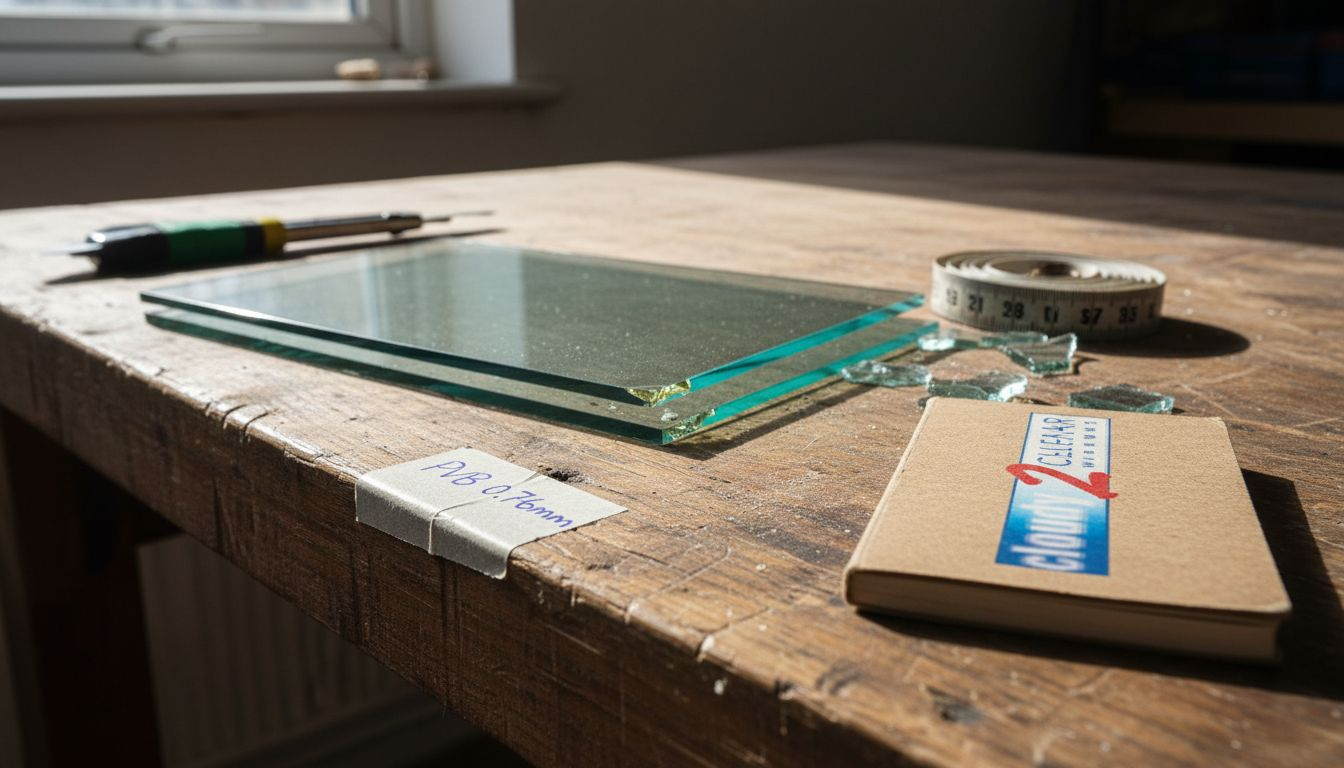
The interlayer provides additional benefits beyond safety. It blocks up to 99% of harmful UV rays, protecting furnishings, flooring, and artwork from fading. Laminated glass also offers improved sound insulation compared to standard glazing, making it ideal for properties near busy roads or noisy environments.
Ideal applications for laminated glass:
- Balustrades and balconies where fall prevention is critical
- Glass floors and walkways requiring structural integrity
- Wet rooms and bathrooms prone to slips
- Overhead glazing like skylights and canopies
- Security-conscious areas needing penetration resistance
Laminated glass remains intact even when cracked, maintaining a barrier against intruders or environmental elements until repairs occur. This containment feature makes it essential for elevated glazing where falling glass poses serious risks. Unlike toughened glass, laminated versions can sometimes be cut after manufacture, though this requires specialist equipment and expertise. For aesthetic considerations, check our guide on glazing bars impact to see how laminated glass works with traditional window designs.
The plastic interlayer thickness varies based on performance requirements. Standard configurations use 0.38 mm PVB, whilst enhanced security or acoustic applications may specify thicker interlayers. Always discuss your specific needs with a glazing professional to select the appropriate laminate construction.
Other types of safety glass: wired and specialist glass
Wired glass incorporates a wire mesh embedded within the glass during manufacture, historically used for fire resistance. Wired glass includes embedded wire mesh for fire resistance but is not recommended as general safety glass because it may shatter dangerously. When broken, wired glass produces sharp shards around the wire mesh, creating significant injury risks.
Modern fire-resistant glass options have largely superseded wired glass for safety applications. Specialist intumescent glass systems provide superior fire protection whilst meeting current safety standards. These alternatives swell when exposed to heat, creating an insulating barrier without the dangerous breakage characteristics of traditional wired glass.
Specialist safety glass types include:
- Heat-soaked toughened glass for reduced spontaneous breakage risk
- Ballistic glass for extreme security applications
- Walk-on glass for structural floors and roofs
- Curved safety glass for architectural features
- Anti-slip coated glass for walkways and stairs
Heat-soaked glass undergoes additional processing to eliminate nickel sulphide inclusions that can cause spontaneous breakage in toughened glass. This treatment is particularly important for overhead glazing where unexpected failure poses serious risks. Ballistic glass layers multiple laminated sheets to resist projectile impacts, used in high-security environments like banks or government buildings.
Walk-on glass requires careful structural engineering to support dynamic loads safely. Engineers calculate thickness, support spacing, and edge conditions to ensure the glass withstands foot traffic without deflecting excessively. Anti-slip treatments applied to the surface improve traction in wet conditions, essential for glass staircases or exterior walkways.
Unless your project demands specialist fire resistance, security, or structural performance, stick with toughened or laminated glass for general safety applications. These mainstream options provide better value and wider availability whilst meeting standard UK compliance requirements.
UK building regulations and safety glass compliance
Approved Document K establishes mandatory requirements for safety glazing throughout England and Wales, with similar provisions in Scotland. Glass below 800 mm from floor level must be safety glass unless protected by a rail or barrier. Critical locations also include doors, doorside panels within 300 mm of edges, and glazing within 1500 mm of floor level adjacent to doors.
BS 6206 defines the UK standard for impact safety, categorising glass into Class A (highest impact resistance), Class B (medium), and Class C (lowest acceptable). All safety glass must display the BS 6206 Kitemark confirming it has passed standardised impact testing. This certification gives you legal protection and assurance the product meets baseline safety requirements.
Double-glazed units present specific compliance challenges. Double-glazed units must have both panes safety glass compliant as per critical location regulations for full compliance. Simply having one toughened or laminated pane does not satisfy requirements if the other pane is annealed glass in a critical location.
Key regulatory requirements:
- Safety glass mandatory in doors and within 300 mm of door edges
- Glazing below 800 mm requires safety glass or protective barriers
- Both panes in double glazing must meet standards in critical locations
- BS 6206 Kitemark certification confirms UK compliance
- Installers must provide documentation proving specification compliance
BS EN 12600 classifies safety glass impact performance using a pendulum test from heights of 1200 mm, 450 mm, and 190 mm. This European standard complements BS 6206, providing detailed performance data for specifiers. The classification system helps match glass strength to specific risk levels in different locations.
Proper installation is equally critical as product certification. Even compliant glass installed incorrectly can fail prematurely or not perform as intended during impacts. Always use qualified installers familiar with safety glazing requirements. Our window installation standards compliance guide covers best practices for ensuring your installation meets all necessary benchmarks.
Building control officers may request certification documentation during inspections. Keep all product certificates, installation records, and compliance statements in a safe location. These documents prove due diligence and protect you legally if questions arise about glazing safety in your property.
Safety glass use cases and practical recommendations
Matching safety glass types to specific property locations maximises protection whilst controlling costs. Toughened glass excels in doors, doorside panels, and high-impact windows where strength matters most. Its lower cost compared to laminated glass makes it economical for large commercial installations requiring numerous safety glazing points.
Laminated glass suits balustrades, balconies, and wet rooms where shard containment provides crucial additional safety. In wet areas like bathrooms, laminated safety glass is favoured to reduce injury risk from slips and glass breakage. The interlayer prevents dangerous shards from scattering across wet floors where occupants are vulnerable.
Practical use case recommendations:
- Front doors: Toughened glass for impact resistance and cost efficiency
- Balustrades: Laminated glass to contain shards and prevent falls
- Low-level windows: Toughened glass meets regulations economically
- Overhead glazing: Laminated glass essential for shard containment
- Wet rooms: Laminated glass reduces injury from breakage on wet surfaces
Avoid wired glass except where specific fire-resistance ratings are mandated by building regulations. Modern fire-resistant alternatives provide better safety characteristics without the injury risks associated with traditional wired glass. Ensure all installations include proper certification confirming compliance with relevant standards.
Consider occupant vulnerability when selecting glass types. Homes with young children, elderly residents, or individuals with mobility challenges benefit from laminated glass in critical locations. The containment feature provides an extra margin of safety if accidental impacts occur. Commercial properties with heavy foot traffic should prioritise durability, making toughened glass the practical choice for most applications.
For guidance on selecting appropriate glazing for your entire window system, review our double glazing options guide covering performance characteristics beyond safety considerations.
Comparing types of safety glass: summary table
This comparison consolidates key differences between main safety glass types to support informed decisions based on your property requirements.
| Feature | Toughened glass | Laminated glass | Wired glass |
|---|---|---|---|
| Strength vs. standard glass | 4–5 times stronger | Moderate strength | Similar to standard |
| Breakage behaviour | Shatters into blunt granules | Shards adhere to interlayer | Sharp shards around wire |
| Shard containment | None | Excellent | Poor |
| Typical applications | Doors, shopfronts, low windows | Balustrades, wet rooms, overhead glazing | Fire doors (being phased out) |
| UK compliance standard | BS EN 12150, BS 6206 | BS EN 14449, BS 6206 | Varies by fire rating |
| UV protection | None | Up to 99% | None |
| Security benefit | Moderate | High | Low |
| Acoustic performance | Standard | Enhanced | Standard |
| Cost relative to standard | Moderate premium | Higher premium | Moderate premium |
| Availability | Widely available | Widely available | Decreasing |
Toughened glass offers the best balance of strength and cost for most applications. Laminated glass justifies its higher price where shard containment, UV protection, or security matters most. Wired glass has limited modern applications and should only be specified where fire regulations explicitly require it.
Both toughened and laminated glass come in various thicknesses to match structural and performance requirements. Standard residential applications typically use 4 mm to 6 mm glass, whilst commercial or structural glazing may require 8 mm to 12 mm or thicker. Always consult a qualified glazing professional to confirm appropriate specifications for your specific installation.
Situational picks: choosing the right safety glass for your property
Tailoring your safety glass choice to specific scenarios ensures optimal protection matched to real-world risks. These recommendations help you navigate common property situations confidently.
- Homes with young children: Specify laminated glass for all low-level glazing below 800 mm. The shard containment feature minimises injury risk if curious toddlers bump into glass or throw toys. Laminated glass in doorside panels provides an extra safety margin in high-traffic family areas.
- Commercial units with heavy foot traffic: Choose toughened glass for doors, partitions, and shopfronts. The superior impact resistance withstands daily wear from customers and staff whilst keeping costs manageable across large glazing areas. Ensure certification documentation is readily available for building control inspections.
- Balconies and balustrades: Always use laminated glass to prevent falls if breakage occurs. Building regulations mandate specific edge protection standards, and laminated glass fulfils these requirements whilst maintaining transparency. Consider thicker laminates (10 mm or 12 mm) for structural balustrade applications.
- Wet rooms and bathrooms: Laminated glass reduces slip-related injuries when breakage happens on wet surfaces. The interlayer contains shards, preventing them from scattering across floors where occupants are barefoot and vulnerable. Toughened glass works for shower enclosures but lacks the containment benefits.
- Offices and workspace partitions: Toughened glass provides cost-effective safety for internal partitions and office fronts. The breakage pattern minimises injury risks whilst maintaining the open, modern aesthetic businesses prefer. Add manifestation markings to prevent walk-through accidents.
- Heritage or period properties: Laminated glass can incorporate slim profiles that respect traditional aesthetics whilst meeting modern safety standards. Specialist suppliers offer laminated glass with Georgian bars or decorative patterns matching original window styles.
- High-security environments: Specify multi-layer laminated glass with thicker PVB interlayers (1.52 mm or greater) to resist forced entry. Combine with appropriate framing systems and locking mechanisms for comprehensive security. Ballistic laminated glass provides protection in extreme threat scenarios.
Each situation balances safety requirements, budget constraints, and aesthetic preferences. Consulting with experienced glazing professionals ensures your specifications align with building regulations whilst delivering practical protection for occupants. Never compromise on certification or installation quality to save costs, as non-compliant glazing exposes you to legal liability and genuine safety risks.
Find the right safety glass solutions with Cloudy2Clear
Navigating safety glass options becomes simpler with expert guidance tailored to your property. At Cloudy2Clear Windows, we have specialised in double glazing repairs and window glass replacement since 2005, helping homeowners and businesses throughout England and Scotland upgrade to compliant, safe glazing. Our team understands UK Building Regulations thoroughly and ensures every installation meets current safety standards.
Whether you need to replace non-compliant glass in critical locations or upgrade tired windows with modern safety features, we provide personalised recommendations based on your specific needs. Our experience across residential and commercial sectors means we understand the unique challenges different properties present. From toughened glass for busy commercial entrances to laminated solutions for family homes, we match the right product to your requirements and budget. Contact us today to discuss how we can enhance your property’s safety whilst maintaining the aesthetic you value.
FAQ
What does the BS 6206 certification mark on safety glass indicate?
The BS 6206 Kitemark confirms the glass has passed standardised impact testing and meets UK safety requirements for critical glazing locations. This certification ensures the product is suitable for use in doors, low-level windows, and other areas where accidental impacts are likely. Always verify this mark before purchasing safety glass, and keep documentation for building control inspections. For more details on compliance standards, see our window installation standards compliance guide.
Can I use wired glass for general safety glazing in my home?
Wired glass is not recommended for general safety applications because it shatters into dangerous sharp shards around the embedded wire mesh. Whilst it offers fire resistance, modern alternatives like toughened or laminated glass provide superior safety characteristics without injury risks. Reserve wired glass only for situations where specific fire-resistance ratings are mandated, and even then, consider newer intumescent glass systems that meet fire standards safely.
Does double glazing automatically include safety glass?
No, double glazing does not automatically include safety glass in both panes. Both panes must be safety glass compliant when installed in critical locations defined by Approved Document K, such as doors or low-level windows. Simply having one toughened or laminated pane does not satisfy regulations if the other pane is standard annealed glass. Always verify that your double-glazed units include appropriate safety glass specifications and certification for the intended installation location.