Most people assume that fogged-up or draughty windows mean the entire unit needs replacing. In reality, a small flexible strip called a window gasket is often the culprit, and replacing it costs a fraction of a full window swap. A window gasket is a flexible strip crucial for sealing and insulation in double glazed windows, yet it rarely gets the attention it deserves. This guide covers everything you need to know: what gaskets are, the different types, how long they last, how to spot problems, and what repairs actually cost.
What exactly is a window gasket?
Think of a window gasket like the rubber seal around your fridge door. Without it, cold air escapes, moisture gets in, and the whole system becomes inefficient. In your double glazed windows, the gasket does exactly the same job, sitting between the glass pane and the frame to create a tight, weatherproof barrier.
A window gasket is a flexible rubber or synthetic strip positioned between the glass and frame, ensuring an airtight and waterproof seal. You will find gaskets in virtually all modern uPVC and aluminium windows across England and Scotland, running along the perimeter of each pane. They are often overlooked during routine maintenance, yet they are doing constant work every single day.
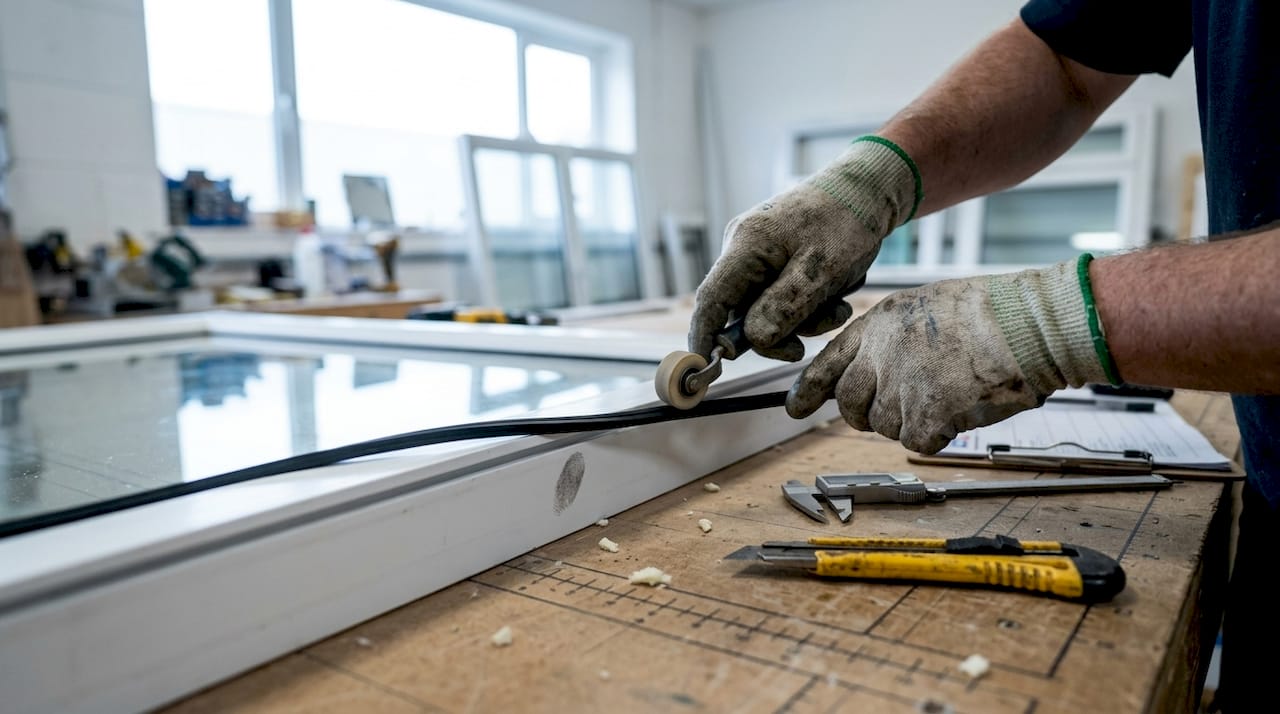
Gaskets are made from EPDM rubber, TPE, and other UV-resistant materials, each chosen for their ability to flex and compress without cracking. The material choice matters enormously in the UK’s variable climate, where a window might face freezing temperatures in January and strong summer sun in July.
Here is a quick overview of what gaskets actually do:
| Function | What it prevents |
|---|---|
| Airtight seal | Draughts and heat loss |
| Waterproofing | Rain ingress and damp |
| Soundproofing | External noise penetration |
| Dust prevention | Fine particles entering the frame |
The key benefits of a well-fitted gasket include:
- Reduced energy bills by maintaining the thermal barrier
- Damp prevention along window frames and sills
- Noise reduction, particularly valuable in urban areas
- Protection for the window glass replacement unit itself from moisture damage
- Improved comfort by eliminating cold spots near windows
For anyone dealing with persistent draughts or damp patches, window leak prevention often starts with inspecting the gasket before anything else.
Types of window gaskets and choosing the right fit
Not all gaskets are the same shape, and fitting the wrong type is one of the most common DIY mistakes we see. Each profile is designed for a specific position and function within the window assembly.
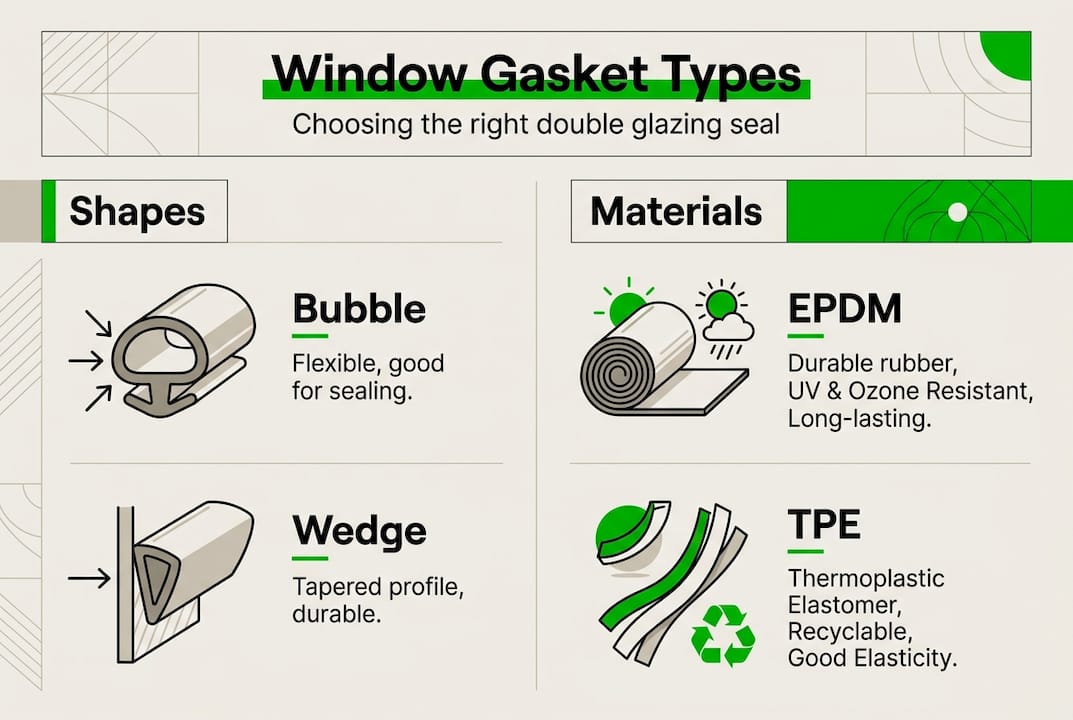
Common types include bubble gaskets, wedge gaskets, and E-gaskets, each with distinct shapes and uses. Here is how they differ:
| Gasket type | Shape | Position | Primary role |
|---|---|---|---|
| Bubble gasket | Hollow, round | Frame channel | Compression seal, draught exclusion |
| Wedge gasket | Ribbed, tapered | Internal, glass edge | Glass retention and internal seal |
| E-gasket | Fir tree profile | External face | Compression seal against weather |
Pairing wedge (internal, glass retention) with E-gasket (external) offers optimal sealing in most modern uPVC windows. Using one without the other, or substituting the wrong profile, leaves gaps that allow water and cold air to enter.
The most common mistakes when choosing gaskets:
- Wrong profile width: a gasket that is too narrow will not compress properly
- Incorrect material: standard rubber in a coastal Scottish location degrades faster than EPDM
- Mismatched groove depth: the gasket must seat fully into the frame channel
- Ignoring the frame manufacturer: different uPVC brands use proprietary groove sizes
Pro Tip: Before buying replacement gaskets, photograph the existing profile and measure the groove width with a calliper. Many suppliers will match the profile from a photo, saving you from a wasted trip.
If you are already dealing with water getting in, fixing window leaks often requires identifying which gasket type has failed before ordering parts.
How window gaskets work and why they matter
A gasket works through compression. When the window closes, the gasket is squeezed between the glass and the frame, and that pressure creates the seal. The tighter and more consistent the compression, the better the barrier against the elements.
“Gaskets compress to form a hermetic barrier; flexibility and resistance to temperature/UV is crucial.”
Imagine a wet and windy night on the west coast of Scotland. Wind-driven rain is hitting the window at an angle, and the temperature outside is close to freezing. A healthy gasket keeps all of that outside. A degraded one lets in a thin stream of cold air and moisture, which then causes condensation on the inner frame and, over time, damp patches on the wall below.
Or consider a busy road in a city like Edinburgh or Manchester. A well-fitted gasket contributes meaningfully to noise reduction by sealing the gap through which sound waves travel. It is not a miracle soundproofing solution, but it makes a noticeable difference in day-to-day comfort.
Here is how gaskets protect your home in practice:
- Draught exclusion: the compressed gasket blocks the air pathway around the glass edge
- Water resistance: the seal prevents capillary action drawing rainwater inward
- Thermal retention: a tight seal supports the insulating gas layer inside the glass unit
- Condensation control: by keeping cold air out, the inner glass surface stays warmer and less prone to condensation
- UV and ozone resistance: quality materials maintain their flexibility despite years of sun and atmospheric exposure
The window seal lifespan is directly linked to how well the gasket maintains its compression over time. Once it loses elasticity, every other function starts to degrade with it.
How long do window gaskets last? Lifespan and what affects it
Gaskets are not a fit-and-forget component. They age, and in the UK’s climate, they can age quickly if the conditions are harsh.
Lifespan is typically 5 to 10 years; up to 20 years under ideal conditions, but may be shortened by UV exposure, compression fatigue, pollution, or poor drainage. Most homeowners in England and Scotland will need to inspect their gaskets at least every five years, and replace them sooner if the property faces south or is near a busy road.
| Factor | Effect on lifespan |
|---|---|
| UV exposure (south-facing) | Accelerates brittleness |
| Coastal salt air | Degrades standard rubber faster |
| Blocked drainage channels | Traps water, softens gasket |
| Extreme temperature swings | Causes repeated expansion and contraction |
| High-quality EPDM or silicone | Extends life by 3 to 5 years |
Wet climates accelerate wear; silicone and neoprene last longer than standard rubber by three to five years. For properties in the Scottish Highlands or along the Welsh and English coasts, upgrading to silicone or neoprene gaskets at replacement time is a worthwhile investment.
Pro Tip: Clear your window drainage channels every autumn. These small slots at the bottom of the frame allow rainwater to escape. When they block with debris, water pools against the gasket and accelerates deterioration significantly.
For draught-free window performance, annual checks are far cheaper than emergency replacements. A five-minute visual inspection after winter can catch early-stage gasket wear before it becomes a costly problem.
Key stat: A gasket that fails prematurely due to blocked drainage or poor installation can reduce a window’s thermal efficiency by up to 30%, significantly increasing heating costs over a winter season.
Common window gasket problems and how to spot them
Gasket failure rarely happens overnight. It is a gradual process, and the early signs are easy to miss if you are not looking for them.
Failures include brittleness from UV, cracks, compression flattening, poor installation, and in rare coastal cases, salt corrosion. Each failure mode looks slightly different, which is why a visual check is so useful.
Watch out for these warning signs:
- Visible cracks or splits along the gasket length, especially at corners
- Hardening or shrinkage, where the gasket has pulled away from the glass edge
- Black streaks or mould appearing inside the frame channel
- Draught or whistling noise when the window is closed
- Water marks or damp patches at the base of the frame after rain
- Condensation forming at the frame edge rather than on the glass itself
A draught on a calm day is one of the clearest indicators. Run your hand slowly around the closed window frame. Any cold air movement points directly to a gasket that has lost its compression.
Key stat: Research suggests that draughty windows and doors account for up to 25% of heat loss in older UK homes, much of which can be traced back to failed or degraded seals.
If you notice misting between the panes rather than at the frame edge, that is a different problem entirely and points to a failed double glazing unit rather than just the gasket. Knowing the difference saves you from paying for the wrong repair.
Repairing and replacing window gaskets: what homeowners need to know
Once you have identified a gasket problem, the good news is that replacement is often straightforward and affordable, especially compared to a full window unit swap.
DIY replacement costs £30 to £50 per window; professional replacement costs £80 to £300 depending on region, with mistakes risking misalignment. For most ground-floor uPVC windows, a confident DIYer can manage the job with the right gasket profile and a few basic tools.
Here is the basic process for replacing a window gasket:
- Remove the old gasket by pulling it free from the frame groove, starting at a corner
- Clean the groove thoroughly with a damp cloth to remove debris, old sealant, and mould
- Measure and cut the new gasket to length, allowing a small overlap at the join
- Press the new gasket firmly into the groove, working around the perimeter evenly
- Test the seal by closing the window and checking for any draught or movement
If only gaskets fail and there is no misting, you can replace the seal without touching the glass. However, misting between panes means the sealed unit has failed and requires a whole unit replacement costing £200 to £500.
When to call a professional rather than attempting DIY:
- Multi-storey windows where working at height is involved
- Heritage or timber-framed windows with non-standard profiles
- Commercial properties where building regulations apply
- Windows under warranty, as DIY work may void the guarantee
Pro Tip: Always buy slightly more gasket than you think you need. Cutting too short and trying to stretch the material is a common mistake that leaves gaps at the corners and defeats the purpose of the repair.
For a full overview of your double glazing repair options, it is worth getting a professional assessment before committing to either a gasket replacement or a full unit swap.
Get help with window gaskets and double glazing repairs
Understanding your window gaskets is the first step. Knowing when to call in expert help is the second.

At Cloudy2Clear Windows, we have been repairing and replacing double glazed windows across England and Scotland since 2005. Whether you need a straightforward gasket swap or a full glass replacement service, our experienced team can assess the problem and recommend the most cost-effective solution. We cover a wide network of locations, including our team handling repairs in Oxford and many surrounding areas. For business owners, our commercial window services cover everything from office blocks to retail units. Get in touch today for an honest assessment and a no-obligation quote.
Frequently asked questions
Do all double glazed windows have gaskets?
Most modern double glazed windows use gaskets as standard, particularly uPVC systems. Older or timber-framed designs may rely on putty or mastic sealant instead.
How can I tell if my window gasket has failed?
The clearest signs are drafts, water ingress, and visible damage such as cracks or hardening along the gasket strip. Running your hand around a closed window frame on a windy day is a quick and reliable test.
Is it safe to replace window gaskets myself?
DIY is possible for straightforward ground-floor windows, but a professional is recommended for multi-storey properties, heritage frames, or any window still under warranty.
Does replacing the gasket improve energy efficiency?
Yes. An effective gasket maintains insulation and prevents draughts, restoring the window’s thermal performance and often reducing heating costs noticeably.
What is the difference between gasket replacement and double glazing unit replacement?
Gasket replacement addresses seal failures at the frame edge. Unit replacement is only needed when the glass itself is misted, meaning the internal argon or air seal has broken down.