• USP Logo Icon
    25 Year Guarantee
  • USP Leaf Icon
    Latest ECO Friendly Technology
  • USP Pointer Icon
    National Coverage
Get a FREE quote

Yes, you can replace glass in double glazing without new frames

You can replace the glass in double glazing without replacing the whole window. In most cases, a specialist swaps out only the failed sealed unit and leaves the existing frame in place, provided that frame is sound and its rebate depth accepts a modern unit. A restored sealed unit typically brings the U-value back down to roughly 1.2 to 1.4 W/m²K, close to original performance, and the job itself takes 30 to 60 minutes per window.

  • Glass-only replacement works when the frame isn’t rotten, warped or damaged.
  • Rebate depth needs checking. Most frames built after 2000 accept modern units.
  • A FENSA or CERTASS registered installer, such as Cloudy2Clear Windows, can self-certify the work under Building Regulations Part L, so you don’t need a separate council inspection.

How does double glazing glass replacement work?

Replacing a sealed unit is a methodical job, not a rip-and-replace exercise. Getting each stage right is what separates a repair that lasts fifteen years from one that fails again within eighteen months.

It starts with inspection and measurement. The installer confirms the unit has actually failed (rather than the problem being condensation on the room-side surface, which is a ventilation issue, not a glazing one) and checks the frame for rot, warping or damaged rebates. Accurate measurement of rebate depth, pocket width and drainage holes matters more than most homeowners expect. Get it wrong and the new unit can fail again within a couple of years.

Once measurements are confirmed and the replacement unit ordered, the visit itself follows a set sequence:

  • Glazing beads are carefully removed without cracking the frame finish.
  • The failed sealed unit is extracted and disposed of responsibly.
  • The rebate is cleaned out and new setting blocks or packers are fitted to support the glass correctly.
  • The made-to-measure unit is dropped into place and the beads reseated.
  • The perimeter is sealed, the window is opened and closed to check smooth operation, and the site is left tidy.

Pro Tip: Ask your installer how they measure rebate depth and whether argon fill and low-E coatings are available. It’s a natural point to upgrade thermal performance while the window’s already open, rather than paying for access twice.

A good installer will also leave you with paperwork confirming the work and the warranty terms, which matters more than it sounds for future resale.

What does it cost to replace double glazing glass in the UK?

Cost is usually the first question, and reasonably so. Supply and fit for a standard replacement sealed unit commonly falls between £55 and £195 per unit, with straightforward jobs averaging around a hundred pounds. Specialist glass and larger sizes push that figure up considerably.

Unit type Typical supply & fit cost
Standard double-glazed unit £120 to £200
Toughened safety glass unit costs typically above a hundred pounds
Acoustic (soundproofing) unit often costing several hundred pounds
Triple-glazed unit usually costs several hundred pounds or more


Labour is usually bundled into the quoted price rather than charged separately, but call-out fees can apply for single small jobs. If you have several failed units in the house, ask about a whole-property visit. Most installers charge less per unit when they’re doing four or five in one appointment rather than one at a time.

Several factors push the price beyond the baseline:

  • Bespoke or non-standard sizes, including bay windows and angled units.
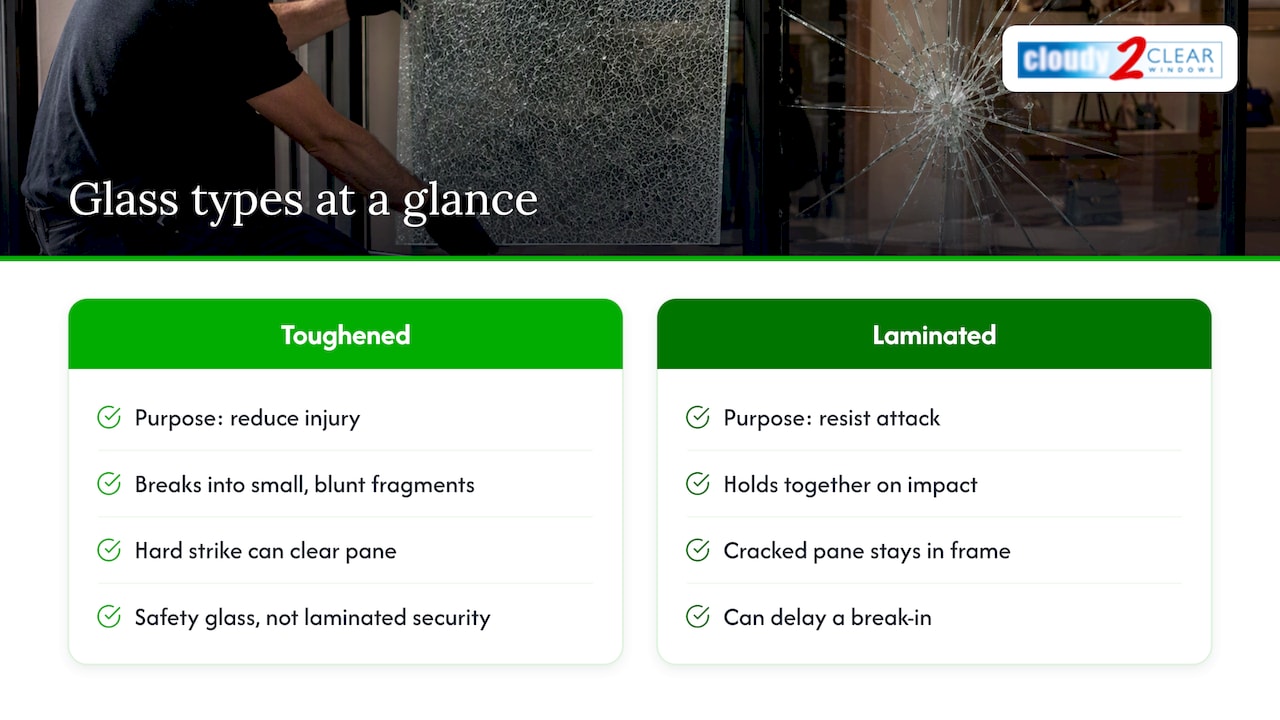
  • Toughened or laminated glass required for safety compliance near doors or low-level glazing.
  • Argon gas fill and low-E coatings for better insulation.
  • Difficult access, such as upper floors requiring scaffolding or a cherry picker.

VAT applies at the standard rate on most replacement work. Old sealed units contain a mix of glass and spacer bar materials that most installers, including Cloudy2Clear Windows, will remove and recycle as part of the job, so ask whether disposal is included in your quote.

Is DIY double glazing glass replacement worth the risk?

It depends heavily on your confidence with glass, your tools, and how forgiving your frame is. Sealed units are heavy, awkward, and unforgiving of small errors, so this isn’t a job to underestimate.

The risks are real. Incorrect measurement is the single biggest cause of repeat failure. Poor sealing lets moisture back in within a year or two. Handling large panes of glass alone is a genuine safety hazard, and DIY work on the unit voids any manufacturer warranty on it. There’s also a compliance angle: work carried out by a FENSA or CERTASS registered installer is self-certified against Building Regulations Part L automatically. DIY work has no such route and can complicate matters if you sell the property later.

  • DIY can be reasonable for an experienced homeowner replacing a simple, standard rectangular pane with a correctly specified unit and proper glazing tools.
  • It’s not reasonable on bay windows, angled units, upper floors, or anything requiring toughened or laminated safety glass.

Pro Tip: If the frame is more than 20 years old or the rebate looks damaged or swollen, don’t attempt DIY. Call a registered installer before you order any glass.

How do you hire a registered double glazing installer?

In England and Wales, replacement glazing must meet Building Regulations Part L, and the practical route to compliance is a FENSA or CERTASS registered installer who self-certifies the work on your behalf. Skip this step and you may need to arrange separate building control sign-off, which costs more and takes longer.

Before booking, ask these questions:

  1. Are you FENSA or CERTASS registered, and can I see your registration number?
  2. What warranty do you offer, and does it cover both the glass unit and the installation labour?
  3. What U-value will the replacement unit achieve?
  4. What glass specification and spacer bar type are you fitting?
  5. What’s your lead time from measurement to installation, and is there a call-out fee?

Get at least two to three written quotes from registered installers before committing. Prices for the same job can vary more than people expect, and a written quote lets you compare like for like rather than relying on memory.

Keep the completion certificate, invoice and warranty documents together once the job’s done. Buyers’ solicitors ask for exactly this paperwork during a property sale, and missing it can slow a transaction or knock money off an offer.

When do you need a full window replacement instead?

A new sealed unit is only as good as the frame holding it, so there are situations where swapping the glass alone is a false economy.

  • The frame itself is rotten, warped, cracked, or visibly out of square.
  • Several units in the same window have failed, suggesting the frame or seals are letting moisture in generally.
  • Hinges, handles or locks are worn out alongside the glazing.
  • The frame is older than roughly 20 to 25 years and nearing the end of its practical life.

Fit a brand-new unit into a compromised frame and it will likely fail again within a few years, and most installers won’t guarantee glass fitted into a frame they judge unsound. Very large bespoke or heavily angled units can also be a problem if the original specification is no longer manufactured, in which case a full frame replacement may be the only practical route.

What happens on the day of your appointment?

Standard units take 30 to 60 minutes each, though large or awkwardly shaped windows take longer. Clear the immediate area, remove curtains or blinds if they’re in the way, and keep pets secured elsewhere in the house.

Prepared window area and tools for glass replacement


The installer removes the glazing beads, extracts the failed unit, cleans the rebate, fits the new sealed unit, then reseals and tests the window’s operation before leaving.

Why homeowners choose a specialist installer

Since 2005, we’ve replaced sealed units in homes across the country, and the priorities rarely change: get it done quickly, restore proper insulation, use the correct safety glass where needed, and back it with a written warranty. That combination is what stops a repair becoming a recurring problem.

Get your sealed unit replaced by Cloudy2Clear Windows

Cloudy2Clear Windows specialises in exactly the job this guide describes: glass-only sealed unit replacement, misted unit swaps, broken glass repairs, and double glazed door glass, locks and hinge repairs, without the cost or disruption of a full window replacement.

Cloudy2clearwindows


Every job is carried out with FENSA and CERTASS-registered self-certification, so you get Building Regulations Part L compliance and proper paperwork without chasing building control separately. We work to typical lead times in line with the rest of the industry and back completed work with a written warranty, giving you the certificate and documentation you’ll want on hand at resale. If your windows are misting up or a pane’s cracked, book a survey through your local branch, including Milton Keynes or Leicester and Loughborough, or explore the full glass replacement service to see what’s included before you call.

This article is general information, not a substitute for advice from a qualified lawyer. Consult a qualified legal professional about your own circumstances before acting on anything here.

Sources

FAQ

How much does it cost to replace only double-glazed glass?

Supply and fit for a standard sealed unit typically runs £55 to £195, with straightforward jobs averaging around a hundred pounds. Toughened, acoustic or triple-glazed units cost more.

Can you replace just the glass in uPVC windows?

Yes, provided the uPVC frame is structurally sound and the rebate depth suits a modern sealed unit. Most frames made after 2000 accept a straightforward glass-only swap.

Is it worth replacing 20-year-old double glazing?

If the frame itself is still solid, replacing just the failed sealed unit is usually worthwhile and restores insulation to around 1.2 to 1.4 W/m²K. If the frame is warped, rotten or over 20 to 25 years old, a full window replacement is often the better long-term investment.

Where can I get replacement glass for my uPVC door?

A FENSA or CERTASS registered installer, such as Cloudy2Clear Windows, can measure, supply and fit replacement door glass, including toughened safety glass where building regulations require it near a door.

Misted window repair cost: what UK homeowners should expect

Most misted or blown double glazed units can be fixed by replacing the sealed glass unit alone, without touching the frame, for a fraction of what a new window costs. For a standard casement window, expect an all-in price of around £130 to £300 for glass and fitting. Smaller panes often come in under that, while large picture windows or bay units climb higher.

Here’s the headline breakdown:

  • Small window (e.g. bathroom or utility pane): roughly £120 to £200
  • Standard casement window: roughly £130 to £300 all-in
  • Large window or bay unit: roughly £350 upwards, sometimes reaching £900 for wide or multi-pane setups

Most glaziers also charge a call-out or minimum visit fee of £50 to £80, though many quote this as part of an all-in price rather than a separate line item.

Pro Tip: If your frame is in good condition, ask specifically for a “unit-only” quote and confirm whether the figure already includes the call-out. That one question stops a lot of billing surprises later.

How much does misted window repair cost by size?

Price depends heavily on the physical size of the failed unit and how many panes need attention. The table below reflects typical UK glazier pricing for glass-only sealed unit replacement, where the frame stays in place and only the double-glazed pane is swapped out.

Window type Typical cost (glass + fitting) Notes
Small pane (bathroom, utility) £120–£200 Often close to the call-out fee alone
Standard casement £130–£300 Most common domestic job
Large window £200–£500 Depends on pane dimensions and glass spec
Bay window (per pane) £300–£500+ Angled units cost more to fabricate
Patio door panel £250–£450 Toughened safety glass usually required


These figures track closely across independent UK sources. Checkatrade’s 2026 guide puts a small blown window repair at £100 to £200, a standard window at £200 to £325, and larger jobs from £350 upwards. MyBuilder’s price guide lists misted pane repairs commonly falling between £75 and £200, with the wider double glazing repair category spanning £50 to £500 depending on scope. MyJobQuote’s 2026 update confirms similar averages, generally £70 to £250 for glass-only work.

Three worked examples show how this plays out in practice:

A standard uPVC casement in a semi-detached house, single misted pane, no access issues: expect around £150 to £220 including the visit. A large picture window in a lounge, roughly 1.8m wide with a bespoke sealed unit: this often lands between £280 and £450, mostly down to the fabrication cost of a non-standard size. A three-pane bay window with one misted pane: because glaziers usually charge per pane and bay angles need custom-cut glass, a single pane swap here can reach £350 to £500, even though only one section has actually failed.

Compare that with full window replacement. Swapping the entire frame and glass on a standard casement typically runs into four figures once you factor in the frame, labour, and disposal, as covered in our guide to what double glazing replacement costs.

What factors change the price of a repair?

No two quotes look identical, and the gap usually comes down to a handful of variables rather than the glazier padding the bill. Understanding what changes affects the double glazing repair cost puts you in a better position to compare quotes fairly.

  • Pane size and shape: bespoke or angled units cost more to fabricate than standard rectangular sizes.
  • Glass specification: low-E coatings, argon gas fill, and acoustic laminate glass all add to the unit price.
  • Frame material: uPVC is generally cheapest to work with; timber and aluminium frames often need more careful handling.
  • Accessibility: upstairs windows, conservatories, or anything needing a ladder or scaffold tower adds labour time.
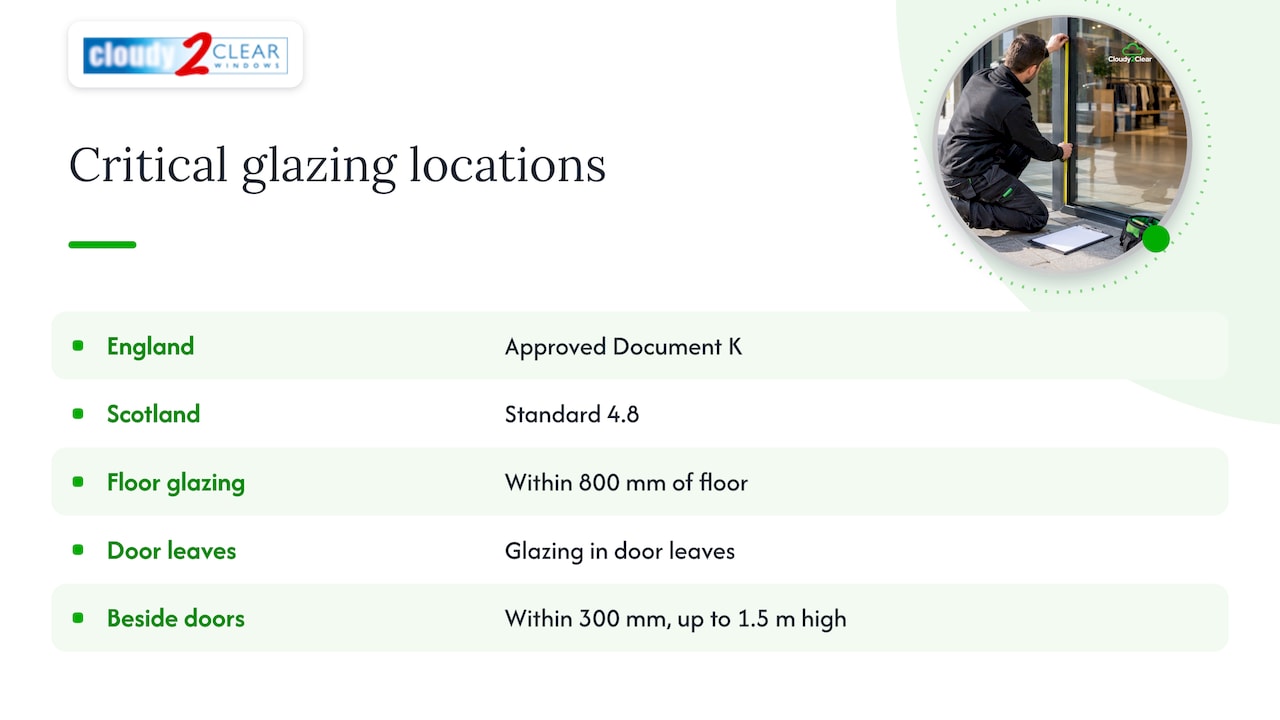
  • Safety glass requirements: panes near doors or close to floor level must use toughened or laminated glass by regulation.
  • Regional labour rates: London and the South East typically run higher than the Midlands, North or East Anglia.

Beyond the core unit swap, watch for extras: damaged handles or hinges (£20 to £80 each), Velux or roof window glass (often pricier due to access and specialist seals), and waste disposal fees for the old failed unit.

Pro Tip: If you have more than one misted window, ask your glazier to quote for all of them in a single visit. Combining jobs spreads the call-out fee across several panes and can shave a meaningful chunk off the total bill.

Should you repair or fully replace a misted window?

The right choice depends on your frame’s condition, your budget, and how long you plan to stay in the property. There are broadly three routes.

Three types of double glazing repair options displayed


De-mist and reseal is the cheapest short-term fix, typically £40 to £80 per pane. A technician drills a small hole, clears the moisture, and reseals it. It does not restore the original factory seal or argon fill, so it usually lasts only two to five years before fogging returns.

Sealed unit replacement swaps the entire glass pane while keeping the frame. This costs roughly £150 to £350 per pane and restores proper thermal performance, typically bringing U-values back down to around 1.2 to 1.4 W/m²K on modern glass. This is the option most homeowners choose, and it delivers most of the benefit of a new window for a fraction of the price.

Full window replacement makes sense only when the frame itself is warped, rotten, or beyond economical repair.

Option Typical cost Expected lifespan
De-mist and reseal £40–£80 per pane 2–5 years
Sealed unit replacement £150–£350 per pane 15–20+ years
Full window replacement Several hundred around 20 years


Cost and lifespan comparison of window repair options


Before deciding, run through a quick checklist: Is the frame free of rot, warping or draughts? Is the window under 20 years old? Do you need better thermal or acoustic performance beyond just clearing the fog? And does a cost-per-year calculation favour paying more now for a longer-lasting fix? If the frame passes muster, a sealed unit swap almost always wins on cost-per-year, even though the upfront figure looks higher than a quick reseal.

What happens during a misted window repair?

A typical sealed unit replacement follows a predictable sequence, and knowing the steps helps you judge whether a quoted timescale is reasonable.

  1. Call-out and measure – a technician visits, confirms the diagnosis, and takes precise internal measurements of the existing unit.
  2. Fabrication – the new sealed unit is manufactured to spec, which typically takes 5 to 10 working days for standard sizes and longer for bespoke shapes.
  3. Removal – on the fitting day, the glazing beads are carefully prised out and the failed unit is lifted from the frame.
  4. Fit and seal – the new unit is set into place, packed, and sealed to manufacturer standards.
  5. Finish and check – beads are refitted, the frame is cleaned, and the technician checks for a weathertight seal.

On-site work for a single standard pane usually takes 30 to 60 minutes once the fitter arrives with the fabricated unit. A quality replacement, properly fitted, should carry a manufacturer warranty of 10 years or more on the sealed unit itself.

Pro Tip: Ask whether the warranty covers the seal failing again, not just breakage. A genuine sealed unit guarantee should specifically name misting as a covered fault.

How do you get an accurate quote for the job?

Getting comparable quotes means asking the same questions of every glazier you contact.

  • Is the price all-in, covering the unit, fitting, and call-out?
  • What’s the lead time between measuring and fitting?
  • What warranty applies, and does it cover future misting?
  • Will the existing frame be kept, or does the job involve more?
  • Is waste disposal of the old unit included?

Before the visit, take clear photos of the misted pane, note the window’s approximate age, and flag any visible frame damage. This speeds up the initial triage and often means a more accurate quote over the phone before anyone visits. As FENSA and GGF guidance recommends, get at least two written quotes and check the installer’s registration before booking anything. It’s also worth reading our tips on reducing double glazing repair costs before you commit.

  1. Photograph the misted pane from inside and outside.
  2. Note the window’s age and frame material.
  3. Get two or three written, itemised quotes.
  4. Confirm registration and warranty terms before booking.

A note from Cloudy2Clear Windows on repair vs replacement

We see the same mistake time and again: homeowners assume a misted window means the whole thing needs replacing, when in most cases only the glass has failed. Since 2005, Cloudy2Clear Windows has fitted and repaired double glazing across private homes and commercial premises throughout the UK, and glass-only replacement remains the most common, cost-effective fix we carry out when the frame is still sound.

The other mistake is choosing the cheapest reseal option without asking how long it’s expected to last. A £50 fix that fogs again within two years often costs more over a decade than a proper sealed unit swap done once. Get the frame checked properly before deciding, and don’t let a quick quote skip that step. Similar logic applies to any repair versus full-unit replacement decision, much like choosing to swap only a door slab rather than the whole frame when the frame itself is still structurally sound.

Book a glass-only repair with Cloudy2Clear Windows

Compared with a full window replacement, a glass-only sealed unit swap gets your window clear and thermally efficient again without the cost or disruption of ripping out the frame. Cloudy2Clear Windows carries out exactly this kind of repair as standard, alongside conservatory and Velux glass replacement, and handle or hinge repairs where the hardware has also failed.

Cloudy2clearwindows


Our teams work across several UK regions, and an on-site diagnosis is the quickest way to confirm your exact price rather than guessing from a phone description. We’re open Monday to Friday, 8:30am to 6:30pm, and a free estimate is the natural next step if you’ve spotted fogging on a pane at home. If you’re based near Milton Keynes, you can book a local assessment directly, or browse our glass replacement service to see the full scope of what’s covered before you call.

Sources

FAQ

How much does it cost to fix misted windows?

A standard casement window typically costs £130 to £300 for a glass-only sealed unit swap, with small panes often cheaper and large or bay windows running higher.

Is it worth replacing misted windows?

Replacing just the sealed glass unit is usually worth it when the frame is sound, since it restores full thermal performance for a fraction of the cost of a new window and typically lasts 15 to 20 years or more.

Can misted double glazing be repaired?

Yes, either by de-misting and resealing the existing unit for £40 to £80 per pane as a short-term fix, or by replacing the sealed unit entirely for a longer-lasting result.

Are Cloudy2Clear Windows expensive?

Cloudy2Clear Windows quotes glass-only repairs in line with typical UK market rates, and because frames are reused wherever possible, most jobs cost significantly less than a full window replacement.

Five habits that add years to your windows’ lifespan

Clean glass and frames every quarter, clear drainage slots twice a year, lubricate hinges and locks twice a year, inspect seals annually, and book a professional check every three to five years. That single routine is what separates windows that reach 25 years of service from ones that fail by year 12.

Each task targets a specific failure point. Blocked drainage causes water to pool against the seal, which speeds up seal breakdown. Dry hinges force the frame to twist as you operate the window, straining the whole unit. Skipping annual seal checks means condensation and draughts go unnoticed until a full sealed-unit replacement is the only fix left.

  • Clean glass and frames every 2 to 3 months
  • Clear drainage slots twice a year
  • Lubricate hinges, locks and rollers twice a year
  • Inspect seals and gaskets annually
  • Book a professional inspection every 3 to 5 years

Pro Tip: Never use solvent-based or abrasive cleaners on uPVC or foiled frames. They strip protective coatings, cause discolouration, and can void your manufacturer warranty outright.

Why routine maintenance extends window lifespan

Maintenance measurably extends service life and cuts heating loss at the same time. Well-maintained double glazing commonly lasts around 20 to 25 years, while neglected units often fail within 10 to 15 years. A failed seal or dry hinge is never just cosmetic. Blocked drainage puts sustained stress on the seal itself, and stiff hardware forces you to yank or slam the sash, which strains the frame joints over time. Small tasks now prevent big failures later.

Diagram comparing window lifespans with maintenance and neglect

What window material do you have, and how should you care for it?

Your maintenance routine depends entirely on the frame material. uPVC tolerates a light-touch routine well; timber needs far more attention to survive UK weather.

  • uPVC: Wipe with warm soapy water; avoid solvents on foiled finishes. Typically lasts over 25 years when maintained correctly.
  • Timber: Needs repainting or re-staining every 3 to 5 years and prompt attention to rot. Expect 20 to 30 years with consistent upkeep, less near the coast.
  • Aluminium: Check for corrosion at joints and fixings annually. Generally lasts 20 to 35 years and copes well with UV exposure.
  • Sealed glazing units: Gaskets remain effective for roughly ten years regardless of frame material, and can often be renewed without removing the sash.

Coastal properties should inspect aluminium fixings and timber joints more frequently. Salt-laden air accelerates both corrosion and rot.

How should you clean glass and frames without causing damage?

Clean glass and frames every 2 to 3 months, more often if you’re near trees, building sites, or coastal spray. The EPWIN maintenance handbook recommends washing exposed parts with warm soapy water and drying thoroughly at least twice a year as a minimum baseline.

  1. Mix warm water with a mild washing-up liquid, never a concentrated detergent.
  2. Wipe frames with a soft cloth, working top to bottom.
  3. Clean glass with the same solution and a squeegee to avoid streaking.
  4. Flush drainage slots and tracks with a soft brush to remove grit.
  5. Dry frames fully to stop water sitting in corners or trims.

Avoid these on any uPVC or foiled surface:

  • Solvent-based cleaners or white spirit
  • Abrasive scourers or scouring powders
  • Ammonia-based glass sprays on coloured or foiled frames
  • Pressure washers aimed directly at seals

Our own guide on cleaning uPVC frames without causing damage walks through the safer alternatives step by step, and these household items work just as well as branded products for most jobs.

What seasonal care keeps frames and finishes in good condition?

Different frame materials need different attention as the seasons turn, but the pattern is the same everywhere: inspect in spring, seal-check in autumn, draught-proof in winter.

  • Spring: Check for winter damage, clear gutters and sills, inspect paintwork on timber frames.
  • Summer: Repaint or treat timber while the weather allows it to dry properly.
  • Autumn: Check seals and weatherstripping before the cold sets in; our autumn maintenance guide covers this in more detail.
  • Winter: Draught-proof and avoid heavy cleaning in freezing temperatures, which can crack cold glass.

Foiled uPVC is more sensitive to solvents than plain white uPVC, and UV exposure fades darker foils faster on south-facing elevations.

Pro Tip: If you’re repainting timber, treat bare wood with a preservative before applying topcoat. Skipping this step is the most common reason repainted timber frames fail again within two years.

How do you spot a failing seal or gasket before it gets worse?

Look for condensation between panes that doesn’t wipe away, visible gaps in the gasket, or water pooling in the drainage slots. Any of these signals sealed-unit failure or gasket wear.

  1. On a still day, run your hand around the closed frame to feel for draughts.
  2. Check drainage slots for standing water or debris blockages.
  3. Open and close the window fully, checking for sticking or grinding.
  4. Look closely at the gasket for cracking, shrinkage or gaps at corners.

What to check for:

  • Misting or fogging that persists between panes
  • Gasket that has hardened, cracked or pulled away from the frame
  • Cold spots or draughts near a closed window
  • Water sitting in the sill or drainage channel

Ignoring these signs rarely stays cheap. A failed sealed unit typically costs £150 to £300 per window to replace, while leaving it can push heating bills up further as the insulating gas escapes. Catching it early usually means replacing just the glass unit rather than the whole frame.

How often should you lubricate hinges, rollers and locks?

Lubricate moving parts twice a year and check fastenings annually. This single habit does more to prevent forced-movement damage than almost anything else on this list.

  1. Wipe hinges, stays and rollers clean of grit and old lubricant.
  2. Apply a light coat of silicone spray or 3-in-1 oil to moving parts.
  3. Work the window or door fully open and closed to spread the lubricant.
  4. Tighten loose screws gently. Never over-torque uPVC fixings.

Recommended by hardware type:

  • Hinges and friction stays: Light machine oil or silicone spray
  • Locks and keeps: A dab of petroleum jelly protects against seizing
  • Rollers (sliding doors and windows): Silicone spray only, oil attracts grit

When is repair enough, and when should you replace?

Replace the sealed glass unit when the glazing itself has failed, but consider full frame replacement when timber has rotted, uPVC has warped, or the warranty has already lapsed.

Quality double glazing lasts 20 to 25 years with proper care. Neglected windows frequently fail within 10 to 15 years, roughly half the expected lifespan.

Work through this before deciding:

  • Is the damage limited to the glass, or has the frame itself degraded?
  • Has your heating bill risen noticeably since the fault appeared?
  • Is the window still under manufacturer or installer warranty?
  • Does the frame still meet your needs functionally and visually?

If the frame is sound and the seal has simply failed, a like-for-like glass swap is usually the more sensible route. Our guide on spotting signs of window damage breaks down which faults justify which fix.

Which window jobs are safe to DIY, and which need a professional?

Cleaning, basic lubrication and clearing drainage slots are safe DIY tasks. Sealed-unit replacement, major reglazing, structural frame repair and any warranty-covered work need a specialist.

  • Safe to DIY: cleaning glass and frames, lubricating hardware, clearing drainage channels, tightening loose screws
  • Call a professional: misted or failed sealed units, cracked glass, warped frames, hinge or lock replacement, warranty claims

Ask a tradesperson these questions before booking:

  1. What does the quote include, and is it itemised by part and labour?
  2. Will this work affect my existing manufacturer warranty?
  3. What’s the expected timescale from quote to completion?
  4. Is the replacement glass unit compliant with current building regulations?

A professional inspection every 3 to 5 years catches alignment issues and hidden seal wear before they force a full replacement.

What maintenance mistakes actually void your warranty?

The single biggest mistake is using the wrong cleaner. Solvent-based and abrasive products permanently degrade uPVC surfaces, cause discolouration, and can void your manufacturer warranty in one go.

  • Using white spirit, solvent cleaners or abrasive pads on uPVC or foiled finishes
  • Over-tightening screws and fixings, which cracks uPVC around the fastening
  • Ignoring blocked drainage slots until water pooling damages the seal
  • Skipping the manufacturer’s care guidance before making DIY adjustments

Pro Tip: Always check your manufacturer’s handbook before adjusting hinges or locks yourself. Some warranties are voided by unauthorised hardware adjustment, not just wrong cleaning products.

How does ventilation affect window condensation and damage?

Poor ventilation is one of the most overlooked causes of window damage, and it has nothing to do with the window itself. Moist indoor air condenses on cold glass and frames, and that moisture sits against seals, sills, and timber joints for hours at a time.

Bathrooms and kitchens produce the most moisture in any home, so extractor fans matter more than most homeowners realise. Run them during and for 15 to 20 minutes after cooking or showering, rather than switching them off the moment you finish. Trickle vents built into modern window frames exist specifically to let a small, constant flow of air escape without you having to open a window fully in cold weather. Keep them open year round unless you’re dealing with an extreme weather event.

Kitchen extractor fan operating after cooking


Drying clothes indoors without ventilation is one of the fastest ways to overload a room with moisture, and it shows up first as condensation pooling on the coldest surface in the room, which is almost always the window. If you must dry clothes inside, crack a window or run an extractor in that room.

Persistent condensation on the inside of your glass, as opposed to between the panes, points to a ventilation problem rather than a seal failure. It’s worth ruling this out before assuming your glazing has failed, since the fix is free and immediate: open a window, run an extractor, or fit a trickle vent, rather than booking a repair you don’t need.

Do curtains and blinds affect how long your windows last?

Window treatments do more than dress a room. They change the airflow and temperature right at the glass surface, and that has a direct effect on how long your frames and seals last.

Heavy curtains drawn tightly against cold glass on a winter night trap moist air between the fabric and the pane. That trapped moisture condenses on the glass and drips onto the sill, where it sits against the frame and accelerates timber rot or seal degradation over time. Leaving a small gap between curtain and glass, or choosing a curtain that doesn’t fully seal against the wall, lets air circulate and reduces this risk considerably.

Winter curtains close to cold window glass


Blinds, particularly venetian and vertical types, tend to be better for window longevity because they allow more airflow than heavy fabric. Wooden or faux-wood blinds close to south-facing glass can, however, suffer their own UV-related fading and warping, so they need occasional dusting and a check for warping just like any other timber component in the house.

The other risk is heat build-up. Closed blinds or curtains on a sunny day can trap heat directly against modern low-emissivity glass coatings, and while this is rarely severe enough to cause damage, it’s worth leaving some ventilation on very hot days. If you’re choosing new treatments, a slight gap at top and bottom of the window, rather than a floor-to-ceiling seal, protects both your glazing and your frames.

A note from Cloudy2Clear Windows on practical experience

Cloudy2Clear Windows has repaired and replaced double glazing across residential and commercial properties since 2005. We see the same warranty-voiding mistakes repeatedly, and our own guidance on maintaining double glazing reflects what actually keeps windows performing for decades, not just what sounds sensible on paper.

When should you call Cloudy2Clear Windows for a repair?

Call us when you’re dealing with a failed sealed unit, cracked glass, or any repair that could affect an existing warranty, rather than a job that soapy water and a lubricant spray can fix.

We handle sealed-unit replacement, broken glass repairs, and hardware fixes for hinges, locks and rollers, alongside larger commercial fenestration and compliance work for housing associations and business premises. A typical visit starts with an inspection of the glass and frame, a clear breakdown of what’s failed and why, and a quote before any work begins. There’s no guesswork involved and no pressure to replace more than the fault requires.

If you’re a property manager overseeing multiple units, our commercial fenestration services cover compliance inspections alongside repairs, so one visit can address several concerns at once. Homeowners dealing with a single misted pane or a stiff hinge that’s gone beyond a spray of oil should look at our window pane and double glazing glass replacement page for what’s involved and how quickly it’s typically done. Book an inspection now and get a straight answer on whether your window needs a repair or a full replacement.

Sources

FAQ

Can windows last 50 years?

Timber and aluminium frames can occasionally reach this age with sustained care and periodic reglazing, but it’s uncommon. Most quality double glazing is built and warrantied for a 20 to 25 year service life.

Are 20 year old windows still good?

They can be, provided seals haven’t failed and the frame hasn’t warped or rotted. Check for condensation between panes, draughts, and gasket condition before assuming a 20 year old window still performs efficiently.

Does putting plastic on windows really help in winter?

Temporary plastic film adds a small extra air gap that reduces draughts and heat loss, but it’s a short-term fix, not a maintenance strategy. Fixing the actual seal or hardware fault gives a permanent result.

What is the average lifespan of a window?

Well-maintained double glazing typically lasts 20 to 25 years, while neglected windows often fail within 10 to 15 years. Material, exposure, and how consistently you maintain it all shift that range.

Tips for small business upgrades: quick glazing fixes

The quickest, highest-impact first step for most small businesses is to check seal integrity and frame condition, then prioritise a targeted insulated glass unit (IGU) swap wherever the frame is still sound. Replacing glass alone is faster, cheaper, and far less disruptive than a full frame change, provided the frame itself is straight and free from corrosion.

Before you plan anything, triage three things:

  • Fogging or misting between the panes
  • Visible rot, rust, or corrosion around the frame
  • Persistent draughts even with windows shut

If two or more of these show up on the same window, treat it as urgent. Fogging especially is a performance warning, not just an eyesore.

Tips for small business upgrades: building a low-disruption plan

Not every window needs the same urgency. Start with safety and thermal failures (cracked panes, failed seals letting in draughts), then move to your most visible elevation, the shopfront or main entrance customers actually see, before tackling back-of-house glazing.

A sensible order of operations looks like this:

  • Document every window and door with a photo and a one-line condition note
  • Measure openings so quotes come back accurate first time
  • Apply temporary fixes (draught strips, sealant) to buy time on lower-priority units
  • Schedule IGU swaps or staged frame replacement by elevation, not by building

Pro Tip: Book glazing work around your quietest trading hours or a scheduled closure day. Most commercial IGU swaps take under a day per unit, so staggering by elevation means you’re never fully closed.

How do you know whether to repair or replace?

Fogging between panes is the clearest signal you’re dealing with seal failure, not surface condensation. Run a simple wipe test: condensation on the inside face wipes away and returns with humidity; fogging trapped between the panes stays put because moisture has entered a broken seal. If it doesn’t clear, the sealed unit has failed.

Before deciding on glass alone versus a full frame change, check the frame itself:

  • Is it still square, or has it dropped or twisted?
  • Any corrosion on metal frames or rot on timber?
  • Do weep holes drain freely, and are gaskets still pliable?

If frames are straight, secure and corrosion-free, an IGU swap is usually the right call, and it lets you add low-E coatings or argon fill without touching the frame. Full replacement becomes necessary when the frame is structurally compromised, when current glazing fails safety glass requirements, or when the same unit has failed more than once.

Fogging between panes signals seal failure and reduced thermal performance, and left unattended it can let moisture reach and damage the frame itself, turning a glass problem into a joinery problem.

Ignore a failed seal for long enough and you’re not just losing heat. You risk hidden frame damage and, in a commercial tenancy, potential liability if a failing window affects safety or accessibility.

Which glazing upgrade actually solves your problem?

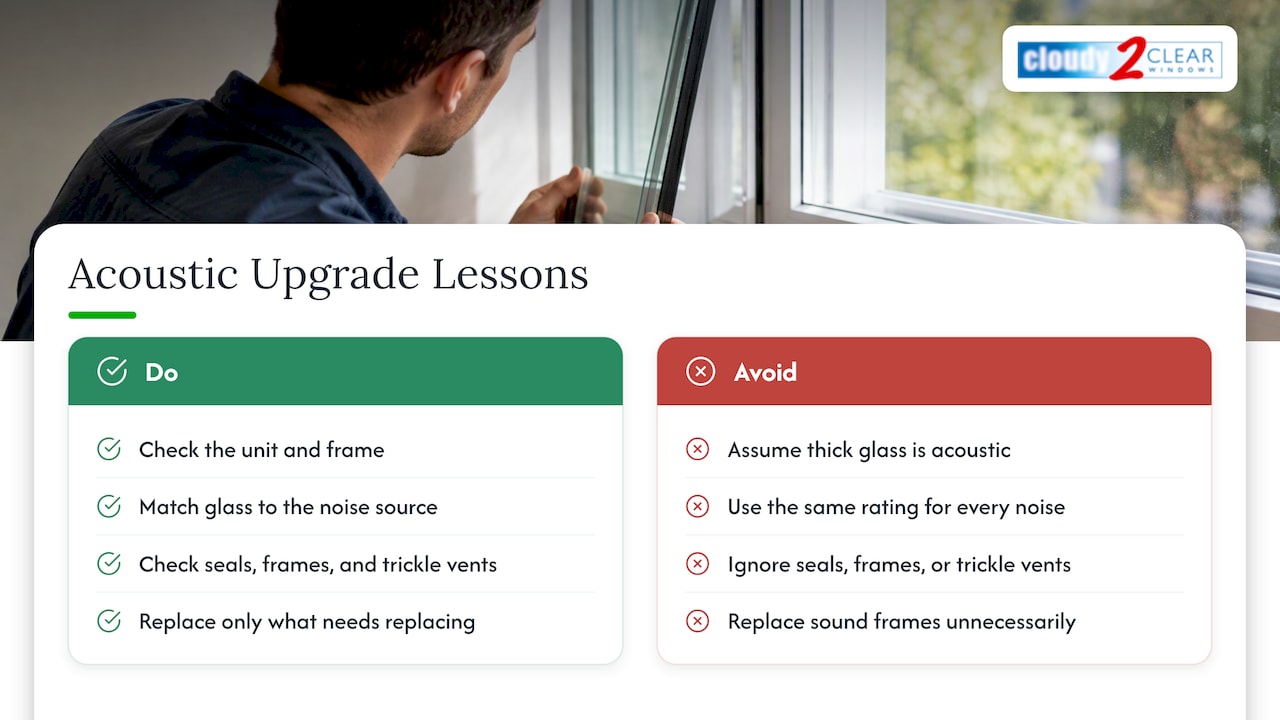
Different upgrades solve different problems, and matching the right one to your building saves money you’d otherwise waste on over-specifying. A straightforward IGU swap restores thermal performance fast where frames are sound. Adding a low-E coating and argon fill during that swap pushes U-values down further for marginal extra cost. Acoustic laminated glass suits premises on busy roads or near transport links. Toughened or laminated safety glass matters most for ground-floor display windows and doors. Secondary glazing remains the standard fallback for listed or character buildings where the original frames can’t be altered.

Technician fitting low-E coated glass


Upgrade option Thermal performance Acoustic benefit Cost (supply + install) Suitability for character/display windows Lifespan/maintenance Compliance risk
IGU swap (standard) Good improvement Modest Lower Good, matches existing frame Low maintenance, typical lifespan Low, if U-value evidence provided
IGU with low-E/argon Very good Modest Moderate Good Low maintenance, typical lifespan Low
Acoustic laminated glass Good High Moderate to higher Good Low maintenance, long lifespan Low
Toughened/laminated safety glass Good Modest Moderate Excellent for shopfronts Low maintenance, long lifespan Low, supports safety compliance
Secondary glazing Moderate to good Good Moderate Best for listed buildings Occasional servicing, typical lifespan Low, often the accepted route where frames can’t change
Full frame replacement Excellent High Highest Poor for listed buildings Typical lifespan Low, but must meet limiting U-values


Pro Tip: If you’re upgrading in stages, match new glass thickness and tint to your existing units first. A mismatched sightline or reflection on one bay of a shopfront is more noticeable to passing customers than the old fogged glass ever was.

What building regulations apply to replacement windows?

Replacement windows and doors in commercial buildings fall under Approved Document L, which sets limits on heat loss through the building fabric, including glazing. U-values are the metric that proves compliance, and suppliers should calculate them using BR 443 conventions for whole-element assessment, applied to the correct plane (vertical for windows, horizontal for rooflights).

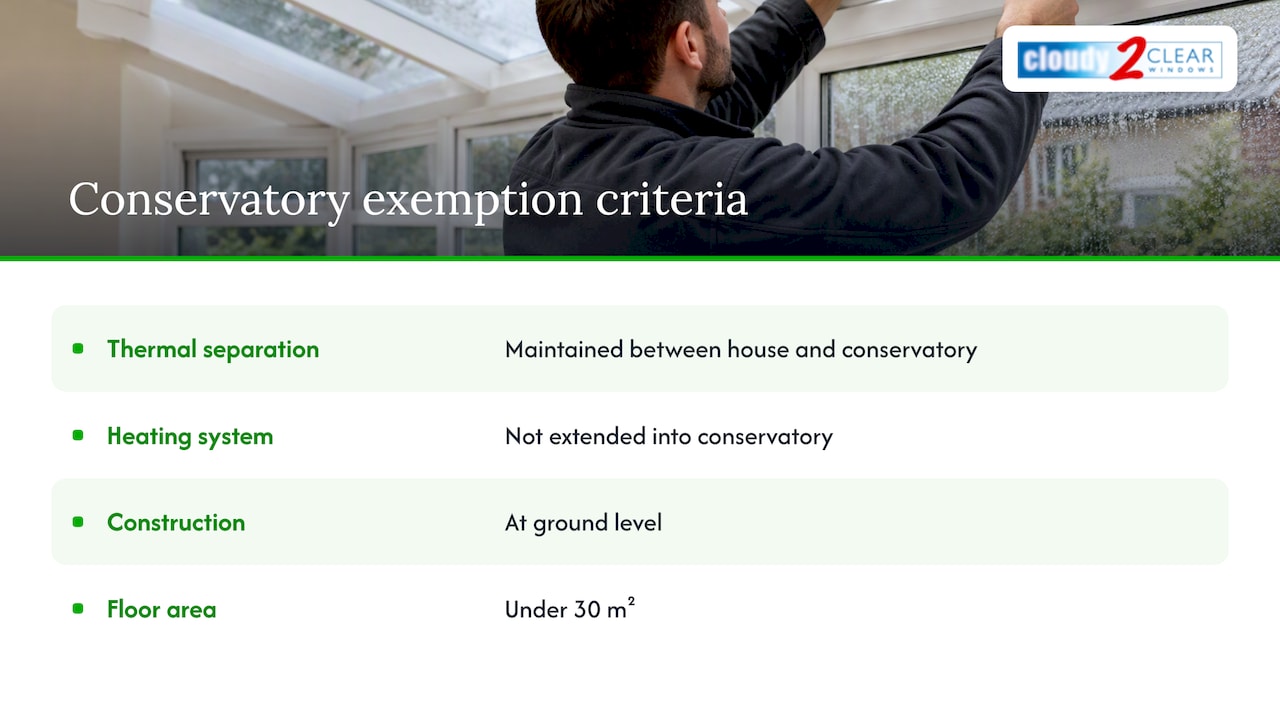
Character or listed buildings sometimes qualify for a relaxed standard, such as a centre-pane U-value around 1.2 W/(m²·K), or secondary glazing as an accepted alternative where original frames must stay in place. Smaller works like ground-floor conservatories under 30 m² can also fall outside the full requirements in certain circumstances.

Before you commit to a supplier:

  1. Request a written U-value calculation or Window Energy Rating for the exact unit specified
  2. Ask how they’ve accounted for air permeability and area-weighted averaging across your elevation
  3. Keep all evidence on file. It may be needed for planning records or an updated EPC recommendation report if the building’s energy status changes

What do glazing upgrades cost, and what’s the payback?

Costs vary by unit size and specification, but as a rough guide: a standard IGU swap tends to sit at the lower end of glazing spend, acoustic or laminated units cost more per unit, and full frame replacement carries the highest supply-and-install cost.

Upgrade type Relative cost band Typical driver of payback
IGU swap Lower Reduced heat loss, lower heating bills
Acoustic/laminated IGU Moderate to higher Comfort, noise reduction, tenant retention
Full frame replacement Highest Longest-term energy saving, lowest maintenance


Payback comes from more than the energy bill. Before you present a business case to stakeholders, work through:

  1. Estimated annual saving from a lower U-value against current heating costs
  2. Reduced maintenance and callout costs versus ageing failed units
  3. Non-energy value: comfort for staff and customers, noise reduction, and reduced liability from a failing shopfront window

What should you ask a glazing installer before hiring them?

A reputable installer should hand over evidence without being chased for it. Before signing anything, ask:

  1. Can you provide a written U-value calculation for this specific unit?
  2. How does this quote meet Approved Document L requirements?
  3. What does the warranty cover, and for how long?
  4. Do you have references or case studies from similar commercial projects?

Red flags are just as telling as good answers:

  • Reluctance to share U-value evidence in writing
  • No proof of insurance or a vague, undocumented warranty
  • Hand-waving on compliance (“it’ll be fine”) rather than a specific reference to Part L

Get at least three written quotes, check local trade credentials, and ask each supplier for a case study close to your building type.

How long does a glazing upgrade project take?

A single IGU swap typically takes a day or less per unit. Multi-unit staged replacement across a shopfront might run one to two weeks in phases. A full frame replacement project usually needs two to four weeks depending on scale.

  1. Book works outside peak trading hours or across a planned closure day
  2. Use cordons and clear signage so customers know the shop is still open
  3. Fit temporary barriers where needed and tackle one elevation at a time

Brief your staff and put a small sign on the door in advance. A short heads-up avoids confused customers on the day.

What experience tells us about window upgrades

Staged IGU swaps are usually the smartest first move for small business premises, not because they’re cheaper (though they often are), but because they let you fix the worst-performing units now without committing to a full-scale project you haven’t budgeted for. Fogging should always be read as a performance warning rather than a cosmetic complaint. Cloudy2Clear Windows has worked across residential and commercial glazing since 2005, and the pattern holds across almost every job: the businesses that act early on seal failure spend less overall than those that wait for a full replacement to become unavoidable. A solid warranty and clear aftercare terms remain the simplest way to judge whether a supplier stands behind their work.

What experience tells us about window upgrades — overview diagram

How Cloudy2Clear Windows can help with your upgrade

Cloudy2Clear Windows specialises in exactly the low-disruption route this article has described: glass-only IGU swaps, full glazing replacement, commercial window repair, and compliance checks that give you the U-value evidence a supplier should hand over unprompted. That’s the practical difference versus starting from scratch with a full-frame contractor. You get the thermal and acoustic upgrade without losing a working frame or closing for weeks.

Cloudy2clearwindows


Every job comes with warranty and aftercare support, so you’re not left chasing anyone if a seal fails again down the line. If you manage a shopfront, office, or commercial unit and want to know which of your windows genuinely need attention, book a free site check through our commercial window repair service or get a quote via double glazing replacement. Our team is available Monday to Friday, 8:30am to 6:30pm, to talk through your priorities and get a plan moving this week.

Where to check the detail yourself

This article is general information, not a substitute for advice from a qualified lawyer. Consult a qualified legal professional about your own circumstances before acting on anything here.

Sources

FAQ

Is it cheaper to replace glass or the whole window?

Replacing just the insulated glass unit is usually cheaper and faster than a full frame replacement, provided the existing frame is straight, secure, and free from corrosion.

Do small business window replacements need to meet Part L?

Yes. Replacement windows and doors in non-domestic buildings must meet the energy efficiency limits set out in Approved Document L, usually demonstrated through U-value evidence.

How do I know if my double glazing has failed?

Fogging or misting trapped between the panes that doesn’t clear on wiping is the clearest sign of seal failure, distinct from ordinary surface condensation.

What is a reasonable warranty on commercial glazing work?

Warranty length varies by supplier and unit type, so always get it in writing alongside details of what it covers. Cloudy2Clear Windows backs its installations with warranty and aftercare support as standard.

Can listed or character buildings still get energy-efficient glazing?

Yes. Approved Document L allows for relaxed standards or secondary glazing in character-sensitive buildings where the original frames must be retained.

Window energy ratings 2025: the UK homeowner’s guide

For any window replacement in England and Wales right now, the legal whole-window U-value limit is 1.4 W/m²K for existing homes and 1.2 W/m²K for new builds, as set by Approved Document L. The Window Energy Rating (WER) scheme, run by the British Fenestration Rating Council (BFRC), summarises performance on a coloured band from A++ to E. Your single most useful next step when evaluating any quote: ask for the whole-window U-value certificate and the BFRC licence number before you sign anything.

The three components that feed into a WER are:

  • Whole-window U-value (thermal transmittance, measured in W/m²K): how much heat the window loses
  • Solar heat gain coefficient (g-value): how much useful solar energy passes through the glass
  • Air leakage (L50): how much air escapes under pressure, measured in m³/(h·m²)

What is a Window Energy Rating and who issues it?

A Window Energy Rating is a verified, consumer-facing score that tells you how energy-efficient a window is as a complete unit. The BFRC designed it to work like an appliance energy label: one clear band that protects buyers from unverified manufacturer claims by combining heat loss, solar gain, and air leakage into a single checked figure.

The BFRC is the UK’s official issuing body. It licences manufacturers to use the WER label only after their products have been assessed using BFRC-approved simulation software. Every licensed product must carry a permanent mark inside the frame, and the licence is subject to audit. The rating is not a marketing claim; it is a scheme-backed certification.

What you will see on a genuine WER label:

  • The rating band (A++, A+, A, B, C, D, or E) displayed on a colour-coded scale
  • The whole-window U-value in W/m²K
  • The g-value (solar heat gain coefficient), where shown
  • The BFRC licence number and certificate reference

The key distinction for trade professionals: WER is the consumer-facing summary, but the regulatory metric for Building Regulations compliance is the whole-window U-value. Both matter, and you need both documents on file.

How WERs are calculated: the three components you need to understand

A WER is an energy balance: solar gain through the glass, minus heat lost through thermal transmittance and air leakage. The Energy Saving Trust confirms the scheme assesses the whole window, frame and glass together, not just the centre pane.

Diagram of factors in window energy rating calculation

Whole-window U-value

The U-value measures how quickly heat passes through the entire window assembly, including the frame, glazing unit, and edge seals. Centre-pane U-values are always lower (better) than whole-window figures because frames conduct more heat than the glass itself. When a supplier quotes a U-value, always confirm it is the whole-window figure. A centre-pane-only figure will not satisfy a Building Control inspector and will not match what appears on a BFRC certificate. You can read more about this distinction in our window U-value guide.

Cross-section of insulated window frame

Solar heat gain (g-value)

The g-value expresses how much solar energy passes through the glazing as a fraction between 0 and 1. A higher g-value means more free solar warmth in winter, which can push a window up a WER band. That is useful context for homeowners, but it does not substitute for a low U-value when it comes to Part L compliance. Building inspectors check the U-value, not the WER band.

Air leakage (L50)

L50 is the air leakage rate measured at 50 Pascals of pressure, expressed in m³/(h·m²). Poorly fitted or low-quality windows lose significant heat through draughts, which reduces the WER band. Installers should supply L50 test evidence or the manufacturer’s declared value alongside the U-value certificate.

Hands fitting draught-proof seal on window frame


Pro Tip: On south-facing elevations with large glazing areas, a high g-value can lift a product into a better WER band than its U-value alone would justify. Building inspectors still check the whole-window U-value for Part L compliance, so always present both pieces of evidence, not just the WER band.

How to read a WER label and the permanent mark

Answer first: check five things on any window label or certificate before accepting delivery or signing off an installation.

  • Rating band: A++ is the best; E is the worst. For 2025 compliance, you want B or better for replacements, A or better for new builds.
  • Whole-window U-value: stated in W/m²K. Confirm it matches the certificate.
  • BFRC licence number: a unique identifier you can cross-reference on the BFRC website.
  • Permanent mark inside the frame: a small, indelible sticker or engraving showing the rating, company name, and BFRC membership number. Per BFRC scheme rules, this mark is mandatory on every licensed product.
  • Certificate or simulator report reference: ties the physical product to the rating calculation.

On-site checklist for surveys and delivery checks:

  1. Locate the permanent mark inside the frame before the window is fitted.
  2. Match the licence number on the mark to the paperwork supplied.
  3. Confirm the whole-window U-value on the certificate, not the marketing brochure.
  4. Check the rating band is B or above for a replacement, A or above for a new build.
  5. Photograph the permanent mark and certificate for your records.

2025 thresholds and UK Building Regulations (Part L)

The Approved Document L sets the legal limits: replacement windows in existing homes must achieve a whole-window U-value of 1.4 W/m²K or better; new-build windows must reach 1.2 W/m²K or better. These thresholds apply to installations in England and Wales.

The table below maps WER bands to approximate whole-window U-value ranges, drawn from trade planning guidance. These are indicative figures; the BFRC is the authoritative source for any certified product’s exact values.

What ‘good’ looks like in 2025: For a replacement window, B-rated (≈1.4 W/m²K) is the legal minimum. Aiming for A-rated (≈1.2 W/m²K) gives you headroom, better energy performance, and stronger appeal to future buyers. For new builds, A-rated or better is the starting point, not the aspiration.

The practical difference between centre-pane and whole-window U-values matters here. A triple-glazed unit might show a centre-pane U-value of 0.6 W/m²K, but the whole-window figure once the frame is included could be 0.9–1.0 W/m²K. Always verify which figure appears on the compliance certificate. Our Building Regulations guide covers this in more detail.

How BFRC certification and audits keep ratings trustworthy

BFRC licences and labels are the standard UK verification method. Genuine products are permanently marked and supported by a simulator report, not just a brochure claim.

To verify a rating, follow these steps:

  • Ask the supplier for the BFRC licence number and check it against the BFRC’s online listings.
  • Request the simulator report that underpins the rating; this is the calculation document produced by a BFRC-approved simulator.
  • Inspect the permanent mark inside the frame on delivery; it must show the rating band, company name, and BFRC membership number.
  • Confirm the whole-window U-value on the certificate matches the mark and the quote.

Only BFRC-approved simulators may produce the calculations used for a rating licence, and licensed products are audited annually to confirm ongoing compliance. That audit trail is what separates a genuine BFRC rating from an unverified manufacturer claim.

Pro Tip: Keep a scanned copy of the simulator report, BFRC licence reference, and permanent-mark photograph in a single job folder. If Building Control requests evidence, or a future buyer’s solicitor asks for compliance documentation, you can respond within minutes rather than hunting through paperwork.

Practical checklist: documents, costs, timelines, and questions to ask

This checklist covers everything an installer or homeowner needs to secure a compliant, verifiable installation.

Documents to request before or on completion:

  1. BFRC licence number and rating report (simulator output)
  2. Whole-window U-value certificate (not centre-pane only)
  3. L50 air leakage data or manufacturer’s declared value
  4. Written installation guarantee
  5. FENSA or CERTASS installer registration proof

Typical timeline: Survey to completion for a standard double-glazed replacement usually runs two to four weeks, depending on the manufacturer’s lead time for the specific unit specification.

Cost and savings context: Costs for a single standard double-glazed unit replacement vary by size, specification, and location. The Energy Saving Trust provides typical savings examples for homeowners upgrading from single glazing to A-rated double glazing, which illustrate the relative benefit of moving up the WER scale. Upgrading to A-rated or better also supports a stronger Energy Performance Certificate (EPC) rating, which can positively affect a property’s resale value.

Questions to ask at quotation stage:

  • Is the U-value quoted the whole-window figure or the centre-pane figure?
  • Can you supply the BFRC licence number and simulator report?
  • Are you FENSA or CERTASS registered?
  • What documentation will you provide on completion?

Red flags to watch for: no BFRC permanent mark on the frame, a U-value quoted without specifying whole-window, no simulator report available, or an installer who cannot confirm their FENSA or CERTASS registration.

Pro Tip: Ask your installer to photograph the permanent mark inside the frame before fitting and to include that image in your completion pack. It takes thirty seconds on site and removes any doubt about product authenticity for Building Control or future conveyancing.

What Cloudy2Clear Windows sees on site: practical lessons

Since 2005, Cloudy2Clear Windows has been replacing and repairing double-glazed units across residential and commercial properties, and the same issues appear repeatedly on site. The most common problem is a missing or illegible permanent BFRC mark, usually because the unit was sourced from a supplier who did not hold a current licence. The second most frequent issue is a quote that cites only a centre-pane U-value, which overstates performance and will not satisfy a Building Control inspection.

Smartphone capturing BFRC mark on window frame


Unverified online calculators are another source of confusion. A planning estimate from a WER calculator is useful for scoping a project, but it is not a certified figure and cannot substitute for a manufacturer’s simulator report.

The trust signals you should expect from any reputable installer are straightforward: a permanent BFRC mark on the frame, a simulator report or rating certificate, a written installation guarantee, and evidence of FENSA or CERTASS registration. If any of those are missing, ask why before the work begins.

How Cloudy2Clear Windows can help you meet the 2025 standards

Glass-only replacement and compliance documentation are at the core of what Cloudy2Clear Windows does. Whether your existing unit has failed, misted, or simply no longer meets the current U-value threshold, the team can supply and fit a replacement unit with the right energy performance credentials.

Cloudy2clearwindows


Relevant services include:

  • Glass-only double-glazed unit replacement, including upgrades to energy-efficient units that meet or exceed the 1.4 W/m²K replacement threshold
  • Full window replacement for properties where the frame as well as the glass needs updating
  • Compliance documentation supply on completion, including U-value information and BFRC licence reference where applicable
  • Commercial and housing association inspections, with written reports suitable for Building Control

On completion of any replacement, Cloudy2Clear Windows provides a written installation guarantee and the relevant energy performance documentation. If you are in the Milton Keynes area, you can book a double glazing repair or replacement directly. For a full double-glazed unit replacement anywhere in the service area, get in touch for a no-obligation quote.

Sources

Regulatory requirements and scheme rules do change. Always verify the current position with primary sources before specifying or installing.

Always verify a BFRC licence number on the BFRC website and confirm the whole-window U-value on the seller’s certification before accepting any installation.

FAQ

What are good energy performance ratings for a window in 2026?

For a replacement window, B-rated (approximately 1.4 W/m²K whole-window U-value) is the legal minimum under Part L. A-rated or better (≈1.2 W/m²K) is the stronger choice for energy savings and future resale value.

What are the new window regulations for 2026?

Approved Document L requires replacement windows in existing English and Welsh homes to achieve a whole-window U-value of 1.4 W/m²K or better; new-build windows must reach 1.2 W/m²K or better.

What is the difference between A-rated and A±rated windows?

Both exceed the 2025 Part L thresholds, but A±rated windows have a lower whole-window U-value (approximately 0.9–1.0 W/m²K) than standard A-rated units (approximately 1.0–1.2 W/m²K), meaning less heat loss and marginally better energy performance.

Is a U-value of 1.4 W/m²K good enough for a replacement window?

Yes, 1.4 W/m²K is the current legal maximum for replacement windows under Part L, so it meets the minimum requirement. Choosing a lower U-value, such as 1.2 W/m²K or below, gives better thermal performance and greater compliance headroom.

How do I check that a window’s energy rating is genuine?

Ask for the BFRC licence number, request the simulator report, and inspect the permanent mark inside the frame on delivery. You can cross-reference the licence number on the BFRC website to confirm it is current and valid.