Most people assume window insulation simply means having glass in a frame. Replace single glazing with double glazing, and the job’s done. In reality, the picture is far more detailed than that. The full performance of any window depends on the whole assembly: the frame material, the edge spacers, the quality of installation, and how well the seals hold over time. For homeowners and businesses across England and Scotland, understanding these factors properly is the difference between windows that genuinely cut energy costs and ones that look modern but still let warmth drain away.
Understanding window insulation: beyond the glass
Having previewed why window insulation is pivotal, let’s break down the terminology and core ideas that drive effective upgrades.
Two measurements matter most when assessing a window’s insulating ability: the U-value and the Window Energy Rating (WER).
The U-value (measured in W/m²K) tells you how much heat passes through the window per square metre, per degree of temperature difference. The lower the number, the better the insulation. A single-glazed window typically has a U-value of around 5.0, while a well-specified double-glazed unit can achieve 1.2 or below. As the BWF Window Energy Performance Toolkit makes clear, insulation performance is primarily about the whole-window U-value and air leakage across the installed assembly, not just the glass in isolation.
The WER (Window Energy Rating) is a letter-based scale running from G (worst) through to A++ (best). It accounts for U-value, solar gain, and air leakage together, giving a more rounded picture of real-world performance. You can learn more about window energy ratings and how they affect your property’s overall efficiency.
| Measurement | What it tells you | Ideal value |
|---|---|---|
| U-value (W/m²K) | Heat loss per square metre | As low as possible (below 1.4 for new installs) |
| WER (A++ to G) | Combined energy performance | A or above |
| Air permeability | Air leakage through the assembly | As low as possible |
Why does this matter so much in practice? Because air leakage through gaps in frames, around beads, and through degraded seals can undermine even the most technically advanced glazing. A window rated to perform at 1.2 W/m²K in a laboratory can perform far worse once poorly installed or left with failing seals in the field. Ensuring your installation follows correct window installation standards is just as important as choosing the right product.
Key factors affecting whole-window insulation include:
- Frame thermal performance: uPVC, timber, and aluminium frames all conduct heat differently
- Edge spacer quality: warm-edge spacers at the perimeter of the glazed unit dramatically reduce heat loss at the edges
- Seal integrity: degraded or poorly fitted seals allow air to bypass the glazing entirely
- Installation airtightness: gaps between the frame and the reveal can be significant sources of draught
A window is only as good as its weakest point. Focusing purely on the centre-pane glass value ignores the edges, frames, and seals where real-world performance often falls short.
Double vs. triple glazing: insulation explained
With a foundation in how whole-window performance is measured, let’s examine practical glazing solutions and their impact.
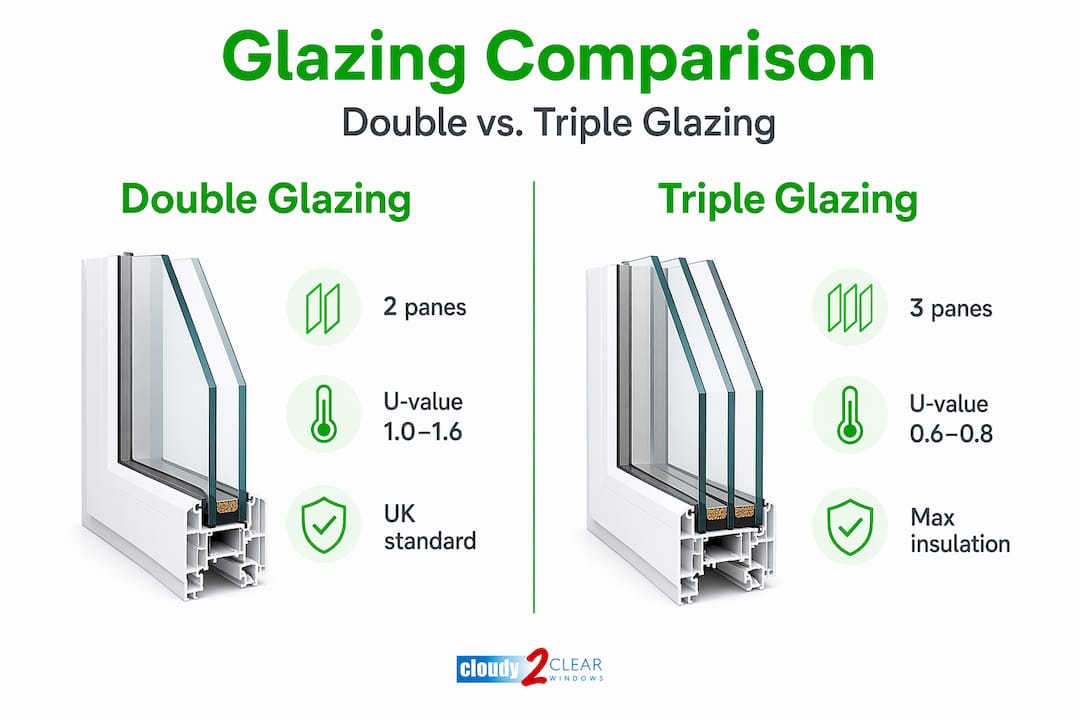
The core principle behind double and triple glazing is straightforward: sealed gaps between panes, usually filled with an inert gas like argon or krypton, slow down the transfer of heat. As the Energy Saving Trust explains, upgrading to double or triple glazing improves insulation by adding a sealed insulating gas layer between panes, reducing heat loss, minimising draughts and cold spots, and lowering the risk of condensation forming on the interior glass surface.
Here is how the two main options compare in everyday terms:
| Feature | Double glazing | Triple glazing |
|---|---|---|
| Typical U-value | 1.0 to 1.6 W/m²K | 0.6 to 0.8 W/m²K |
| Insulating gas layers | 1 | 2 |
| Noise reduction | Good | Very good |
| Weight | Standard | Heavier (structural check advised) |
| Cost | Moderate | Higher upfront |
| Best suited for | Most UK homes and businesses | Colder regions, high-exposure sites |
Double glazing remains the most practical and cost-effective insulation solution for the majority of properties in England and Scotland. The science behind why it works so well is explored in detail in our article on double glazing science.
Triple glazing takes this further by introducing a second insulating gas layer between three panes. The result is a measurably lower U-value and improved performance in very cold or exposed conditions. If you are weighing up whether the upgrade is right for your property, read our overview of triple glazing pros and when it makes financial sense.
Benefits of upgrading glazing for insulation:
- Reduced heat loss through the glass surface itself
- Lower energy bills over the long term
- Greater thermal comfort, with fewer cold spots near windows
- Reduced condensation on interior glass surfaces
- Quieter interior environment, particularly near busy roads
Pro Tip: When comparing quotes for new insulated glass windows, always ask for the whole-window U-value, not just the centre-pane figure. The centre-pane value is consistently lower than the whole-window figure, and the whole-window value is what matters for your actual energy performance.
A useful benchmark: UK Building Regulations currently require a whole-window U-value of 1.4 W/m²K or better for replacement windows in England. Many modern double-glazed units comfortably exceed this requirement.
Frames, edges, and seals: the hidden factors
After choosing optimal glazing, it’s crucial to recognise the importance of frames, edges, and seals that form the insulation boundary.
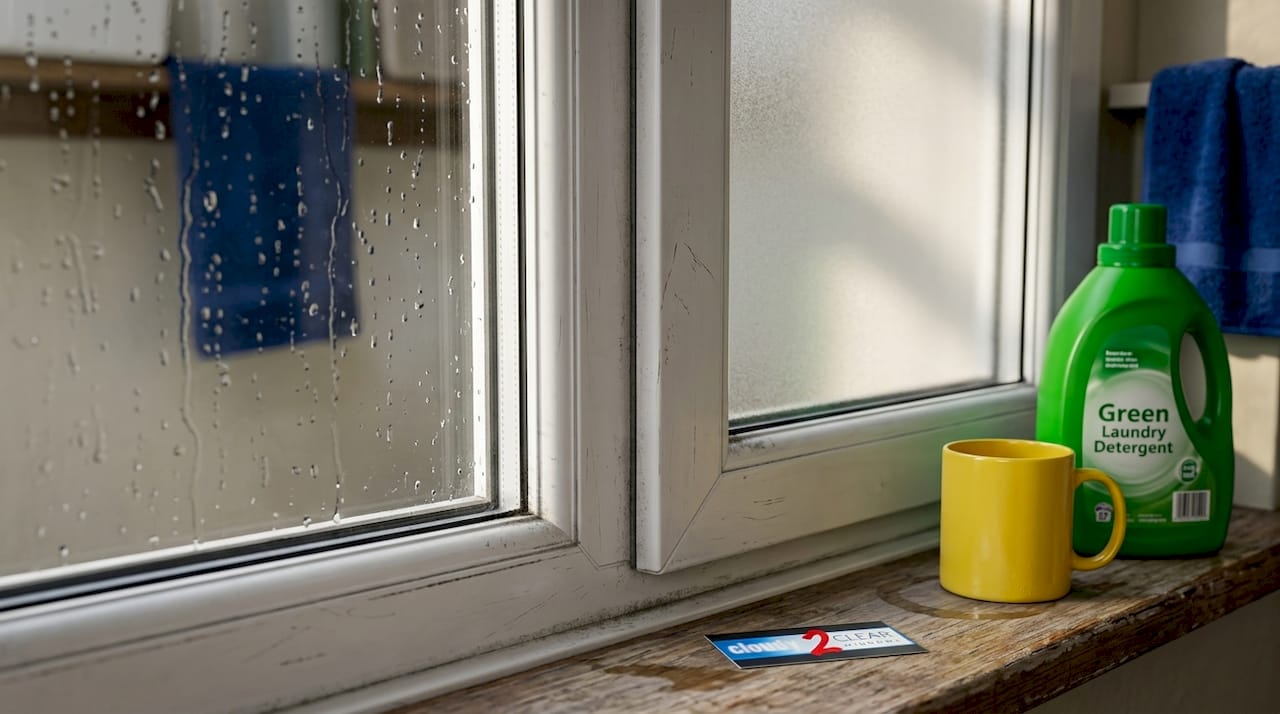
As the Energy Saving Trust confirms, window insulation is strongly affected by performance at the frame, edges, and seals, not just the centre-pane glass. Thermal bridging (where heat bypasses insulation by travelling through a conductive material such as an aluminium frame or a metal edge spacer) can account for a significant share of total window heat loss, even in otherwise well-specified units.
Here is a practical checklist to address the hidden weak points:
- Inspect seals annually: Run your hand around the edge of the closed frame in cold weather. Any detectable draught indicates seal degradation that is costing you energy.
- Ask about warm-edge spacers: When specifying a new unit, insist on a warm-edge spacer bar rather than a standard aluminium bar. This reduces edge-of-glass heat loss noticeably.
- Choose frames wisely: Thermally broken aluminium or good-quality uPVC frames outperform standard aluminium significantly in terms of heat conduction.
- Check the installation perimeter: The gap between frame and reveal should be filled with low-expansion foam and finished with an airtight sealant. This step is often rushed on cheaper installations.
- Address draughts proactively: Temporary draught-proofing measures can supplement window performance while a full upgrade is planned. Detailed guidance on draught proofing tips covers the most effective approaches.
Thermal bridging at window edges accounts for a disproportionate share of heat loss in many properties. Addressing the edge spacer and frame specification alone can improve whole-window U-values by 10 to 20 percent compared to using standard components.
If seals have already deteriorated, the fix is often simpler than people expect. Our article on sealing drafty windows covers the most practical options, and if you suspect water ingress alongside air leakage, our guide on fixing window leaks walks you through diagnosis and solutions.
Pro Tip: Even new windows can have poor airtightness if installation quality is low. After any new installation, test all opening lights with a piece of thin tissue paper held at the edge. Movement in still indoor air indicates a seal that needs attention before the first cold spell.
Moisture, condensation, and ventilation: balancing insulation
Strengthening insulation raises new questions about moisture control. Let’s review how to balance insulation and air quality.
One of the most overlooked consequences of improving window insulation is the effect it has on moisture behaviour inside your property. When you seal draughts and upgrade glazing, you reduce the accidental ventilation that previously helped to carry humid air out of the building. The result can be increased condensation, particularly on cold wall surfaces near windows.
It is important to distinguish between two very different types of condensation at windows:
| Type | Location | Likely cause | Action needed |
|---|---|---|---|
| Surface condensation | Inside the glass | Humidity too high / poor ventilation | Improve ventilation; check heating |
| Interstitial condensation | Inside the sealed unit (misting) | Failed seal / unit breakdown | Replace the sealed unit |
| External condensation | Outside the glass | High-performance glazing (normal) | No action needed |
As Barry Turner & Son notes, improving insulation and airtightness can make condensation-related damp issues more noticeable if ventilation is not addressed alongside the upgrade. This is not a reason to avoid improving your windows. It is a reason to manage the change thoughtfully.
Practical steps to balance insulation and moisture control:
- Maintain background ventilation: trickle vents built into window frames provide low-level ventilation without negating draught-proofing gains
- Use extractor fans in kitchens and bathrooms: these are the primary sources of moisture in most properties
- Monitor humidity levels: a simple digital hygrometer (available for a few pounds) tells you whether indoor humidity is reaching the risk zone above 70 percent
- Consider MVHR in new builds or major refurbishments: Mechanical Ventilation with Heat Recovery captures warmth from outgoing stale air and uses it to pre-heat incoming fresh air
For a detailed breakdown of how to identify which type of condensation you are dealing with and how to resolve it, our guide on solving condensation is an excellent starting point.
Upgrading windows: UK ratings, compliance, and heritage considerations
To ensure your insulation project delivers lasting value and meets standards, it’s essential to understand UK energy ratings and compliance matters.
When buying replacement windows in England and Scotland, look for products independently rated through the BFRC (British Fenestration Rating Council). The BFRC scheme verifies WER labels so that the performance you see on paper reflects real-world testing. As the BWF Window Energy Performance Toolkit advises, look for independently rated window performance via BFRC rather than unverified manufacturer claims. The rating incorporates insulation (U-value), air leakage, and solar gain together.
Key points when choosing and specifying compliant windows:
- Always ask for the BFRC-rated WER label, not just a U-value figure from a brochure
- Replacement windows must meet Building Regulations: currently a minimum of 1.4 W/m²K whole-window U-value in England
- FENSA or CERTASS registration: any installer fitting replacement windows must be registered with a competent persons scheme or submit a Building Regulations application on your behalf
- Commercial properties: may face different compliance requirements; speak to a specialist with commercial installation experience
Heritage and listed building owners face additional considerations. Historic England is clear that retrofit measures for historic buildings should include good detailing and workmanship, balancing thermal performance with heritage constraints and moisture risks. In practice, this often means using secondary glazing rather than replacing original frames, or specifying slim-profile double glazing designed to match the proportions of period windows.
Pro Tip: If your property is listed or in a conservation area, always consult your local planning authority before specifying replacement windows. Some councils have pre-approved product lists for common window types in their area, which can speed the approval process considerably.
Why most people underestimate window insulation — and what actually works
Beyond compliance and technical ratings, it is worth reflecting on what truly leads to insulation success in real homes and businesses.
The standard advice in most guides focuses almost entirely on glazing specification: switch from single to double, upgrade to triple if you can afford it. While glazing matters, this advice systematically undervalues the contribution of everything else.
In our experience working across England and Scotland since 2005, the properties that benefit most from window upgrades are rarely those that simply swap glass. They are the ones where the whole window assembly is addressed: frames, edge spacers, seals, installation quality, and ventilation strategy considered together. The Energy Saving Trust puts it clearly: windows work as part of the building’s overall energy strategy, and the best results come from coordinating window upgrades with the broader insulation and airtightness plan.
What does this mean in practice? It means that a property where seals are failing, where the installation perimeter has never been checked, and where ventilation is either excessive or absent, will not achieve meaningful gains from glazing upgrades alone. Conversely, a property with thoughtfully detailed frames, well-fitted seals, and controlled ventilation can deliver genuinely impressive insulation performance even with standard double glazing.
The other underappreciated factor is installation quality. The same window unit, fitted by two different installers, can perform very differently in the real world. Corners cut on foam filling, rushed seal application, or poorly trimmed frames create air pathways that defeat the entire purpose of the upgrade. Exploring fenestration strategies that take the whole building envelope into account is the approach that consistently delivers results.
Our honest advice: treat your window upgrade as a building fabric project, not a product purchase. The glass matters. Everything around it matters just as much.
Upgrade your windows for lasting insulation and energy savings
If this guide has given you a clearer picture of how window insulation actually works, the next step is finding the right team to help you act on it. Whether you are a homeowner wanting warmer rooms and lower bills, or a business looking to improve the efficiency and comfort of your premises, professional advice and quality installation make all the difference.

At Cloudy2Clear Windows, we have been installing, repairing, and replacing double-glazed windows for homeowners and businesses across England and Scotland since 2005. We understand that every property is different, and we approach each project with the whole-window performance picture in mind, not just the glass. From sealed unit replacements to full window upgrades for domestic or commercial properties, our experienced team is ready to help. Get in touch today to find out how we can improve your windows and your comfort this year.
Frequently asked questions
What is a U-value and why does it matter for window insulation?
A U-value measures how much heat passes through your window per square metre; a lower figure means better insulation and, in practice, greater comfort and lower energy bills. The BWF toolkit confirms that U-value is the core measure of thermal transmittance for window assemblies.
Do I need ventilation if I upgrade to airtight windows?
Yes, absolutely. Improved airtightness reduces draughts but can increase indoor humidity if ventilation is not managed, and controlled ventilation under Approved Document F in England is still required to prevent damp and maintain air quality.
How do double and triple glazing differ in insulating ability?
Double glazing creates one insulating gas-filled gap between two panes, while triple glazing adds a second gap and third pane, lowering heat loss further. The Energy Saving Trust notes that triple glazing extends insulation performance with the additional panes and insulating gaps.
Is it possible to improve insulation in historic buildings without damaging the character?
Yes, with careful design, sympathetic materials, and skilled workmanship, meaningful insulation improvements are achievable. Historic England advises that good detailing and workmanship are the key to balancing thermal performance with heritage preservation.