Argon-filled double glazing improves insulation by roughly 15 to 30% over air-filled units, pushing centre-pane U-values down to around 1.1 to 1.4 W/m²K in typical builds. For most UK homes, that modest premium over air-filled units pays for itself in lower heating bills and less condensation, provided the sealed unit is well made and properly installed. The rest of this guide covers the evidence, the costs, and what to check before you buy.
What is argon-filled double glazing?
Argon-filled double glazing is a sealed insulating glass unit where the space between the two panes, the cavity, is filled with argon gas instead of ordinary air. Argon is inert, colourless, and roughly 35% denser than air, which slows the transfer of heat through the cavity far more effectively than air alone.
Manufacturers fill units with argon during production, injecting the gas as the panes are sealed together with a spacer bar around the edge. This is why the process is described as “factory-filled” rather than something an installer does on-site. Once sealed, the unit is designed to hold that gas for decades.
A few practical points worth knowing:
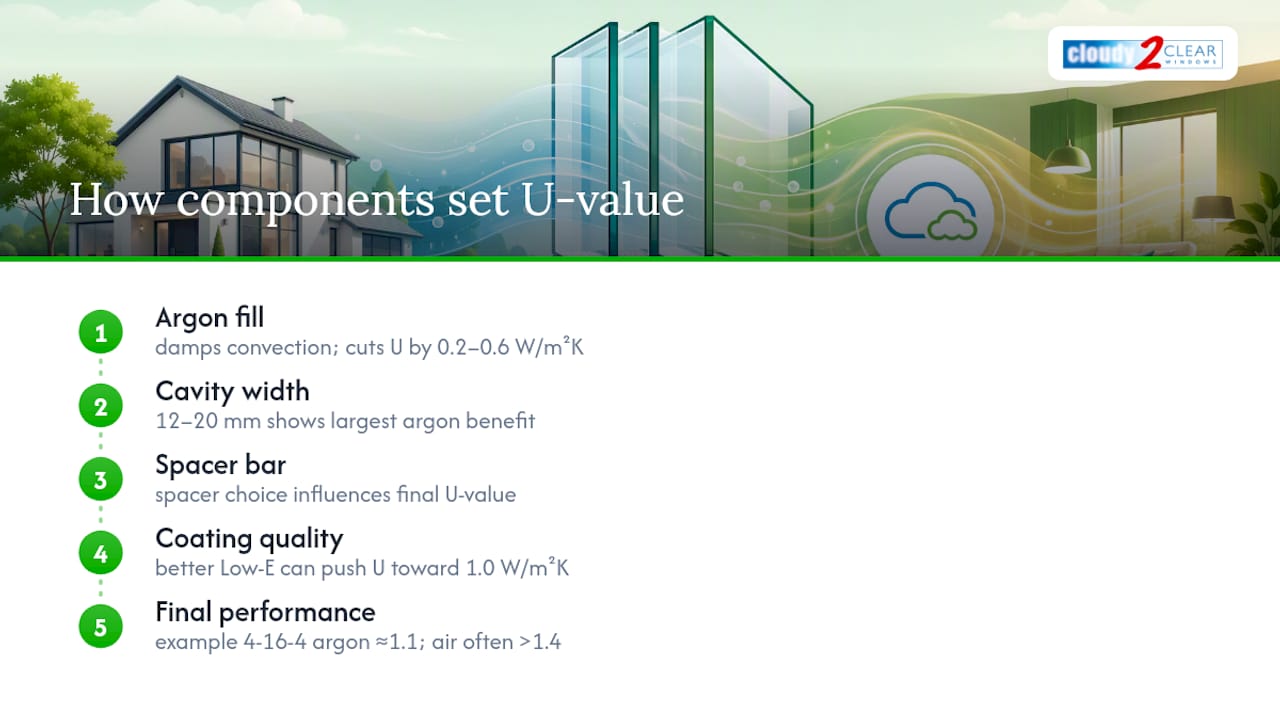
- Cavity widths typically range from 12mm to 20mm, with 16mm being a common sweet spot for argon performance.
- Older double glazing, particularly units installed before the mid-2000s, is often air-filled rather than argon-filled.
- The gas fill works alongside a low-emissivity (Low-E) coating on the glass, and the two together do most of the thermal work.
- Argon-filled units look identical to air-filled ones from the outside. You cannot tell by looking at a window whether it has argon or air inside.
If you are checking existing windows in your home, the Cloudy2Clear guide to window energy efficiency walks through what to look for.
How does argon improve insulation?
Argon conducts heat more slowly than air. This single physical property is the entire reason it ends up in your window cavity, and it is worth understanding why it matters so much for a room that feels cold in winter.
Air constantly circulates within a sealed cavity through convection, carrying heat from the warm inner pane to the cold outer pane. Argon, being heavier and less prone to convective movement, dampens that circulation. A comparative study using experimental testing and CFD modelling found that argon-filled cavities consistently produced lower U-values and better thermal resistance than air-filled units across a range of cavity widths, with the improvement most pronounced at cavity widths of 12mm to 20mm, the range most UK manufacturers already use.
Argon’s edge: Switching from air to argon in a standard cavity typically cuts the centre-pane U-value by 0.2 to 0.6 W/m²K, translating to a 15 to 30% improvement in heat retention depending on coatings and spacer type.
To put real numbers on this, a common 4-16-4 configuration (4mm glass, 16mm cavity, 4mm glass) with a Low-E coating and argon fill typically reaches a centre-pane U-value of around 1.1 W/m²K, according to EN 673-based calculator examples. Higher-specification units with better coatings can nudge that down towards 1.0 W/m²K. The same build filled with plain air would sit noticeably higher, often above 1.4 W/m²K, because it loses the argon effect entirely.
None of this happens in isolation. The spacer bar, coating quality, and cavity width all interact with the gas fill to produce the final figure, which is why two argon-filled windows from different manufacturers can still perform quite differently.
What are the main benefits of argon gas windows?
Better insulation is the headline benefit, but it shows up in your home in several distinct ways beyond the number on a spec sheet.
- Lower heating bills. Energy Saving Trust benchmarks suggest that upgrading a single-glazed semi-detached home to A-rated double glazing can save roughly £85 to £195 a year, depending on your region and starting point. Argon-filled units, being the standard for A-rated glazing, deliver most of that saving.
- Reduced condensation. A warmer inner pane surface means moisture in room air is less likely to hit dew point and condense on the glass. This matters for mould risk around window reveals, particularly in bathrooms and bedrooms.
- Better comfort near windows. Cold spots and draughts near glazing reduce when the inner pane runs closer to room temperature.
- Acoustic improvement. While argon’s soundproofing effect is secondary to its thermal role, the denser gas and sealed unit construction do reduce airborne noise transmission compared with a poorly sealed air-filled equivalent.
Pro Tip: Argon-filled units still need adequate trickle ventilation to meet Building Regulations Part F and prevent damp buildup. Do not seal a room completely just because the glazing is more efficient.
What does argon-filled double glazing cost?
The argon premium itself is small. Fitting a room, or a whole house, is where the bigger cost decisions sit.
- The gas premium is minor. Argon typically adds a small percentage to the manufacturing cost of a sealed unit compared with an air-filled equivalent, often a modest amount per window rather than a significant jump in overall project cost.
- Payback depends on your baseline. If you are replacing single glazing entirely, the Energy Saving Trust’s £85 to £195 annual saving range for a typical semi-detached home gives a payback period of several years once you factor in full installation costs, not just the gas fill.
- Frame material and installation quality matter more than the gas. A well-fitted uPVC or aluminium frame with a proper Low-E argon unit will outperform a cheaply installed equivalent every time, regardless of what gas sits in the cavity.
- VAT and grants vary by project. Standard installations carry standard VAT, though some energy efficiency schemes offer support depending on eligibility, so check current guidance before budgeting.
For a fuller cost breakdown across window types, the guide to investing in energy efficient windows is a useful next read.
How long does argon last in a sealed unit?
Argon does not vanish overnight. Well-manufactured units typically leak gas at a rate of less than 1% per year, meaning a properly sealed unit can retain useful thermal performance for decades.
- Misting or fogging between the panes is the clearest sign of a failed seal, not a gradual argon leak you would notice day to day.
- Once a seal fails, refilling the unit with fresh argon is rarely practical or cost-effective. Replacing the sealed unit is normally the correct fix.
- Look for FENSA certification and BFRC energy ratings when buying, and check what warranty terms cover seal failure specifically, not just frame defects.
- Installation quality and spacer system design often matter as much as the gas fill itself for long-term performance, so ask what spacer bar is used before you commit.
Argon vs krypton vs triple glazing: which should you choose?
Argon is the standard choice for good reason, but it is not the only option, and knowing when to look elsewhere saves you money.
- Argon vs air: Argon wins comfortably in any standard cavity. There is little argument for choosing air-filled units in new installations today.
- Argon vs krypton: Krypton conducts heat even more slowly than argon, but it only shows a meaningful advantage in narrow cavities, typically under 10mm, and it costs considerably more to produce. For the 12 to 20mm cavities most UK homes use, argon delivers better value for money.
- Triple glazing: Worth considering for north-facing rooms, homes near busy roads, or anyone chasing the lowest possible U-values, but it adds weight, cost, and frame strain that is unnecessary for most standard rooms.
- Cavity width and coatings still decide the outcome. A well-specified Low-E coating with a warm-edge spacer and the right cavity width can shift performance as much as the gas choice does, so treat gas fill as one part of a bigger specification, not the whole answer. For a broader comparison of options, see how to select glazing for energy efficiency.
Should you retrofit or replace your windows?
Deciding between retrofitting and full replacement comes down to the condition of your existing frames and seals, not just the glass.
- Inspect for misting first. Fogged panes mean the seal has failed and the unit needs replacing, not topping up.
- Check the frame condition. Sound, undamaged frames can often accept new argon-filled units without full replacement.
- Consider age. Units older than 15 to 20 years are more likely to be air-filled and past their efficient prime anyway.
- Ask your installer these questions: Can they show U-value certification for the specific unit? Are they FENSA or equivalent certified? Can you see a sample unit? What does the warranty cover, and for how long? What cavity width and spacer system will they use?
Pro Tip: A retrofit argon injection into an existing sealed unit is sometimes offered, but effectiveness varies widely. Get a professional assessment of your seals and frame condition before paying for one.
For a step-by-step walkthrough, see the guide to energy efficient window upgrades.
Cloudy2Clear Windows: experience and proof points
Cloudy2Clear Windows has installed, replaced, and repaired double glazing across the private and commercial sectors since 2005. That means two decades of fitting the exact sealed units this article describes, from standard residential replacements to housing association compliance jobs.
Services relevant to argon-filled glazing include glass-only replacement for misted or failed units, energy-efficient and soundproofing glass upgrades, and inspection services for commercial and housing association properties.
When is argon-filled double glazing the pragmatic choice?
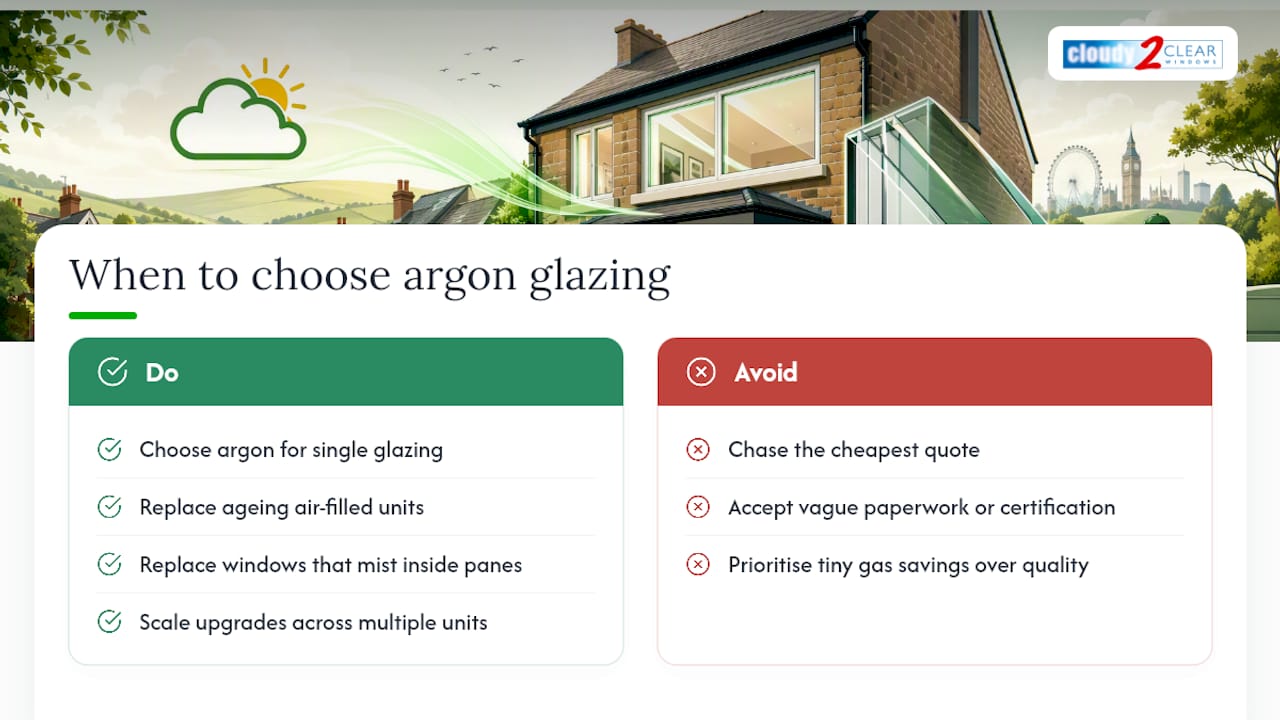
Argon-filled glazing makes the most sense for anyone still living with single glazing, ageing air-filled units, or windows that mist between the panes. Property managers overseeing multiple units get the clearest return, since even modest per-window savings scale quickly across a block or estate.
The mistake we see most often is homeowners chasing the cheapest quote rather than checking the certification behind it. A properly specified argon unit with a decent spacer system and a genuine FENSA-registered installer will outperform a bargain unit with vague paperwork, every time. Quality of manufacture and installation matters more than squeezing the last percentage point out of gas choice.
Get your windows assessed by Cloudy2Clear Windows
Cloudy2Clear Windows offers something most full-frame replacement quotes do not: a glass-only repair option, so if your argon-filled unit has failed and the frame is still sound, you are not paying to replace what does not need replacing.

Whether you have a single misted pane or a whole property’s worth of ageing units, our teams handle glass-only replacement, energy-efficient upgrades, and compliance inspections for homeowners, businesses, and housing associations alike. If you are near Oxford, Milton Keynes, Watford, Leicester, Bury St Edmunds, or Norwich, check your nearest Cloudy2Clear branch page for local service details, or head straight to our window pane and double glazing glass replacement page to see how the process works. Property managers with commercial stock can also explore our commercial window replacement and glass repair service. Book an inspection today and find out whether your existing frames can take a new argon-filled unit without full replacement.
Sources
- Windows and doors | Energy Saving Trust
- U-Value Calculator for Glazing — EN 673 Method | Clear Sealed Units
- Why Argon Gas Is Used in Double Glazed Windows | Axiom
FAQ
Is argon-filled double glazing worth it?
Yes, for most homes. The 15 to 30% improvement in thermal performance over air-filled units usually justifies the small extra manufacturing cost, especially when replacing single glazing.
Is argon in windows worth the extra cost specifically?
The argon fill itself adds only a modest amount to a unit’s price, so the payback period is short compared with the annual savings of £85 to £195 that upgraded glazing can deliver.
Are all double glazing units argon filled?
No. Many older units, particularly those installed before the mid-2000s, are air-filled, and some budget new units still use air rather than argon, so it is worth confirming the specification before buying.
Why use argon in double glazing rather than air?
Argon conducts heat more slowly than air and dampens convective heat loss within the cavity, giving a measurably lower U-value and better real-world insulation, as shown in experimental and CFD testing.
What causes argon gas loss in windows, and how would I notice it?
Argon gas loss happens gradually through seal degradation, typically under 1% per year in well-made units. The visible symptom is not gas loss itself but eventual seal failure, which shows up as misting or fogging between the panes.