Window seal failure is one of the most common problems affecting double glazed units across England and Scotland, and it does not only happen to old windows. Even relatively new installations can develop faults within just a few years, particularly when exposed to the unpredictable British climate. Thermal expansion and contraction, driven by temperature swings and direct sunlight, is one of the leading triggers. This guide explains exactly why seals fail, what warning signs to look for, and what you can do to protect your windows before the problem gets worse.
How double glazed window seals work
Every double glazed unit relies on two layers of sealing to keep it performing properly. The primary seal, usually made from butyl rubber, bonds directly to the glass and the spacer bar running around the edge of the unit. The secondary seal, typically silicone or polysulphide, sits on the outside of that and provides structural support and additional moisture resistance. Together, they trap a layer of air or inert gas (usually argon) between the two panes, which is what gives double glazing its insulating and sound-reducing properties.
When either seal is compromised, moisture-laden air begins to enter the gap between the panes. At first, you might notice a faint haze. Over time, that haze turns into visible condensation or even water droplets sitting between the glass. Once moisture is inside, the insulating gas is gone and the unit’s thermal performance drops significantly. You can read more about the types of window seal failures to understand how each type progresses.
Here is a quick overview of what affects how long your seals will last:
| Factor | Effect on seal lifespan |
|---|---|
| Unit quality | Higher quality seals last longer, up to 20+ years |
| Sun exposure | South and west-facing windows degrade faster |
| Coastal location | Salt air and humidity accelerate breakdown |
| Installation quality | Poor fitting shortens lifespan considerably |
| Maintenance | Regular checks and cleaning extend performance |
According to industry data, double glazed seals typically last between 10 and 20 years, though this varies widely depending on quality and exposure. Key factors that shorten seal life include:
- Direct and prolonged sunlight on south or west-facing elevations
- Coastal or high-humidity environments
- Low-quality materials used during manufacture
- Poor installation technique
- Lack of routine maintenance
With this base knowledge, let us examine what actively causes these seals to break down.
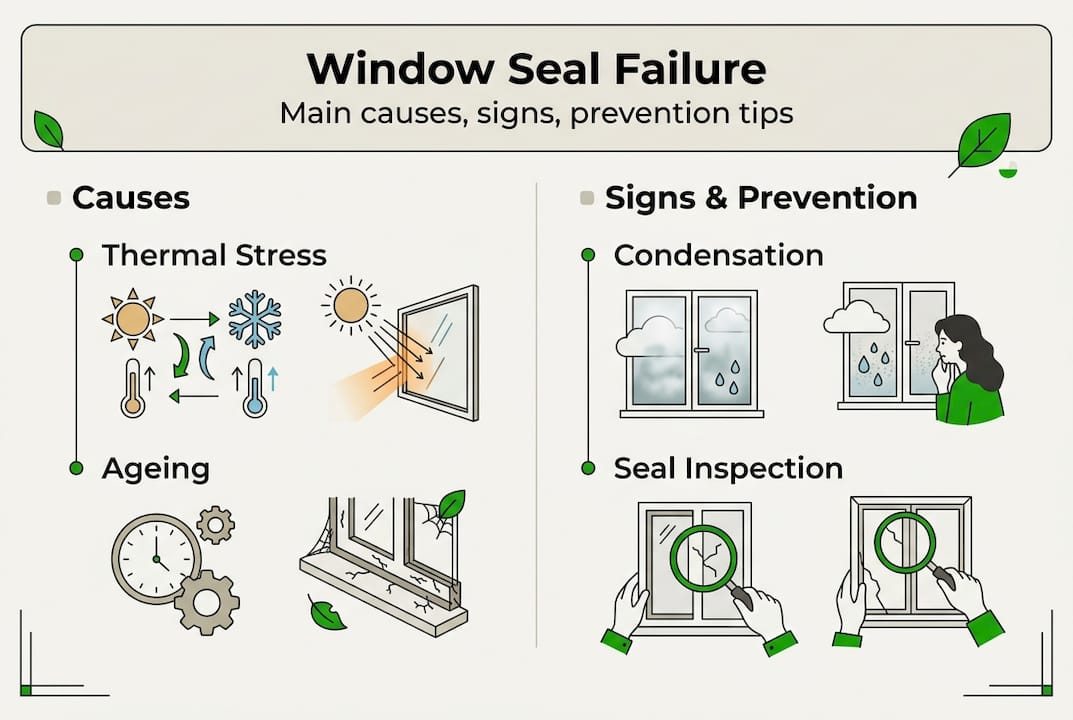
Main causes of window seal failure
Understanding what causes seal failure helps you take the right steps at the right time. There is rarely just one culprit.
Thermal expansion and contraction is the most significant cause. Every day, as temperatures rise and fall, the glass and frame materials expand and contract slightly. Over years, this repeated movement stresses the seals. In summer, direct sun can cause a process known as solar pumping, where the air inside the unit heats up, expands, and pushes against the seals. When it cools at night, it contracts and pulls air back in. This cycle of expansion and contraction gradually weakens the bond between the seal and the glass.
Natural ageing is unavoidable. Seal materials, even good ones, degrade over time through simple wear and tear. Rubber and silicone become brittle, lose flexibility, and eventually crack. This process is faster in windows exposed to harsh weather.
Poor installation or manufacturing defects are more common than many people realise. Misaligned glass, uneven pressure on the spacer bar, or a weak initial bond can all cause premature seal failure within just a few years of fitting.
Physical damage is another trigger. Accidental knocks, nearby building work, or even using a pressure washer too close to the frame can crack or dislodge seals without you noticing immediately.
UV exposure and weathering cause the outer seal materials to harden and shrink over time. UV degradation accelerates breakdown particularly on windows with no overhang or shade protection. Adding UV protection for windows can meaningfully slow this process.
Windows on south and west-facing elevations can experience seal degradation up to 40% faster than those on north-facing walls, due to greater sun and weather exposure.
Pro Tip: Check the inside edge of your window frames for any yellowing, stickiness, or slight separation from the glass. These are early signs of primary seal softening that most homeowners overlook until condensation appears.
Here is a summary of the main causes and their relative impact:
| Cause | Likelihood | Impact on seal |
|---|---|---|
| Thermal expansion (solar pumping) | Very high | Severe over time |
| Natural ageing | Certain | Moderate to severe |
| Poor installation | Moderate | Severe, early onset |
| Physical damage | Low to moderate | Immediate or rapid |
| UV and weathering | High | Moderate, cumulative |
Short and long-term triggers to be aware of:
- Short-term: physical impact, pressure washing, sudden temperature extremes
- Long-term: UV exposure, freeze-thaw cycles, gradual material ageing, persistent damp
Now we know the common triggers, let us look more closely at the unique pressures from British weather. You can also explore our window seal failure guide for a deeper breakdown of each failure type.
British weather: A critical factor in seal longevity
The UK climate is particularly hard on window seals. England and Scotland experience a wide range of conditions throughout the year, from freezing winters to warm, sunny summers, often with significant rainfall and coastal wind in between. This variety is precisely what makes British weather so damaging to double glazing.
South and west-facing windows bear the brunt of it. They receive the most direct sunlight and are most exposed to prevailing south-westerly winds and rain. In Scotland especially, harsh weather including rain, wind, and cold winters accelerates seal breakdown, particularly in coastal and high-humidity areas.
Coastal locations in both England and Scotland present an additional challenge. Salt-laden air is corrosive and can attack seal materials and frame finishes more aggressively than inland conditions. Properties in areas like Cornwall, the Scottish Highlands, or the north-east coast of England may see seal lifespans reduced by three to five years compared to sheltered inland locations. Understanding how climate influences window seals is essential if you live in one of these areas.
UK regional risk factors to keep in mind:
- Coastal properties: salt air and persistent moisture
- Scottish Highlands: freeze-thaw cycles and high wind exposure
- Northern England: prolonged cold and damp winters
- South-west England: high rainfall and strong prevailing winds
- Urban areas: pollution and temperature variation from heat islands
Understanding the harsh reality of British weather, let us now explore the signs of early and late seal failure.
How to spot failed seals: Early and late signs
Catching seal failure early can save you money and prevent further damage to your frames and surrounding walls. Here is how to check your windows systematically:
- Look between the panes. Stand close to the window and look at the glass at an angle. Any fogging, haze, or visible moisture between the two panes is a clear sign the seal has failed.
- Check for condensation patterns. Condensation on the inside surface of the inner pane is normal in cold weather. Condensation between the panes is not.
- Feel for draughts. Run your hand slowly around the edge of the frame on a cold or windy day. Any noticeable airflow suggests the outer seal has broken down.
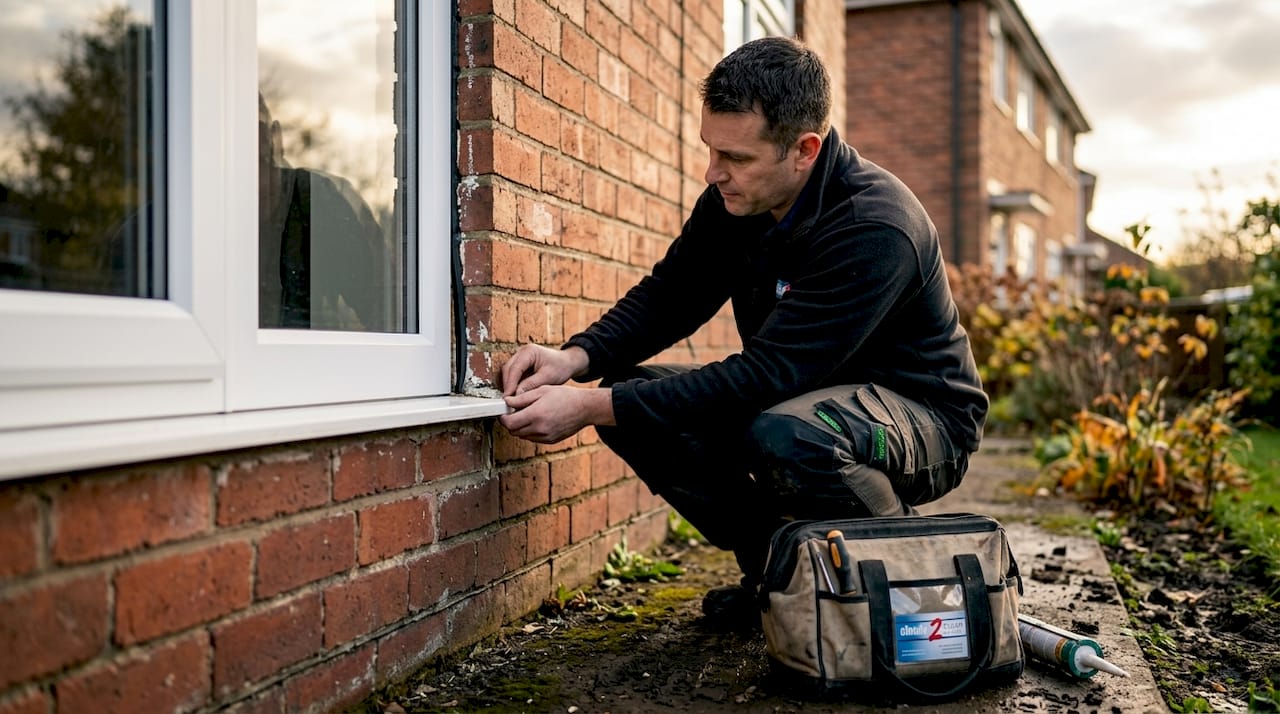
- Inspect the frame edges. Look for any visible cracking, separation, or discolouration around the perimeter of the glass unit.
- Test the mechanism. Stiff or sticky handles and hinges can indicate frame distortion caused by moisture ingress following seal failure.
Physical damage from impacts or pressure washing can cause failures that are not immediately visible, so check windows after any nearby work or accidental knocks.
Pro Tip: Professionals often check for a slight bowing or bulging of the glass, which indicates pressure changes inside the unit. If your glass looks slightly convex or concave, the sealed unit may already be compromised even without visible condensation.
If you spot any of these signs, our double glazing repair advice can help you decide on the right next step.
Can you repair or must you replace? Solutions explained
This is the question most homeowners and business owners face once they confirm a seal has failed. The honest answer is: it depends on the extent of the damage.
Repair options that may be available include:
- Edge resealing: Applying new sealant around the perimeter of the unit, suitable for minor outer seal degradation
- Defogging or ventilation drilling: A small hole is drilled to allow moisture to escape, though this does not restore the insulating gas
- Argon refill: Possible in some cases where the unit structure is still sound
- Full glass unit replacement: The sealed unit is replaced while keeping the existing frame
When is full replacement the only sensible option? If the glass itself is cracked, if the frame has warped due to moisture, or if the unit is more than 15 years old, a full replacement will almost always deliver better long-term value. Repair is cheaper in the short term, but full unit replacement restores thermal efficiency and typically comes with a new warranty.
Pro Tip: When choosing a repair specialist, look for a company that offers a written guarantee on their work, uses FENSA-registered installers, and can provide references or reviews from local customers. A reputable firm will always assess the frame condition before recommending repair over replacement.
For more detail on your options, our guide to repairing double glazing covers the process step by step.
How to prevent window seal failure
Prevention is always more cost-effective than repair. A few straightforward habits can add years to the life of your double glazing.
- Address chips and cracks promptly. Even a small chip in the glass edge can allow moisture to work its way into the seal over time.
- Clean frames and seals regularly. Use a mild detergent and a soft cloth. Avoid abrasive cleaners that can degrade rubber seals.
- Pay extra attention to south and west-facing windows. These need more frequent checks, especially after summer and winter.
- Avoid high-pressure washing near window frames. The force can dislodge or damage seals without leaving any visible mark.
- Consider UV-protective window film. This reduces the solar pumping effect and slows UV degradation. Sun protection for windows is a practical and relatively low-cost measure.
- If buying a property, ask about window age and warranty. Windows approaching 15 years old may need attention soon, and knowing this upfront helps you budget accordingly.
It is also worth knowing that in lower-quality units, the primary butyl seal can begin to soften and migrate under heat and UV, giving a slightly melted appearance around the spacer bar before full failure occurs. If you notice this, act quickly. Our guide to preventing window seal problems has further practical advice.
You now have the facts and the tools to protect your windows. But if your windows are already showing signs of failure, professional support is close at hand.
Professional help for window seal failure
If you have spotted condensation between the panes, felt a draught, or noticed any of the other warning signs covered in this guide, it is time to call in a specialist. Attempting to manage a failed sealed unit without the right tools and materials rarely produces a lasting result.

At Cloudy2Clear Windows, we have been helping homeowners and businesses across England and Scotland since 2005. We specialise in double glazing glass replacement, replacing only the failed glass unit rather than the entire window frame, which keeps costs down without compromising on performance. Whether you need a single unit replaced or a full property assessment, our local teams are ready to help. If you are based in the Midlands, our team offering repairs in Milton Keynes is just one example of the nationwide coverage we provide. Get in touch today for a free, no-obligation quote.
Frequently asked questions
How long should window seals last before failing?
Most double glazed window seals last between 10 and 20 years, with higher quality units sometimes reaching 25 years depending on installation quality and exposure.
Can failed window seals be repaired, or do they always need replacing?
Minor failures can sometimes be addressed with resealing or defogging, but full unit replacement is often the most effective solution for restoring thermal efficiency and long-term performance.
Does the weather in Scotland and England really increase the risk of seal failure?
Yes. Harsh UK weather conditions including wind, rain, and freeze-thaw cycles accelerate seal breakdown, particularly in coastal or exposed positions where salt air adds further stress.
Are any window brands immune to seal failure?
No brand is completely immune. Natural ageing of seal materials affects all units eventually, and quality, installation standard, and ongoing maintenance are the most reliable defences against early failure.