Choosing the right windows for your home or business is more involved than it might first appear. You want something that looks striking, suits your building’s character, and holds its own against the weather. But in England and Scotland, you also need to satisfy strict building regulations that have only tightened in recent years. Whether you’re planning a full renovation, replacing ageing units, or upgrading a commercial property, understanding your options before you commit saves money, delays, and frustration. This article walks you through the key compliance criteria, the most popular modern window styles, a side-by-side comparison, and practical recommendations from our team.
How to evaluate modern windows: criteria and compliance essentials
Before you fall in love with a particular style, it helps to know what every window you consider must actually do. UK building regulations are not optional extras; they are legal requirements, and they vary between England and Scotland.
Here are the core standards your windows must meet:
- Energy efficiency (U-value): The U-value measures how much heat escapes through the glass and frame. A lower number means better insulation. Building regulations require a U-value of 1.4 W/m²K or less in England, with Scotland typically imposing stricter targets. Triple glazing can achieve U-values well below this threshold.
- Ventilation (Part F): Windows must provide adequate background ventilation, often via trickle vents, to maintain healthy indoor air quality.
- Safety and escape (Parts B and K): Ground and first-floor windows in habitable rooms must allow escape in a fire. There are also requirements around safety glass in low-level or large pane situations.
- Acoustic and security performance: While not always mandated, these factors are increasingly specified in urban and commercial settings.
Matching your window type to your building’s use and location is just as important as hitting the numbers. A style that works brilliantly in a city-centre flat may be entirely wrong for a rural farmhouse conversion. Check out our glazing options for energy efficiency guide for deeper detail on glass specifications.
Pro Tip: Always confirm compliance with your installer or local authority before ordering bespoke or oversized units. Errors at this stage are costly and difficult to reverse.
Triple glazing is growing fast in popularity across both private homes and commercial buildings, driven by rising energy costs and tighter regulation.
Casement windows: the traditional favourite with a modern twist
With compliance criteria in mind, let’s explore the most widely installed modern window: the casement. Casement windows open outward on side hinges, much like a door. It’s a design that has been around for centuries, but modern versions are a different animal entirely.
Today’s casements feature:
- Narrow sightlines that maximise the glass area and let in more light
- High-performance seals that dramatically cut heat loss compared to older designs
- Multi-point locking for improved security without visible bolts
- Escape window compatibility, making them suitable for habitable rooms on lower floors
- Versatility, fitting everything from Victorian terraces to contemporary new builds
One key strength is ventilation. Casement windows offer superior full ventilation compared to tilt-and-turn alternatives because the entire sash opens outward, creating an unobstructed airflow path. This makes them a strong choice for properties where fresh air circulation is a priority.
They also suit a wide range of double glazing options, from standard double glazed units to high-specification triple glazed panels for maximum thermal performance.
“Casement windows remain the benchmark for residential glazing in the UK, precisely because they balance tradition, performance, and compliance so well.”
Pro Tip: For ground-floor casements, always specify upgraded multi-point security hardware. Standard single-point locks on large casements are a known vulnerability.
Casements are an excellent default for homeowners and business owners who want a proven, versatile solution without the premium price tag of more complex systems.
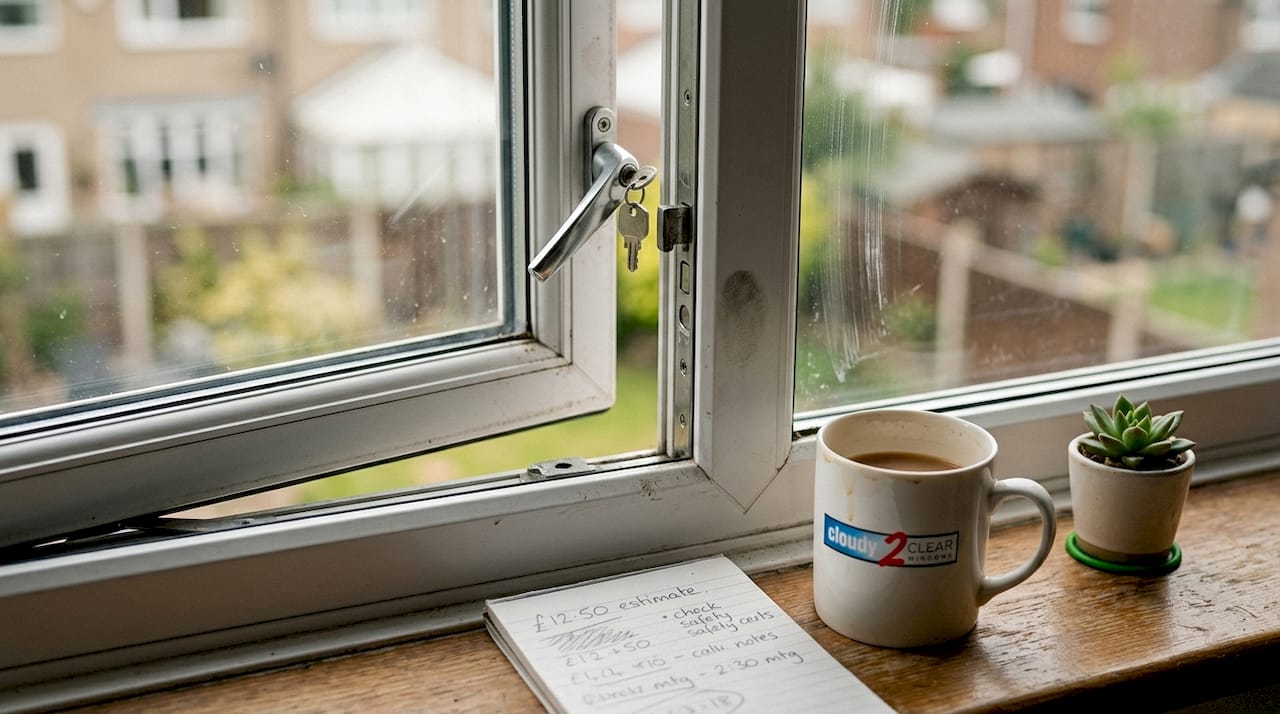
Tilt and turn windows: flexibility for modern living
As a flexible alternative, tilt and turn windows are becoming increasingly popular in new builds and renovations. The name describes exactly how they work: tilt the sash inward at the top for controlled background ventilation, or turn it fully inward like a door for cleaning and emergency access.
This dual function solves several problems at once:
- Safe ventilation without rain ingress, even in wet weather
- Easy cleaning from inside, eliminating the need for external ladders
- High security when tilted, since the opening is too narrow to enter
- A slim, contemporary frame profile that suits modern architecture
- Outstanding thermal performance, with U-values starting at 0.8 W/m²K, comfortably exceeding current regulations
Sashes can be manufactured up to 1.5m wide and 2.4m tall, making them viable for large, dramatic openings in contemporary interiors. That combination of size and thermal efficiency makes them a natural pairing with triple glazing, especially in Scotland where energy targets are more demanding.
They work particularly well in urban flats, upper-storey rooms, and any situation where accessing the exterior for cleaning is impractical. If your property is above the second storey or sits close to neighbouring buildings, tilt and turn is worth serious consideration.
For those also thinking about the broader environmental picture, pairing these windows with sustainable window choices in terms of frame material and glazing specification can reduce your property’s carbon footprint meaningfully.
Other modern window styles: sliding, fixed and internal glazing
Those seeking more architectural impact often turn to alternative styles. Here are the ones shaping today’s interiors and commercial fit-outs.
Sliding windows and doors use a horizontal track system so one or more panels glide past each other. They suit wide openings and create a seamless connection between indoor and outdoor spaces, which is particularly valued in open-plan homes and hospitality businesses. There are no projecting sashes, which matters where space outside is limited.
Fixed (picture) windows do not open at all. They exist purely to admit natural light and frame views. Because they have no moving parts, they tend to achieve better U-values than openable equivalents and require very little maintenance. In commercial settings, large fixed panes create a sense of openness and visual connection that resonates with both staff and customers.
Internal glazing, including the increasingly popular Crittall-style steel-framed partitions, is used inside buildings to bring more light into deeper rooms without touching the exterior. This is a particularly attractive option in period properties or listed buildings where external changes would require planning consent. Internal Crittall-style glazing is widely recognised as a way to boost natural light without altering the building’s facade.
Key considerations for these styles:
- Safety glass (toughened or laminated) is required for large or low-level panes
- Heritage and listed buildings need slimline or timber-effect frames to satisfy conservation requirements
- Sliding units require precise, level installation for long-term smooth operation
Pro Tip: For large panoramic or structural glazing projects, involve a structural engineer at the planning stage. Loadbearing implications around oversized openings are often underestimated.
Comparing window styles: energy, compliance and aesthetics
With several high-performing styles available, here is how they stack up side by side.
| Style | Typical U-value | Ventilation | Escape suitability | Best application |
|---|---|---|---|---|
| Casement | 1.0–1.4 W/m²K | Excellent (full open) | Yes | Homes, period and contemporary |
| Tilt and turn | 0.8–1.2 W/m²K | Good (tilt mode) | Yes (turn mode) | Flats, upper floors, urban |
| Sliding | 1.0–1.4 W/m²K | Moderate | Limited | Open-plan, commercial |
| Fixed/internal | 0.5–1.0 W/m²K | None | No | Light-focused, office, heritage |
A few things stand out from this comparison:
- Tilt and turn leads on thermal performance for openable windows, comfortably meeting both English and Scottish requirements
- Fixed glazing achieves the best raw U-values, particularly when specified with triple glazing
- Casements offer the broadest versatility, suitable for the widest range of property types and budgets
- Sliding windows suit specific scenarios rather than being a universal choice
It is worth noting that triple glazing achieves U-values of 0.5 to 0.8 W/m²K, exceeding compliance benchmarks in both nations. If you are asking whether triple glazing is right for your project, the answer often comes down to budget versus long-term energy savings rather than regulatory need.
For business properties, the aesthetic dimension matters too. A sliding or fixed glazing system signals modernity and investment, which can positively influence customer perceptions and staff wellbeing alike.
A practitioner’s view: what most window guides get wrong
Most window guides focus heavily on looks and, to a lesser degree, energy ratings. What they consistently underplay is the day-to-day practicality of living or working with the windows you choose.
Cleaning is the clearest example. A casement window on the third floor looks beautiful in a brochure but creates a genuine maintenance problem if you cannot reach the outer face safely. Tilt and turn solves this. Yet we see homeowners choosing casements for upper floors simply because they preferred the profile. The cost of realising the mistake is not just the window itself; it’s the scaffolding every time you want clean glass.
Escape access is another area buyers overlook. Regulations require windows in certain rooms to allow escape, but the specification is sometimes treated as a box-ticking exercise rather than a genuine safety consideration. Think about who sleeps in each room and how they would realistically exit in an emergency.
Finally, the regulatory gap between England and Scotland catches people out more often than it should. Standards genuinely differ, and a window specification that passes in Manchester may fall short in Edinburgh. Always consult the current codes for your specific location, and use our installation compliance guide before finalising any order. Getting professionals involved early, especially for bespoke, structural, or heritage projects, is not a luxury. It is how you avoid expensive surprises.
Upgrade your windows with help from the experts
At Cloudy2Clear Windows, we have been helping homeowners and businesses across England and Scotland choose and install the right windows since 2005. Whether you are replacing a single unit or upgrading an entire commercial building, our team can advise on compliance, style, and the most cost-effective specification for your budget.

We cover a wide range of locations, including window repairs in Milton Keynes and window repairs in Oxford, as well as dedicated commercial window repair services for businesses of all sizes. Get in touch with Cloudy2Clear Windows today to discuss your project and get a no-obligation quote from a team that knows UK regulations inside out.
Frequently asked questions
What is the difference between tilt and turn and casement windows?
Tilt and turn windows open inward, either tilting at the top for ventilation or swinging fully open for cleaning, while casement windows hinge outward at the side to deliver maximum airflow.
What U-value should modern windows meet in the UK?
All replacement windows in England must achieve a U-value of 1.4 W/m²K or lower, with Scotland frequently requiring stricter performance targets depending on the project type.
Are internal glazing and Crittall windows suitable for listed properties?
Internal glazing can often be approved for listed buildings since it does not alter the exterior, but heritage properties require planning consent and typically demand slimline or timber-effect frames to satisfy conservation officers.
Are sliding windows energy efficient?
Sliding windows can perform very well thermally when fitted with double or triple glazed units and installed to current building regulation standards.
Which modern window style is easiest to clean?
Tilt and turn windows are the simplest to clean from inside the building, since the full inward opening gives safe and straightforward access to both faces of the glass without ladders or scaffolding.