Two neighbours buy near-identical double glazed windows from different installers. One gets a robust 10-year guarantee backed by an insurer. The other gets a vague promise on a single sheet of paper. When problems arise, only one of them is protected. Window warranties in the UK typically range from 5 to 25 years, yet the actual protection on offer varies enormously. This guide walks you through what window warranties really mean, how long they last, what they cover, and how to make sure you are never left out of pocket.
What is a window warranty (and why does it matter)?
Before you sign anything, it helps to understand the difference between a guarantee and a warranty. They sound interchangeable, but they are not. A guarantee versus warranty distinction matters: a guarantee is a company’s promise to repair or replace under its own terms, while a warranty gives you a legal right to remedies for a fixed period. One is goodwill; the other is enforceable.
For double glazing, warranties and guarantees typically cover three main areas:
- Frames: Protection against warping, discolouration, and structural failure
- Glass units: Cover for failed seals, condensation between panes, and fogging
- Hardware: Hinges, handles, locking mechanisms, and other moving parts
Think about the double glazing lifespan of your windows. A quality installation should last 20 years or more. Without solid warranty cover, any fault that appears in year six could cost you hundreds to fix out of your own pocket. A strong warranty protects your investment, reduces stress, and can even support your property’s resale value.
Weak or absent warranty cover is one of the most common and costly mistakes homeowners make when buying double glazing. Always treat the warranty as part of the product, not an afterthought.
Your consumer rights guide from Which? is a useful starting point for understanding what you are legally entitled to expect.
How long does a window warranty last? Understanding coverage periods
Not all parts of your window age at the same rate, which is why most warranties are tiered. Hardware such as hinges and handles tends to wear faster than the frame itself, so cover periods differ accordingly. Double glazing warranties typically range from 5 to 25 years depending on the component and the installer.
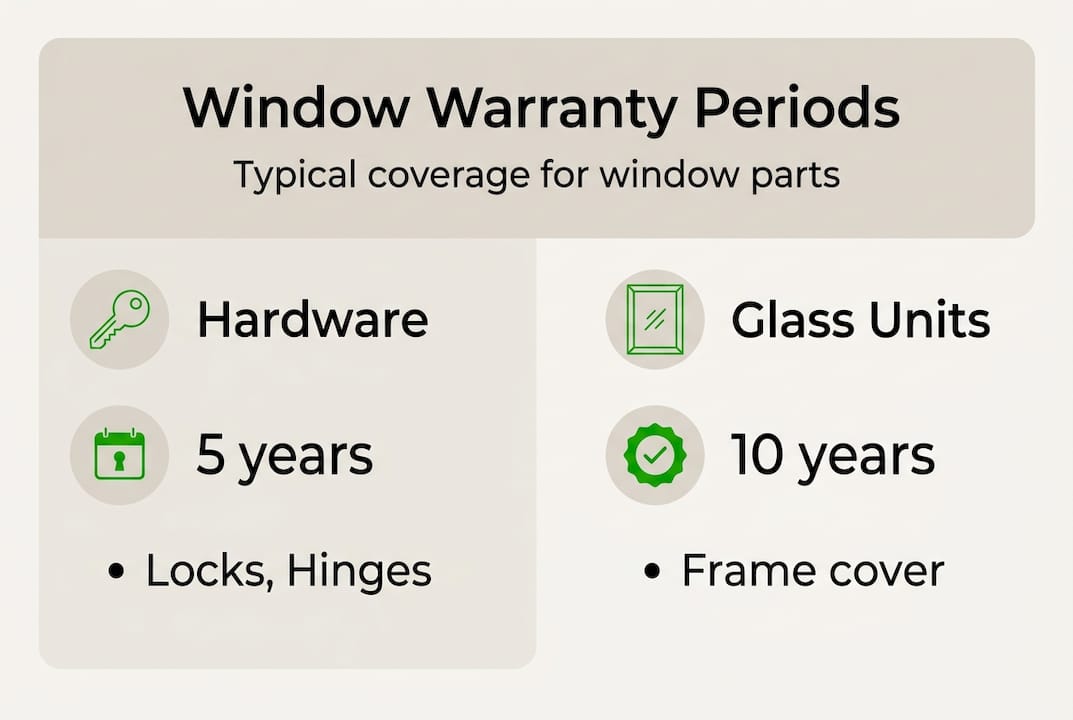
Here is a typical breakdown of what you might expect:
| Component | Typical warranty period |
|---|---|
| Hardware (hinges, handles, locks) | 5 years |
| Glass units | 10 years (25 years with Us!) |
| Frames (uPVC, aluminium, timber) | 10 to 25 years |
| Full installation (some providers) | Up to lifetime |
Tiered cover means you could be fully protected on your frames for 20 years, but your hardware cover may expire after just five. This is not a flaw in the system; it reflects the realistic lifespan of double glazing components. What matters is that you know exactly which tier applies to which part of your window.
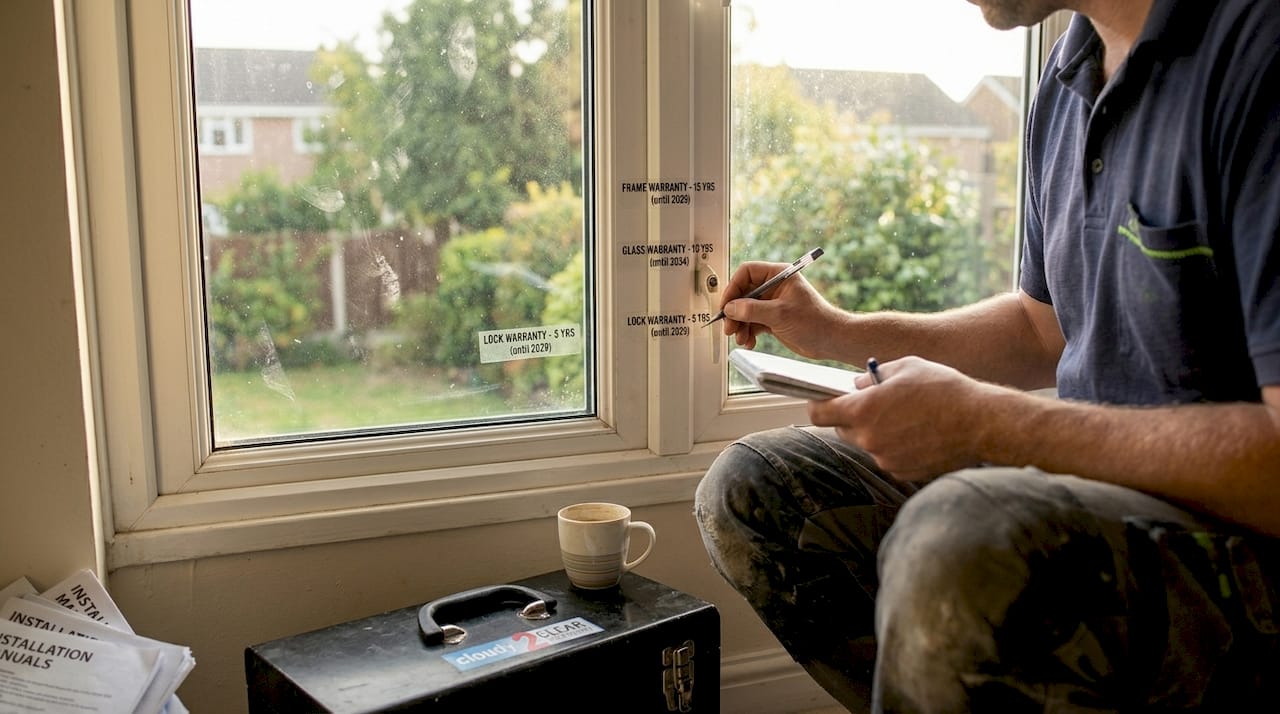
Some premium installers offer lifetime guarantees. These sound impressive, but read the small print carefully. Lifetime cover is often tied to the original property owner and may not transfer to a new buyer.
Pro Tip: Before you commit to any installation or replacement, ask your installer for a written breakdown of warranty periods by component. If they cannot provide one, that is a warning sign.
Insurance backed guarantees and accredited installers
A warranty is only as strong as the company standing behind it. If your installer goes out of business, a standard guarantee becomes worthless. That is where an Insurance Backed Guarantee, or IBG, comes in.
An IBG is a separate insurance policy that pays out if your installer ceases trading. IBGs have been required for FENSA and CERTASS registered installers since 2014, offering up to 10 years of protection. This means even if your installer disappears, you can still make a valid claim.
Here is a quick comparison of the two main accreditation schemes:
| Feature | FENSA | CERTASS |
|---|---|---|
| Covers building regulations compliance | Yes | Yes |
| IBG required | Yes | Yes |
| Free certificate issued | Yes | Yes |
| Complaints resolution service | Yes | Yes |
When choosing an installer, always check their credentials. You can verify FENSA registered installers directly on the FENSA website. For accredited installer choices, look for clear evidence of registration before any work begins.
Key points to remember about IBGs:
- They are separate from the manufacturer’s warranty
- You must provide proof of installer insolvency to make a claim
- Cover is typically capped at 10 years
- They do not cover accidental damage or misuse
What does a window warranty actually cover (and exclude)?
Knowing you have a warranty is one thing. Knowing what it actually covers is another. Many property owners are surprised to discover how many common situations fall outside standard cover.
Typical inclusions:
- Condensation or fogging between glass panes (failed seal)
- Frame warping, cracking, or discolouration under normal conditions
- Hardware failure not caused by misuse
- Faulty installation workmanship
Common exclusions:
- Accidental damage (a ball through the glass, for example)
- Storm or flood damage
- Damage caused by unapproved repairs or modifications
- Normal wear and tear on moving parts
- Failure to follow maintenance guidelines
The FENSA complaints process highlights that tiered coverage and exclusions like accidental damage are among the most frequent sources of dispute. Checking the terms and conditions before signing is not optional; it is essential.
Good window maintenance advice can also help you avoid voiding your warranty unintentionally. Something as simple as using the wrong cleaning product on a uPVC frame could give an installer grounds to reject a claim.
For a full list of what to watch for, the common exclusions guide is worth reading before you sign.
Pro Tip: Always request a full copy of the terms and conditions before signing any contract. Do not accept a summary. The detail is in the full document.
Your legal rights and extra schemes for protection
Beyond the warranty itself, you have legal rights that apply regardless of what any installer puts in their paperwork. The Consumer Rights Act 2015 is your baseline protection in England and Scotland.
Under this legislation, your rights when buying double glazing include the right to installation carried out with reasonable care and skill, materials that are of satisfactory quality, and remedies including repair or replacement if something goes wrong.
If you need to use these rights, follow these steps:
- Document the fault with photographs and written notes
- Contact your installer in writing, referencing the Consumer Rights Act 2015
- Allow a reasonable time for them to respond and offer a remedy
- If they refuse, escalate to their trade body (FENSA, CERTASS, or similar)
- As a last resort, consider the small claims court for disputes under £10,000
Your legal rights exist independently of any warranty. Even if a warranty has expired, you may still have a claim if a fault is due to poor workmanship.
Beyond the law, several voluntary schemes offer additional cover. Schemes like GGF, DGCOS, and CPA provide extra protections, and transferable guarantees through these bodies can actively boost your property’s resale value. For a broader view of your double glazing protections, these schemes are worth exploring.
Warranties for domestic versus commercial properties
If you own a commercial property, the rules shift. Warranty expectations, legal protections, and scheme eligibility all differ from the domestic market.
| Factor | Domestic | Commercial |
|---|---|---|
| Typical warranty length | 10 to 25 years | 1 to 5 years (often shorter) |
| DGCOS/CPA scheme eligibility | Yes (England and Scotland) | Usually no |
| IBG availability | Standard | Less common; check individually |
| Consumer Rights Act 2015 | Applies | Applies differently |
For homeowners, domestic properties receive fuller protections through schemes like DGCOS, which is limited to domestic properties in England and Scotland. Commercial buyers need to negotiate warranty terms directly and carry out more thorough due diligence before signing.
Key considerations for commercial property owners:
- Request written warranty terms specific to commercial use
- Confirm whether an IBG is available for your project
- Check if the Consumer Rights Act 2015 applies to your contract type
- For landlords, confirm whether tenants’ use affects warranty validity
Making a claim: what to do if there’s a problem with your windows
Even with the best warranty in place, knowing how to make a claim is what turns protection into results. Act quickly and methodically.
- Identify the fault clearly. Is it a failed seal, a hardware issue, or a frame problem? Knowing this helps you reference the right tier of your warranty.
- Gather your documents. Find your original contract, warranty certificate, and any IBG paperwork.
- Review the terms and conditions. Confirm the fault falls within the covered period and is not listed as an exclusion.
- Contact your installer in writing. Email creates a clear record. State the fault, reference your warranty, and request a response within 14 days.
- Escalate if needed. If the installer does not respond or refuses your claim, contact FENSA, CERTASS, or your IBG insurer directly.
For IBG claims specifically, you will need proof of installer insolvency before the insurer will process your case. This typically means a Companies House record or a formal insolvency notice.
Understanding how long double glazing lasts also helps you judge whether a fault is premature and therefore more likely to be covered.
Pro Tip: Keep a dedicated folder, physical or digital, containing all warranty certificates, IBG documents, installer details, and correspondence. If you ever need to make a claim, having everything in one place saves significant time and stress.
Get lasting peace of mind with professional window repairs and replacements
Understanding your warranty options is the first step. The second is choosing an installer you can genuinely trust to honour them. At Cloudy2Clear Windows, we have been working with homeowners and commercial property owners across England and Scotland since 2005, and we know how much your property means to you.
Whether you need double glazing replacements with clear warranty terms, local support such as repairs in Oxford, or specialist commercial window repairs for your business premises, we can help. Our team works transparently, so you always know exactly what cover you are getting and for how long. Get in touch today to arrange an inspection and take the uncertainty out of your window protection.
Frequently asked questions
What’s the difference between a guarantee and a warranty?
A guarantee is a company promise to repair or replace under its own terms, while a warranty gives you a legal right to remedies within a set period. In short, a warranty is enforceable; a guarantee depends on the company’s goodwill.
What is an insurance backed guarantee (IBG) for windows?
An IBG is a separate insurance policy that protects you if your installer goes out of business. IBGs have been required since 2014 for FENSA and CERTASS registered installers, ensuring you can still claim repairs even if the original company no longer exists.
Can I transfer my window warranty to a new homeowner?
Transferable guarantees boost resale value and are offered by many installers, but the terms vary. Always check the small print for restrictions on transfer, as some are limited to the original property owner only.
Does a window warranty cover accidental damage?
Most window warranties exclude accidental damage, treating it as the owner’s responsibility. Accidental damage exclusions are among the most common sources of claim disputes, so check your terms carefully before assuming you are covered.
What should I do if my installer goes out of business?
If you have an IBG, contact the insurer with proof of installer insolvency to begin your claim. If you do not have an IBG, check whether the window manufacturer offers any direct support or warranty cover independently of the installer.
Recommended
- Double glazing options explained: How to buy the right windows for your home – Cloudy2Clear Windows
- Double Glazing Care Tips 2026: Extend Lifespan by 7 Years
- How to maintain double-glazed windows & make them last longer | Cloudy2Clear Windows
- What is a window gasket? Complete guide to double glazing seals
- Heat Pump Warranty Terms – Protecting Your Investment – CoolFix Appliance & HVAC Service