Not all double or triple glazed windows are created equal, and glazing thickness is one of the most misunderstood factors behind that difference. Many homeowners and business owners focus entirely on the style of a window frame or its price tag, yet the thickness of the glass itself quietly determines how well your property retains heat, resists intruders, muffles noise, and avoids damp problems. Get it right from the start and you could save hundreds of pounds a year on energy bills while also sleeping a little easier at night. This article walks you through everything you need to know about glazing thickness, from basic definitions to practical guidance on choosing the best option for your property.
What is glazing thickness and why does it matter?
Glazing thickness refers to the depth of each individual pane of glass used in a window unit. In a standard double glazed window, you typically have two panes of glass separated by a sealed gap, often filled with an insulating gas such as argon. Each pane has its own thickness, and the overall performance of the window depends heavily on that measurement.
In the UK, the most common pane thicknesses are 4mm, 6mm, and 6.8mm. Some specialist windows use thicker panes of 8mm or more. These numbers might sound minor, but the difference between a 4mm and a 6mm pane is significant in practice. A thicker pane adds mass, and mass is what slows down heat transfer, sound waves, and physical force from potential intruders.
Here is a quick summary of where you typically encounter different pane thicknesses:
- 4mm glass: Most common in standard residential double glazing, cost-effective and adequate for many applications
- 6mm glass: Frequently used in properties near busy roads, in commercial settings, or where slightly better sound insulation is needed
- 6.8mm laminated glass: Combines two sheets bonded with a special interlayer, used for both security and acoustic performance
- 8mm and above: Found in specialist security or acoustic applications, shop fronts, and buildings in high-risk areas
The gap between the panes also matters, and it works alongside the glazing thickness to determine overall performance. However, the glass itself is your first line of defence against heat loss, noise, and intrusion.
“Glazing thickness determines how well windows retain heat and resist break-ins.” This simple principle underpins every specification decision you should make when upgrading or replacing your windows.
When you think about window energy efficiency, the glazing thickness is one of the first variables a glazing professional will discuss with you. It is not a minor technical detail. It is the foundation of window performance, and understanding it puts you in a far stronger position when speaking to suppliers or reviewing quotes.
Many people assume that any double glazed unit automatically performs well. In reality, a thin-paned unit with a narrow gas gap can still allow significant heat to escape, make little difference to street noise, and offer limited resistance to forced entry. Thickness alone does not guarantee superior performance, but choosing the wrong thickness for your situation almost always costs you more in the long run.
How glazing thickness influences energy efficiency
With a clear understanding of thickness, let’s focus on how it translates into real energy and cost savings for your property.
Heat escapes through windows in several ways: conduction through the glass itself, convection through the air or gas in the gap, and radiation across the pane. Thicker glass slows down conduction. The gas-filled gap manages convection. Together, they reduce the overall rate at which warmth leaves your home or business premises.
The table below shows how common glazing configurations typically compare for energy performance in UK conditions:
| Configuration | Pane thickness | Approximate U-value | Best suited for |
|---|---|---|---|
| Standard double glazing | 4mm + 4mm | 2.8 W/m²K | Older homes, mild climates |
| Enhanced double glazing | 6mm + 6mm | 1.6 W/m²K | Most UK residential properties |
| Triple glazing | 4mm + 4mm + 4mm | 0.8 W/m²K | New builds, very cold regions |
| Specialist acoustic/security | 6.8mm laminated | Varies | High-traffic, high-risk areas |
The U-value measures how quickly heat passes through a window. The lower the U-value, the better the insulation. Thicker glazing significantly reduces heat loss, leading to lower energy bills, which is why upgrading from a standard 4mm configuration to a 6mm or above setup can make a noticeable difference to your winter heating costs.
Pro Tip: If you are unsure which thickness suits your property, ask your glazing supplier for the U-value of any unit you are considering. A U-value of 1.4 W/m²K or lower is generally considered good practice for UK properties in 2026.
Choosing the right glazing thickness for energy efficiency involves three key steps:
- Assess your current heat loss: Check whether your windows feel cold to the touch in winter or whether you notice draughts near the frames. This suggests your current glazing thickness is insufficient.
- Match thickness to your property type: Older Victorian or Edwardian homes in Scotland or northern England often benefit from thicker or triple-glazed units due to harsher weather conditions. More modern homes in southern England may perform adequately with standard 6mm double glazing.
- Consider the full specification: Look at glazing options for energy efficiency alongside the glass thickness, including the type of gas fill, the gap width, and the frame material.
It is also worth noting that upgrading your glazing thickness can positively affect window thickness and property value, making it a sound investment whether you plan to stay long-term or sell in the future. Buyers are increasingly savvy about energy performance certificates and the quality of a property’s windows.
The role of glazing thickness in noise and condensation control
Alongside energy and cost, comfort and health are priorities. The right glazing thickness transforms your environment in ways that go beyond simply feeling warmer.
Noise is a growing concern for both homeowners and businesses across England and Scotland. Properties near motorways, flight paths, railways, or busy town centres face constant acoustic pressure. The thickness of your glazing is one of the most direct ways to address this.
Here is how typical glazing configurations compare for noise reduction:
| Glazing type | Typical noise reduction |
|---|---|
| Standard 4mm double glazing | 25 to 28 dB reduction |
| 6mm double glazing | 30 to 33 dB reduction |
| 6.8mm laminated glass | 35 to 38 dB reduction |
| Specialist acoustic glazing | Up to 40 dB reduction |
To put those figures in perspective, a 10 dB reduction roughly halves the perceived loudness of a sound. Moving from standard 4mm glass to a laminated 6.8mm configuration can make a busy street feel dramatically quieter inside your home or office.
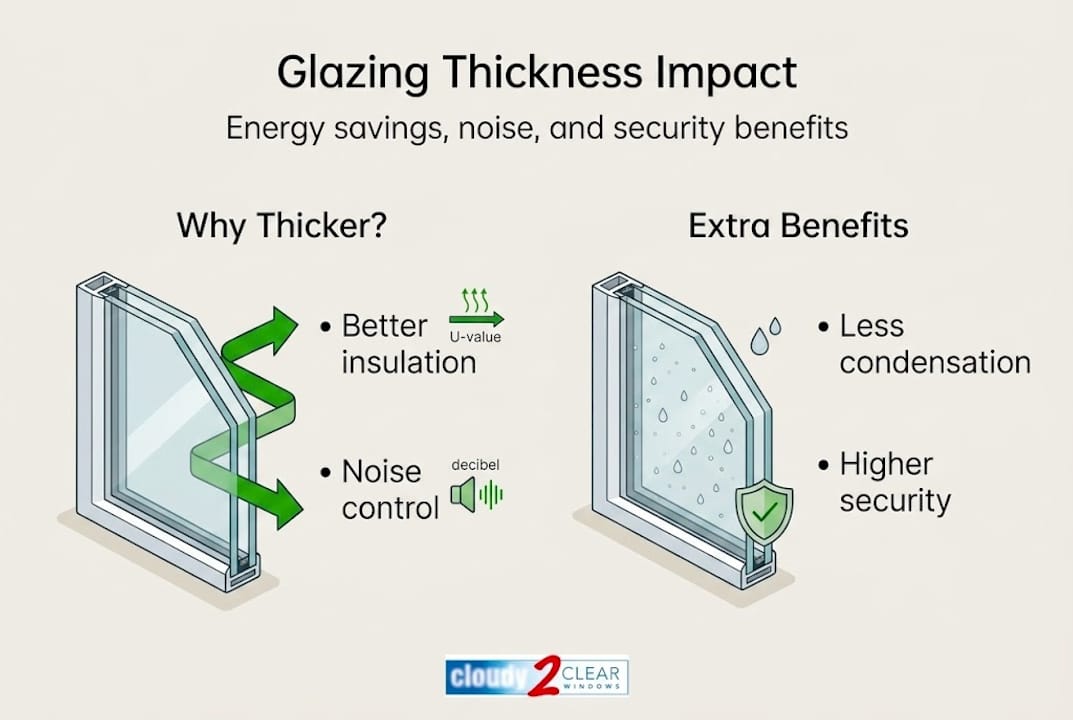
Thicker glazing can cut noise by up to 40 dB and reduce condensation, making it one of the most cost-effective upgrades available to noise-affected properties. If you are interested in exploring soundproof glazing benefits in more detail, it is worth requesting a site assessment to understand your specific acoustic environment.

The benefits for condensation are equally important. Condensation forms when warm, moist indoor air meets a cold glass surface. Thinner glass cools quickly in winter, creating the perfect conditions for condensation to build up. This is not just an annoyance. Persistent condensation leads to mould growth, which damages window frames, walls, and furnishings, and can also cause health issues for occupants.
Thicker glass retains more heat on its inner surface, keeping it warmer and reducing the temperature difference that causes condensation. If you are already dealing with this issue, learning how to reduce window condensation can help you decide whether a glazing upgrade is the right solution.
Key benefits of upgrading glazing thickness for noise and condensation:
- Reduced external noise entering your home or workplace
- Lower risk of mould and damp caused by condensation
- Better overall indoor air quality
- Less frequent need to clean or treat window frames affected by moisture
Pro Tip: For the best acoustic performance, consider combining thicker glass with a laminated interlayer rather than simply increasing pane thickness alone. The laminate layer disrupts sound wave transmission in a way that uniform glass cannot, giving you better results for the same or similar cost.
One important caution: choosing an identical thickness for both panes in a double glazed unit can actually allow certain sound frequencies to pass through more easily. Specifying different thicknesses for the two panes, such as 4mm on the outside and 6mm on the inside, helps break up the resonance and delivers a broader noise reduction across more frequencies.
Glazing thickness and property security: What you need to know
With internal comfort covered, property owners must not overlook the importance of thickness for safety.
Burglars typically look for the path of least resistance, and thin glass is one of the most obvious weak points in any property. A standard 4mm pane can be broken quickly and quietly with the right tool. Thicker glass takes significantly more effort, noise, and time to penetrate, all of which deter opportunistic thieves.
Enhanced glazing thickness offers more resistance against forced entry, improving security in both residential and commercial settings. However, it is important to understand that not all thick glass performs equally when it comes to security.
The key distinction is between toughened glass and laminated glass. Toughened glass is stronger than standard glass, but when it breaks it shatters into small fragments. Laminated glass holds together even when cracked, because a plastic interlayer bonds the panes. This is a critical difference for security purposes: laminated glass prevents easy access even after the pane has been struck.
Common security glazing types and their typical thicknesses include:
- 6.4mm laminated glass: Entry-level security, suitable for most residential properties
- 6.8mm laminated glass: Standard choice for commercial premises and ground-floor windows in higher-risk areas
- 10mm toughened glass: Used in shop fronts and public-facing commercial buildings
- 11.5mm or greater laminated units: High-security applications including banks, jewellers, and listed buildings
For more information on how triple glazing fits into the security picture, about triple glazing covers whether the additional pane offers genuine security advantages over standard double glazed alternatives.
The three property types that benefit most from investing in security glazing are:
- Ground-floor residential properties: Particularly those in urban areas or on corner plots where visibility from the street is limited
- Commercial premises with high-value stock: Retail shops, jewellers, and electronics retailers where a smash-and-grab is a real risk
- Properties in higher-crime postcodes: Where insurance requirements may already specify minimum glazing standards
Speaking of insurance, many home and business insurance policies now require evidence that windows meet certain security standards. Fitting glazing that falls below these standards could affect your ability to make a successful claim after a break-in. Always check your policy documents and consult your insurer before specifying glazing for a property where security is a primary concern.
Why many overlook glazing thickness—and what you risk if you do
In our experience working with homeowners and businesses across England and Scotland since 2005, the same pattern repeats itself. People spend considerable time choosing a window style and frame colour, then accept whatever glass specification the supplier includes as standard without questioning it.
The consequence is usually one of three things: higher energy bills than expected, a condensation problem that develops within a year or two, or a security incident that might have been prevented. None of these outcomes are inevitable, but all of them become far more likely when glazing thickness is treated as an afterthought.
The uncomfortable truth is that retrofitting the correct glazing specification after installation is almost always more expensive than getting it right first time. Replacing glass units within existing frames adds labour costs and disruption that could be avoided with a simple conversation at the specification stage.
We also see properties where how window structure affects efficiency has been ignored entirely, with decorative glazing bars added for aesthetics that actually compromise the thermal performance of the unit. Style and specification need to work together, not against each other.
Before your next window purchase, use a brief checklist: ask for the U-value, confirm the pane thicknesses, check whether laminated glass is appropriate for your situation, and verify that the specification meets your insurer’s requirements. These four questions take minutes to ask and can save you thousands of pounds over the lifetime of your windows.
Upgrade your windows with expert help
Understanding glazing thickness is the first step. Taking action is what actually makes your property warmer, quieter, and safer.

At Cloudy2Clear Windows, we have been helping homeowners and businesses across England and Scotland choose the right glazing specification since 2005. Whether you need double glazing replacement for your home, specialist support through our Milton Keynes double glazing repairs branch, or tailored commercial window solutions for your business, our team will guide you through every specification decision with honesty and expertise. No guesswork. No unnecessary upselling. Just the right glass for your property and your budget.
Frequently asked questions
What is the best glazing thickness for my home?
For most UK homes, double glazing with 4mm to 6mm panes and a 16mm gap offers a reliable balance of energy efficiency and sound insulation suited to a wide range of property types and locations.
Does thicker glazing always mean better insulation?
Not always. Insulation also depends on the gas fill between panes, the gap width, and the overall quality of the window unit, so thickness is one important factor rather than the only one.
Will thicker glazing make my property more secure?
Generally, yes. Thicker glass resists forced entry more effectively than thin glass, but the frame quality, locking mechanism, and installation standard also play a significant role in overall security.
Can increasing glazing thickness reduce condensation?
Yes. Thicker and better-insulated windows keep the inner glass surface warmer, which reduces condensation risk and lowers the chance of damp and mould developing around your window frames.