• USP Logo Icon
    25 Year Guarantee
  • USP Leaf Icon
    Latest ECO Friendly Technology
  • USP Pointer Icon
    National Coverage
Get a FREE quote

Seasonal window care tips for UK homes: your checklist

Clear your weep holes twice a year, inspect seals and gaskets each spring and autumn, and book a professional if you spot misting between panes or soft timber frames. Those four actions cover the majority of double glazing failures before they become expensive. A structured annual check takes around 30 minutes per floor and costs almost nothing in materials.

Quick-action list for this season:

  • Clear weep holes (the small slots at the bottom of the frame) with a cocktail stick or soft brush
  • Check perimeter gaskets for cracks, shrinkage, or gaps
  • Lubricate hinges and handles with silicone spray
  • Look for misting or condensation between the panes of glass
  • Note any rattling, sticking, or draught and photograph it

Pro Tip: Never use a pressure washer to clear weep holes. The force pushes debris further in and can dislodge the gasket. A dry brush or cocktail stick does the job safely.

Hands clearing uPVC window weep hole outdoors

What are the best seasonal window care tips for each season?

A season-by-season routine keeps double glazing performing well year-round. The tasks below are split by season and by frame material where the approach differs.

Spring

Spring is the most important season for window maintenance. Winter rain and freeze-thaw cycles stress seals and frames, so a thorough check now prevents summer problems.

  • Clear weep holes: this is the single most critical task and should happen every spring and autumn
  • Inspect gaskets for perishing or shrinkage along the full perimeter
  • Wash uPVC frames with warm soapy water; use a pH-neutral cleaner on aluminium
  • Lubricate all hinges, handles, and locking points with silicone spray
  • Photograph any chips, cracks, or discolouration for your maintenance log

Summer

Heat causes uPVC to expand slightly, which can make sashes sticky or cause seal edges to lift. Check that every window opens and closes smoothly, and wipe down frames with a damp cloth to remove UV-degraded residue. Avoid dark-coloured cleaning cloths on light uPVC frames in direct sun; they can transfer heat and cause localised warping.

Autumn

Autumn is your second weep-hole clearance of the year. Leaf debris and wind-blown grit block drainage channels quickly. For timber frames, inspect for flaking paint or exposed wood and recoat before the wet season arrives. Timber frames need recoating every 3–6 years; catching bare patches in autumn prevents rot taking hold over winter.

Winter

Condensation on the interior glass surface is a ventilation issue, not a seal failure. Open trickle vents, run extractor fans in kitchens and bathrooms, and keep indoor humidity below 60%. If condensation appears between the panes, that is a failed sealed unit and requires professional attention. Apply temporary draught-proofing strips to draughty frames, but avoid covering weep holes or trickle vents.

Season Priority task Frame material note
Spring Clear weep holes, inspect gaskets uPVC: soapy water; aluminium: pH-neutral only
Summer Check operation, clean finishes Avoid heat transfer on light uPVC
Autumn Second weep-hole clearance, recoat timber Timber: repaint bare patches before rain
Winter Manage condensation, draught-proof Keep trickle vents unobstructed


How often should you inspect windows, and when do you need a professional?

A monthly visual check takes two minutes: look for obvious misting, cracks, or hardware that has stopped working. Twice a year, in spring and autumn, carry out a hands-on check that includes operating every window, pressing the frame for softness, and running a finger along the gasket.

Red flags that require a professional:

  • Misting or condensation between the panes: this indicates a failed sealed unit and cannot be fixed by cleaning
  • Cracked or loose glass in any pane
  • Timber that gives under thumb pressure (internal rot)
  • Pitting or structural corrosion on aluminium joints
  • Broken handles, locks, or hinges that prevent secure closing
  • Persistent rattling or audible draughts after draught-proofing
  • Yellowing or cracked welds on uPVC corners

Which? identifies draughts, leaks, excessive noise, yellowing uPVC, and condensation between panes as clear signals to contact your installer or a qualified repairer.

Delaying professional attention when a seal has failed can reduce the window’s thermal efficiency by up to 50%, raising your heating costs and allowing moisture to reach the frame. The longer a failed seal is left, the wider the damage spreads.

Documenting faults for warranty or insurance:

  1. Photograph the fault from two angles, with a ruler for scale where relevant
  2. Note the date, weather conditions, and which window is affected
  3. Record any previous repairs or maintenance carried out on that unit
  4. Keep all receipts and correspondence with installers

Pro Tip: Date-stamped photos on your phone are accepted as evidence by most insurers and speed up professional triage during a site visit.

What cleaning methods and minor repairs can you safely do yourself?

Most homeowners can handle cleaning, lubrication, and simple gasket replacement without specialist tools. The key is knowing which materials to use and which actions to avoid.

DIY-safe tasks and correct materials:

  • uPVC frames: warm water and a small amount of washing-up liquid; rinse thoroughly
  • Aluminium frames: pH-neutral cleaner only; acidic or alkaline products cause pitting
  • Timber frames: mild soap and water for cleaning; microporous paint for recoating bare patches
  • Glass: a squeegee and clean water, or a proprietary glass cleaner without ammonia

Clearing weep holes (step by step):

  1. Locate the small slots along the bottom of the outer frame
  2. Insert a cocktail stick or soft-bristle brush and work debris loose gently
  3. Blow or brush the loosened material clear; do not push it inward
  4. Check the channel runs clear by pouring a small cup of water along the sill

Lubricating hinges:

Apply silicone spray to all moving parts, including hinges, locking points, and handle mechanisms. Oil-based lubricants attract dirt and cause mechanisms to seize over time; silicone spray is the correct product.

Perimeter gasket replacement is feasible on most uPVC windows: pull the old gasket from its channel, measure the profile, purchase matching rubber gasket from a glazing supplier, and press the new gasket in from one corner around the full perimeter.

Never attempt: pressure washing frames or weep holes, solvent-based cleaners on uPVC, drilling into sealed units, or adjusting the glazing beads without professional guidance.

Pro Tip: Photograph the gasket profile before removing it. The photo makes matching the replacement profile at a glazing supplier straightforward and avoids a wasted trip.

How do you winterproof windows and reduce condensation in the UK?

The UK’s damp winters make condensation management the most practical energy-saving step you can take. Ventilation control — using trickle vents and extractor fans consistently — reduces internal humidity and slows seal degradation.

Practical winterproofing steps:

  • Keep trickle vents open, even in cold weather; they are sized to ventilate without significant heat loss
  • Run kitchen and bathroom extractor fans during and for 15 minutes after cooking or bathing
  • Apply self-adhesive foam draught-proofing strips to draughty casement edges; avoid covering weep holes
  • Use a condensation prevention workflow to identify whether moisture is on the surface or between panes
  • Consider internal shutters as an additional insulation layer; they also help with condensation control on cold nights

A failed window seal can reduce thermal efficiency by up to 50%, so replacing a blown unit before winter is one of the most cost-effective energy upgrades available. When a full replacement is due, A-rated or better double glazing units with improved U-values (1.6 W/m²K or lower for replacements under Part L) deliver measurable reductions in heat loss.

Pro Tip: Temporary draught-proofing strips cost under £10 and buy you a winter season while you arrange a professional quote. They are not a substitute for a failed seal, but they reduce discomfort while you plan.

What do window repairs and replacements cost in the UK?

Repair costs vary by fault type, frame material, and access. As a general guide:

  • Hinge or handle replacement: around £80–£150 per pair
  • Failed sealed unit (re-glazing): approximately £120–£250 per unit
  • Gasket replacement: approximately £80–£150 per window
  • Locking mechanism: approximately £100–£200 per window
  • Full window replacement: typically £500–£1,200 per window depending on size and material

These figures are indicative; always obtain a written, itemised quote before committing. Lead times for minor repairs are typically 1–2 weeks; full replacement units may take 3–6 weeks depending on specification and supplier.

A useful decision rule: if the repair cost is less than 40% of the replacement cost and the frame is structurally sound, repair. If multiple units have failed, the frame is rotten, or the window is over 20 years old with recurring faults, replacement is the stronger long-term choice.

Pro Tip: Request at least two written quotes and ask each repairer to specify whether the price includes VAT, disposal of the old unit, and a guarantee on parts and labour.

Why trust this guidance, and where does Cloudy2Clear Windows fit in?

Cloudy2Clear Windows has been repairing and replacing double glazed windows across residential and commercial properties since 2005. The team carries out glass-only sealed-unit replacements, hinge and lock repairs, conservatory and Velux glass work, and compliance inspections for commercial and housing association properties.

Cloudy2Clear Windows has completed thousands of sealed-unit replacements and hardware repairs across the UK since 2005, working with homeowners, businesses, and housing associations to restore window performance without unnecessary full-frame replacement.

When you contact Cloudy2Clear Windows, you can request a written quote, a site visit, and documentation of the work carried out, including any warranty details. For further reading on spotting damage early, the guide on signs of window damage covers the most common indicators that seasonal wear has become a repair job.

Pro Tip: Ask any repairer whether they are FENSA-registered or work to equivalent standards. FENSA registration means replacement work is self-certified for Building Regulations compliance, saving you the cost of a separate inspection.

What Cloudy2Clear Windows technicians actually look for on a site visit

When a Cloudy2Clear Windows technician arrives, the first check is always the glass: is there misting between the panes, and is the sealed unit intact? From there, the frame is assessed for structural soundness, hardware is tested under load, and drainage channels are inspected. Health and safety on-site means no work is carried out on cracked or loose glass without securing the area first. Every job is documented with before-and-after photographs, and the customer receives a clear explanation of what was found, what was done, and what, if anything, needs monitoring.

Cloudy2Clear Windows: book a survey or request a quote

Cloudy2Clear Windows offers glass-only sealed-unit replacements, hinge and lock repairs, and commercial window repair services across the UK. Whether you need a single misted pane replaced or a full survey of a commercial property, the team provides written, itemised quotes with no obligation.

Cloudy2clearwindows


Branches cover Milton Keynes, Watford, Oxford, Leicester, Loughborough, Norwich, Bury St Edmunds, and surrounding areas. Operating hours are Monday to Friday, 8:30 AM to 6:30 PM. To book a site visit or request a quote for double glazing replacement or repair, contact your nearest branch directly. All completed work is documented and warranted, giving you a clear paper trail for insurance or future sale.

FAQ

How often should you clear window weep holes?

Clear weep holes at least twice a year, in spring and autumn. Blocked weep holes are one of the two most common preventable causes of seal failure and water ingress.

What does misting between window panes mean?

Misting between the panes means the sealed unit has failed. Surface cleaning will not fix it; the unit needs professional replacement, typically costing £120–£250 per unit.

Can you repair double glazing yourself, or do you need a professional?

Cleaning, lubrication, and simple gasket replacement are safe DIY tasks. Cracked glass, failed sealed units, rotten frames, and broken locking mechanisms all require a qualified professional.

How do you reduce condensation on windows in winter?

Keep trickle vents open, run extractor fans during and after cooking or bathing, and maintain indoor humidity below 60%. If condensation appears between the panes rather than on the surface, the sealed unit has failed and needs replacing.

When is it better to replace a window than repair it?

Replace when the repair cost exceeds 40% of the replacement cost, when multiple sealed units have failed, or when the frame is structurally unsound. A single failed hinge or seal on a sound frame is nearly always worth repairing first.

Window safety tips for businesses: compliance checklist

Every UK business owner should act on five things right now: inspect window seals and hardware for visible damage, secure or board any broken panes, verify that cleaning access is safe and planned, schedule routine maintenance, and review whether your glazing meets current security and safety standards.

Three sets of rules govern your legal position. Building Regulations K5.4 requires safe cleaning access for commercial buildings where there is a risk of falling from height. The Workplace (Health, Safety and Welfare) Regulations 1992 (Regulations 15 and 16) require that windows cannot be opened in a way that exposes anyone to risk and must be designed to be cleaned safely. The Health and Safety Executive (HSE) places primary responsibility for safe window cleaning on the employer or whoever controls the work. If you are unsure whether your windows meet these standards, Cloudy2Clear Windows offers commercial inspection and repair services to help you get compliant quickly.

Compliance officer reviewing UK window safety documents overhead


Pro Tip: Book a professional glazing inspection before your next insurance renewal. Documented compliance can support your liability position if a claim arises.

What should you check on a site walk-round?

A quick visual inspection takes under twenty minutes and can flag issues before they become costly or dangerous. Work through this checklist on each visit:

  • Glass condition: cracked panes, edge chips, spidering fractures, or distorted glass
  • Sealed units: misting or condensation between panes indicates a failed seal
  • Frames and hinges: corrosion, warping, or stiff operation
  • Locks and restrictors: faulty or missing opening restrictors on upper-floor windows
  • Escape routes: windows designated as emergency exits must open freely and fully
  • Cleaning access: confirm that any window located at a height that requires safe access arrangements for cleaning

Prioritise issues as follows: broken or cracked glass is an immediate safety risk; failed seals and faulty hardware are high priority for repair within days; cosmetic wear and minor frame deterioration can be scheduled as routine maintenance.

Regular cleaning also pays dividends beyond appearance. Scheduled cleaning helps spot maintenance issues early and reduces long-term wear on seals and frames.

Pro Tip: Photograph every fault you find and log the date. That record protects you with insurers and demonstrates due diligence to the HSE if an incident is ever investigated.

Which UK regulations apply to your business windows?

Three overlapping frameworks set your legal duties as a property owner or employer.

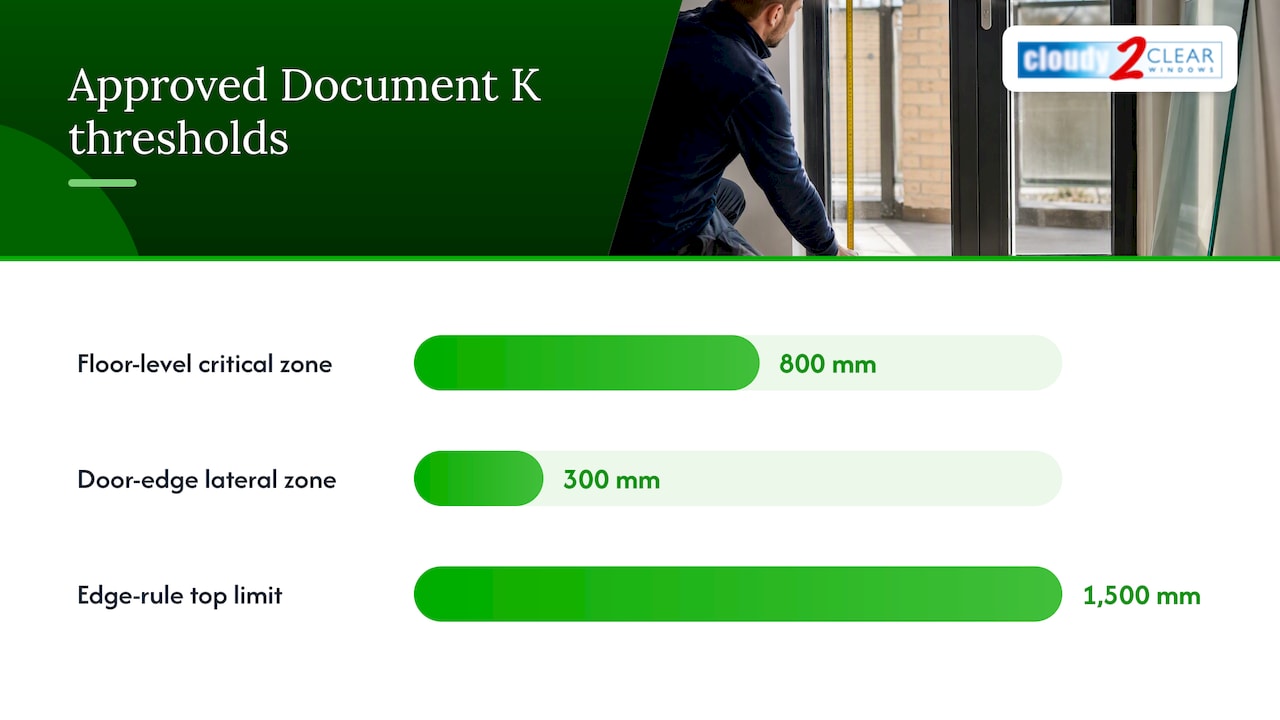
Building Regulations K5.4 requires that commercial buildings provide safe access for cleaning any glazed surface where a person could fall more than two metres. Approved Document K lists six compliant options: reversible or openable windows, access ladders (up to 6 metres), suspended cradles, anchorage points for rope access, permanent guarded walkways, and space for scaffold towers. One of these must be designed in and maintained.

Workplace Regulations 1992, Regulation 15 states that no window shall be opened in a way likely to expose anyone to a safety risk, and no window shall be left open in a dangerous position. Regulation 16 requires that windows and skylights are constructed or designed so they can be cleaned safely, taking into account any devices or equipment used with them.

HSE and Work at Height Regulations place the duty to plan, supervise, and resource safe window cleaning on the employer or the person in control of the work. Competent operatives and inspected equipment are not optional.

“Falls from height are the leading cause of workplace fatalities in UK construction, and window cleaning is among the highest-risk occupations.” — Architects’ Journal / HSE data

Who is responsible? The building owner holds primary responsibility for the design and maintenance of safe access. The employer (which may be the same person) is responsible for how cleaning and maintenance work is carried out. Both can be liable if an incident occurs.

How do you clean windows safely at height?

Avoid work at height wherever reasonably practicable. Where it cannot be avoided, the HSE requires that the work is planned, supervised, and carried out by competent people using properly inspected equipment.

Preferred controls, in order of preference:

  • Clean from inside the building using reversible or tilt-and-turn windows
  • Use water-fed poles from ground level
  • Use collective protection (guarded platforms) before relying on personal protective equipment
  • Avoid ladders where possible; almost all ladder falls happen because the ladder moves unexpectedly

When you engage a cleaning contractor, ask for written evidence of: a risk assessment and method statement, LOLER inspection records for any powered access equipment, anchor point inspection records, public liability insurance, and a documented emergency rescue plan. The HSE is clear that rescue procedures must be planned before work starts and must not rely solely on the emergency services.

Pro Tip: Schedule window cleaning during low-footfall periods and set a ground exclusion zone beneath any elevated work. This protects both staff and members of the public.

How do you spot a hazardous window before it fails?

Visible warning signs are usually present well before a window becomes dangerous. Look for:

  • Spidering cracks or edge chips in the glass
  • Misting or condensation trapped between panes (failed sealed unit)
  • Distorted or bowed glass panels
  • Bent, corroded, or stiff hinges and stays
  • Locks that do not engage fully or opening restrictors that are missing or broken

Faulty hardware creates a specific compliance risk under Regulation 15. A window that sticks and then releases suddenly, or one that swings open beyond a safe angle, can injure anyone nearby. Window hardware condition directly affects both safety and legal compliance.

Photograph faults at the time of discovery. A dated image is useful for insurance claims, contractor quotes, and demonstrating that you identified and acted on a problem promptly.

What safety glass options suit commercial properties?

Upgrading glazing is often the most cost-effective way to reduce injury risk and meet insurance requirements. The three main options for commercial use are:

Glass type Safety behaviour Best suited for
Toughened (tempered) Shatters into small, blunt fragments Doors, partitions, ground-floor windows
Laminated Holds together on impact; interlayer retains shards High-security areas, overhead glazing, escape routes
Fire-rated Maintains integrity under heat for a rated period Compartment walls, fire doors, stairwells


Annealed (standard float) glass breaks into large, sharp shards and is not suitable for locations where people could fall against it or where forced entry is a risk. Acoustic and thermally upgraded units can be specified in toughened or laminated form, so performance and safety are not mutually exclusive.

Pro Tip: Where security is a concern, combine laminated glazing with reinforced multi-point locking hardware. Glass alone will not deter a determined intruder; the combination significantly raises the difficulty of forced entry.

How can you reduce break-ins and glazing damage?

Practical security measures for commercial glazing do not need to be expensive to be effective:

  • Fit laminated or reinforced glazing to ground-floor and accessible windows
  • Install multi-point locking systems on all external windows and doors
  • Apply internal security film as a temporary measure after damage or while awaiting replacement
  • Use external shutters or grilles where the building use and planning permissions allow
  • Ensure CCTV coverage includes glazing lines and that lighting eliminates dark areas around windows

Delays to repair after vandalism or a break-in increase your insurance exposure. A smashed pane left unboarded overnight is both a liability and an invitation to further damage. Keep an emergency contact for a glazing specialist who can arrange rapid boarding and broken window repair to limit your risk.

For more on security glazing features that can be applied to commercial settings, Cloudy2Clear Windows has published practical guidance covering the options available.

What inspection schedule should you follow?

Task Frequency Responsible party
Visual check (glass, seals, hardware) Monthly On-site manager
Full operational and hardware inspection Quarterly Qualified contractor
Professional glazing survey Annually or after severe weather/impact Specialist glazier
Cleaning frequency (offices) Every 1–3 months Approved cleaning contractor


Commercial window maintenance records should include the date of each inspection, who carried it out, faults found, and actions taken. Retail and hospitality premises may need cleaning every 4–8 weeks; healthcare and food-service environments often require more frequent attention.

Pro Tip: Keep inspection records for at least three years. If an incident occurs, documented maintenance history is your strongest defence with insurers and enforcement bodies.

What should you do immediately after window damage?

Act in this order:

  1. Secure the area and prevent access by staff and the public.
  2. Remove obvious sharp debris if it is safe to do so without risk of further breakage.
  3. Board or apply security film to the broken pane to prevent weather ingress and further injury.
  4. Photograph the damage before any temporary repair for insurance evidence.
  5. Notify your insurer and log the incident with time, date, and circumstances.
  6. Contact a glazing specialist for emergency boarding and a replacement quote.

Call emergency services if there is a risk of structural collapse, if anyone has been injured, or if the damage has created an immediate fall hazard that you cannot safely control. For everything else, a qualified glazier is the right first call. Cloudy2Clear Windows provides emergency commercial glass repair and boarding services for exactly these situations.

How do you choose the right glazing contractor?

Ask every contractor these questions before booking:

  1. Do you carry public liability insurance, and can you provide the certificate?
  2. What is your experience with commercial double glazing repair and replacement?
  3. Can you supply a written risk assessment and method statement for the work?
  4. What are your turnaround times for emergency jobs?
  5. Do you provide LOLER inspection records for any access equipment used?
  6. What warranty do you offer on replacement sealed units?

Demand written answers, not verbal assurances. A contractor who cannot produce inspection logs, insurance documents, and a method statement is not compliant with HSE requirements and should not be engaged for work at height or commercial glazing.

Cloudy2Clear Windows: our perspective on commercial glazing safety

Since 2005, Cloudy2Clear Windows has inspected and repaired commercial double glazing across the UK. The faults we see most often are failed sealed units that have been left to deteriorate for months, and opening hardware that has seized or lost its restrictor. Both are straightforward to fix when caught early. Left unaddressed, they become compliance failures and, in some cases, the direct cause of an incident.

The businesses that manage glazing well treat it the same way they treat fire safety: scheduled checks, documented records, and a clear escalation path when something needs urgent attention. Those that do not tend to call us after an incident rather than before one.

Cloudy2Clear Windows can help you stay safe and compliant

Cloudy2clearwindows


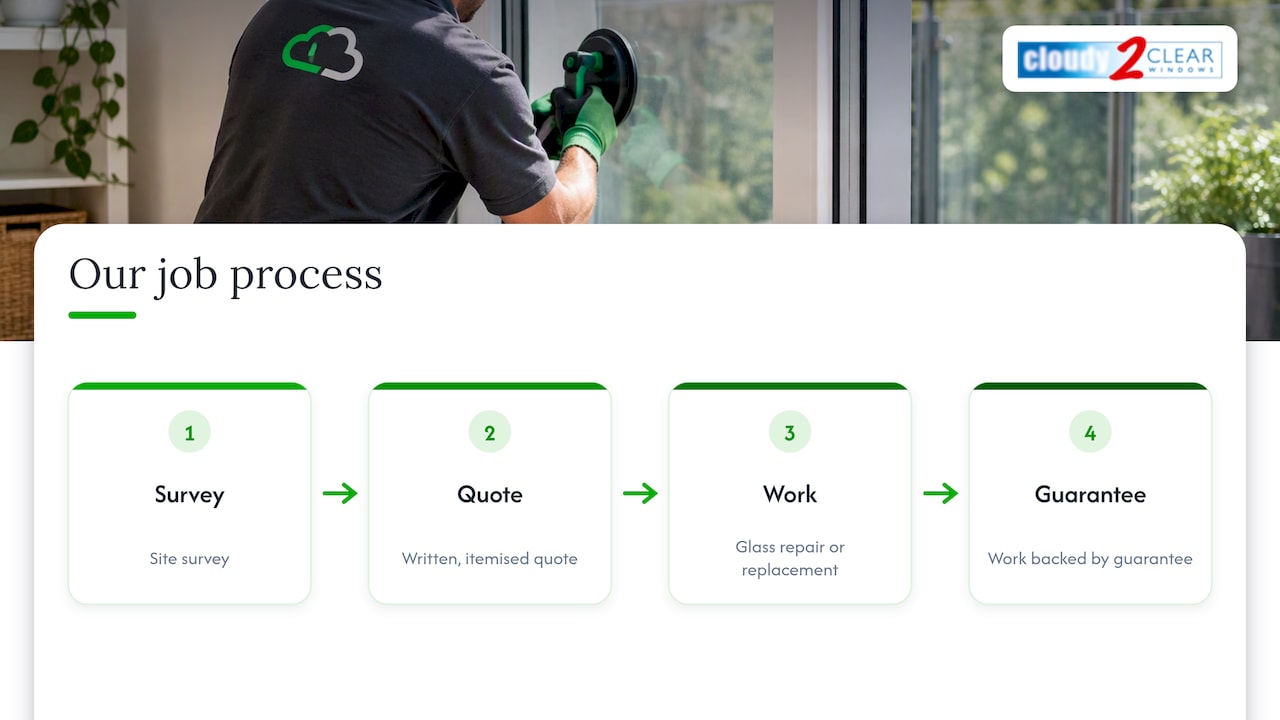
Cloudy2Clear Windows has been repairing and replacing commercial double glazing since 2005, and our services are built around the needs of property owners who need fast, reliable results without the hassle of managing multiple contractors. We handle the full process from inspection through to written quote and completed repair or replacement, including emergency boarding when you need it the same day.

Our commercial window replacement service covers misted units, cracked panes, failed hardware, and full glazing upgrades to toughened or laminated glass. We are available Monday to Friday, 8:30am to 6:30pm. To book a commercial inspection or arrange an emergency repair, contact your local Cloudy2Clear Windows branch today.

Useful sources for UK compliance and safe working at height

These primary sources are the most reliable references for verifying your legal duties:

  • Workplace Regulations 1992, Regulation 15: Safe window operation requirements for employers
  • Workplace Regulations 1992, Regulation 16: Design requirements for safe window cleaning
  • HSE window cleaning guidance: Planning, supervision, and equipment requirements for work at height
  • Building Regulations K5.4 (Architects’ Journal analysis): Six compliant options for safe cleaning access in commercial buildings
  • Commercial window cleaning frequency guide: Sector-specific cleaning intervals and contractor checks

Use the Workplace Regulations pages to confirm your legal duties as an employer. Use the HSE guidance when briefing or vetting cleaning contractors. Use the Building Regulations analysis when planning any glazing replacement or refurbishment project.

FAQ

What does Building Regulations K5.4 require for business windows?

K5.4 requires that commercial buildings provide safe access for cleaning any glazed surface where a fall of more than two metres is possible, using one of six approved methods including reversible windows, anchor points, or guarded walkways.

How often should commercial windows be professionally inspected?

A qualified contractor should carry out regular full operational and hardware inspections, with professional glazing surveys conducted periodically and frequent visual checks by an on-site manager.

What type of glass is required for commercial doors and partitions?

Toughened or laminated safety glass is required in locations where people could fall against the glazing, such as doors, low-level windows, and partitions, in line with the Workplace Regulations 1992.

When should you call a glazing specialist rather than board a window yourself?

Call a specialist immediately after any break-in, impact damage, or seal failure. Temporary boarding is a short-term measure only; Cloudy2Clear Windows can arrange emergency commercial repairs and a permanent replacement to restore compliance.

Who is legally responsible for window safety in a commercial building?

The building owner is responsible for the design and maintenance of safe access; the employer (which may be the same person) is responsible for how cleaning and maintenance work is carried out, as set out by the HSE and the Workplace Regulations 1992.

How to remove broken glass safely: a UK guide

Removing broken glass safely means protecting yourself first, then cleaning methodically, and disposing of it correctly under UK regulations. Put on heavy-duty, puncture-resistant gloves and closed-toe shoes before you touch anything. Secure the area so no one else walks in. Collect large shards using a dustpan and broom or tongs, never your bare hands. Pick up tiny fragments with damp paper towels, adhesive tape, or a vacuum cleaner. Finally, place everything in a puncture-proof container, label it clearly as DANGER: BROKEN GLASS, and dispose of it following 2026 UK waste guidance, which means general residual waste or a Household Waste and Recycling Centre, not your kerbside recycling bin.

  • Wear heavy-duty, puncture-resistant gloves and closed-toe shoes
  • Secure the area from people and pets before starting
  • Collect large shards with a dustpan and broom or tongs
  • Use damp paper towels, adhesive tape, or a vacuum for small fragments
  • Contain all glass in a puncture-proof, labelled container
  • Dispose via general waste or a Household Waste and Recycling Centre

How to remove broken glass safely: step-by-step

A calm, methodical approach is the single most effective way to avoid injury. Rushing is the most common mistake that leads to cuts, so work through each stage deliberately.

Step 1: Put on your PPE. Standard household rubber or nitrile gloves will not protect you. You need thick, heavy-duty leather or puncture-resistant work gloves. Add safety goggles if there is any risk of fragments flying upward, and wear sturdy closed-toe shoes throughout.

Step 2: Secure the area. Remove children and pets from the room immediately. Close doors and, if you are in a commercial setting, use barriers or signage to prevent colleagues from entering.

Step 3: Remove large shards first. Use a dustpan and broom, tongs, or tweezers to collect the biggest pieces. Place them directly onto a thick layer of newspaper or kitchen roll spread nearby. Avoid using a broom as your primary tool if possible, as glass fragments can lodge in the bristles and be difficult to dislodge safely.

Hands inspecting glass shards with torchlight


Step 4: Tackle tiny fragments. Press a folded damp paper towel gently over the affected area. The smallest shards will cling to it. Adhesive tape wrapped sticky-side-out around your gloved hand works equally well. A vacuum cleaner handles any remaining dust-sized splinters.

Infographic visualizing steps to safely remove broken glass


Step 5: Inspect with a torch. Hold a torch at a low angle across the floor. The light catches the edges of any missed slivers, making them visible before you stand up and move around.

Step 6: Clean your shoes. Before leaving the area, check the soles of your footwear. Glass travels farther than you expect, and carrying fragments into another room creates a secondary hazard.

Step 7: Wrap and contain. Wrap the collected glass in several layers of newspaper, place it inside a rigid cardboard box or sturdy plastic tub, and seal it with strong packing tape.

Pro Tip: Never kneel on the floor during cleanup. Stand and bend at the waist, or sit on a low stool. Kneeling puts your knees directly in contact with any shards you have not yet spotted.

How should you dispose of broken glass in the UK?

Broken window glass is excluded from household recycling under 2026 UK waste guidance. Window panes, mirrors, drinking glasses, and Pyrex all have different melting points and compositions from bottle glass, so they cannot be processed at standard recycling facilities. Putting them in your kerbside bin creates a serious injury risk for collection crews.

Your two compliant options are:

  • General residual waste bin: Only after the glass is securely wrapped and contained in a puncture-proof box, sealed with tape, and labelled on all sides.
  • Household Waste and Recycling Centre (HWRC): The preferred route for larger quantities such as a full window pane. Staff at HWRCs are equipped to handle it, and many sites have dedicated skips for flat glass.

Labelling is not optional. Write DANGER: BROKEN GLASS in large, clear letters on every side of the container using a permanent marker. This protects your household, your neighbours, and the waste workers who handle thousands of bins every day. Dorset Council explicitly forbids broken glass of any kind in kerbside recycling bins, and this approach is consistent with council guidance across the UK.

Avoid bottle banks for broken glass. These are designed for whole, unbroken bottles, and broken shards can injure members of the public using the bank and the staff who empty it.

Glass type Kerbside recycling? Correct disposal
Window panes / flat glass No HWRC or general waste (wrapped and labelled)
Mirrors No General waste (small) or HWRC
Drinking glasses No General waste (wrapped and labelled)
Pyrex / ovenproof dishes No General waste or HWRC
Broken bottles or jars No General waste (wrapped) or HWRC
Whole glass bottles and jars Yes Kerbside recycling bin


When should you call a professional glazier?

Some glass breakages go beyond what you should handle yourself. The Glass and Glazing Federation (GGF) is clear: wherever possible, do not attempt to remove broken glass from window or door framing yourself.

Situations that warrant professional help include:

  • High-level or inclined glazing, where fragments could fall without warning onto people below
  • Structural glazing or large window panes, where removing glass risks damaging the frame or surrounding structure
  • Commercial premises, where health and safety obligations require documented, compliant remediation
  • Double glazed units, where the sealed unit must be replaced correctly to maintain thermal performance

A professional glazier brings the right tools, protective equipment, and knowledge of post-breakage assessment to prevent recurring failures. GGF members offer emergency glazing repair services, and Cloudy2Clear Windows provides broken window repair for both residential and commercial properties across the UK.

For business owners, the stakes are higher still. A broken window in a commercial setting creates liability, and a professional assessment confirms the replacement meets current building regulations. Cloudy2Clear Windows also covers commercial glass repairs for exactly these situations.

How to treat injuries from broken glass

Act quickly if glass cuts you, but stay calm. Most minor cuts can be managed at home with basic first aid.

For minor cuts: Rinse the wound under clean running water to flush out any glass fragments. Apply gentle pressure with a clean cloth or sterile gauze to stop bleeding. Once bleeding has slowed, apply an adhesive plaster or sterile dressing. Check the wound carefully under good light for any embedded fragments before covering it.

If glass is embedded: Do not attempt to remove deeply embedded glass yourself. Cover the wound loosely with a clean dressing and seek medical attention at an urgent treatment centre or A&E. Trying to pull out a fragment can cause further damage to surrounding tissue.

When to call 999 or go to A&E: Seek immediate help if the cut is deep, bleeding does not stop after ten minutes of firm pressure, the wound is near the eye, or there is any numbness suggesting nerve involvement.

Good housekeeping safety practices recommend keeping a basic first aid kit accessible in any area where glass is handled regularly, whether at home or in a commercial kitchen or workshop.

Cloudy2Clear Windows’ perspective on broken glass safety

The instinct to clean up quickly is understandable. A broken window or shattered pane feels urgent, and most people want the mess gone as fast as possible. Having worked in glazing since 2005, Cloudy2Clear Windows sees the consequences of that rush more often than you might expect.

The two most overlooked steps are the torch inspection and the disposal label. People sweep up what they can see, assume the job is done, and then someone finds a shard three days later with their bare foot. The torch takes thirty seconds and catches what the eye misses. The label on the container protects a waste collector who has no way of knowing what is inside.

Different glass types also carry different risks. A broken drinking glass is manageable with the right gloves. A shattered double-glazed window unit is a different matter entirely. The outer pane, the spacer bar, and any remaining fragments in the frame all need careful handling, and the frame itself may be compromised. Attempting that without professional tools and training is where serious injuries happen.

Cloudy2Clear Windows’ advice is straightforward: for anything beyond a small domestic breakage, call a professional. The cost of a repair is always less than the cost of an injury or a poorly fitted replacement that fails again within months.

Ready to get your window repaired safely?

If you have broken glass in a window or door, do not leave it unprotected. Cloudy2Clear Windows has been repairing and replacing glazing across the UK since 2005, covering both homes and businesses.

Cloudy2clearwindows


Get in touch with your local Cloudy2Clear Windows team for fast, professional smashed glass replacement. Local branches cover areas including Oxford, Leicester and Loughborough, and Milton Keynes.

FAQ

Can broken window glass go in the recycling bin?

No. Window glass is excluded from household recycling under UK 2026 waste guidance because it has a different composition and melting point from bottle glass. Place it in general residual waste or take it to a Household Waste and Recycling Centre, securely wrapped and labelled.

What gloves should you use to handle broken glass?

Standard rubber or nitrile household gloves are not sufficient. Use thick, heavy-duty leather or puncture-resistant work gloves, which are the only types that reliably prevent lacerations from glass shards.

How do you find tiny glass fragments after a breakage?

Hold a torch at a low angle across the floor after the main cleanup. The light catches the edges of any remaining slivers. Follow up with a damp paper towel or vacuum cleaner to collect what the torch reveals.

When should you call a professional glazier instead of cleaning up yourself?

Call a professional for any breakage involving window or door framing, high-level glazing, or double-glazed units. The GGF advises against DIY removal from frames due to the risk of injury and structural damage.

How should you label a container of broken glass for disposal?

Write DANGER: BROKEN GLASS in large, clear letters on all sides of the container using a permanent marker. Seal the container with strong packing tape before placing it in general waste or taking it to an HWRC.

Energy ratings for windows: your 2026 UK guide

What are energy ratings for windows?

The Window Energy Rating (WER) is a standardised score that tells you how efficiently a window performs overall, combining heat loss, solar gain, and air leakage into a single figure expressed in kWh/m²/year. The British Fenestration Rating Council (BFRC) administers the UK’s most widely used scheme, rating windows on a scale from A++ (most efficient) to E (least efficient). Windows rated A or above are classed as “energy positive,” meaning they contribute more heat through solar gain than they lose through the glass and frame.

Why does this matter for your home? Poorly rated windows are one of the biggest sources of heat loss in UK properties, and replacing them with higher-rated alternatives directly reduces your heating bills. Under UK Building Regulations, replacement windows installed in 2026 must meet at least a C rating or a whole-window U-value of 1.4 W/m²K.

Key facts at a glance:

  • The BFRC scale runs from A++ (best) to E (worst).
  • Ratings of A and above are energy positive, delivering a net heat gain.
  • The WER score is measured in kWh/m²/year; a higher positive number means better performance.
  • Building Regulations set a minimum C rating for all replacement windows in England and Wales.
  • WER labels are voluntary but independently verified by BFRC, unlike manufacturers’ own claims.

What determines a window’s energy rating?

Three measurable factors feed into the WER calculation, each assessed against EN and ISO standards.

  • U-value (thermal transmittance): Measures how quickly heat escapes through the whole window assembly, frame included. A lower U-value means less heat loss. The whole-window U-value always differs from the glass-only figure, so never compare the two directly.
  • g-value (solar factor): Measures how much of the sun’s heat passes through the glass into your home. This is a positive contribution to the energy balance.
  • L-value (effective air leakage): Measures uncontrolled airflow through gaps in the window unit. Draughts carry warm air out, so a lower L-value improves the overall rating.

The WER is essentially an energy balance: solar gain minus heat loss and air leakage. Crucially, the rating covers the entire window unit, including the frame, glass, and hardware. Swapping the glass alone does not change the certified rating without retesting the full assembly.

Technician fitting triple-glazed window frame

How to read a BFRC window energy rating label

The official BFRC label is designed to be read at a glance, but there is more detail on it than most people realise.

  • Letter rating and colour band: The large letter at the top (A++ to E) sits within a rainbow colour band, similar to the labels you see on white goods or car tyres.
  • Energy Index score: A numeric figure in kWh/m²/year sits below the letter. Two windows can share the same letter band yet carry different numeric scores; the higher number indicates the better performer.
  • Whole-window U-value: Listed separately on the label. This is the figure that matters for Building Regulations compliance, not the glass-only U-value sometimes quoted in brochures.
  • Solar factor and air leakage values: Both are printed on the label, giving you the raw data behind the overall rating.

Spotting a genuine label is straightforward once you know what to look for. Genuine BFRC-certified products carry a small official sticker on the inside of the frame, alongside the larger rainbow label. Some manufacturers use lookalike labels without third-party verification. If you are unsure, you can check live licences directly on the BFRC website before you buy.

Pro Tip: Always ask your installer for the numeric WER score, not just the letter grade. Two A-rated windows can perform quite differently depending on their actual kWh/m²/year figure.

Infographic showing how to read window energy rating labels

What are the real benefits of choosing energy-efficient windows?

Higher-rated windows deliver savings you can feel and measure. A-rated windows typically save £100–£150 per year compared with older single glazing, while triple-glazed A++ rated windows can offer greater savings in particularly exposed or cold locations.

The comfort gains are just as tangible. Better-insulated windows reduce cold spots and draughts near the glass, leading to more consistent indoor temperatures. Homes in regions with longer heating seasons tend to see the sharpest improvements. Pairing energy-efficient windows with an efficient heating system compounds the savings further.

There is also an environmental dimension. Lower heat loss means less fuel burned, which directly reduces your home’s carbon emissions. For property managers with multiple units, upgrading to A-rated or above across a portfolio can make a measurable difference to an EPC score, which in turn affects rental value and compliance with minimum energy efficiency standards.

Key figure: A-rated windows save £100–£150 annually versus single glazing, with A++ triple-glazed units offering further gains in colder or more exposed properties.

Expert advice on navigating the UK window energy rating system

The WER scheme is voluntary, not statutory. That distinction matters when you are shopping. A window without a BFRC label is not necessarily poor quality, but you have no independent verification of its performance. The Glass and Glazing Federation recommends explicitly requesting BFRC-labelled products when obtaining quotes, rather than assuming all suppliers will offer them.

Comparing windows by letter band alone can mislead you. Two products both labelled “A” may have meaningfully different WER scores. Always ask for the numeric figure. Similarly, a glass-only U-value quoted in a sales brochure is not the same as the whole-window U-value on the BFRC label; the frame and hardware affect the final number.

  • Check that the BFRC sticker is on the inside of the frame, not just a printed label on the glass.
  • Verify the product’s licence on the BFRC website using the manufacturer’s name or membership number.
  • Confirm the whole-window U-value meets the 1.4 W/m²K threshold required by Building Regulations.
  • Ask whether the installer is a BFRC Approved Installer, which adds a further layer of accountability.
  • Explore whether you qualify for any government grant or energy efficiency scheme before committing to a purchase.

Pro Tip: The BFRC product search lets you look up any registered window by manufacturer. Use it before signing a contract to confirm the rating is genuine and current.

How UK window energy rating standards have evolved

The BFRC was founded in 1997 specifically to establish a window energy rating system for the UK, at a time when the industry had no consistent way to compare products on energy performance. The early scheme focused primarily on U-values, but it became clear that heat loss alone did not capture the full picture. Solar gain and air leakage were incorporated into the WER formula to create a more complete energy balance.

Building Regulations have tightened progressively since then. The minimum standard for replacement windows has moved upward over successive revisions, reaching the current C-rating threshold. The 2026 regulations reflect a broader government push to improve the energy performance of the existing housing stock, aligned with net-zero commitments. For homeowners, this means that windows installed even a decade ago may now fall below the legal minimum for replacement units.

How do UK window ratings compare with international standards?

The BFRC system is specific to the UK and uses a formula calibrated to British climate conditions, standard building occupancy, and average solar exposure. That makes direct comparisons with overseas schemes imprecise.

In the United States, the ENERGY STAR programme rates windows using U-factor and Solar Heat Gain Coefficient (SHGC), with regional climate zones determining the qualifying thresholds. The underlying physics are the same, but the rating boundaries differ because US climate zones range from hot-humid to cold-continental, requiring different trade-offs between solar gain and heat retention.

European standards use the EN 14351 framework, which specifies U-values and other performance characteristics but does not produce a single consumer-facing letter rating in the way BFRC does. If you are importing windows from a European supplier, ask for the whole-window U-value and cross-reference it against the UK Building Regulations threshold of 1.4 W/m²K. A European product with a strong U-value may still perform differently in a UK context once solar gain and air leakage are factored into the WER calculation.

How to compare window products using energy ratings when shopping

Elderly couple comparing window brochures in showroom


Start with the letter band as a filter, then drill into the numbers. Any window below a C rating fails the Building Regulations minimum, so you can rule those out immediately. From C upward, the WER numeric score is your primary comparison tool.

Rating band WER score (kWh/m²/year) Typical use case
A++ Highest positive score Exposed or cold locations, maximum savings
A+ High positive score Most UK homes seeking best value
A Positive score Good all-round performance, meets regulations comfortably
B Near-zero or slightly positive Acceptable mid-range option
C Meets minimum legal threshold Regulatory compliance only


When selecting glazing options, also consider the frame material, as uPVC, timber, and aluminium frames all affect the whole-window U-value and therefore the final WER score. A high-performance glass unit in a poorly insulating frame will not achieve the rating you expect. Pairing your window choice with an efficient heating system maximises the overall benefit to your home’s energy performance.

Real-life impacts of window ratings on bills and comfort

Consider a typical semi-detached house in the Midlands with original single-glazed windows. Replacing all windows with C-rated double glazing meets the legal minimum and reduces draughts noticeably, but the energy savings are modest. Upgrading to A-rated units on the same property delivers the £100–£150 annual saving noted earlier, with a warmer feel near the glass during winter months.

For a property manager running a block of flats in Norwich, the calculation shifts. Upgrading from D-rated to A-rated windows across multiple units improves each flat’s EPC rating, potentially moving properties from band D to band C. That shift can affect compliance with minimum energy efficiency standards for rented properties and may reduce tenant complaints about cold rooms or condensation. The impact on insulation is particularly pronounced in older buildings where windows are a primary source of heat loss.

A homeowner in Scotland fitting A++ triple-glazed units in a north-facing extension reported a marked reduction in condensation and a more consistent room temperature throughout winter, without increasing boiler output. The longer heating season in Scotland means the payback period on the higher upfront cost is shorter than in southern England.

How Cloudy2Clear Windows can help

If your windows are underperforming or you are planning an upgrade to meet 2026 Building Regulations, Cloudy2Clear Windows has been helping homeowners and property managers across the UK since 2005. Whether you need a double glazing replacement to hit the A-rating threshold or a repair to restore an existing unit’s performance, the team can advise on the right solution for your property and budget.

Cloudy2clearwindows


Cloudy2Clear Windows covers a wide area, with local teams in Oxford, Leicester and Loughborough, and Norwich, among many other locations. Get in touch to discuss your requirements.

FAQ

What is a good energy rating for windows in the UK?

A rating of A or above is considered good, as these windows are energy positive, meaning they gain more heat from solar energy than they lose through the frame and glass. For most UK homes, an A or A+ rating offers the best balance of performance and cost.

Which energy rating is best, A or G?

A is best. The BFRC scale runs from A++ (most efficient) to E, so A sits near the top. G does not exist within the current UK scheme. The higher the letter, the better the window performs.

Is energy rating D or E better for windows?

D is better than E. Both fall below the minimum C rating required by UK Building Regulations for replacement windows, so neither would be acceptable for a new installation in a standard residential property.

What is the U-value of an A-rated window?

An A-rated window typically carries a whole-window U-value well below 1.4 W/m²K, which is the maximum permitted under Building Regulations for replacement windows. The exact figure varies by product; always check the whole-window U-value on the BFRC label rather than any glass-only figure quoted separately.

The role of window rebates in the UK: 2026 guide

Window rebates are targeted financial incentives that reduce the upfront cost of replacing old, draughty windows with energy-efficient double or triple glazing. In the UK, they play a direct role in encouraging homeowners and building managers to make upgrades they might otherwise delay, particularly when installation costs feel prohibitive. The most significant government-backed programme right now is the Warm Homes: Local Grant, which offers eligible English households up to £15,000 for energy performance improvements, including glazing upgrades.

The core functions of window rebates in the UK include:

  • Reducing the financial barrier to energy-efficient window installation
  • Incentivising adoption of double and triple glazing in lower-income households
  • Supporting national fuel poverty reduction targets
  • Encouraging whole-house retrofit approaches rather than isolated upgrades
  • Channelling public funding through accredited suppliers to maintain quality standards

How window rebates work in the UK

Rebates are not upfront discounts. You pay for the installation first, then claim back a portion of the cost through the relevant scheme, provided you meet the eligibility criteria and use an accredited installer. This distinction matters because it means you need to plan your finances before work begins.

The typical process looks like this:

  • Confirm eligibility based on income, property type, and existing insulation levels
  • Obtain quotes from suppliers accredited under the relevant scheme
  • Have a retrofit assessor visit your property to determine which measures qualify
  • Installation is completed to the programme’s technical standards
  • Submit documentation including proof of eligibility, installer certificates, and Energy Performance Certificate (EPC) data
  • Await processing, which typically takes several weeks before the rebate is awarded

Pro Tip: Get your EPC updated before applying. An outdated certificate can delay your application or affect which measures you qualify for.

Eligibility for most UK schemes centres on household income, benefit entitlement, and your property’s current energy rating. Building managers overseeing social or rented housing may access separate routes through local authority referrals. Under the ECO4 scheme, window upgrades are classed as secondary measures, meaning your property generally needs loft and cavity wall insulation installed first before glazing qualifies for funding.

What types of window rebates and incentives are available in the UK?

The UK rebate landscape covers several distinct programmes, each with different eligibility rules and funding levels.

Energy adviser reviewing window rebate materials


Scheme Who it covers Max window funding Key condition
Warm Homes: Local Grant Low-income English households Up to £15,000 for energy performance improvements (including glazing) Income and EPC criteria; runs to March 2028
ECO4 (Energy Company Obligation) Low-income and vulnerable households Varies by measure and supplier Windows are secondary measures; insulation required first
Great British Insulation Scheme Households in lower EPC bands Partial contribution; varies Not a grant; supplier-led; cannot be blended with other schemes
Local authority schemes Varies by council Varies Dependent on local funding allocation


Infographic comparing UK window rebate schemes


The Warm Homes: Local Grant launched in April 2025 and runs until March 2028, providing eligible households with up to £15,000 for energy performance improvements, including window upgrades, and an additional £15,000 for low-carbon heating. Government grants for windows in England can cover up to £15,000 for eligible households to address fuel poverty and improve energy efficiency, directing the most support to those with the greatest need and least efficient properties. Tax credits for window upgrades are not currently a mainstream route in England, though this may evolve as the Warm Homes Plan develops.

What are the real benefits of window rebates for homeowners?

The most immediate benefit is cost reduction. Replacing single-glazed windows with energy-saving double glazing can meaningfully cut heating bills, and a rebate makes that investment far more accessible. Research from the Great British Insulation Scheme confirms that larger subsidies boost uptake of expensive measures like window replacement more than they do for cheaper insulation options, precisely because the cost barrier is higher.

The benefits extend well beyond the monthly energy bill:

  • Lower heating costs as draughts and heat loss through glazing are reduced
  • Improved thermal comfort, particularly in older properties with single glazing
  • Reduced condensation and associated damp problems
  • Potential increase in property value and EPC rating
  • Contribution to reducing the UK’s overall residential energy demand

Beyond individual households, window rebates contribute to national energy resilience by cutting aggregated demand across millions of homes, which reduces the UK’s reliance on imported fuels. For building managers, upgraded glazing also reduces maintenance calls related to condensation, failed seals, and draughty frames.

How government policy shapes UK window rebate programmes

The UK government’s Warm Homes Plan sets the strategic direction for all energy efficiency rebates, and its 2026 priorities are clear: whole-house retrofits come first. The plan explicitly moves away from piecemeal upgrades, pushing instead for bundled interventions that combine insulation, glazing, and low-carbon heating in a single coordinated project.

Key policy drivers shaping how rebates are structured include:

  • Fuel poverty reduction as a primary goal, directing the largest grants to the lowest-income households
  • The insulation-first hierarchy, which means windows typically follow loft and cavity wall work
  • Long-term funding commitments (the Warm Homes: Local Grant runs to March 2028) to give suppliers and homeowners planning certainty
  • Integration of local authority delivery to reach households not captured by national schemes
  • Policy mixes combining grants, information campaigns, and reduced administrative barriers to lift adoption rates

Research published via UKERC identifies long-term policy reliability and effective policy mixes as the factors most consistently associated with higher retrofit volumes internationally. Countries achieving the greatest uptake, including France and Germany, combine financial support with strong intermediary services and multi-scale governance. The UK’s current approach is moving in that direction, though the pace of delivery remains a live policy debate.

Expert insights: how to get the most from window rebate programmes

Navigating the rebate system is straightforward once you know where the complexity sits. The biggest pitfall for homeowners is assuming that any window installer can process a rebate claim. Only suppliers accredited under the relevant scheme can do so, and using an unaccredited contractor means you lose eligibility entirely.

Best practices for maximising your rebate benefit:

  • Check your property’s EPC rating before contacting any installer, as this determines which schemes you can access
  • Use a one-stop-shop retrofit service that coordinates assessment, accredited installation, and paperwork in a single process
  • Time your window upgrade to coincide with insulation work, since most schemes require insulation to be in place first
  • Ask your local authority whether they are participating in the Warm Homes: Local Grant, as funding is allocated locally and availability varies
  • Combine rebate funding with any available local authority top-up grants to maximise total support

Pro Tip: If you are a building manager overseeing multiple properties, a single retrofit assessor visit can cover several units at once, reducing both cost and disruption.

One-stop-shop models, where a single provider handles advice, assessment, and installation coordination, are particularly effective at increasing uptake among homeowners who would otherwise be deterred by administrative complexity. The UKERC research is clear on this point: reducing the “hassle factor” is as important as the size of the subsidy itself.

Limitations and exclusions you should know about

Window rebates are not available to everyone, and understanding the exclusions upfront saves time and frustration. The most common limitations include:

Income and benefit thresholds. Most schemes, including ECO4 and the Warm Homes: Local Grant, are means-tested. If your household income exceeds the programme threshold, you will not qualify for the highest funding levels, and in some cases you will not qualify at all.

The insulation-first rule. As noted under ECO4 guidance, windows are secondary measures. If your property lacks adequate loft or cavity wall insulation, your glazing upgrade will not be funded until that insulation is in place. This can add time and cost to your overall project.

Scheme blending restrictions. The Great British Insulation Scheme cannot be combined with funding from ECO4, the Home Upgrade Grant, or other national schemes at the same property. You need to choose the most appropriate route rather than stacking multiple programmes.

Geographic variation. The Warm Homes: Local Grant is administered by local authorities in England. Not every council has the same funding allocation, and some areas may have exhausted their budget before you apply. Scotland and Wales operate separate schemes with different rules.

Property type restrictions. Listed buildings, properties in conservation areas, or homes with non-standard construction may face additional planning constraints that affect eligibility or the type of glazing permitted.

Real-world examples of window rebates in action

The practical impact of these programmes is clearest when you look at how they work for specific property types.

Older terraced housing. A homeowner in a pre-1980 mid-terrace with single glazing and no cavity wall insulation would typically need to install loft and cavity insulation first under ECO4 before the windows qualify. Once that insulation is confirmed, the glazing upgrade becomes eligible as a secondary measure, with the energy supplier covering part or all of the cost depending on household income and EPC band.

Privately rented properties. Building managers overseeing privately rented homes can access the Warm Homes: Local Grant through local authority referral routes, particularly where tenants are on qualifying benefits. The grant covers the glazing upgrade directly, reducing the landlord’s capital outlay while improving the property’s EPC rating, which is increasingly relevant given minimum energy efficiency standards for rented homes.

Whole-house retrofit projects. The most cost-effective use of rebate funding is within a coordinated retrofit that bundles insulation, glazing, and heating in one project. A property receiving loft insulation, cavity wall insulation, and double glazing through a single accredited provider can access the maximum available funding while minimising disruption. Cloudy2Clear Windows has been installing and replacing double glazed windows since 2005, and our team can advise on how your glazing upgrade fits within a broader retrofit plan.

For homeowners ready to take the next step, Cloudy2Clear Windows offers double glazing replacement services across the UK, with local teams available in areas including Milton Keynes and beyond.

https://www.cloudy2clearwindows.co.uk


FAQ

How does the government grant for windows work?

The Warm Homes: Local Grant provides eligible English households with funding for energy improvements including double or triple glazing, delivered through local authorities and accredited installers. You apply via your local council, and funding is subject to income and EPC eligibility criteria.

Why are rebates important for energy-efficient upgrades?

Rebates directly reduce the cost barrier that prevents homeowners from replacing inefficient windows, and larger subsidies produce disproportionately higher adoption rates for expensive measures like glazing compared to cheaper insulation options.

Do window rebates actually save you money?

Yes. Rebates cut the upfront installation cost, while the new glazing reduces ongoing heating bills by limiting heat loss. The combined effect means most households recoup their remaining outlay over time through lower energy costs.

Is it worth replacing 25-year-old windows?

Windows of that age are likely to have failed seals, poor thermal performance, and outdated frames. Replacing them with modern energy-efficient glazing improves comfort, reduces heating costs, and can raise your property’s EPC rating, which matters for both resale value and rental compliance.

Can building managers claim window rebates for commercial properties?

Commercial properties are generally outside the scope of domestic schemes like ECO4 and the Warm Homes: Local Grant, though some local authority programmes cover mixed-use or smaller commercial buildings. Cloudy2Clear Windows offers dedicated commercial window services and can advise on what funding routes may apply to your building.