• USP Logo Icon
    25 Year Guarantee
  • USP Leaf Icon
    Latest ECO Friendly Technology
  • USP Pointer Icon
    National Coverage
Get a FREE quote

What is solar control glazing? A guide for 2026

Solar control glazing is float glass with a microscopically thin coating that reflects and absorbs solar heat while allowing natural light to pass through, reducing overheating and cutting energy consumption in homes and offices. With the UK recording temperatures of 40.3°C in 2022 and building regulations tightening under Part O and Part L, demand for this technology has risen sharply. Manufacturers such as Guardian Glass and Pilkington have developed coatings that manage solar heat gain without sacrificing the bright, open feel that large windows provide. Whether you are upgrading a south-facing living room or specifying glazing for a commercial building, understanding how this technology works will help you make a better decision.

What is solar control glazing and how does it work?

Solar control glazing works by applying a selective coating to the glass surface that reflects and absorbs infrared solar radiation while transmitting visible light. The coating is made from metal oxides and is applied using one of two processes. Magnetron sputtering produces a soft coat with superior heat rejection properties, while pyrolytic deposition produces a hard coat that is more robust but slightly less precise in its performance. Both methods create a coating measured in nanometres, invisible to the naked eye.

Close-up of solar control glass coating


The key performance measure is the g-value, also called the solar heat gain coefficient. A lower g-value means less solar heat enters the building. A typical coating such as SN 70/35 offers around 70% visible light transmission alongside a g-value of approximately 0.35. That means 70% of daylight enters while 65% of solar heat is rejected. This balance is what separates solar control glass from older tinted glass, which simply darkened the room without meaningfully reducing heat.

Solar control glazing is also distinct from low-e glass. Low-e coatings are designed primarily to retain internal heat during winter, whereas solar control coatings are engineered to reject external solar heat in summer. Many modern units combine both technologies in a single double-glazed unit to deliver year-round thermal performance.

  • Soft coat (magnetron sputtered): Better solar control, requires protection inside a sealed unit
  • Hard coat (pyrolytic): More durable and easier to handle, slightly less precise heat rejection
  • Combined solar control and low-e units: Best of both worlds for year-round efficiency

Pro Tip: Match your coating choice to your building’s orientation before ordering. A high-performance low-g coating is ideal for south and west-facing facades, but the same glass on a north-facing wall can make a room feel cold and dim.

What are the main benefits of solar control glazing?

The most immediate benefit is a measurable reduction in indoor temperature. Solar control glass can reduce peak indoor temperatures by 3 to 5°C during summer. That is the difference between a comfortable office and one where staff are unproductive, or a living room you actually want to sit in during July.

The energy savings are equally significant. In highly glazed buildings, solar control glazing can cut cooling energy consumption by 15 to 30% and reduce total primary energy use by 7 to 16% in office environments. Lower cooling loads mean smaller air conditioning systems, which reduces both capital expenditure and running costs over the building’s lifetime.

UV protection is another major advantage, particularly for homeowners. Solar control glass filters out up to 99% of UV radiation, which reduces furniture, flooring, and artwork fading by 50 to 70%. If you have invested in quality fitted furniture or bespoke interiors, protecting them from UV damage is a genuine financial consideration. Pairing solar control glazing with UV-sensitive home interiors makes particular sense for rooms with large south-facing windows.

Infographic showing key benefits of solar control glazing


Beyond comfort and cost, solar control glazing supports compliance with UK building regulations. Part O addresses overheating risk in new residential buildings, and Part L covers energy efficiency. Specifying solar control glass from the design stage helps satisfy both requirements without relying entirely on mechanical ventilation or air conditioning.

Key benefits at a glance:

  • Reduces peak indoor temperatures by 3 to 5°C in summer
  • Cuts mechanical cooling energy use by 15 to 30%
  • Filters up to 99% of UV radiation, protecting interiors
  • Reduces furniture and flooring fading by 50 to 70%
  • Supports compliance with Part O and Part L building regulations
  • Lowers carbon emissions and long-term energy bills
  • Increases property value by improving comfort and protecting interiors

What types of solar control glazing are available?

Choosing the right type of solar control glass depends on your priorities: how much light you want, how much heat you need to reject, and the aesthetic you are aiming for. The table below summarises the main options.

Type G-value (approx.) Visible light transmission Best use
Neutral coating 0.35 to 0.50 60 to 75% Residential, offices, balanced performance
Reflective coating 0.20 to 0.35 40 to 60% High-solar facades, commercial buildings
Tinted glass 0.45 to 0.60 50 to 70% Aesthetic preference, moderate heat control
Combined solar control and low-e 0.30 to 0.45 60 to 72% Year-round efficiency, UK climate
High-performance rooflights (e.g. SN 70/35) ~0.35 ~70% Rooflights, large glazed areas


Neutral coatings are the most popular choice for UK homes and offices because they deliver strong heat rejection without significantly altering the colour of the glass. Reflective coatings offer the highest solar heat rejection but can create a mirror-like exterior appearance that does not suit every architectural style. Tinted glass is the oldest form of solar control and the least effective. It absorbs heat into the glass itself, which then radiates inward, rather than reflecting it away from the building.

The coating process also matters for longevity. Factory-applied coatings last for the lifetime of the glass unit, whereas retrofit window films typically degrade within 5 to 10 years. If you are replacing glazing rather than adding a film to existing windows, you are making a significantly more durable investment.

Pro Tip: For south and west-facing windows, prioritise a low g-value even if it means slightly less visible light. For north-facing rooms, choose a coating with a higher visible light transmission to avoid losing daylight without gaining any meaningful heat benefit.

How to choose and maintain solar control glazing

Selecting the right solar control glass starts with three questions: which direction does the window face, how large is the glazed area, and how is the room used? A large south-facing office with full-height glazing needs a very different specification to a small north-facing bedroom. Building orientation is the single most important factor in coating selection, yet it is the one most commonly overlooked.

Glazing area matters because the larger the window, the greater the solar heat gain. Rooms with floor-to-ceiling glazing on multiple elevations will need a lower g-value coating than a room with a single standard window. Your glazing installer should calculate the total solar heat gain for each room before recommending a specification.

Integration with other building elements also affects performance. Solar control glass works best as part of a system that includes well-insulated frames, appropriate ventilation, and shading where needed. Specifying solar control glazing as a strategic building asset from the design stage allows you to size HVAC systems smaller, which offsets the higher upfront cost of the glazing itself.

Maintenance is straightforward. Factory-applied coatings require no special treatment beyond regular cleaning. Avoid abrasive cleaners or harsh chemicals, which can damage the coating on soft coat units. A mild detergent and a soft cloth are sufficient. Unlike window films, which can bubble, peel, and discolour over time, coated glass units need no reapplication or replacement due to coating wear. For businesses managing multiple windows, following commercial window maintenance best practice will keep your glazing performing at its best for decades.

The cost-benefit case is clear. Higher upfront glazing costs are offset by reduced air conditioning expenditure, lower energy bills, and the avoided cost of replacing faded furnishings. For commercial properties, the energy efficiency gains also contribute to improved EPC ratings, which increasingly influence rental values and asset valuations.

What we have learned from two decades of glazing installations

At Cloudy2Clear Windows, the most consistent mistake we see is treating solar control glass as an afterthought. Clients who specify it at the design stage get the full benefit: smaller HVAC systems, lower construction costs, and a building that performs well from day one. Clients who retrofit it later still benefit, but they have already paid for oversized cooling equipment they did not need.

The second most common mistake is ignoring orientation. We have seen south-facing conservatories become unusable in summer because the glazing specification was chosen for its appearance rather than its performance. Equally, we have seen north-facing rooms fitted with high-performance low-g glass that left occupants feeling they were sitting in a cave. The coating must match the elevation.

Modern selective coatings are genuinely impressive compared to the tinted glass of 20 years ago. They reject heat without darkening the room, and they do it for the lifetime of the unit without any maintenance. If you are weighing up whether solar control glass is worth the premium, the answer for south and west-facing glazing in the UK is almost always yes. The comfort improvement alone justifies the cost, before you account for energy savings or interior protection.

— Cloudy2Clear

Upgrade your glazing with Cloudy2Clear Windows

https://www.cloudy2clearwindows.co.uk


Cloudy2Clear Windows has been installing and replacing double glazed units across residential and commercial properties since 2005. If you are considering solar control glass for your home or business, our team can assess your building’s orientation, glazing area, and usage to recommend the right specification. We supply and install energy-efficient glazing solutions that meet current UK building regulations, including Part O and Part L. Whether you need a single replacement unit or a full commercial window replacement programme, we provide honest advice and quality installation you can rely on. Get in touch with Cloudy2Clear Windows to discuss your requirements.

FAQ

What is solar control glazing in simple terms?

Solar control glazing is glass with a thin metal oxide coating that reflects and absorbs solar heat while allowing natural light through, keeping buildings cooler without blocking the view.

How much energy can solar control glass save?

Solar control glazing can reduce cooling energy use by 15 to 30% in highly glazed buildings and cut total primary energy consumption by 7 to 16% in office environments.

Does solar control glass need special maintenance?

No. Factory-applied coatings last for the lifetime of the glass unit and require only standard cleaning with a mild detergent. Unlike window films, they do not peel, bubble, or need replacing.

Is solar control glazing the same as low-e glass?

No. Low-e glass retains internal heat in winter, while solar control glass rejects external solar heat in summer. Many modern double-glazed units combine both coatings for year-round performance.

Which direction should solar control glazing face?

South and west-facing windows benefit most from high-performance low-g coatings. North-facing windows need a coating with higher visible light transmission to avoid losing daylight without any meaningful heat reduction.

How to identify window issues in your UK property

Knowing how to identify window issues early is the single most effective way to protect your property from heat loss, water ingress, and costly structural damage. Window faults fall into four main categories: condensation and seal failure, operational problems, physical frame and glass damage, and cracks near the window opening. Each category has distinct, recognisable symptoms. Cloudy2Clear Windows has been diagnosing and repairing double-glazed windows across the UK since 2005, and the patterns we see repeatedly confirm one truth: most expensive repairs begin as small, overlooked signs.

How to identify window issues: condensation and seal failure

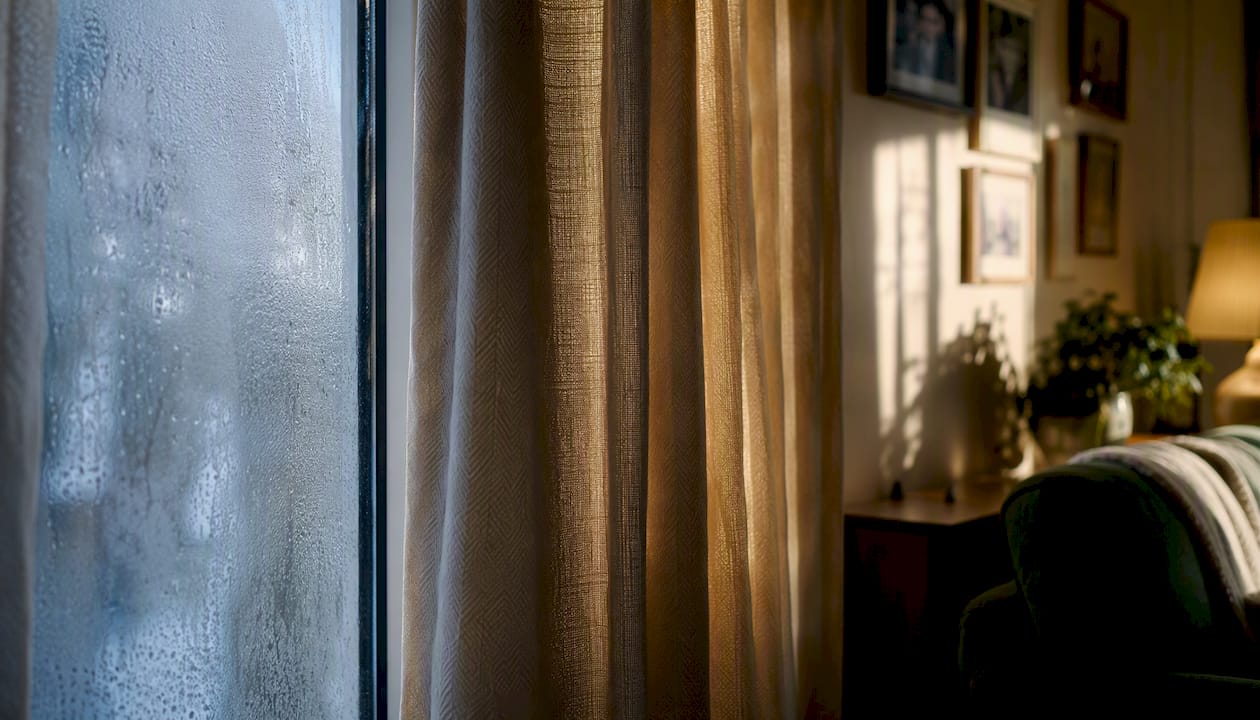
Condensation between the panes of a double-glazed window is the clearest sign of sealed unit failure. This is not surface moisture you can wipe away. It sits permanently inside the sealed insulated glass unit, appearing as a persistent fog, haze, or droplets between the two panes of glass.

The diagnostic test is straightforward. Run a dry cloth across both the inside and outside surfaces of the glass. If the misting remains after wiping, the seal has failed and moisture is trapped within the unit itself. This is a product failure, not a ventilation problem. Opening windows or using a dehumidifier will not resolve it.

Condensation between double-glazed window panes


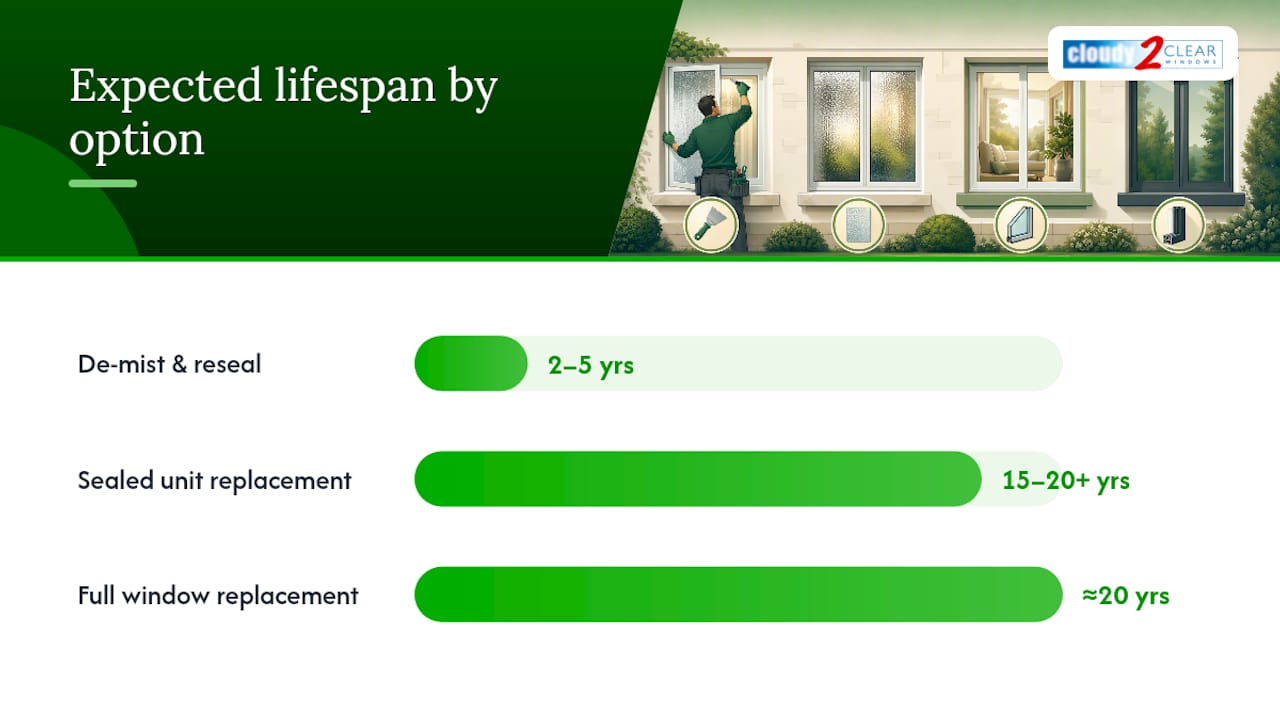
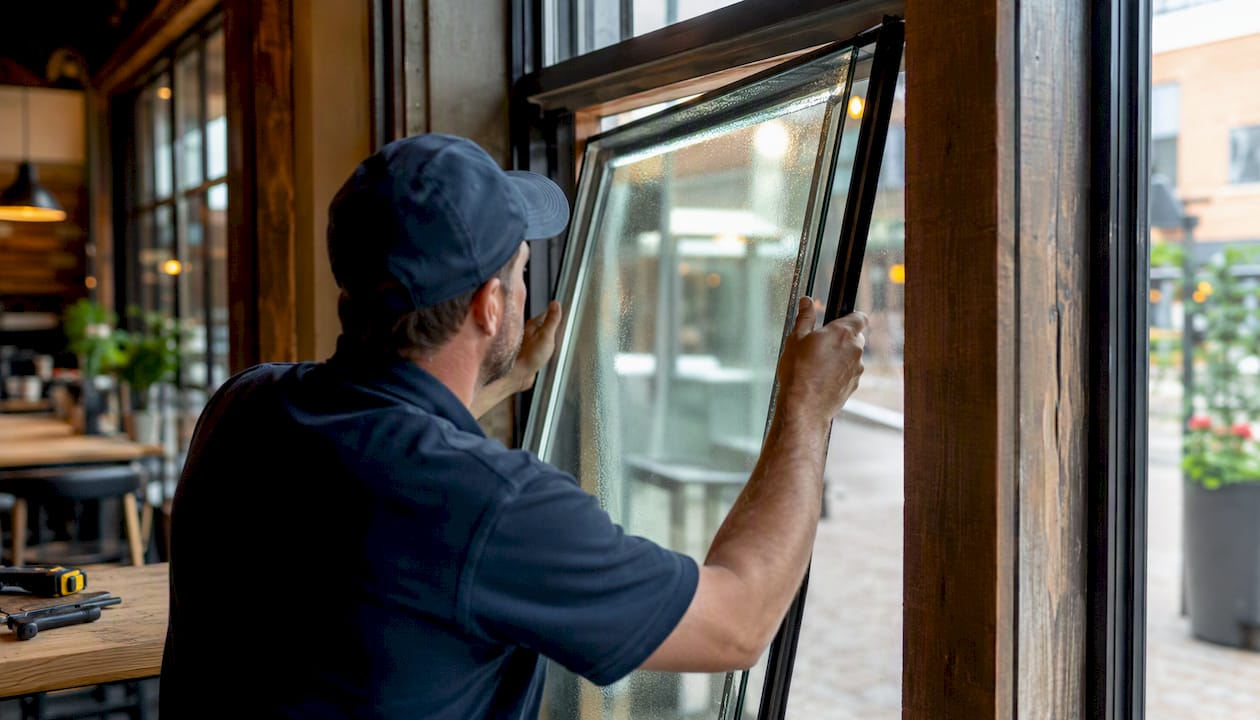
Condensation between panes cannot be fixed by any surface treatment or repair to the existing unit. The sealed glass unit must be replaced entirely to restore insulation and stop moisture ingress. The Glass and Glazing Federation (GGF) and manufacturers such as Dekko confirm this position. Replacing just the sealed unit within an intact frame costs between £150 and £350 per window, which is considerably less than a full window replacement.

Pro Tip: Check your windows on a cold morning when the temperature difference between inside and outside is greatest. Seal failures that are hard to spot in mild weather become obvious when condensation is at its peak.

Signs of seal failure to look for include:

  • Persistent fogging or haze between the panes that does not clear
  • Water droplets or streaks visible inside the sealed unit
  • A white or grey mineral residue left on the inner glass surfaces after moisture evaporates
  • Noticeably colder glass compared to other windows in the same room
  • A visible gap or distortion in the spacer bar running around the edge of the unit

For more detail on diagnosing misty windows, Cloudy2Clear Windows has a dedicated guide covering the full range of causes and remedies.

Are your windows sticking, jamming, or hard to open?

Windows that stick or jam are among the most common window issues reported by homeowners, yet they are frequently misdiagnosed as a dirt problem when the real cause is mechanical or structural. Misalignment, frame swelling due to humidity, and damaged or corroded hardware are the three primary causes.

Diagnosing the fault correctly determines whether you need a simple clean or a hardware replacement. Follow these steps in order:

  1. Inspect the frame visually. Look for warping, bowing, or any visible gap between the frame and the wall. A frame that has moved out of square will cause the sash or casement to bind.
  2. Clean the tracks and hinges. Use a soft brush and a mild detergent to remove dirt, paint flakes, and debris from all moving parts. Lubricate hinges and friction stays with a silicone-based spray.
  3. Test the operation slowly. Open and close the window deliberately, feeling for the exact point where resistance begins. This locates the fault precisely.
  4. Check the hardware condition. Examine hinges, handles, espagnolette locks, and friction stays for corrosion, cracking, or deformation. Damaged hardware often requires direct replacement rather than adjustment.
  5. Assess seasonal behaviour. If the window sticks only in summer or after prolonged rain, timber frame swelling is the likely cause. If it sticks year-round, misalignment or hardware failure is more probable.

Pro Tip: Never force a stiff window open or closed. Forcing it accelerates wear on hinges and locks, and can crack the glass or split the frame. Identify the cause first, then address it.

Worn or broken locking mechanisms also reduce security significantly. Checking window locks during any operational assessment is not optional. A window that closes but does not lock properly is a security risk regardless of its visual condition.

What are the signs of physical damage to frames and glass?

Physical deterioration in window frames and glass is often visible to the naked eye, but the implications of what you see are not always obvious. Knowing what each sign means helps you decide whether a repair will suffice or whether replacement is the right course of action.

Infographic on step-by-step window issue identification

Identifying frame rot and moisture damage

Timber frames are particularly vulnerable to rot when paint or sealant fails and moisture penetrates the wood. Rotting frames show soft, crumbly, or discoloured wood, often with a spongy texture when pressed with a screwdriver. Minor surface rot can be cut back, treated with a wood hardener, filled with an exterior-grade filler, and repainted. Extensive rot that has reached the structural core of the frame requires full frame replacement.

uPVC and aluminium frames do not rot, but they do deteriorate. Look for discolouration, chalking, warping, or cracking along the profile. Yellowing uPVC is a sign of UV degradation and, while cosmetic at first, it indicates the material is becoming brittle.

Recognising glass damage and cracks near windows

Damage type Likely cause Recommended action
Single crack across pane Impact or thermal stress Replace the glass pane promptly
Spider-web cracking Severe impact Replace immediately for safety
Diagonal crack from corner Lintel stress or settlement Inspect structure; replace glass
Chips or edge damage Handling or installation fault Monitor or replace depending on size
Scratches on surface Abrasion Polishing compound or replacement


Diagonal cracks from window corners are a particular concern because they can indicate lintel weakness or differential settlement in the surrounding structure rather than a simple glass fault. Stress concentrates at window corners, and a crack that widens over weeks or months signals active structural movement.

Key signs of physical damage to check during any inspection:

  • Soft, discoloured, or crumbly timber at frame corners and sill joints
  • Visible gaps between the frame and the surrounding masonry or plasterwork
  • Paint that is peeling, blistering, or flaking from the frame surface
  • Cracked or missing external sealant around the frame perimeter
  • Any crack in the glass, regardless of size, in a sealed double-glazed unit

Photographing cracks and monitoring them over four to six weeks is the most reliable way to distinguish stable historic cracking from active movement that needs urgent professional attention.

How do you decide between window repair and replacement?

Once you have identified the fault, the next decision is whether to repair or replace. The answer depends on the severity of the damage, the condition of the surrounding frame, and the age of the window.

Fault type Frame condition Recommended action
Seal failure (misting) Frame sound and square Replace sealed unit only
Seal failure (misting) Frame warped or rotten Full window replacement
Hardware failure Frame sound Replace hardware components
Extensive frame rot Structural compromise Full window replacement
Minor surface rot Localised only Fill, treat, and repaint
Cracked glass (single pane) Frame sound Replace glass pane
Multiple faults combined Any condition Full window replacement


Significant or multiple window faults justify full replacement because the cumulative effect on thermal performance and security outweighs the cost of piecemeal repairs. A window with a failed seal, stiff operation, and deteriorating frame is not worth repairing in stages.

Pro Tip: Before calling a professional, write down every symptom you have noticed and when it first appeared. This saves time during assessment and helps the engineer identify the root cause rather than just the visible symptom.

For guidance on when replacement is the right call, Cloudy2Clear Windows has a dedicated homeowner’s guide covering the key indicators.

What we have learnt from 20 years of window assessments

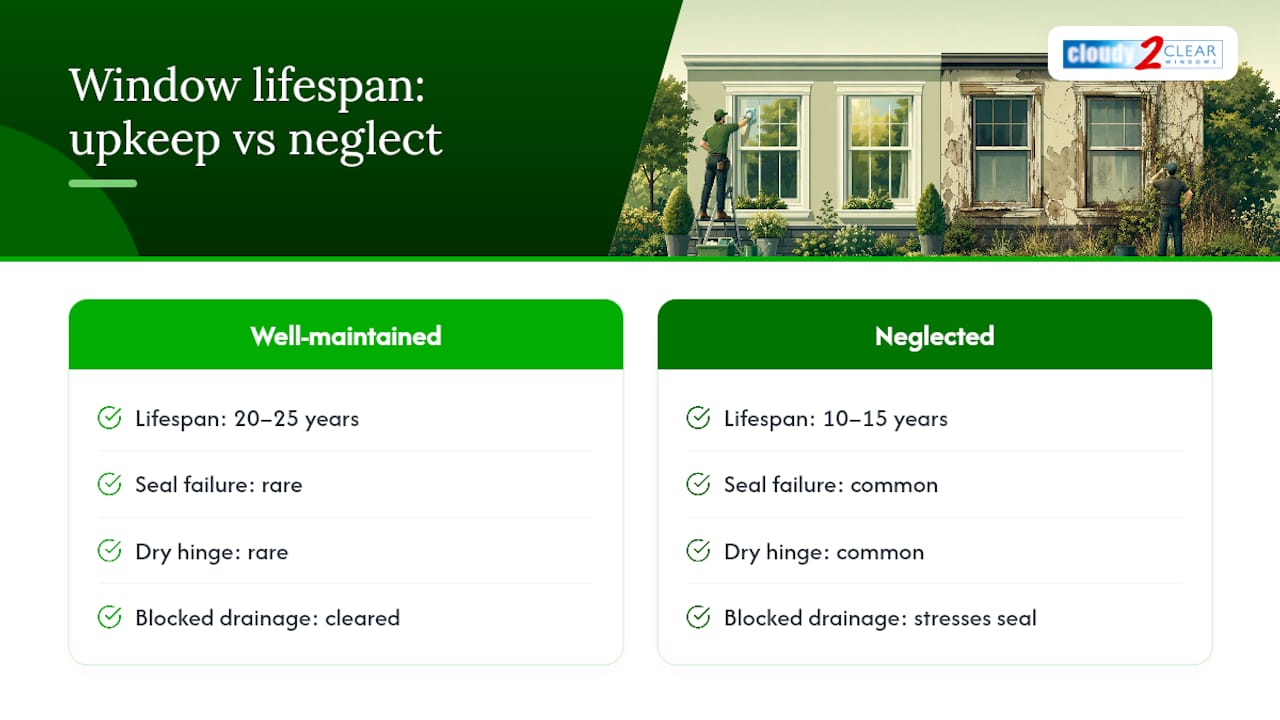
The most consistent mistake we see from homeowners and business owners is treating window faults as cosmetic until they become structural. A failed seal gets ignored because the window still opens. A stiff handle gets forced rather than inspected. Surface rot gets painted over rather than treated.

The second most common mistake is assuming that condensation between the panes is caused by poor ventilation inside the property. We have visited properties where owners have installed extractor fans, bought dehumidifiers, and redecorated, all because they believed the misting was their fault. It is not. Seal failure is a product fault, and no amount of ventilation will resolve it.

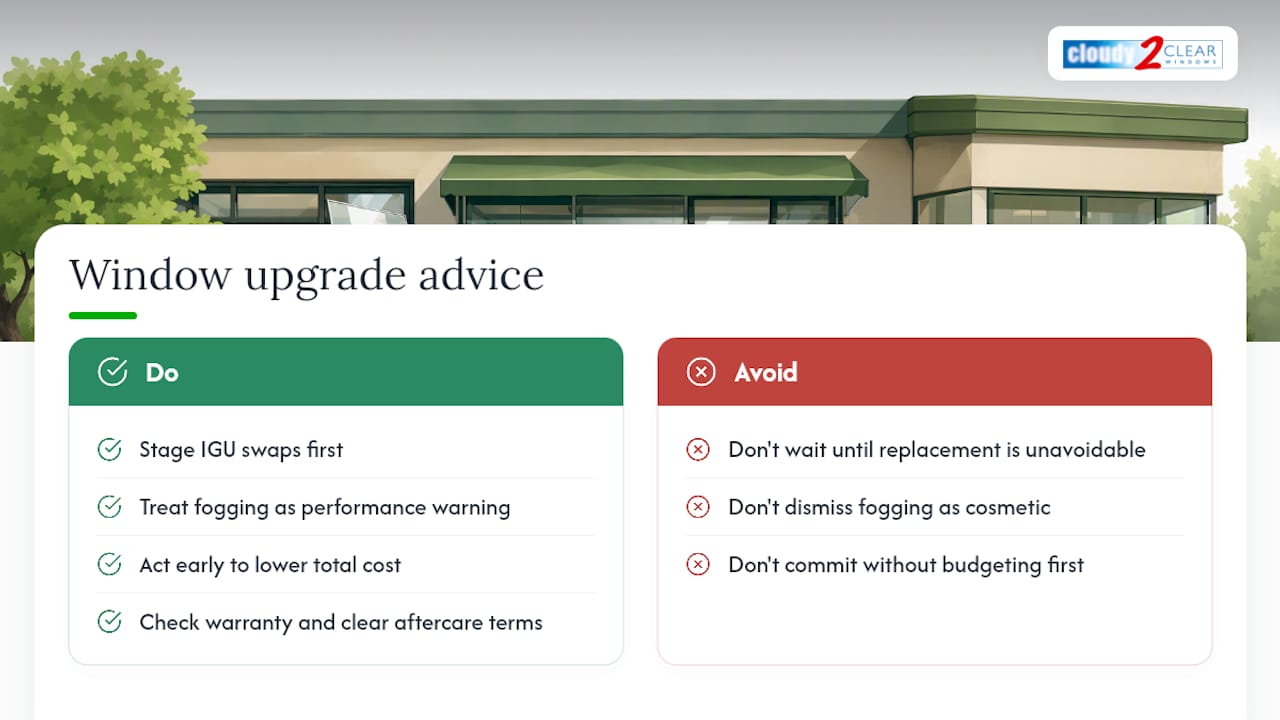
What we have found genuinely useful over the years is a simple seasonal inspection routine. Walk around your property twice a year, once in autumn before the cold sets in and once in spring after the wet months. Look at every window from the outside and the inside. Check the sealant lines, the frame condition, the glass clarity, and the hardware operation. The faults that cost the most to fix are always the ones that were visible months or years before anyone acted on them. Early identification is not just good maintenance practice. It is the difference between a £200 sealed unit replacement and a £1,500 full window installation.

— Cloudy2Clear Windows

Get expert help from Cloudy2Clear Windows

If your inspection has revealed signs of seal failure, frame damage, or operational faults, Cloudy2Clear Windows can assess and resolve them quickly.

https://www.cloudy2clearwindows.co.uk


Cloudy2Clear Windows has been repairing and replacing double-glazed windows across the UK since 2005, serving both homeowners and commercial properties. Whether you need a sealed unit replacement or a full window assessment, our local engineers cover areas including Milton Keynes, Watford, Oxford, and Leicester. Contact your nearest branch for a no-obligation assessment and get the right fix, at the right price, from a team with two decades of experience behind them.

FAQ

What is the quickest way to check for a failed window seal?

Run a dry cloth across both surfaces of the glass. If the misting or fogging remains after wiping, the seal has failed and the insulated glass unit needs replacing.

Can a sticking window be fixed without replacing it?

In most cases, yes. Cleaning the tracks, lubricating the hinges, and adjusting or replacing the hardware resolves the majority of operational faults without needing a new window.

How do I know if a crack near my window is structural?

Photograph the crack and monitor it over four to six weeks. A crack that widens or extends, particularly a diagonal crack from a window corner, may indicate lintel stress or settlement and requires a structural assessment.

Is condensation between window panes my fault?

No. Condensation trapped between the panes of a double-glazed unit is a sign of seal failure within the window itself. It cannot be resolved through ventilation or heating and requires sealed unit replacement.

When does a window need full replacement rather than repair?

Full replacement is the right choice when the frame is structurally compromised, when multiple faults are present at the same time, or when the window is old enough that repair costs approach the price of a new installation.

Why window hardware matters for UK homes and businesses

Window hardware is the collection of components, including handles, locks, hinges, and compression seals, that enables your windows to open, close, seal, and secure properly. Understanding why window hardware matters is the difference between a window that performs as intended for decades and one that quietly drains your energy budget and compromises your security. The hardware on your windows is not decorative. It is functional, and when it fails, everything from your heating bills to your peace of mind suffers. Brands such as Amesbury Truth produce hardware specifically engineered to maintain sealing pressure and locking integrity over thousands of operating cycles.

Why window hardware matters for energy efficiency

Windows account for 25% to 30% of residential heating and cooling energy use, making the components that maintain sealing pressure and locking compression critical to your energy bills. That figure means a poorly sealed window is not a minor inconvenience. It is a measurable, ongoing cost.

Hardware directly controls how tightly your window closes. Compression seals, hinges, and locking points work together to press the frame against the weatherstripping and hold it there. When any one of these components wears, corrodes, or distorts, the seal weakens. Poor compression seals and distorted hinges can make a window’s rated energy performance irrelevant by allowing drafts to bypass even high-quality double glazing. In practical terms, you could have an A-rated window unit that still lets cold air in because the hardware no longer pulls the sash tight.

Close-up of window multi-point locking hardware


The ENERGY STAR programme in the United States and equivalent UK Building Regulations Part L both set performance thresholds that assume hardware is functioning correctly. If your locks no longer engage fully or your hinges have developed play, your window is no longer performing to the standard it was installed to meet. Our guide to energy efficient window upgrades explains how hardware improvements sit alongside glazing choices in reducing heat loss.

Pro Tip: If you notice a cold draught near a closed window, check the locking points before assuming the glazing unit has failed. Tightening or replacing the lock mechanism often resolves the issue at a fraction of the cost of a full replacement.

What are the security benefits of high-quality window hardware?

Window hardware is your first physical line of defence against intrusion. Locks, hinges, bolts, and multi-point locking systems all contribute to how difficult it is to force a window open from the outside. The quality of that hardware, not just its presence, determines how effective that defence actually is.

Hardware is graded by cycle performance. Grade 1 hardware supports 800,000 operating cycles compared to 400,000 for Grade 2. For a domestic property, Grade 2 may be adequate. For a commercial building with high footfall or windows that are opened and closed multiple times daily, Grade 1 is the correct specification. Choosing the lower grade to save money upfront leads to premature failure and higher long-term costs.

The table below compares the two grades across the factors most relevant to UK homeowners and business owners.

Factor Grade 1 hardware Grade 2 hardware
Cycle rating 800,000 cycles 400,000 cycles
Best suited to Commercial, high-traffic Domestic, low-traffic
Long-term cost Lower (fewer replacements) Higher (earlier failure)
Security performance Higher resistance to force Adequate for standard use
Typical application Offices, retail, schools Houses, flats


Infographic comparing Grade 1 and Grade 2 window hardware

Security hardware also needs to balance safety with usability. Windows in bedrooms and upper floors must be openable from the inside in an emergency, so hardware that locks securely from the outside but releases quickly from the inside is a legal and practical requirement. Restrictors and egress hinges serve this dual purpose and are worth specifying when you are choosing hardware for any sleeping area.

Pro Tip: When replacing window locks, check that the new lock engages fully with the existing keep or striker plate. A lock that does not seat correctly offers little more resistance than no lock at all.

Which maintenance mistakes damage window hardware most?

The most common maintenance mistake is reaching for a can of WD-40. Oil-based lubricants attract dirt, which builds up inside hinges and gearboxes and accelerates wear rather than preventing it. Silicone-based lubricants are the industry standard for window hardware in the UK, resisting grime and performing reliably through cold, damp winters. Graphite powder is the correct choice for lock cylinders where liquid lubricants can cause sticking.

Beyond lubrication, these are the maintenance errors that cause the most damage over time:

  • Ignoring early warning signs. Visible corrosion, loose locks, and difficulty operating windows are signals of failing hardware. Catching these early prevents energy loss and security risks from developing.
  • Replacing one part without assessing the system. Hardware failure is often misdiagnosed by swapping a single component without checking whether the frame or track is also damaged. A new handle fitted to a distorted frame will fail again quickly.
  • Skipping seasonal checks. Hinges and seals expand and contract with temperature changes. A window that closes perfectly in summer may not seal in winter if the hardware has not been inspected and adjusted.
  • Using the wrong replacement parts. Fitting a handle or gearbox that is not matched to the original specification changes the load on surrounding components and can cause premature failure elsewhere in the system.

Our article on common window and door faults covers the early signs of hardware deterioration in more detail, including what to look for during a seasonal inspection.

Pro Tip: Twice a year, in spring and autumn, wipe down all exposed hardware with a dry cloth, apply silicone lubricant to hinges and friction stays, and test every lock point for full engagement. This takes under ten minutes per window and extends hardware life significantly.

How to choose window hardware that matches your window type

Choosing window hardware is not simply a matter of finding something that fits. The hardware must be matched to the window style, the weight of the sash or panel, the frequency of use, and the security level required. Getting this wrong means the hardware either fails early or never performs correctly from the start.

The table below outlines the key hardware considerations by window type.

Window type Key hardware required Weight consideration Security priority
Casement Friction stays, espagnolette locks Medium Multi-point locking
Sash (vertical sliding) Sash balances, sash locks High Dual sash locks
Tilt and turn Tilt and turn handles, multi-point locks Medium to high Full perimeter locking
Sliding Sliding locks, anti-lift blocks Low to medium Anti-lift and deadbolts
Fixed light Restrictors only N/A Frame fixings


Hardware interfaces, such as the handle-to-gearbox fit and the lock-to-keeper engagement, determine sealing and mechanical function more than individual parts alone. This means buying a high-quality handle and pairing it with a mismatched gearbox produces a system that underperforms. Always assess the full hardware chain before purchasing any single component.

For traditional properties with timber sash windows, matching the original hardware style is not just an aesthetic choice. Original hardware dimensions and fixing patterns are often specific to the window frame, and fitting modern equivalents without checking compatibility can cause frame damage. A well-designed multi-point lock with proper engagement consistently outperforms more complex systems that bind or require excessive force to operate. Simplicity and fit matter more than specification on paper.

Selecting hardware based on lifecycle cost rather than unit price is the most reliable approach for both homeowners and commercial property managers. A component that costs twice as much but lasts three times longer, with no mid-cycle failures, is the better investment by any measure.

What we have learned from 20 years of window hardware repairs

After two decades of repairing and replacing window hardware across homes and commercial buildings throughout the UK, the pattern we see most often is this: the hardware was never the priority. Homeowners invest in new glazing, new frames, even new window boards, but the locks, hinges, and seals are left as they are. Then, two or three years later, the window starts to feel draughty, the lock is stiff, and the energy savings they expected never materialised.

The uncomfortable truth is that a well-glazed window with failing hardware performs worse in real-world conditions than a modest window with hardware that is correctly specified and properly maintained. We have seen A-rated double glazed units in properties where the hinges had so much play that the sash was visibly rocking in the frame. The glass was fine. The hardware was not.

Our advice, based on what we see every week, is to treat hardware as part of the window system, not an afterthought. Before you decide that a window needs replacing, have the hardware assessed. In many cases, a lock mechanism, a set of friction stays, or a new compression seal is all that stands between a window that works and one that does not. Knowing how to spot signs of window damage early gives you the information to make that call before the problem becomes expensive.

— Cloudy2Clear Windows

How Cloudy2Clear Windows can help with your window hardware

https://www.cloudy2clearwindows.co.uk


Cloudy2Clear Windows has been repairing and upgrading window hardware across the UK since 2005, working with both homeowners and commercial property managers. Whether your locks are stiff, your hinges have developed play, or your windows are no longer sealing as they should, our experienced technicians assess the full hardware system before recommending any work. We cover a wide range of locations, including double glazing repairs in Milton Keynes, Oxford, Leicester, and many more. For businesses, our commercial window repair service covers hardware upgrades that meet security and energy performance requirements. Our lock, hinge, and handle repair service is the practical next step if your windows are showing any of the signs discussed in this article.

FAQ

What does window hardware actually include?

Window hardware includes handles, locks, hinges, friction stays, compression seals, espagnolette gearboxes, and keeps. These components work together to enable a window to open, close, seal, and lock correctly.

How does window hardware affect my energy bills?

Windows account for 25% to 30% of residential heating and cooling energy use, and hardware that fails to maintain sealing pressure allows drafts to bypass even high-quality glazing. Replacing worn locks and hinges is often the most cost-effective way to restore a window’s thermal performance.

How often should window hardware be serviced?

Window hardware should be inspected and lubricated twice a year, ideally in spring and autumn. Use silicone-based lubricants on hinges and stays, and graphite powder for lock cylinders.

When should I replace rather than repair window hardware?

Visible corrosion, locks that no longer engage fully, and windows that are difficult to operate are all signs that hardware needs attention. If frame or track damage is also present, a full system assessment is needed before replacing individual parts.

Is Grade 1 or Grade 2 hardware better for my home?

Grade 2 hardware is adequate for most domestic properties with standard usage. Grade 1 hardware, rated to 800,000 operating cycles, is the correct specification for commercial buildings or any window subject to frequent daily use.

Best window types for Scotland: 2026 energy guide

The best window types for Scotland are those that meet the whole-window U-value of 1.6 W/m²K or lower, as required by Scottish Building Standards Section 6 from October 2026. This figure is not just a regulatory box to tick. It directly determines how much heat your home retains through a Scottish winter, and how much you spend on energy bills each year. Whether you are replacing windows in a Victorian tenement in Glasgow or building a new home in the Highlands, the right combination of style, frame material, and glazing is what separates a compliant, comfortable property from one that leaks heat and money.

What are the Scottish Building Standards for window energy efficiency?

A U-value measures how quickly heat passes through a material. The lower the number, the better the insulation. From October 2026, replacement windows must achieve a whole-window U-value of 1.6 W/m²K or lower across all existing homes in Scotland. This is a stricter threshold than the rest of the UK, and it reflects Scotland’s colder, wetter climate.

The critical word here is whole-window. Many manufacturers advertise centre-pane U-values, which measure only the glass at its thickest insulating point. The whole-window value includes the frame, spacer bars, and edge-of-glass zones, all of which perform worse than the centre pane. A window that looks impressive on a product sheet can still fail compliance if the frame drags the overall figure above 1.6. Certified whole-window U-values must be supplied by UKAS-accredited test laboratories or recognised certification bodies at the point of installation.

The financial case for meeting this standard is straightforward. Replacing single glazing with compliant double glazing can reduce heat loss by 60% and save between £195 and £285 annually on energy bills. That saving compounds over the lifetime of the window, making the investment in quality glazing a sound long-term decision for any Scottish homeowner.

Pro Tip: Ask your installer for the certified whole-window U-value documentation before work begins, not after. Building control in Scotland requires this at the point of installation, and retrofitting paperwork is far more difficult than requesting it upfront.

U-value (W/m²K) Performance level Typical glazing type
Above 5.0 Very poor Single glazing
2.8 Below standard Basic double glazing
1.6 Scottish minimum (2026) Quality double glazing
1.2 or below High performance Triple glazing

How do different window styles perform in Scotland’s climate?

Window styles for Scottish climate conditions include tilt-and-turn, casement, sash, bay, and bow designs, each with distinct advantages depending on your property type and priorities. Style influences ventilation, cleaning access, security, and how well the window integrates with your building’s character. It does not, on its own, determine energy performance. That comes from the glazing and frame combination. However, certain styles lend themselves more naturally to high-performance installations.

Here is how the main options compare for Scottish homes:

  • Tilt-and-turn windows are the standout choice for energy efficiency and practicality. They open inward in two modes: tilting at the top for ventilation without full opening, and turning fully inward for easy cleaning. Their multi-point locking systems create an exceptionally airtight seal, which is critical in Scotland’s wind-driven rain. Large-scale retrofit programmes in Glasgow have standardised on PVCu tilt-and-turn windows precisely because they combine performance, security, and ease of installation at scale.
  • Casement windows are the most common window style in Scotland and across the UK. They are hinged at the side and open outward, offering good ventilation and a clean, versatile appearance. Modern casement windows with quality frames and warm-edge spacer bars consistently achieve whole-window U-values well below 1.6, making them a reliable choice for both new builds and replacements.
  • Sash windows are the defining feature of many Scottish Georgian and Victorian properties. Traditional single-glazed sash windows are among the worst performers for heat retention, but sash designs preserve heritage appearance while accepting double-glazed units in slimline profiles. Slim-profile double-glazed sash windows can meet the 1.6 U-value requirement while keeping the character of a period property intact.
  • Bay and bow windows project outward from the wall and are popular in traditional Scottish homes. They are more complex to install and seal correctly, which makes airtightness harder to achieve. With careful installation and quality frames, they can meet standards, but they require more attention during specification.

Comparing frame materials for Scottish homes

The frame is not a passive component. It contributes directly to the whole-window U-value and determines how your windows hold up against Scotland’s persistent damp, wind, and temperature swings. The three main frame materials in Scotland are PVCu, timber, and aluminium.

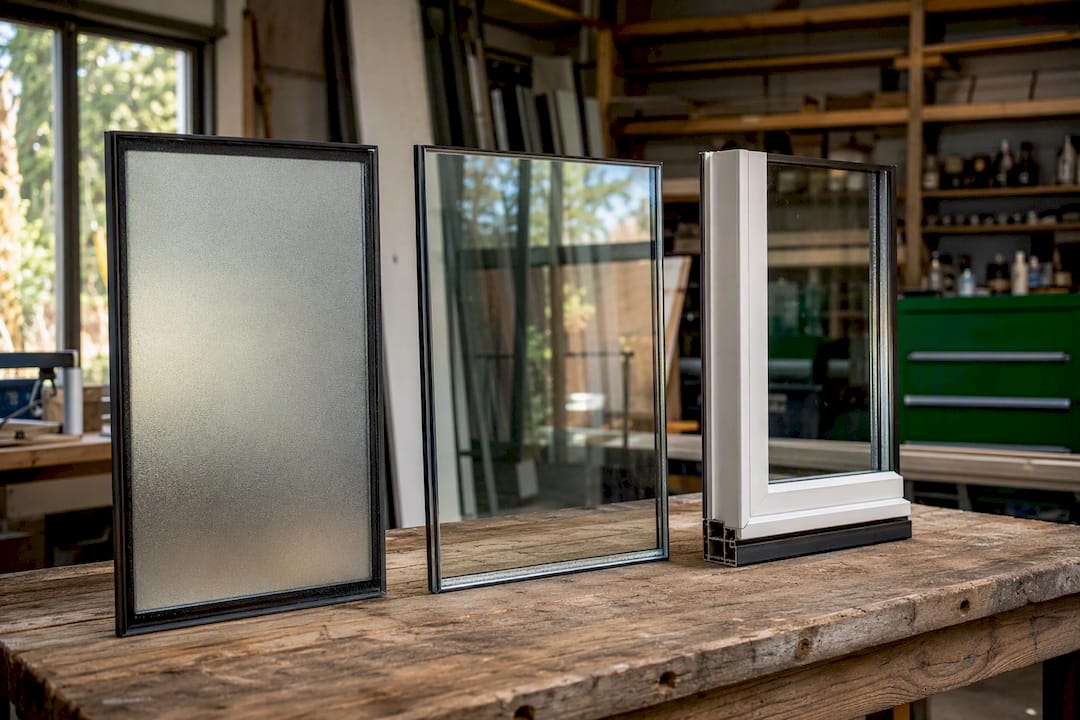
Three window frames: PVCu, timber, aluminium side by side


Frame material Thermal performance Maintenance Typical lifespan Best suited for
PVCu Excellent Very low 20–35 years Modern homes, retrofits
Timber Good (with treatment) High 30–60 years Heritage and period properties
Aluminium Moderate (needs thermal break) Low 30–45 years Contemporary and commercial builds


PVCu is the most widely used frame material in Scotland for good reason. It is inherently resistant to moisture, does not rot or warp, and requires no painting or sealing. Multi-chambered PVCu profiles trap air within the frame itself, adding to the overall insulation value. Steel reinforcement inside PVCu frames, as used in the Glasgow Whiteinch and Scotstoun retrofit programme, adds structural rigidity without compromising thermal performance. For most Scottish homeowners replacing windows in a standard property, PVCu delivers the best balance of cost, performance, and longevity.

Infographic comparing window frame materials with features

Timber frames offer natural insulating properties and the traditional aesthetic that many Scottish period properties demand. The challenge is maintenance. Untreated or poorly maintained timber absorbs moisture, swells, and eventually rots, which is a significant risk in Scotland’s wet climate. Engineered timber and factory-applied finishes have improved durability considerably, but timber frames still require periodic repainting or re-staining. For listed buildings or conservation areas where PVCu is not permitted, high-quality timber with double glazing remains the correct solution. You can explore window frame performance factors in more detail to understand how each material affects your overall U-value.

Aluminium frames are slim, strong, and visually striking. Their weakness is thermal conductivity. Metal transfers heat rapidly, which means aluminium frames without a thermal break perform poorly in cold climates. Modern aluminium windows use a polyamide thermal break within the frame to interrupt this heat transfer. When specified correctly, thermally broken aluminium can meet the 1.6 U-value requirement, but it typically costs more than PVCu for equivalent performance.

Pro Tip: If you are working on a property in a conservation area, check with your local planning authority before specifying any frame material. Some areas in Edinburgh and Glasgow have specific requirements that restrict PVCu entirely.

Key installation and practical considerations

Choosing the right window is only part of the process. How it is installed determines whether it performs as specified. A window with a certified U-value of 1.4 installed poorly can perform worse in practice than a 1.6-rated window fitted with care.

  1. Request certified U-value documentation. Compliance demonstration requires certified whole-window U-values from UKAS-accredited laboratories. Do not accept centre-pane values or manufacturer estimates as substitutes. If a supplier cannot provide this documentation, choose a different supplier.
  2. Specify trickle vents. Airtight windows reduce draughts but also reduce background ventilation. High airtightness without ventilation increases condensation risk and degrades indoor air quality. Trickle vents, fitted into the frame head, allow controlled background airflow without compromising thermal performance. Scottish Building Standards require them in most replacement window scenarios.
  3. Check installer certification. Look for installers registered with CERTASS or FENSA. Registered installers can self-certify compliance with building regulations, which simplifies the process and provides you with a certificate of compliance at completion.
  4. Consider the whole opening, not just the glass. Thermal bridging around the window reveal, poor cavity closers, and inadequate sealing at the frame perimeter all undermine the performance of even the best window. A quality energy-efficient window upgrade addresses the full installation, not just the glazed unit.
  5. Plan for large-scale projects carefully. The Whiteinch and Scotstoun programme in Glasgow installed 890 windows across 124 properties within 16 weeks, valued at £723,000. That scale was only achievable by standardising on a single window style and frame specification. If you are managing a block or estate retrofit, standardisation reduces procurement complexity and quality control risk significantly.

What we have learned from two decades of Scottish window installations

After nearly 20 years of installing and replacing windows across Scotland, the pattern we see most often is this: homeowners focus on the glass and overlook the frame. They compare glazing specifications in detail, then accept whatever frame the installer recommends without question. That is the wrong order of priorities.

The whole-window U-value is a system measurement. A high-performance triple-glazed unit fitted in a poorly insulated aluminium frame without a thermal break will not meet 1.6. A well-specified PVCu casement with quality warm-edge spacers will. The frame is not a secondary consideration. It is half the equation.

We also see the heritage versus efficiency tension play out regularly in Edinburgh’s New Town and Glasgow’s West End. The instinct is to preserve original sash windows at all costs. Our experience is that slim-profile double-glazed sash replacements, fitted by a skilled installer, are virtually indistinguishable from the originals at street level and deliver a genuine improvement in comfort. The conversation with planning authorities is worth having before you assume PVCu or modern glazing is off the table.

One more observation: ventilation planning is consistently underestimated. We have visited properties where new, well-specified windows have been installed without trickle vents, and within 18 months the owners are dealing with condensation on walls and ceilings. Airtight windows are not a problem. Airtight windows without a ventilation strategy are.

— Cloudy2Clear Windows

How Cloudy2Clear Windows can help with your Scottish window upgrade

If you are ready to replace your windows and want products that meet Scotland’s 2026 Building Standards without the guesswork, Cloudy2Clear Windows is here to help.

https://www.cloudy2clearwindows.co.uk


Cloudy2Clear Windows has been installing and replacing double-glazed windows across Scotland since 2005. Every product we supply comes with certified whole-window U-value documentation, and our installations are carried out to meet Scottish Building Standards Section 6. Whether you need a single window replaced or a full property upgrade, our team covers Glasgow, Ayr, and the surrounding areas. Visit our Glasgow and Ayr branch to find your local team and get started with a no-obligation assessment. You can also read more about energy saving windows to understand exactly what to expect from a compliant installation.

FAQ

What U-value do replacement windows need in Scotland?

From October 2026, replacement windows in Scotland must achieve a whole-window U-value of 1.6 W/m²K or lower under Scottish Building Standards Section 6. This applies to the full window system, including frame and glass, not just the centre pane.

Which window frame material is best for Scotland’s climate?

PVCu is the most practical choice for most Scottish homes, offering low maintenance, good thermal performance, and strong resistance to moisture. Timber suits heritage properties but requires regular upkeep in Scotland’s wet conditions.

Do tilt-and-turn windows meet Scottish Building Standards?

Yes. PVCu tilt-and-turn windows with quality glazing and steel reinforcement consistently meet the 1.6 W/m²K requirement and are widely used in Scottish retrofit programmes, including large-scale social housing projects in Glasgow.

Are trickle vents required in replacement windows in Scotland?

Scottish Building Standards require trickle vents in most replacement window installations to maintain background ventilation. Without them, airtight windows can cause condensation and poor indoor air quality.

Can sash windows meet the 2026 energy standards in Scotland?

Yes. Slim-profile double-glazed sash windows can achieve whole-window U-values at or below 1.6 W/m²K, making them a viable option for period properties in conservation areas where traditional aesthetics must be preserved.

Why invest in energy efficient windows: UK guide

Energy efficient windows are defined as glazing systems engineered to minimise heat transfer, reduce air infiltration, and lower the energy demand of a building. For UK home and business owners, the question of why invest in energy efficient windows has a clear answer: reduced energy bills, improved comfort, and a measurable boost to property value. ENERGY STAR-certified windows save homeowners up to 13% on energy bills compared to single-pane alternatives. The UK assesses window performance through Window Energy Ratings (WER) and U-values, both of which account for the whole window, including frame and seals.

Why invest in energy efficient windows: how they reduce heat loss

Understanding how these windows actually work helps you appreciate the value they deliver. The performance gains come from several technologies working together, not from any single feature.

  1. Multi-pane glazing and gas fills. Double and triple glazed units trap air or inert gas between panes, creating a thermal barrier. Argon and krypton gas fills significantly reduce heat transfer through glazing, with argon being the more cost-effective choice and krypton offering superior performance in thinner profiles.
  2. Low-emissivity coatings. A low-e coating is a microscopically thin metallic layer applied to the glass surface. Low-e coatings reduce heat transfer by 30% to 50%, reflecting radiant heat back into the room during winter while limiting solar heat gain in summer.
  3. Insulated and thermally broken frames. The frame contributes significantly to overall window performance. Wood, uPVC, composite, and fibreglass frames all offer better thermal resistance than standard aluminium. Thermally broken frames include a non-conductive barrier that interrupts the path heat takes through the frame material.
  4. Warm edge spacers. The spacer bar separating the panes is often overlooked. Warm edge spacers minimise condensation and enhance thermal performance at the glass edges, reducing cold spots that cause discomfort near windows.
  5. Air leakage control. Windows and doors account for approximately 20% of household air infiltration. Reducing this leakage means your heating system works less hard, which cuts both energy use and wear on the equipment.

In the UK, performance is measured using WER bands and U-values, which range from A++ down to G and factor in heat transfer, solar gain, and air leakage across the whole window unit. A window rated A or above is the minimum worth specifying for a meaningful upgrade.

Pro Tip: When comparing quotes, always ask for the whole-window U-value rather than the centre-pane figure. The centre-pane value is consistently better and does not reflect real-world performance.

Comparison of double and triple glazing window panes

Double vs triple glazing: which is right for your property?

Choosing the right window type depends on your climate, budget, and building type. The table below compares the most common options available to UK buyers.

Infographic showing key benefits of energy efficient windows


Feature Double glazing Triple glazing uPVC frame Timber frame Composite frame
Typical U-value 1.2 to 1.6 W/m²K 0.6 to 0.8 W/m²K Good Very good Excellent
Cost Lower Higher Lower Higher Higher
Weight Moderate Heavy Light Moderate Moderate
Maintenance Low Low Very low Higher Low
Best for Most UK homes Cold or exposed locations Budget upgrades Heritage properties Commercial use


Triple glazing delivers the lowest U-values and is worth considering for properties in exposed northern locations or those with large glazed areas. For most UK homes, high-specification double glazing with argon fill and a low-e coating achieves a strong balance of performance and cost.

Frame material matters as much as the glass itself. Key considerations include:

  • uPVC offers excellent thermal performance, low maintenance, and competitive pricing, making it the most popular choice in the UK residential market.
  • Timber suits period properties and offers good insulation, but requires regular painting or staining to maintain performance.
  • Composite and fibreglass frames provide the best long-term thermal stability and are increasingly specified for commercial projects.
  • Casement and awning windows seal more tightly than sliding types. Sliding windows generally have higher air leakage rates due to their sealing mechanics, which reduces overall efficiency.

The Solar Heat Gain Coefficient (SHGC) is worth understanding if your property has south-facing glazing. A lower SHGC limits solar heat entering the building, which reduces cooling loads in summer. A higher SHGC is preferable for north-facing rooms where passive solar gain helps offset heating costs in winter.

What are the financial and environmental benefits of upgrading windows?

The advantages of energy efficient windows extend well beyond lower energy bills, though the bill savings alone justify the investment for most UK properties.

The financial case is straightforward. ENERGY STAR-certified replacement windows deliver up to 13% savings on energy bills, with the benefit felt immediately in the first heating season. Homeowners also recoup around 60 to 70% of window upgrade costs on resale, alongside improved kerb appeal and a stronger Energy Performance Certificate (EPC) rating. A better EPC rating directly affects the marketability and rental eligibility of a property, particularly as minimum EPC standards for rental properties tighten.

Comfort improvements are equally significant. Many owners find that eliminating drafts and temperature swings is the benefit they notice first, before any bill reduction appears. Cold spots near windows disappear, condensation reduces, and rooms feel consistently warmer without the heating running at full capacity.

The environmental case is also compelling. Reducing your heating demand directly cuts your property’s carbon footprint. For businesses, this contributes to sustainability reporting and can support compliance with corporate environmental targets. You can read more about energy saving window benefits on the Cloudy2Clear Windows website.

Pro Tip: Do not expect to recoup the full investment through energy savings alone within five years. The real return combines bill savings, comfort gains, reduced HVAC maintenance costs, and the uplift to your property’s sale or rental value.

UK regulations and funding schemes for window upgrades

The UK has a clear regulatory framework governing window performance, and several funding routes exist to reduce the upfront cost of upgrading.

  1. Approved Document L sets the minimum thermal performance standards for replacement windows in England. Any replacement window must meet or exceed a WER of Band C or a U-value of 1.4 W/m²K. Fitting below this standard without planning permission is non-compliant.
  2. EPC implications. Upgrading from single glazing or poor-quality double glazing to A-rated windows can improve your EPC by one or two bands. This matters for landlords facing minimum EPC requirements and for homeowners planning to sell.
  3. ECO4 scheme. ECO4 grants cover window replacement only as part of a whole-house retrofit package, typically combined with insulation and boiler upgrades. Standalone window funding under ECO4 is not available. The scheme targets households in fuel poverty and requires TrustMark-registered installers.
  4. HUG2 and GBIS. The Home Upgrade Grant (HUG2) and Great British Insulation Scheme (GBIS) follow similar composite package rules. Windows are funded as part of a broader improvement plan rather than in isolation.
  5. Sequencing your retrofit. Installing insulation before window upgrades maximises grant eligibility and overall efficiency gains. Replacing windows before other fabric measures can block EPC improvement thresholds required for funding, so the order of works matters.

Pro Tip: Always confirm your installer holds TrustMark registration before signing any contract linked to a government funding scheme. Without it, your installation will not qualify for ECO4, HUG2, or GBIS support.

You can find detailed guidance on UK building regulations compliance for windows on the Cloudy2Clear Windows website.

How to choose an installer and plan your window upgrade

The quality of installation determines whether your windows perform as specified. A well-made window fitted poorly will underperform a mid-range window fitted correctly.

  • Get at least three written quotes. Compare whole-window U-values, WER ratings, frame materials, and warranty terms, not just price. A lower quote that omits warm edge spacers or uses a lower-rated gas fill is not a saving.
  • Check warranties carefully. A reputable installer will offer a minimum ten-year guarantee on sealed units and a separate guarantee on installation workmanship. Confirm what happens if a seal fails within the warranty period.
  • Replace all windows at once where possible. Replacing windows in phases costs more overall due to repeat scaffolding, survey, and call-out charges. A full replacement also delivers a consistent aesthetic and a single, stronger EPC improvement.
  • Consider frame maintenance requirements. uPVC requires only occasional cleaning. Timber frames need repainting every five to seven years to maintain their weather seal. Factor this into your total cost of ownership.
  • Verify proper installation techniques are used. Correct seals, flashing, and weatherstripping prevent drafts and preserve the window’s energy performance. Incorrect installation can puncture sealed units and cause air leakage that negates the thermal upgrade entirely.

For a practical overview of the upgrade process, the Cloudy2Clear Windows guide on energy efficient window upgrades covers each stage from survey to completion.

Our view on investing in energy efficient windows

After nearly two decades of installing and repairing double glazed windows across the UK, we have seen a consistent pattern. Homeowners who focus only on payback period through energy savings alone often underestimate the full return. The comfort improvement is immediate and tangible. The reduction in HVAC wear is real but invisible until a boiler or heat pump lasts two or three years longer than expected. The property value uplift only becomes visible at sale or remortgage.

The misconception we encounter most often is that energy efficient windows are only worth it if energy prices stay high. That is the wrong frame for the decision. A well-specified, properly installed window will perform for 20 to 25 years. Over that period, the combination of bill savings, comfort, reduced maintenance, and property value makes the investment straightforward for the vast majority of UK properties.

We also see owners make the mistake of upgrading windows before addressing loft or cavity wall insulation. If you are eligible for ECO4 or GBIS funding, sequence your retrofit correctly. Insulation first, then windows. You will access more funding and achieve a better overall result.

The right window for your property depends on orientation, exposure, frame type, and budget. There is no single answer, but there is always a right answer for your specific situation. That is where experience matters.

— Cloudy2Clear Windows

Upgrade your windows with Cloudy2Clear Windows

Cloudy2Clear Windows has been installing, replacing, and repairing double glazed windows across the UK since 2005, serving both residential and commercial customers.

https://www.cloudy2clearwindows.co.uk


Whether you need a full window replacement programme for a commercial property or a single unit repaired in a family home, Cloudy2Clear Windows provides certified products, experienced installation teams, and honest advice tailored to your building and budget. Our double glazing replacement service covers everything from survey to completion, with products rated to meet or exceed UK building regulations. If you are based in the Milton Keynes area, our local glazing team is ready to assess your property and provide a no-obligation quote.

FAQ

What makes a window energy efficient?

An energy efficient window uses multi-pane glazing, inert gas fills such as argon or krypton, low-emissivity coatings, and insulated frames to reduce heat transfer and air leakage. In the UK, performance is measured by WER band and U-value, with A-rated windows or a U-value of 1.4 W/m²K or better required for compliance under Approved Document L.

Are energy efficient windows worth the investment?

Yes. ENERGY STAR-equivalent windows save up to 13% on energy bills and homeowners typically recoup 60 to 70% of the upgrade cost on resale, alongside immediate comfort improvements and a stronger EPC rating.

Can I get a grant for energy efficient windows in the UK?

Window replacement is funded under ECO4, HUG2, and GBIS only as part of a whole-house retrofit package. Standalone window grants are not available under these schemes, and all work must be carried out by TrustMark-registered installers to qualify.

Does the order of home improvements affect grant eligibility?

Yes. Installing insulation before window upgrades maximises your EPC improvement and preserves eligibility for government funding schemes. Replacing windows first can block the EPC threshold gains required to access ECO4 or GBIS support.

How long do energy efficient windows last?

A well-specified and correctly installed double or triple glazed window will perform reliably for 20 to 25 years. Sealed unit failure before ten years is typically covered by installer warranties, provided the installation was carried out to the manufacturer’s specification.