• USP Logo Icon
    25 Year Guarantee
  • USP Leaf Icon
    Latest ECO Friendly Technology
  • USP Pointer Icon
    National Coverage
Get a FREE quote

Double Glazing with Low-E Glass Reduces Heat Loss

Did you know that up to 30% of your home’s heat escapes through windows (Gov.UK)?

So, if you’ve cranked up the heating and you’re feeling the chill indoors, your windows could be the culprit. Poorly insulated windows means heat is transferred outside, resulting in higher energy bills for you, and more carbon emissions.

One of the most effective solutions? Double glazing.

This advanced window technology traps heat inside your home, minimising heat loss and reducing energy consumption, so you can enjoy a warmer, more energy-efficient home all year round

The science behind double glazing: How does it reduce heat loss?

To understand how double glazing improves insulation, let’s compare it to single glazing.

Double glazing reduces heat loss by creating a thermal barrier. Unlike single glazing, which has only one pane, double-glazed windows feature two glass panes with an insulating gap, preventing heat from escaping and improving energy efficiency.

But there’s more to double glazing than meets the eye. Here’s how it works:

The air or gas layer

The gap between the panes is filled with air or an insulating gas (such as argon or krypton), reducing the rate of heat loss.

Use of low-E (low emissivity) glass

Some double-glazed units are built with a special Low-E coating, which reflects heat back into the room while still allowing natural light in.

Sealed units to stop draughts

A properly sealed double-glazed unit stops cold spots and draughts, helping to keep your home at a comfortable and consistent temperature.

What does a window’s U-value tell you about its heat-loss performance?

A window’s U-value measures the rate of heat transfer through it, expressed in watts per square metre Kelvin (W/m²K).

Lower is better: a lower U-value means less heat is transferred through the window, so it insulates more effectively.

What to look for: for new windows, aim for a U-value of 1.4 W/m²K or lower when comparing products.

The benefits of double glazing for energy efficiency

Double glazing is a smart investment when it comes to reducing heat loss and improving home insulation.

Benefits of double glazing How it helps
Reduced heat loss Less warmth escapes, keeping your home nice and warm for longer.
Lower energy bills Reduced need for constant central heating use, lowering the cost of bills.
Minimised condensation Warmer internal window glass stops moisture buildup, reducing the risk of mould and dampness.
Better sound insulation The extra pane absorbs external noise, creating a quieter home.
Reduced carbon footprint Lower energy consumption means fewer CO2 emissions.


Fact: According to the Energy Saving Trust, upgrading from single to double glazing could save up to £140 per year on heating costs.

How does double glazing compare to other insulation methods?

Double glazing and its alternatives, such as triple glazing, secondary glazing, thermal curtains, and draught excluders, vary in their ability to reduce heat loss.

Triple glazing adds a third pane and a second insulating gap, which can give the windows better insulation compared to double glazing, reducing heat loss even more. However, pane count alone doesn’t tell you how well a window performs: always compare U-values rather than assuming more panes automatically means better insulation.

Secondary glazing fits an extra pane or transparent panel inside your existing window, which can cost less than new windows, though its effectiveness depends on the type installed.

Option What it does
Triple glazing Three panes and two gas-filled gaps; lower heat loss than double glazing, compare the U-value to see how well it actually insulates, as recommended by the Energy Saving Trust.
Double glazing Two panes separated by an air or argon-filled gap; reduces heat loss by up to 64% compared to single glazing.
Secondary glazing An extra pane fitted inside an existing window; cheaper than replacement, but performance varies with the type fitted.
Thermal curtains Reduce draughts around the window frame; don’t improve the insulating performance of the glass itself.
Draught excluders Block gaps and draughts at frame edges; a low-cost add-on rather than a glazing upgrade.

Signs you need to upgrade or repair your double glazing

Over time, even high-quality double glazing can lose its effectiveness. Here are some common signs that indicate it may be time for an upgrade or repair:

  • Condensation between panes: If you notice fogging or moisture inside your double glazing, it’s a sign that the seal has failed, reducing energy efficiency and allowing heat to escape.
  • Draughts & cold spots: Feeling cold air near your windows? This suggests broken seals or frame damage, preventing your home from retaining warmth effectively.
  • Unexpectedly high energy bills: While seasonal changes and tariff increases can affect energy costs, persistently rising bills could indicate poor window insulation. Damaged or ageing double glazing allows more heat to escape, making your heating system work harder over time.

Not sure if your double glazing needs repairing? Check out our guide on common window problems.

Does double glazing really reduce heat loss?

Yes, double glazing significantly reduces heat loss by creating a thermal barrier between two panes of glass. The air or gas trapped between the panes slows down heat transfer, keeping warmth inside your home.

How much heat does double glazing stop from escaping?

Double glazing can reduce heat loss by up to 50% compared to single glazing. The exact savings depend on the type of glass, the insulating gas used, and the quality of the installation.

Is double glazing better than secondary glazing?

While secondary glazing adds insulation, double glazing is more effective because it provides a sealed air gap, better heat retention, and improved noise reduction. Secondary glazing is a good alternative for listed buildings or budget-conscious homeowners but doesn’t offer the same performance. If you’re looking for the most affordable options, you can learn more about different types of secondary glazing in our guide.

What is the lifespan of double glazing?

Well-maintained double glazing can last 20 to 35 years. However, over time, seals may fail, leading to condensation and reduced insulation efficiency.

Can double glazing be repaired instead of replaced?

Yes! If your double glazing is misted or has failed seals, Cloudy2Clear can replace just the glass unit, restoring energy efficiency without the need for a full window replacement.

Is double glazing the best way to reduce heat loss?

Double glazing is one of the most effective ways to improve home insulation.

✅ Prevents heat loss by up to 50% compared to single glazing.
✅ Lowers energy bills (up to £140 saved per year, Energy Saving Trust).
✅ Minimises condensation and prevents draughts.
✅ Lasts 20+ years with proper maintenance.
✅ Cloudy2Clear repairs misted or failed double glazing, saving you money on replacements.

Stop losing heat and money through inefficient windows! Cloudy2Clear’s experts can repair misted or failed double glazing, restoring insulation without the cost of full replacement.

Call us today for your free, no-obligation consultation!

Glass thickness explanation: what you need to know

Glass thickness is the measurement, in millimetres, that determines a pane’s structural strength, safety rating, and suitability for any given application. Whether you are replacing a window at home or specifying glazing for a commercial premises, getting this measurement right is not optional. Glass thickness ranges from as little as 2mm for decorative picture frames up to 19mm for heavy structural floors and staircases. The wrong choice can mean failed building inspections, safety hazards, and costly rework. This guide covers the full glass thickness explanation you need, from standard ranges and technical factors through to measurement techniques and building code compliance.

How thin can double glazing be?

Whether a slimline unit suits your frame depends on three separate measurements: overall unit depth, individual pane thickness, and the frame rebate that has to hold it all.

Slimline double glazing is typically around 14mm, making it suited to older timber or aluminium frames that were never built to take a full-depth unit. Some slimline ranges go thinner still, down to roughly 6.5mm to 8mm, which is why period sash windows often use units in that bracket.

What glass thickness ranges are used for home and business applications?

Understanding the standard thickness categories is the most practical starting point for any glazing decision. Glass thickness standards follow a clear hierarchy based on application, and knowing where your project sits within that hierarchy saves time and money.

Application Typical thickness Glass type
Picture frames and decorative panels 2mm or less Annealed
Standard residential windows 4mm to 6mm Annealed or toughened
Double glazing panes 3mm to 4mm per pane Annealed or low-e coated
Commercial storefronts 10mm to 12mm Toughened or laminated
Balustrades and structural floors 15mm to 19mm Laminated toughened


Hands arranging different thickness glass samples on workshop table


Double-pane residential windows use 3 to 4mm glass per layer, which means the glass itself is relatively thin. The insulation performance of a double glazed unit comes primarily from the sealed air or gas cavity between the panes, not from the glass thickness alone. This is a point many homeowners misunderstand when comparing units.

For commercial applications, the requirements shift considerably. Shopfronts and office facades regularly specify 10mm to 12mm toughened glass to handle wind loads, accidental impact, and the structural demands of large unsupported spans. Moving up to structural glazing, such as glass floors, walkways, or stair treads, requires 15mm to 19mm laminated panels to meet both load-bearing and safety fragmentation requirements.

Key thickness categories at a glance:

  • 2mm or less: Decorative glass, picture frames, cabinet inserts
  • 4mm to 6mm: Residential windows, internal doors, conservatory roofs
  • 3mm to 4mm per pane: Double and triple glazed units
  • 10mm to 12mm: Commercial facades, large shopfronts, partitions
  • 15mm to 19mm: Structural glass floors, balustrades, stair treads

Safety mandates also influence minimum thickness in certain settings. Low-level glazing below 500mm from floor level, shower enclosures, and balustrades all carry specific requirements that override general thickness guidance. These are covered in detail in the compliance section below.

How do support systems and load affect required glass thickness?

Two panes of identical size can require very different thicknesses depending entirely on how they are supported and what loads they must carry. This is the part of the glass thickness explanation that surprises most people, and it is where under-specification most commonly occurs.
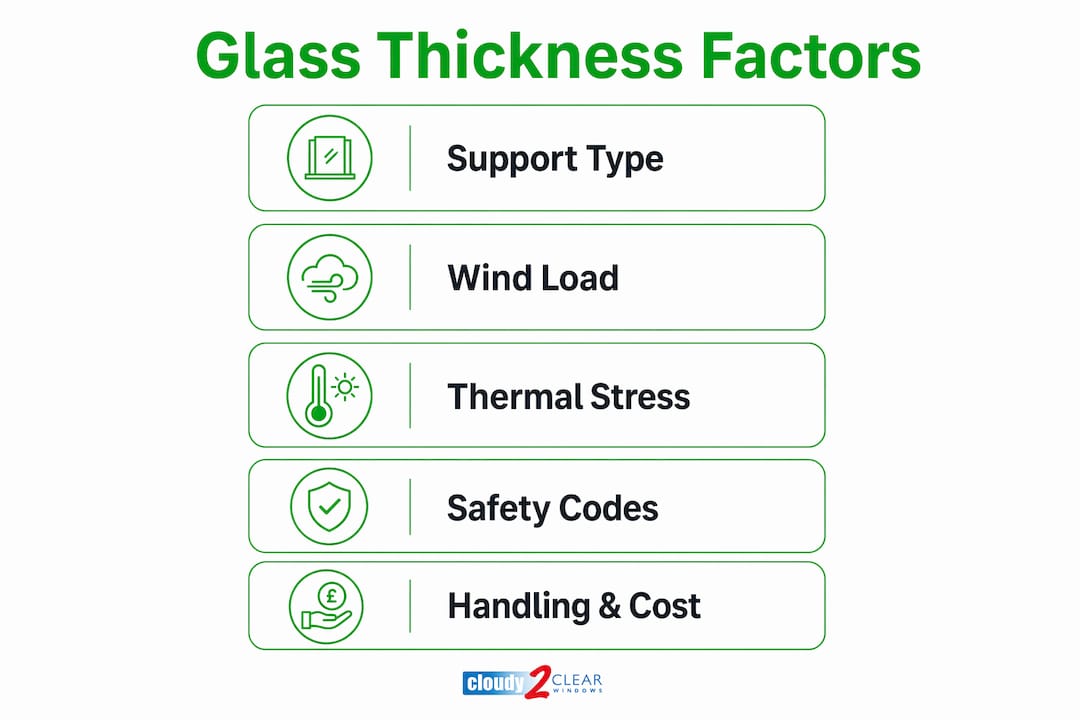
Infographic illustrating factors affecting glass thickness requirements


Support conditions fall into three main categories. Four-sided support, where the glass is held in a frame on all edges, distributes stress most efficiently and allows for thinner glass. Two-sided support, common in sliding doors or some curtain walling systems, concentrates stress along two edges and demands greater thickness. Point-supported or frameless systems, used in structural glazing and glass balustrades, place the highest demands on the glass and require the thickest, strongest panels.

Wind load is the other critical variable for exterior glazing. The L/175 deflection limit governs how much a pane can bend under load before it risks cracking or causing discomfort. For a 2100mm span, the maximum permitted deflection is just 12mm. This rule directly dictates minimum thickness based on the span and the expected wind pressure at the installation site.

Thermal stress is a less obvious but equally real factor. Large panes in south-facing elevations can experience significant temperature differentials between the centre and the edges, particularly when partially shaded. At certain thicknesses and sizes, heat-strengthened or toughened glass becomes necessary to prevent spontaneous thermal fracture.

Pro Tip: If you are specifying glass for a frameless or point-supported installation, always consult a structural engineer or glazing specialist before ordering. The thickness required for these systems is rarely intuitive, and the consequences of under-specification are serious.

Factors that increase the required thickness:

  • Larger unsupported spans
  • Frameless or point-supported fixing methods
  • High wind exposure zones
  • South-facing elevations with significant shading
  • Balustrade or overhead glazing applications

How to measure glass thickness accurately and safely

Measuring glass thickness correctly matters whether you are ordering a replacement pane, verifying a supplier’s specification, or checking compliance. Proper measuring tools include glazing gauges and digital calipers. A standard ruler can give a rough indication on exposed edges but lacks the precision needed for compliance purposes.

Follow these steps to measure a double glazed unit accurately:

  1. Identify an exposed edge. On a sealed double glazed unit, the edge spacer bar is usually visible. This is where you take your measurement.
  2. Use a glazing gauge or digital caliper. Place the U-shaped jaw of a glazing gauge around the edge of the glass. Read the measurement directly from the scale.
  3. Account for the full unit depth. A double glazed unit measurement includes both glass panes and the cavity. For example, a 4mm pane, a 16mm cavity, and a second 4mm pane gives a total unit depth of 24mm.
  4. Check the spacer bar markings. Many manufacturers stamp the cavity width on the spacer bar itself. Combined with the pane thickness, this gives you the full specification.
  5. Read laminated glass notation carefully. A specification written as 6+1.52+6 means two 6mm panes bonded with a 1.52mm PVB interlayer, giving a total thickness of 13.52mm. The interlayer contributes to both safety performance and sound insulation.

When glass is fully framed and the edge is inaccessible, a glazing gauge with a magnetic or ultrasonic sensor is the most reliable option. These tools are available from glazing suppliers and are worth using if you need a precise reading for compliance or replacement purposes.

Pro Tip: The tap test, gently tapping the glass and listening for a dull thud versus a ringing tone, can give a rough indication of whether glass is toughened or annealed. It is not a substitute for measurement, but it is a useful first check before calling in a specialist.

Common mistakes to avoid:

  • Measuring only the glass pane and forgetting the cavity depth in a double glazed unit
  • Confusing the unit depth with the individual pane thickness
  • Assuming all glass of the same visual appearance is the same thickness
  • Ordering replacement glass based on frame size alone without measuring the existing unit

How do safety and building codes affect glass thickness requirements?

Building regulations in the UK set minimum standards for glass thickness and type in specific locations. Incorrect glass thickness is a common cause of failed building inspections and installation rework, and the consequences extend beyond inconvenience. Using under-specified glass in a regulated location can result in enforcement notices, liability for injuries, and the cost of complete replacement.

The key regulatory areas to understand are:

  • Low-level glazing: Any glazing with its lowest edge within 800mm of floor level in a domestic setting, or 1500mm in a non-domestic setting, must use safety glass. This applies to patio doors, French doors, and full-height windows.
  • Shower enclosures: All glass used in shower doors and screens must be toughened or laminated safety glass, regardless of thickness.
  • Balustrades and barriers: Monolithic tempered glass alone is prohibited for balustrades in most applications. Laminated glass is required to retain fragments if the pane breaks, preventing falls through the opening.
  • Overhead glazing: Any glass installed overhead, such as in a glass roof or canopy, must be laminated to retain fragments on breakage.

The distinction between glass types matters as much as thickness in these contexts. Tempered glass is approximately four times stronger than annealed glass at the same thickness, which means a 6mm toughened pane outperforms a 12mm annealed pane in impact resistance. However, toughened glass shatters into small granular pieces on breakage, which can still allow a person to fall through a balustrade opening. Laminated glass, by contrast, holds together when broken, which is why it is mandated for barrier applications.

Always confirm your local building regulations before ordering glass for any regulated location. Requirements can vary between England, Scotland, Wales, and Northern Ireland, and commercial premises carry additional obligations under workplace safety legislation.

For guidance on types of safety glass and which applications require them, it is worth reviewing the specific mandates that apply to your property type before specifying any glazing.

What are the effects of glass thickness on insulation, cost, and handling?

Thickness affects more than strength. It has a direct bearing on thermal performance, project cost, and the practicalities of getting glass onto site and into a frame.

Thicker glass does improve sound insulation, but its effect on thermal performance is more limited than most people expect. The primary driver of thermal efficiency in a double or triple glazed unit is the gas-filled cavity and the low-emissivity coating on the glass surface, not the glass thickness itself. Choosing triple glazing adds a third pane and cavity, which improves insulation significantly, but the individual pane thickness remains in the 3mm to 4mm range.

Weight is where thickness has its most immediate practical impact. Glass weighs approximately 2.5kg per square metre per millimetre of thickness. Moving from 10mm to 12mm glass across a 1000 square metre commercial installation adds 5000kg to the total weight. That figure affects crane requirements, delivery logistics, frame load ratings, and fixing hardware specifications. For homeowners, even moving from 4mm to 6mm panes in a large window can require heavier hinges and a stronger frame rebate.

Cost does not scale linearly with thickness. The glass material itself costs more per square metre as thickness increases, but the associated costs, including heavier delivery vehicles, specialist lifting equipment, and compatible hardware, often represent a larger proportion of the total project cost than the glass price difference alone.

Practical considerations when specifying thicker glass:

  • Verify that existing frames have sufficient rebate depth to accommodate the new unit
  • Confirm that hinges, locks, and handles are rated for the additional weight
  • Check that delivery access allows for the size and weight of panels being ordered
  • Avoid over-specifying thickness where a thinner, stronger glass type such as toughened or laminated would meet the requirement at lower weight and cost

What thicknesses are used for vacuum-insulated glass?

Vacuum-insulated glass (VIG) replaces the wide gas-filled cavity with an evacuated gap of around 0.1mm, so the panes sit far closer together than in a conventional double-glazed unit.

  • Total build-up: Typically 6mm to 10mm overall, including both panes and the gap, against the 20mm to 28mm of a standard sealed unit.
  • Frame compatibility: Final thickness depends on the window frame it’s fitted into, so figures vary between products.
  • Before ordering: Check the manufacturer’s specification sheet rather than assuming a single standard thickness applies across the VIG market.

What we have learned from two decades of glazing installations

At Cloudy2Clear Windows, we have been specifying and installing glass since 2005, and the most consistent mistake we see is treating thickness as the primary measure of quality. Homeowners often request thicker glass believing it will perform better, when in reality the glass type, coating, and cavity specification matter far more for insulation and safety in most residential applications.

The opposite error occurs in commercial projects, where cost pressure leads to under-specification. Skipping the structural calculation and ordering based on a previous project’s specification is a risk that regularly results in failed inspections and expensive remedial work. Every project has different span dimensions, support conditions, and wind exposure, and those variables change the required thickness more than most people realise.

Our advice, based on what we have seen across thousands of installations, is straightforward. Get the support conditions and span dimensions confirmed before you approach a supplier. Check your local building regulations for the specific location where the glass will be installed. And treat glazing thickness as one part of a wider specification that includes glass type, coating, and cavity design. Thickness alone does not make glass safe, efficient, or compliant. The full specification does.

How Cloudy2Clear Windows can help with your glazing needs

If this glass thickness explanation has raised questions about your own windows or commercial glazing, Cloudy2Clear Windows is here to help.

https://www.cloudy2clearwindows.co.uk


Cloudy2Clear Windows has been repairing and replacing double glazed units across the UK since 2005, working with both homeowners and commercial clients. Our teams specify glass thickness to meet local building regulations and your property’s exact requirements, whether that is a straightforward double glazing replacement for a residential window or a full commercial window repair programme for a business premises. We cover multiple regions including Milton Keynes, Watford, and beyond. Contact your nearest branch to get expert advice on the right glass specification for your property.

FAQ

What is the standard glass thickness for a home window?

Standard residential windows use 4mm to 6mm glass, while double glazed units typically contain two panes of 3mm to 4mm each with a sealed cavity between them. The total unit depth is usually 20mm to 28mm depending on the cavity width.

How do I measure glass thickness on a sealed double glazed unit?

Use a glazing gauge or digital caliper on the exposed edge of the unit, measuring the full depth including both panes and the cavity. The individual pane thickness is typically marked on the spacer bar or included in the manufacturer’s specification.

Why is laminated glass required for balustrades?

Monolithic tempered glass is prohibited for most balustrade applications because it shatters completely on breakage, creating a fall risk. Laminated glass holds together when broken, retaining the barrier function and preventing injury.

Does thicker glass always mean better insulation?

No. Thermal performance in double and triple glazed units is driven primarily by the gas-filled cavity and low-emissivity coatings, not glass thickness. Increasing pane thickness beyond the standard 3mm to 4mm range adds weight and cost without a proportional improvement in insulation.

What happens if I use the wrong glass thickness?

Using under-specified glass in a regulated location can result in failed building inspections, enforcement action, and liability for any injuries that occur. Replacement is required at the owner’s cost, making correct specification from the outset the more economical and safer choice.

What is window beading? A homeowner’s guide

Window beading, also known as a glazing bead, is the narrow strip of material that holds window glass securely within its frame while creating an airtight and watertight seal. These small structural strips are typically made from wood, vinyl, or aluminium and sit along the inner edges of the glass pane. Without them, your glass would have no mechanical retention and your window would lose its thermal and weather performance. Whether you are replacing a cracked bead or simply trying to understand your windows better, knowing what glazing beads do makes all the difference.

What is window beading and how does it work?

Window beading is defined as a narrow retaining strip, typically between 3/8 and 3/4 inch wide, that mechanically retains glass within a window frame. It works alongside sealants, gaskets, and setting blocks to create a complete seal around the glass unit. The bead presses against the edge of the glass and locks it in place, preventing movement, rattling, and water ingress.

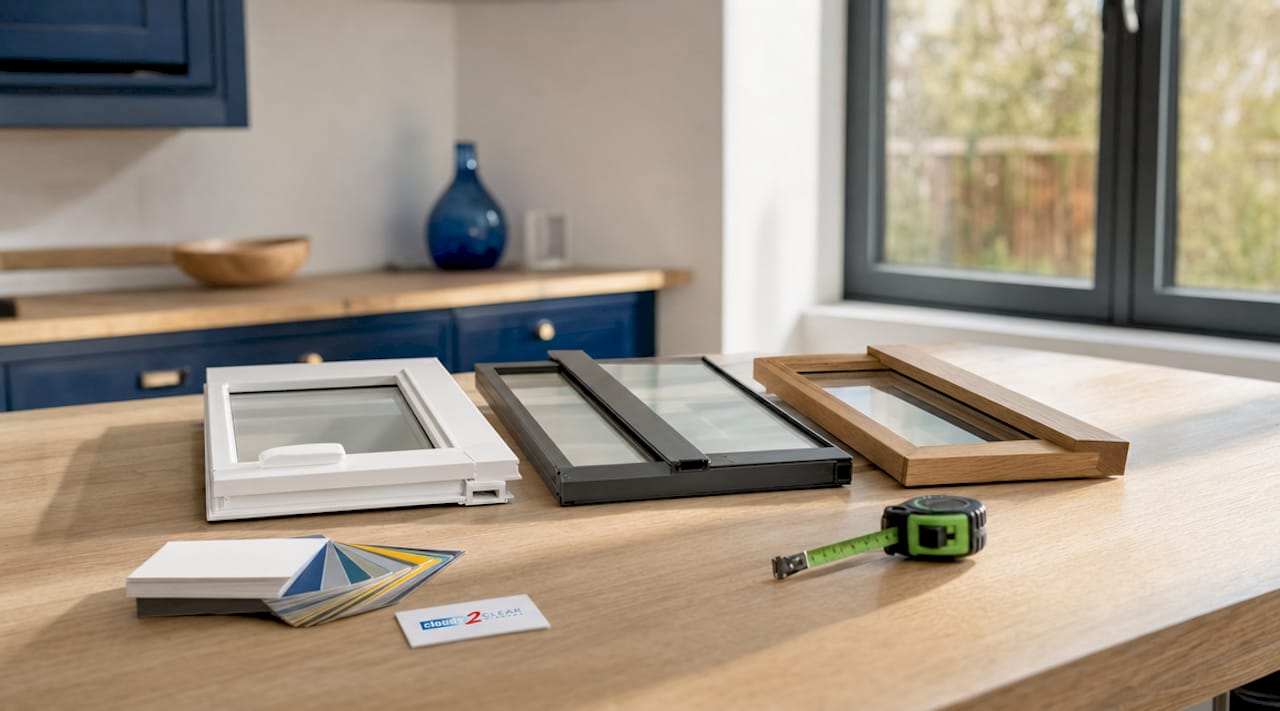
Three window frames showing different glazing bead types


It is worth distinguishing glazing beads from general window trim or casing. Beads are structural strips that hold the glass edges directly, while casing is the decorative surround covering the whole window frame. Confusing the two leads homeowners to order the wrong parts or neglect the component that actually keeps their glass in place.

Modern windows use two main fixing methods:

  • Snap-in beads: Common in vinyl and aluminium systems, these click into a groove in the frame and allow glass replacement without removing the sash. They are fast to fit but must not be forced, as this can permanently damage the frame profile.
  • Nailed or screwed beads: More common in timber frames, these are fixed mechanically and require careful removal with a chisel or flat bar.

Loose or damaged beads compromise the entire window seal, allowing air and moisture to penetrate. This directly affects your home’s energy efficiency and can lead to condensation, draughts, and higher heating bills. Properly fitted beads are a key factor in window thermal performance.

Pro Tip: Run your finger along the bead line on a cold day. If you feel a draught, the bead seal has likely failed and replacement should be considered sooner rather than later.

What types of window beading are there?

Glazing beads vary by location, material, and profile shape. Choosing the right type matters both for function and for matching your existing window system.

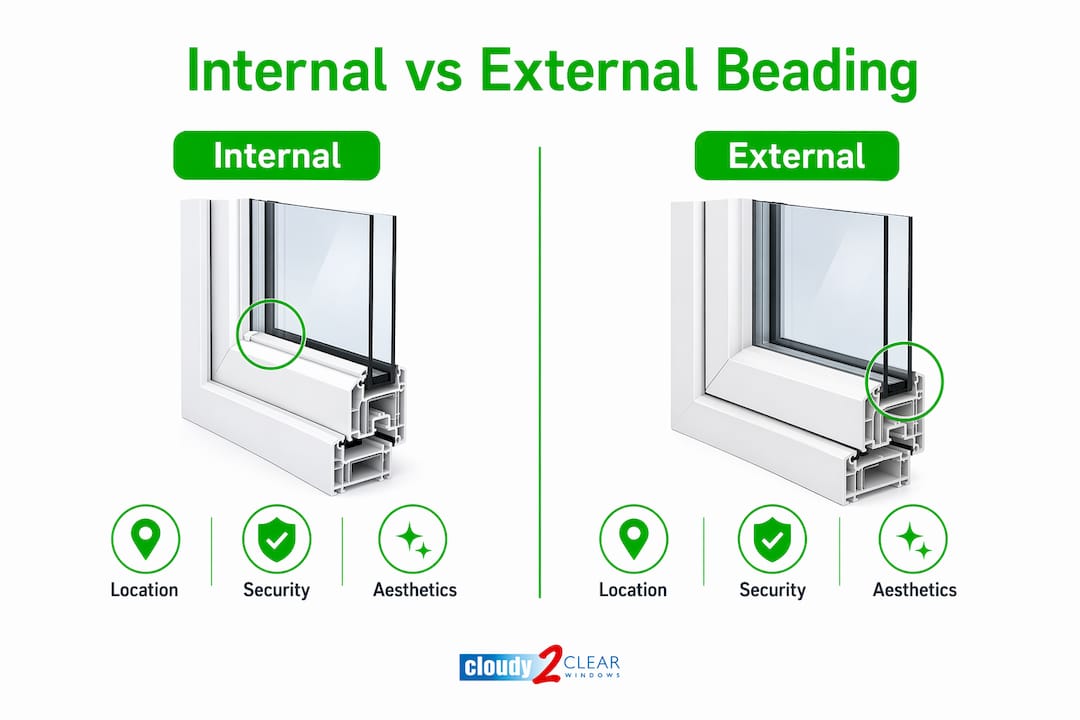
Infographic comparing internal and external window beading features

Internal vs external beading

The most important distinction is whether the bead sits on the inside or outside of the glass.

Feature Internal beading External beading
Location Inside the property Outside the property
Security level High Lower
Accessibility Not reachable from outside Can be accessed externally
Common use Modern double glazing Traditional and heritage windows
Aesthetic style Clean, minimal More visible, traditional look

Material options

The three most common materials each have distinct properties:

  • Timber: Used in traditional and heritage windows. Timber beads offer a classic appearance and can be painted or stained, but they require more maintenance and are prone to swelling or rotting over time. If you own older timber windows, protecting them from moisture is critical to preserving bead integrity.
  • PVC (uPVC): The most common material in modern double glazing. PVC beads are low maintenance, weather resistant, and available in a wide range of colours. They are typically snap-in designs.
  • Aluminium: Used in commercial and contemporary residential windows. Aluminium beads are strong, slim, and durable, making them suited to large glass units.

Profile shapes and manufacturer matching

Bead profiles vary between manufacturers. Many companies use proprietary designs, meaning a bead from one supplier will not fit a frame made by another. Generic replacement beads frequently fail to provide airtight seals and can cause rattles or leaks. Always identify your window manufacturer before ordering replacement beads, and take a sample of the old bead to a glazing supplier for profile matching.

Sash windows use parting beads to separate the two sliding sashes and staff beads to hold the inner sash against the frame, with channels guiding the sash as it moves. Whether the window is a single-hung or double-hung sash changes how these parts work together, so check which sashes actually slide before ordering. Match the old component’s profile and measurements exactly.

How does window beading affect security and aesthetics?

The position of your glazing bead has a direct impact on how secure your window is against forced entry. According to the Glass and Glazing Federation, external glazing beads are not designed to resist forced entry and can be pried off from outside without breaking the glass. Internal beads, by contrast, cannot be removed without breaking the glass from the outside, making them significantly more secure.

“External glazing beads can be removed with basic tools from outside the property, giving intruders access to the glass unit without triggering an alarm or breaking a pane. Internal beads eliminate this vulnerability entirely.” — Glass and Glazing Federation, 2026

This does not mean external beads are always the wrong choice. Many homeowners with period properties or traditional-style windows prefer the visual character that external beading provides. The security versus aesthetics trade-off is a genuine consideration, and the right answer depends on your property type, location, and priorities.

For most modern homes, internal beading is the recommended choice. It delivers better security without sacrificing the clean appearance of contemporary double glazing. If you are replacing windows or upgrading older units, specifying internal beads is a straightforward way to improve your home’s resistance to break-ins.

How to install or replace window beading

Glazing beads typically last between 10 and 20 years before they become cracked, brittle, or loose enough to require replacement. When that point arrives, matching the original bead profile is the single most important step to maintaining structural integrity and the thermal seal.

Follow these steps for a safe and effective replacement:

  1. Assess the damage. Check whether the bead is cracked, warped, or has pulled away from the frame. If the glass itself is also damaged or the seal has failed, consider a full glass replacement rather than just the bead.
  2. Source the correct profile. Take a section of the old bead to a glazing supplier or contact your window manufacturer. Do not assume a standard size will fit.
  3. Gather your tools. You will need a flat pry bar or glazing tool, a rubber mallet, a utility knife, silicone sealant, and the replacement bead cut to length.
  4. Support the glass. Before removing any bead, place setting blocks under the glass to hold it firmly. Glass must be fully supported before you remove or fit beads to prevent the pane from shifting or breaking.
  5. Remove the old bead. Work carefully along the bead with your pry bar, releasing it gradually rather than forcing one section. For snap-in types, a glazing tool or flat screwdriver inserted at the corner is usually sufficient.
  6. Clean the rebate. Remove any old sealant or debris from the groove where the bead sits. A clean surface ensures the new bead seats correctly.
  7. Fit the new bead. Press or tap the new bead into place, starting at the corners. For snap-in types, apply firm, even pressure along the length. For nailed beads, pre-drill to avoid splitting.
  8. Seal if required. Apply a thin bead of silicone sealant along the outer edge if your window design requires it, and smooth it flush with a wet finger.

Pro Tip: For large windows, this is a two-person job. One person should hold the glass steady while the other fits the bead. Attempting it alone on a large pane significantly increases the risk of breakage or injury.

If the frame itself is damaged, the profile is no longer available, or you are unsure about working with glass, contact a professional glazier. Incorrect fitting can void any remaining window warranty and create new seal failures.

Our view on window beading: what most homeowners miss

At Cloudy2Clear Windows, we have been repairing and replacing double glazed windows since 2005, and glazing beads are one of the most overlooked components we encounter. Homeowners often call us about draughts, condensation, or rattling glass, and in many cases the root cause is a failed or incorrectly fitted bead rather than the glass unit itself.

The confusion between glazing beads and decorative window trim is genuinely common. We regularly speak to homeowners who have ordered casing or architrave when they needed a glazing bead. These are entirely different components with different functions, and ordering the wrong one wastes time and money.

On security, we have seen a clear shift in recent years. More homeowners are specifying internal beads when upgrading their windows, and rightly so. The difference in forced-entry resistance is significant, and it costs nothing extra to specify internal beading at the point of installation.

Our advice on DIY replacement is straightforward: if the profile is available and the frame is in good condition, a careful homeowner can replace a bead successfully. But do not underestimate the importance of glass support and profile matching. These are the two steps most often skipped, and they are the two most likely to cause problems. If you are in any doubt, the cost of a professional repair is far less than the cost of a broken glass unit.

— Cloudy2Clear Windows

Need help with your windows? Cloudy2Clear Windows can assist

If your glazing beads are cracked, loose, or no longer sealing correctly, Cloudy2Clear Windows offers professional double glazing repair and replacement services across the UK. Our experienced teams carry out glazing bead replacement, glass unit repairs, and full window refurbishments to the highest standard.

https://www.cloudy2clearwindows.co.uk


We cover a wide range of locations, including Oxford, Milton Keynes, and Watford, with local teams who understand the specific window types common in each area. Whether you need a single bead replaced or a full window overhaul, Cloudy2Clear Windows has the expertise to get it right first time. Get in touch today to arrange a free assessment.

FAQ

What is the difference between a glazing bead and window trim?

A glazing bead is a small structural strip that holds the glass directly within the window frame, while window trim or casing is the decorative surround covering the outer edge of the frame. They serve entirely different purposes and are not interchangeable.

How do I know if my window beading needs replacing?

Signs include visible cracking or brittleness, glass that rattles in the frame, draughts around the glass edge, or water ingress at the bead line. Glazing beads typically last between 10 and 20 years before replacement is needed.

Are internal or external glazing beads more secure?

Internal glazing beads are significantly more secure. External beads can be removed from outside the property without breaking the glass, whereas internal beads cannot be accessed without breaking the pane first.

Can I replace window beading myself?

Yes, in many cases a careful DIYer can replace glazing beads, provided the correct profile is sourced and the glass is fully supported throughout the process. For large panes or damaged frames, professional help is recommended.

Does window beading affect energy efficiency?

Yes. Even minor gaps caused by loose or damaged beads allow air and moisture to enter, reducing the window’s thermal performance. Well-fitted beads are a key part of maintaining an energy-efficient glazing system.

Misty windows: how to diagnose and fix the problem

Many homeowners treat misty windows as an unavoidable side effect of British weather. A quick wipe and it is gone, right? Not always. What looks like everyday condensation can actually be a signal that your double glazing has failed internally, and no amount of wiping will fix it. Warm moist air meeting cold glass is what typically triggers condensation, especially in autumn and winter, but the cause determines everything about the right solution. This article walks you through exactly how to tell the difference and what to do next.

What causes misty windows and how to tell the difference

Understanding why your windows turn misty is the first step to solving the problem correctly. Condensation forms when warm moist air meets a cold surface, causing water droplets to appear. That much is well known. What trips people up is assuming all window misting is the same.

There are two distinct problems that look similar but require completely different responses:

  • Surface condensation forms on the inside face of the glass. It is caused by high indoor humidity and cold glass. You can wipe it off with a cloth. It tends to appear in the morning, especially in winter, and often clears as the room warms up.
  • Sealed-unit failure (also called internal misting) is when moisture is trapped between the two panes of your double glazing. You cannot wipe it away because it is inside the unit. It may look hazy, streaky, or cloudy regardless of the weather outside.

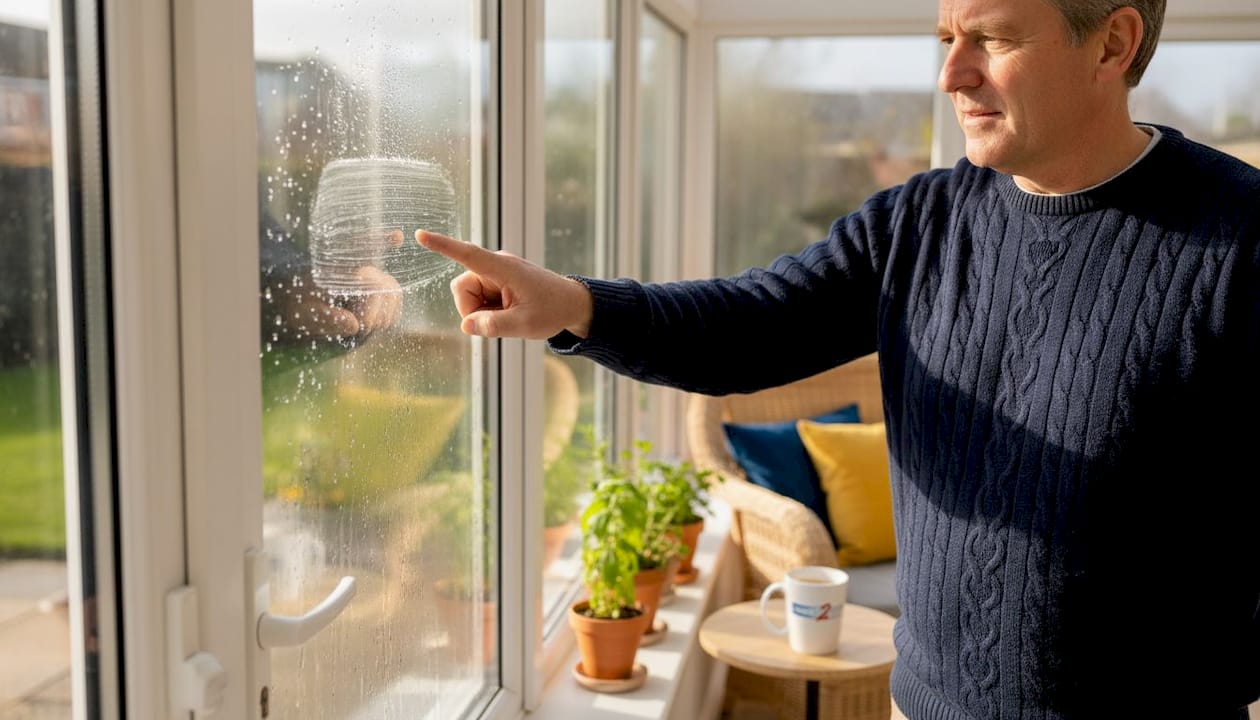
The key diagnostic test is simple: run your finger across the glass. If the mist wipes clean, it is surface condensation. If the haziness is still there, the glazed unit has failed and moisture has entered the sealed cavity.

Feature Surface condensation Sealed-unit failure
Location On the glass surface Between the panes
Can be wiped away? Yes No
Cause High humidity, cold glass Failed hermetic seal
Seasonal pattern Mostly autumn and winter Year-round, persistent
Solution Ventilation and humidity control Sealed unit replacement


Man testing window condensation with finger


Surface condensation is seasonal and manageable. Internal misting is permanent until the unit is replaced. Knowing which one you are dealing with saves you time, money, and frustration.

Now that we understand the nature of misty windows, we can explore how to manage and prevent surface condensation effectively.

Managing and preventing surface condensation effectively

Surface condensation is common across homes and businesses in England and Scotland, particularly in winter when heating is running and windows stay closed. The good news is that most cases respond well to straightforward changes. Ventilation improvements such as daily airing and using extractor fans during cooking or showering are the most effective starting points.

Here is a practical sequence to follow:

  1. Open windows briefly each morning. Even five to ten minutes allows moist overnight air to escape. This single habit makes a noticeable difference in bedroom and bathroom windows.
  2. Use extractor fans in kitchens and bathrooms. These rooms generate the most moisture. Leave fans running for a few minutes after cooking or showering.
  3. Avoid drying clothes on indoor radiators. A single load of washing releases around two litres of moisture into the air as it dries. Use a tumble dryer or dry clothes outside where possible.
  4. Keep curtains open during the day. Closed curtains trap cold air against the glass and reduce airflow, making condensation worse.
  5. Maintain indoor humidity between 40% and 50%. This range is comfortable for occupants and low enough to prevent persistent condensation.

You can also take a few targeted steps to reduce moisture at the source:

  • Place moisture-absorbing products near particularly cold or north-facing windows
  • Ensure trickle vents in window frames are open and unblocked
  • Check that loft and wall insulation is adequate, as poorly insulated walls create cold spots that attract condensation
  • Learn more about long-term strategies with these condensation prevention tips for double glazing

For a more detailed guide on protecting your double glazed units from moisture damage, you can also read about how to prevent condensation in double glazed windows.

Pro Tip: Buy a hygrometer (a small device that measures indoor humidity) and place one in rooms where condensation is worst. They cost around £10 to £15 and take the guesswork out of whether your ventilation efforts are working.

Once surface condensation is controlled or ruled out, we turn to solutions for internal sealed-unit failure and misted double glazing.

Understanding and repairing misted double glazing units

A double glazed unit is made up of two panes of glass with a sealed cavity between them, usually filled with argon gas for insulation. When the hermetic seal (the airtight bond around the edge of the unit) fails, outside moisture enters that cavity. The result is permanent internal fogging that no amount of cleaning or ventilation will shift.

Seal failure typically happens due to age, heat exposure, or frame movement over time. Once it fails, your options are straightforward:

  • Sealed unit replacement: The failed glass unit is removed from the existing frame and replaced with a new one. The frame itself stays in place. This is the standard repair and is suitable for most windows.
  • Full window replacement: The frame and glass are both replaced. This is only necessary if the frame is damaged, warped, or structurally compromised.

The cost difference is significant. Sealed unit replacement typically costs £80 to £250 per pane including fitting, making it far more economical than full window replacement.

Repair type Typical cost (per window) When it is appropriate
Sealed unit replacement £80–£250 Seal failure, frame intact
Full window replacement £400–£900 Frame damaged or severely aged
DIY defogging kits £20–£60 Not recommended (temporary at best)


For a full breakdown of what to budget, the double glazing repair costs UK guide covers current pricing across different window types and regions.

The cost of replacing misted double glazed units is often far lower than people expect, which is why getting a quote before assuming you need full replacement is always worth doing.

Pro Tip: Get at least three written quotes from registered installers before committing to any repair. Prices vary considerably, and having multiple quotes helps you identify fair pricing and avoid unnecessary upselling.

With costs and repair options clear, let us review some practical tips homeowners can use while managing misty window issues.

Temporary fixes and expert tips for homeowners

Before your repair appointment, or while you are deciding on next steps, there are a few things you can try to manage the issue. These are not permanent solutions, but they are practical in the short term.

For surface condensation only, a small amount of washing-up liquid spread thinly across the glass can temporarily reduce misting by altering how water droplets form on the surface. It is not a fix, but it can reduce the visual impact while you put longer-term measures in place.

Here is what else you can do in the short term:

  • Keep radiators clear of furniture and curtains so warm air circulates freely
  • Open trickle vents on window frames to encourage airflow
  • Use a small dehumidifier in rooms with persistent condensation
  • Check window cleaning methods for keeping glass surfaces in the best condition during this period

What to avoid is equally important. DIY defogging kits sold online claim to inject solutions between the panes and clear the misting. Some produce short-term results, but they do not restore the seal or the insulation value of the unit. In some cases, they can introduce additional moisture or chemicals into the cavity.

‘Professional sealed unit replacement is the only permanent solution for misted double glazing.’ — Home Careness

The most useful step you can take is an accurate diagnosis. Understanding how to identify and solve types of window condensation helps you move forward with confidence rather than spending money on approaches that will not last.

Pro Tip: Keep radiators on a low, consistent setting rather than blasting heat on and off. Dramatic temperature swings accelerate seal degradation and contribute to surface condensation.

Understanding temporary fixes prepares homeowners to take informed next steps when addressing misty window problems.

Choosing and working with professionals for double glazing repairs

Finding the right glazier matters. Not just for the quality of the repair, but for avoiding unnecessary costs. Some installers will recommend full window replacement when only the sealed unit needs attention. Obtaining at least three quotes from registered installers ensures you have a fair basis for comparison.

When searching for a professional, keep the following checklist in mind:

  • Look for FENSA-registered glaziers. FENSA is the UK’s primary competent persons scheme for window installation and replacement. Registration means the installer meets industry standards and their work is automatically registered with the local authority.
  • Ask for itemised written quotes. A trustworthy installer will break down costs clearly, including call-out charges, glass unit costs, and fitting fees separately.
  • Confirm exactly what is being replaced. If your frame is sound, you should only be quoted for the sealed unit, not the full window.
  • Ask about guarantees. Reputable glaziers typically offer a guarantee on both the sealed unit and their workmanship, often for five to ten years.
  • Check reviews and regional availability. A local installer with strong reviews in your area is usually a safer choice than a national call centre with subcontracted labour.

Expect a single window sealed unit replacement to take between one and two hours from start to finish. The process is not particularly disruptive, and you should have a clear, properly sealed window by the time the job is done.

If you are based in Scotland, our team covering double glazing repairs in Glasgow and Ayr is available to assess and repair failed sealed units. Further south, our double glazing repairs in Oxford team covers the surrounding region too.

A fresh take on misty windows: balancing DIY and professional repairs

Here is something we have observed over nearly two decades of working with homeowners across England and Scotland: most people either do too little or too much.

They either ignore misted windows for years, assuming it is just cosmetic, or they panic and authorise full window replacements that were never necessary. Both responses are understandable. Neither is ideal.

The honest truth is that the majority of foggy window problems fall into one of two categories. Either it is surface condensation, which costs nothing to fix beyond some ventilation habit changes, or it is sealed-unit failure, which is almost always repairable without replacing the whole window. Mist between panes is caused by seal failure and cannot be resolved by household cleaning methods, but the sealed unit itself is a replaceable component.

What homeowners often overlook is frame condition. If you have an older property with original timber or uPVC frames that are warped, rotting, or poorly fitted, addressing only the glass unit may leave you with the same problem within a few years. A good glazier will flag this before starting work. One who does not mention the frame condition at all is worth being cautious about.

There is also a strong case for monitoring multiple windows at once. Seal failures rarely happen in isolation. If one unit has failed on a set of windows installed at the same time, others are likely not far behind. Grouping repairs in a single visit saves on call-out charges and fitting costs. Staying proactive about preventing condensation in double glazed windows extends the life of your units considerably.

Pro Tip: Walk around your property on a cold morning and check every window for persistent haze. Catching multiple failing units early and grouping the repairs is one of the most practical ways to keep costs down.

Professional double glazing repair services with Cloudy2Clear Windows

If you have worked through this guide and realised your windows need professional attention, we are here to help. At Cloudy2Clear Windows, we have been repairing and replacing failed sealed units across England and Scotland since 2005. Our focus has always been on replacing only what needs replacing, keeping your existing frames wherever possible and saving you money in the process.

https://www.cloudy2clearwindows.co.uk


We cover a wide range of locations, including double glazing repairs in Milton Keynes, repairs in Oxford, and many other areas across England and Scotland. Our glaziers use quality sealed units backed by manufacturer guarantees, and every quote we provide is transparent and itemised. There is no pressure to replace full windows when a sealed unit repair will do the job properly. If you are ready to clear up your misty windows for good, explore our double glazing glass replacement service and get in touch with your local branch today.

Frequently asked questions

What causes windows to become misty between the panes?

Misting between panes means the hermetic seal on your insulated glass unit has failed, allowing moisture to enter and condense inside the glass cavity where it cannot be wiped away.

Can I fix misty windows myself?

For surface condensation, improving ventilation can reduce the problem, but DIY defogging attempts are unreliable for sealed-unit failure. Professional sealed unit replacement is the only permanent solution for internal misting.

How much does it cost to replace a misted double glazed unit in the UK?

Sealed unit replacement typically costs between £80 and £250 per pane including fitting, which is usually considerably less expensive than full window replacement.

How can I prevent surface condensation on my windows?

Reduce indoor humidity and improve ventilation by briefly airing rooms each morning, using extractor fans during cooking and showering, and keeping air circulating freely near windows.

Should I replace the entire window if my double glazing is misty?

Not usually. The glass unit and frame are separate components, and replacing only the sealed unit is typically sufficient unless the frame itself is damaged or structurally compromised.

What is a window gasket? Complete guide to double glazing seals

Most people assume that fogged-up or draughty windows mean the entire unit needs replacing. In reality, a small flexible strip called a window gasket is often the culprit, and replacing it costs a fraction of a full window swap. A window gasket is a flexible strip crucial for sealing and insulation in double glazed windows, yet it rarely gets the attention it deserves. This guide covers everything you need to know: what gaskets are, the different types, how long they last, how to spot problems, and what repairs actually cost.

What exactly is a window gasket?

Think of a window gasket like the rubber seal around your fridge door. Without it, cold air escapes, moisture gets in, and the whole system becomes inefficient. In your double glazed windows, the gasket does exactly the same job, sitting between the glass pane and the frame to create a tight, weatherproof barrier.

A window gasket is a flexible rubber or synthetic strip positioned between the glass and frame, ensuring an airtight and waterproof seal. You will find gaskets in virtually all modern uPVC and aluminium windows across England and Scotland, running along the perimeter of each pane. They are often overlooked during routine maintenance, yet they are doing constant work every single day.

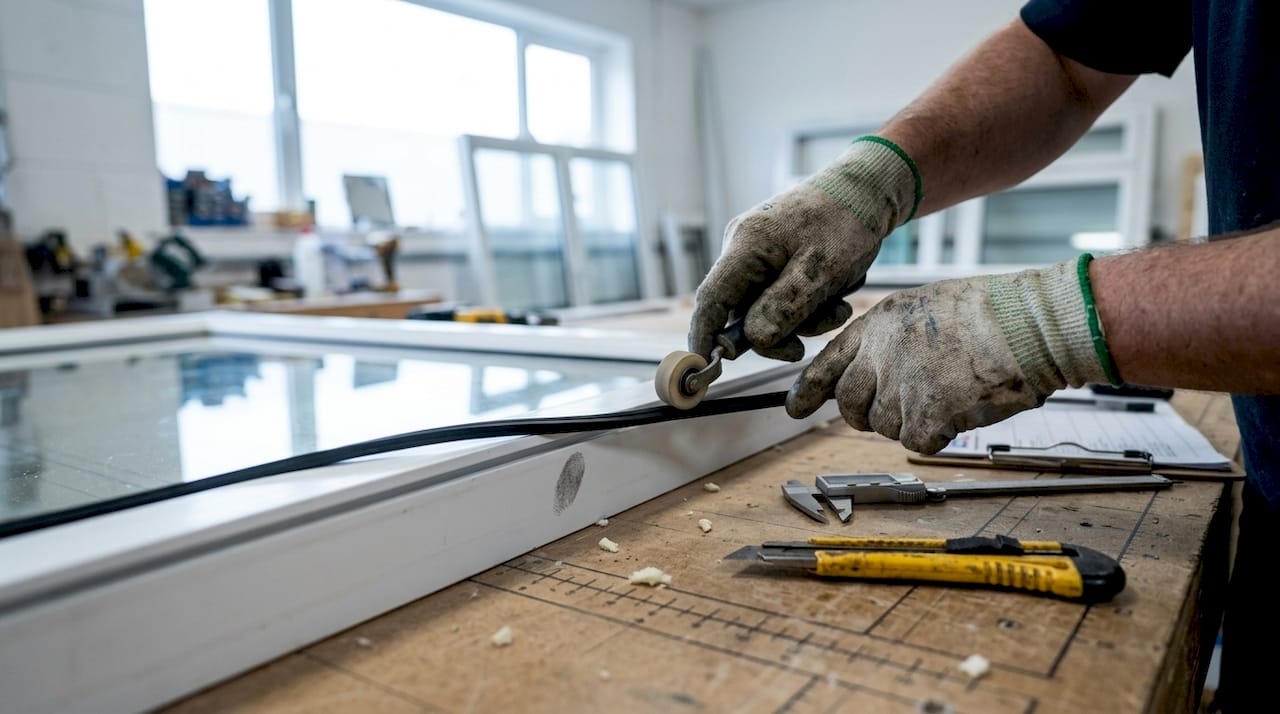
Hands fitting gasket on window frame


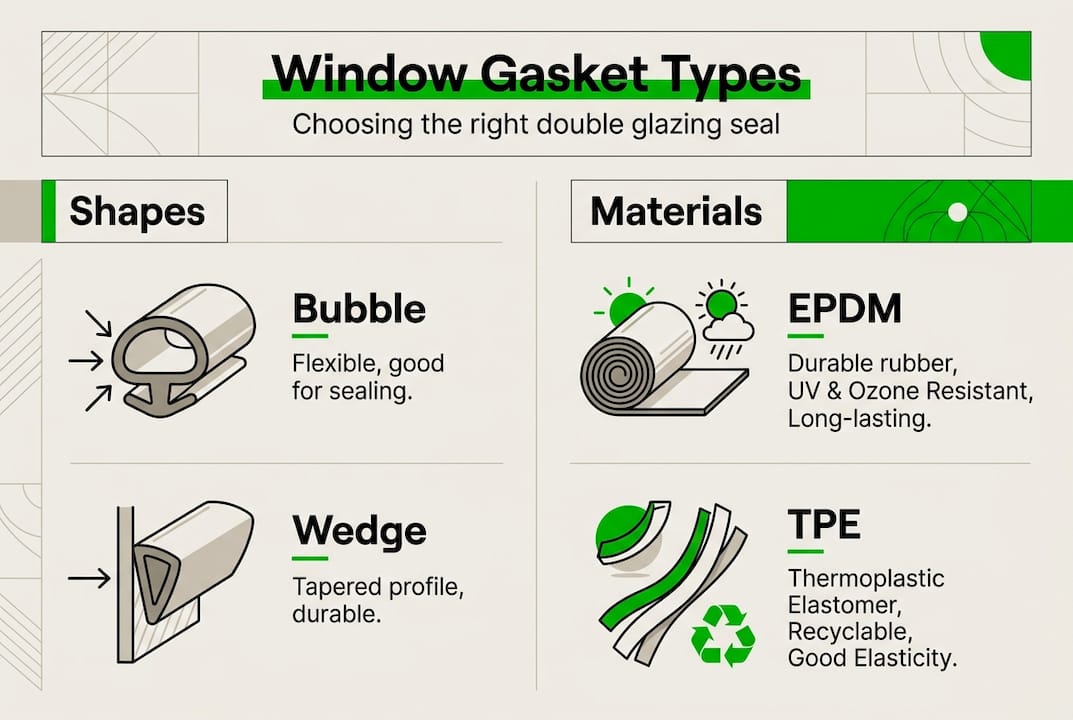
Gaskets are made from EPDM rubber, TPE, and other UV-resistant materials, each chosen for their ability to flex and compress without cracking. The material choice matters enormously in the UK’s variable climate, where a window might face freezing temperatures in January and strong summer sun in July.

Here is a quick overview of what gaskets actually do:

Function What it prevents
Airtight seal Draughts and heat loss
Waterproofing Rain ingress and damp
Soundproofing External noise penetration
Dust prevention Fine particles entering the frame


The key benefits of a well-fitted gasket include:

  • Reduced energy bills by maintaining the thermal barrier
  • Damp prevention along window frames and sills
  • Noise reduction, particularly valuable in urban areas
  • Protection for the window glass replacement unit itself from moisture damage
  • Improved comfort by eliminating cold spots near windows

For anyone dealing with persistent draughts or damp patches, window leak prevention often starts with inspecting the gasket before anything else.

Types of window gaskets and choosing the right fit

Not all gaskets are the same shape, and fitting the wrong type is one of the most common DIY mistakes we see. Each profile is designed for a specific position and function within the window assembly.

Infographic of window gasket types and materials


Common types include bubble gaskets, wedge gaskets, and E-gaskets, each with distinct shapes and uses. Here is how they differ:

Gasket type Shape Position Primary role
Bubble gasket Hollow, round Frame channel Compression seal, draught exclusion
Wedge gasket Ribbed, tapered Internal, glass edge Glass retention and internal seal
E-gasket Fir tree profile External face Compression seal against weather


Pairing wedge (internal, glass retention) with E-gasket (external) offers optimal sealing in most modern uPVC windows. Using one without the other, or substituting the wrong profile, leaves gaps that allow water and cold air to enter.

The most common mistakes when choosing gaskets:

  • Wrong profile width: a gasket that is too narrow will not compress properly
  • Incorrect material: standard rubber in a coastal Scottish location degrades faster than EPDM
  • Mismatched groove depth: the gasket must seat fully into the frame channel
  • Ignoring the frame manufacturer: different uPVC brands use proprietary groove sizes

Pro Tip: Before buying replacement gaskets, photograph the existing profile and measure the groove width with a calliper. Many suppliers will match the profile from a photo, saving you from a wasted trip.

If you are already dealing with water getting in, fixing window leaks often requires identifying which gasket type has failed before ordering parts.

How window gaskets work and why they matter

A gasket works through compression. When the window closes, the gasket is squeezed between the glass and the frame, and that pressure creates the seal. The tighter and more consistent the compression, the better the barrier against the elements.

“Gaskets compress to form a hermetic barrier; flexibility and resistance to temperature/UV is crucial.”

Imagine a wet and windy night on the west coast of Scotland. Wind-driven rain is hitting the window at an angle, and the temperature outside is close to freezing. A healthy gasket keeps all of that outside. A degraded one lets in a thin stream of cold air and moisture, which then causes condensation on the inner frame and, over time, damp patches on the wall below.

Or consider a busy road in a city like Edinburgh or Manchester. A well-fitted gasket contributes meaningfully to noise reduction by sealing the gap through which sound waves travel. It is not a miracle soundproofing solution, but it makes a noticeable difference in day-to-day comfort.

Here is how gaskets protect your home in practice:

  1. Draught exclusion: the compressed gasket blocks the air pathway around the glass edge
  2. Water resistance: the seal prevents capillary action drawing rainwater inward
  3. Thermal retention: a tight seal supports the insulating gas layer inside the glass unit
  4. Condensation control: by keeping cold air out, the inner glass surface stays warmer and less prone to condensation
  5. UV and ozone resistance: quality materials maintain their flexibility despite years of sun and atmospheric exposure

The window seal lifespan is directly linked to how well the gasket maintains its compression over time. Once it loses elasticity, every other function starts to degrade with it.

How long do window gaskets last? Lifespan and what affects it

Gaskets are not a fit-and-forget component. They age, and in the UK’s climate, they can age quickly if the conditions are harsh.

Lifespan is typically 5 to 10 years; up to 20 years under ideal conditions, but may be shortened by UV exposure, compression fatigue, pollution, or poor drainage. Most homeowners in England and Scotland will need to inspect their gaskets at least every five years, and replace them sooner if the property faces south or is near a busy road.

Factor Effect on lifespan
UV exposure (south-facing) Accelerates brittleness
Coastal salt air Degrades standard rubber faster
Blocked drainage channels Traps water, softens gasket
Extreme temperature swings Causes repeated expansion and contraction
High-quality EPDM or silicone Extends life by 3 to 5 years


Wet climates accelerate wear; silicone and neoprene last longer than standard rubber by three to five years. For properties in the Scottish Highlands or along the Welsh and English coasts, upgrading to silicone or neoprene gaskets at replacement time is a worthwhile investment.

Pro Tip: Clear your window drainage channels every autumn. These small slots at the bottom of the frame allow rainwater to escape. When they block with debris, water pools against the gasket and accelerates deterioration significantly.

For draught-free window performance, annual checks are far cheaper than emergency replacements. A five-minute visual inspection after winter can catch early-stage gasket wear before it becomes a costly problem.

Key stat: A gasket that fails prematurely due to blocked drainage or poor installation can reduce a window’s thermal efficiency by up to 30%, significantly increasing heating costs over a winter season.

Common window gasket problems and how to spot them

Gasket failure rarely happens overnight. It is a gradual process, and the early signs are easy to miss if you are not looking for them.

Failures include brittleness from UV, cracks, compression flattening, poor installation, and in rare coastal cases, salt corrosion. Each failure mode looks slightly different, which is why a visual check is so useful.

Watch out for these warning signs:

  • Visible cracks or splits along the gasket length, especially at corners
  • Hardening or shrinkage, where the gasket has pulled away from the glass edge
  • Black streaks or mould appearing inside the frame channel
  • Draught or whistling noise when the window is closed
  • Water marks or damp patches at the base of the frame after rain
  • Condensation forming at the frame edge rather than on the glass itself

A draught on a calm day is one of the clearest indicators. Run your hand slowly around the closed window frame. Any cold air movement points directly to a gasket that has lost its compression.

Key stat: Research suggests that draughty windows and doors account for up to 25% of heat loss in older UK homes, much of which can be traced back to failed or degraded seals.

If you notice misting between the panes rather than at the frame edge, that is a different problem entirely and points to a failed double glazing unit rather than just the gasket. Knowing the difference saves you from paying for the wrong repair.

Repairing and replacing window gaskets: what homeowners need to know

Once you have identified a gasket problem, the good news is that replacement is often straightforward and affordable, especially compared to a full window unit swap.

DIY replacement costs £30 to £50 per window; professional replacement costs £80 to £300 depending on region, with mistakes risking misalignment. For most ground-floor uPVC windows, a confident DIYer can manage the job with the right gasket profile and a few basic tools.

Here is the basic process for replacing a window gasket:

  1. Remove the old gasket by pulling it free from the frame groove, starting at a corner
  2. Clean the groove thoroughly with a damp cloth to remove debris, old sealant, and mould
  3. Measure and cut the new gasket to length, allowing a small overlap at the join
  4. Press the new gasket firmly into the groove, working around the perimeter evenly
  5. Test the seal by closing the window and checking for any draught or movement

If only gaskets fail and there is no misting, you can replace the seal without touching the glass. However, misting between panes means the sealed unit has failed and requires a whole unit replacement costing £200 to £500.

When to call a professional rather than attempting DIY:

  • Multi-storey windows where working at height is involved
  • Heritage or timber-framed windows with non-standard profiles
  • Commercial properties where building regulations apply
  • Windows under warranty, as DIY work may void the guarantee

Pro Tip: Always buy slightly more gasket than you think you need. Cutting too short and trying to stretch the material is a common mistake that leaves gaps at the corners and defeats the purpose of the repair.

For a full overview of your double glazing repair options, it is worth getting a professional assessment before committing to either a gasket replacement or a full unit swap.

Get help with window gaskets and double glazing repairs

Understanding your window gaskets is the first step. Knowing when to call in expert help is the second.

https://www.cloudy2clearwindows.co.uk


At Cloudy2Clear Windows, we have been repairing and replacing double glazed windows across England and Scotland since 2005. Whether you need a straightforward gasket swap or a full glass replacement service, our experienced team can assess the problem and recommend the most cost-effective solution. We cover a wide network of locations, including our team handling repairs in Oxford and many surrounding areas. For business owners, our commercial window services cover everything from office blocks to retail units. Get in touch today for an honest assessment and a no-obligation quote.

Frequently asked questions

Do all double glazed windows have gaskets?

Most modern double glazed windows use gaskets as standard, particularly uPVC systems. Older or timber-framed designs may rely on putty or mastic sealant instead.

How can I tell if my window gasket has failed?

The clearest signs are drafts, water ingress, and visible damage such as cracks or hardening along the gasket strip. Running your hand around a closed window frame on a windy day is a quick and reliable test.

Is it safe to replace window gaskets myself?

DIY is possible for straightforward ground-floor windows, but a professional is recommended for multi-storey properties, heritage frames, or any window still under warranty.

Does replacing the gasket improve energy efficiency?

Yes. An effective gasket maintains insulation and prevents draughts, restoring the window’s thermal performance and often reducing heating costs noticeably.

What is the difference between gasket replacement and double glazing unit replacement?

Gasket replacement addresses seal failures at the frame edge. Unit replacement is only needed when the glass itself is misted, meaning the internal argon or air seal has broken down.