• USP Logo Icon
    25 Year Guarantee
  • USP Leaf Icon
    Latest ECO Friendly Technology
  • USP Pointer Icon
    National Coverage
Get a FREE quote

Top energy saving tips for offices: a practical guide

Start with the things that cost nothing. Turn off lights in empty rooms, switch computers off at the plug overnight, close doors to retain heat, and check your windows for draughts or misting between panes. Those four actions alone can reduce your office energy bills noticeably within days. Simple measures can cut office energy costs by up to around 20% for many offices, with heating, lighting and equipment as the primary targets.

Your three-priority checklist:

  • Within 1 day: Switch off all non-essential equipment at the plug; set heating and cooling to recommended setpoints.
  • Within 1 week: Fit timers on shared equipment; check windows and doors for draughts; brief staff on the last-out rule.
  • Within 1 month: Audit lighting and upgrade priority areas to LED; commission a glazing inspection if you spot condensation or cold spots.

What are the best energy saving tips for offices right now?

The fastest wins are behavioural and cost nothing. Beyond that, low-cost controls and LED upgrades deliver the next layer of savings.

No-cost actions:

  • Switch off lights whenever a room is unoccupied.
  • Apply the last-out rule: the final person to leave turns off all lights, monitors and shared appliances.
  • Unplug phone chargers, desk fans and kitchen appliances at the socket overnight.
  • Close blinds on south-facing windows in summer to reduce cooling load; open them in winter to gain solar heat.
  • Use natural daylight wherever possible before switching on overhead lighting.

Low-cost actions (typically under £200 per measure):

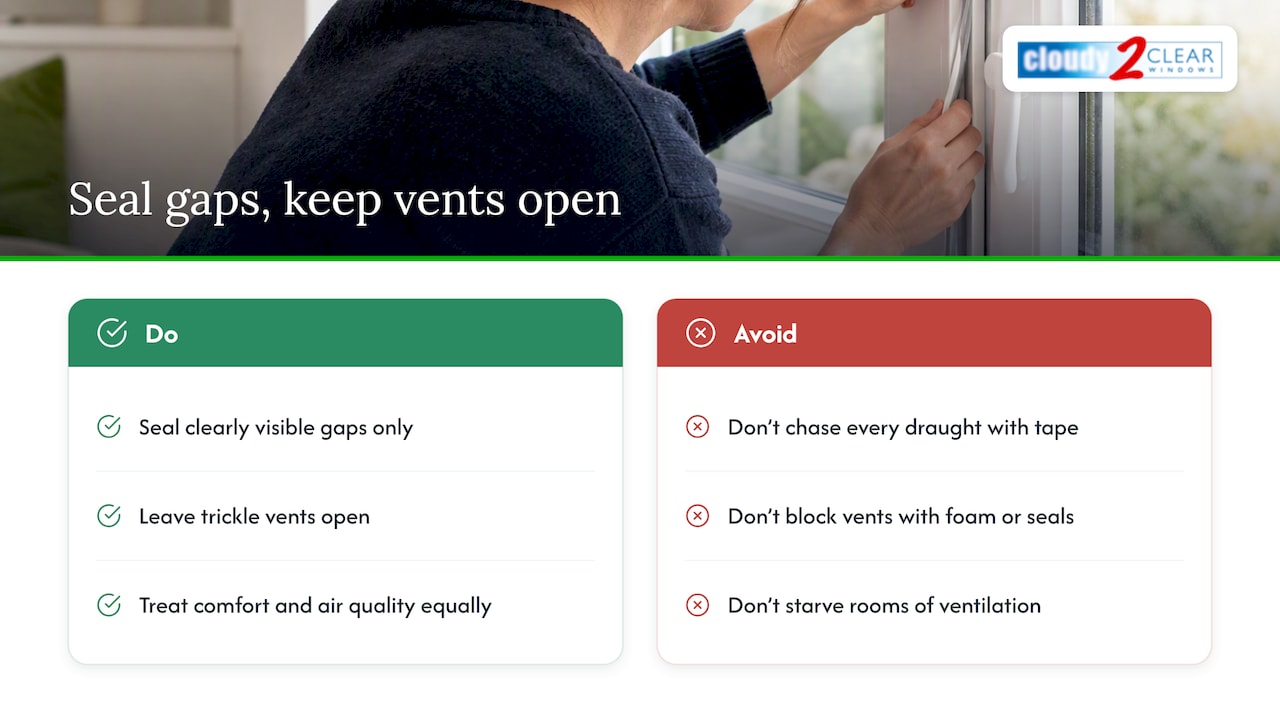
  • Fit self-adhesive draught-proofing strips to window frames and door edges. Draught-proofing is one of the most overlooked quick wins in office buildings.
  • Install plug-in timers on shared equipment such as printers, water boilers and vending machines.
  • Swap the most frequently used lamps to LED where they have not already been replaced.

Pro Tip: Brief your cleaning team and security staff as well as your office staff. They are often the last people in the building and can enforce the last-out rule more reliably than a policy document alone.

How should you manage heating and cooling to cut costs?

Set your office heating to 19°C and cooling to no lower than 24°C. The gap between those two setpoints is called the deadband, and keeping it wide enough prevents your heating and cooling systems from fighting each other simultaneously. A deadband control strategy is one of the simplest, most measurable savings you can make.

Programme your heating on a seven-day timer so it comes on 30 minutes before staff arrive and shuts off 30 minutes before they leave. Avoid leaving it running through weekends. Nearly half of business electricity use occurs outside standard operating hours, and heating is a major contributor to that overnight waste.

Maintenance checklist for boilers and air conditioning:

  • Bleed radiators annually and check for cold spots.
  • Replace air filters in AC units every six months.
  • Check that thermostats are not blocked by furniture or equipment generating heat.
  • Confirm that heating and cooling zones do not overlap on the same timer programme.

When to call an HVAC specialist:

  1. Heating and cooling appear to run at the same time despite correct setpoints.
  2. The system cannot maintain temperature without running continuously.
  3. You want to explore part-load optimisation and heat recovery, which can deliver substantial savings in larger office schemes.
  4. Controls are more than ten years old and lack a seven-day programme.

Which lighting changes save the most energy in offices?

Switch to LED and add occupancy sensors. Those two steps together deliver the fastest lighting savings for most offices. Lighting can account for around 20% of business electricity use, so the return on investment is real.

Occupancy sensors alone can reduce lighting energy use by roughly 30% in intermittently occupied areas such as meeting rooms, toilets and corridors. Daylight sensors dim or switch off lights automatically when natural light is sufficient, which suits open-plan areas with good window coverage.

Implementation priority order:

  1. Meeting rooms and toilets: fit occupancy sensors first as these spaces are empty for long periods.
  2. Open-plan areas: install daylight-linked dimming controls.
  3. Corridors and stairwells: motion-activated LED strips with a short time delay.
  4. External and security lighting: replace with LED and add dusk-to-dawn or PIR controls to avoid lights running through daylight hours.

Payback expectations: LED lamp replacements typically pay back within one to two years through energy savings alone. Sensor installations in meeting rooms often pay back within a similar period given the hours those spaces sit empty.

How can you reduce energy waste from office equipment and IT?

Enable power management settings on every PC and monitor so they drop to sleep mode after ten minutes of inactivity. This single step, applied across a typical office, cuts equipment electricity use during the working day without disrupting anyone. Seven-day timers on shared equipment can reduce energy waste on those devices by up to 70% during overnight and weekend periods.

Steps to apply across your office:

  • Set all PCs and monitors to sleep after 10 minutes and hibernate after 30 minutes.
  • Fit seven-day plug-in timers to printers, water boilers, monitors and shared kitchen appliances.
  • Switch to laptops over desktop towers when replacing devices; laptops typically use significantly less power.
  • Choose Energy Star or A-rated appliances when purchasing replacements.
  • Turn off the office dishwasher’s heated-dry cycle and run it only when full.
  • Switch off vending machines overnight if the supplier permits it.

Pro Tip: Schedule software updates and server maintenance for overnight runs, then use a timed power-down to switch servers to low-power mode once the update window closes. This balances availability with energy savings without requiring manual intervention.

Why do your office windows affect your heating bill?

Failed window seals, single glazing and draughty frames force your heating system to work harder than it should. Fixing draughts and upgrading glazing where U-values are poor reduces heat loss directly and can make a measurable difference to your bills before you touch the boiler or thermostat.

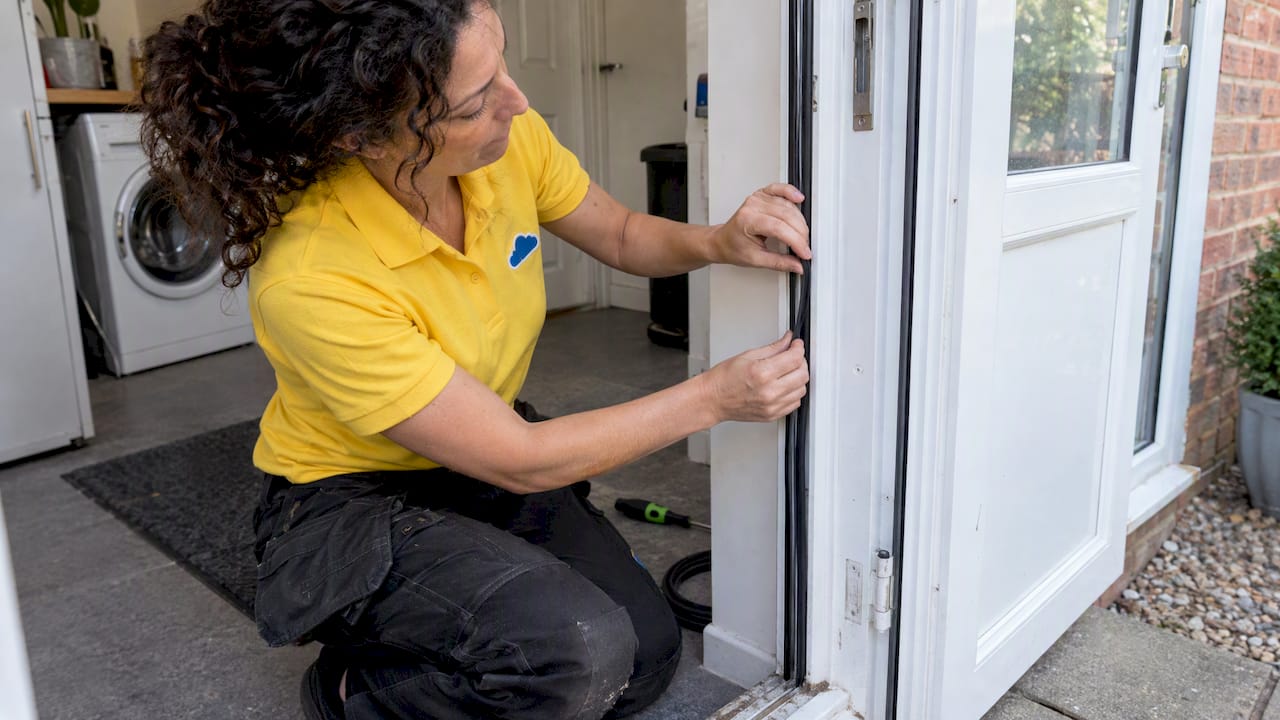
Hands applying draught-proofing strip on window frame


Replacing single glazing with A-rated double glazing can save around £140 per year in a typical GB property. In a commercial building with multiple windows, the cumulative saving is proportionally larger. Low-E glass and double or triple glazing reduce radiant heat loss and cold draughts near window seats, which also improves occupant comfort and productivity.

Signs your glazing is costing you money:

  • Condensation or misting between the panes (failed seal, no longer insulating).
  • Cold spots near windows even when heating is running.
  • Draughts felt at window edges or around door frames.
  • Single-glazed units still in place in older commercial premises.

For offices where only the glass unit has failed rather than the frame, a glass-only repair is often the most cost-effective route. Full frame replacement makes sense when frames are structurally compromised or when upgrading to a significantly higher specification. You can read more about commercial glazing and energy efficiency to understand where each option fits.

Draught-proofing doors is equally worthwhile. Winterising door frames with draught seals and brush strips is a low-cost measure that complements window repairs well.

How do you get staff to actually change their behaviour?

Appoint an energy champion for each floor or department. Give them a simple brief: walk the floor at the end of each day, check that equipment is off at the plug, and report back monthly. Staff behaviour is the single largest variable in office energy consumption, and a champion scheme typically outperforms many higher-cost investments in the short term.

Reinforce the message with printed reminders near light switches and sockets, and share a monthly energy reading with the whole team so staff can see the impact of their actions. Practical steps such as using natural light and managing appliances are simple to communicate and quick to embed as habits.

How do you prioritise measures and estimate savings?

Start with no-cost actions, then low-cost controls, then fabric and capital upgrades. The Carbon Trust notes that businesses frequently underinvest in energy efficiency and that a short, evidence-based business case often unlocks budget for medium-term measures.

Measure Cost band Typical annual saving Rough payback
Switch-off policy and last-out rule No cost Up to 10% of equipment energy Immediate
Seven-day timers on shared equipment Low (£20) Up to 70% on those devices Under 1 year
LED lamp replacements Low–medium (£30 per lamp) around 20% of lighting energy 1–2 years
Occupancy sensors (meeting rooms) Low–medium (£200 per room) ~30% of lighting energy 1–2 years
Draught-proofing strips Low (£10 per window/door) Reduces heating load Under 1 year
Glass-only glazing repair Medium (varies by unit) Reduces heating demand one to two years
Full double glazing upgrade Capital Material reduction in heat loss more than ten years


Diagram of office energy saving measures cost and savings


Combine measures for cumulative effect. A switch-off policy costs nothing; add LED lighting and occupancy sensors, and you have addressed the two largest electricity categories before spending significant capital. Glazing repairs sit in the medium-cost band and fit naturally after the quick wins are in place.

How do you audit your office energy use?

Start with a walk-round during and after working hours. Note what is left on, where draughts are felt, and which areas are overheated or underheated. Compare your meter reading for this month with the same month last year to establish a baseline.

Walk-round audit checklist:

  • Check all lights are off in unoccupied rooms.
  • Feel for draughts at window edges, door frames and any gaps around pipework.
  • Confirm heating and cooling setpoints match your policy.
  • Check that monitors, printers and kitchen appliances are off at the plug after hours.
  • Look for condensation between window panes.

Monitoring steps:

  1. Read your smart meter data weekly for the first month after implementing changes.
  2. Set a baseline from the previous year’s bills for the same period.
  3. Track impact over three months before drawing conclusions.
  4. Consider sub-metering for large floors or server rooms to identify specific drains.

Pro Tip: If your smart meter is not providing half-hourly data to your energy supplier’s portal, contact your supplier and request access. That granularity shows exactly when overnight waste is occurring and which timer settings need adjusting.

Call a glazing professional when you spot condensation between panes, persistent cold spots near windows, or draughts that draught-proofing strips have not resolved. Call an HVAC specialist when heating and cooling appear to run simultaneously or when the system cannot hold setpoint without running continuously.

Where can UK offices find grants and further guidance?

Check Gov first. It sets out no-cost steps, low-cost measures and signposts to grants for larger investments such as heat pumps. The Energy Saving Trust offers practical guidance on glazing, insulation and controls, along with calculators to estimate savings. The Carbon Trust publishes business-focused resources including sector guides and finance tools.

Key UK sources at a glance:

  • gov.uk SME guide: No-cost and low-cost steps plus grant signposting for SMEs.
  • Energy Saving Trust: Glazing, insulation and heating calculators; practical advice for commercial and domestic buildings.
  • Carbon Trust: Business energy efficiency guides, sector reports and finance case studies.
  • Business Energy Efficiency campaign (businessenergyefficiency.campaign.gov.uk): Practical tips and timer guidance for businesses.
  • Ofgem: Energy market data and supplier information; useful for tariff reviews.

Immediate steps:

  • Ask your energy supplier to activate half-hourly smart meter data.
  • Review your tariff annually; switching can reduce unit costs without any physical changes.
  • For glazing work, look for installers registered under TrustMark or a relevant competent person scheme to confirm quality and compliance.

Why glazing problems cost offices more than most managers realise

Failed window seals are easy to overlook because the glass still looks intact. But a misted or failed double-glazed unit has lost its insulating gas fill and is performing little better than single glazing. In a commercial building with ten or twenty such units, the heating demand increase is significant and entirely avoidable.

At Cloudy2Clear Windows, we regularly carry out commercial glazing inspections where the brief starts as a general energy review and ends with several failed units identified that the facilities team had not connected to their heating costs. A glass-only repair, where the frame is sound, is typically far more cost-effective than a full window replacement and can be completed with minimal disruption to the working day.

If you are planning a broader energy upgrade, a glazing inspection is a sensible early step. Our guide to energy-efficient window upgrades walks through what to look for and how to prioritise repairs alongside other fabric measures.

Cloudy2Clear Windows can help with your office glazing

Offices with misted, cracked or draughty windows are paying more to heat their space than they need to. Cloudy2Clear Windows offers commercial window repairs and glass replacements for businesses of all sizes, from single failed units to full commercial fenestration programmes.

Cloudy2clearwindows

Our glass-only repair service means you keep your existing frames where they are sound, cutting both cost and disruption. We work across the commercial sector, including offices, housing associations and commercial premises, and our teams are available Monday to Friday, 8:30am to 6:30pm. To arrange a commercial glazing survey or repair, visit our commercial fenestration page or find your nearest branch to book directly.

Sources

FAQ

What are the simplest energy saving tips for an office?

Switch off lights and equipment at the plug when not in use, set heating to 19°C on a seven-day timer, and apply a last-out rule for all staff. These no-cost steps can reduce office energy use by up to around 20%.

How can an organisation save energy most quickly?

The fastest route is a combination of a switch-off policy, power management settings on all PCs and monitors, and timers on shared equipment. These require no capital spend and can be implemented within a working week.

Do occupancy sensors make a real difference to lighting bills?

Yes. Occupancy sensors can reduce lighting energy use by roughly 30% in intermittently occupied areas such as meeting rooms and corridors, with payback periods typically under two years.

How does glazing affect office energy costs?

Failed or single-glazed window units allow heat to escape and create cold draughts that push heating demand higher. A glass-only repair on a failed double-glazed unit restores its insulating performance and is often the most cost-effective fix before considering a full replacement.

Where can UK businesses find grants for energy efficiency improvements?

The GOV.UK SME energy efficiency guide signposts grants and funded support for measures including heat pumps and insulation. The Energy Saving Trust and Carbon Trust also publish funding routes and calculators relevant to UK businesses.

Child-safe windows: what every parent needs to know

Child-safe windows prevent falls and save lives. Fit compliant restrictors or guarding on every upstairs and low-cill window, move climbable furniture away from sills, and check that existing hardware actually works. RoSPA recommends restrictors that allow ventilation while stopping a child from opening a window wide enough to fall. Building Regulations Part K sets the legal thresholds, and Awaab’s Law now compels social landlords to act within tight timeframes. Cloudy2Clear Windows can inspect, repair, or replace window hardware and glazing to bring your home up to standard.

Right now, do these three things:

  • Fit window restrictors or guarding on all upstairs windows and any window with a low cill
  • Move beds, chairs, and other climbable furniture at least 500mm away from every window
  • Test every existing restrictor by hand; if it moves more than 100mm or feels loose, treat it as failed

Statistic: Research published in the Archives of Disease in Childhood found that 73.3% of children hospitalised after window falls were under five years old.

Why do so many children fall from windows?

Infographic showing child window safety key steps


Toddlers are the highest-risk group precisely because they are curious, fast, and have no sense of height. A child under five can climb onto a low bed, step onto a windowsill, and lean against a pane before an adult in the next room has time to react.

The National Child Mortality Database briefing on falls from windows and balconies found that in 8 of 13 recorded child deaths involving windows, a restrictor was present but broken or disabled. That figure reframes the problem: the issue is not always the absence of safety hardware, but the failure to maintain it. Head trauma is the most common serious outcome, and many children who survive a fall from height face long-term neurological consequences.

Risk concentrates around three patterns: low cills that a toddler can step onto unaided, furniture placed within reach of a window, and restrictors that have been overridden or have corroded. Addressing all three together is what actually reduces harm. Restricting the opening alone is insufficient if a child can still climb to the sill.

What do UK law and regulations require?

Awaab’s Law: landlord obligations

Awaab’s Law applies to social landlords in England and requires them to investigate significant hazards, including unsafe windows, and complete relevant safety work within five working days of finishing the investigation. Where a hazard cannot be resolved in time, the landlord must provide suitable alternative accommodation for the family, including children. Guidance for social landlords makes clear that hazards affecting children are to be prioritised.

Building Regulations Part K

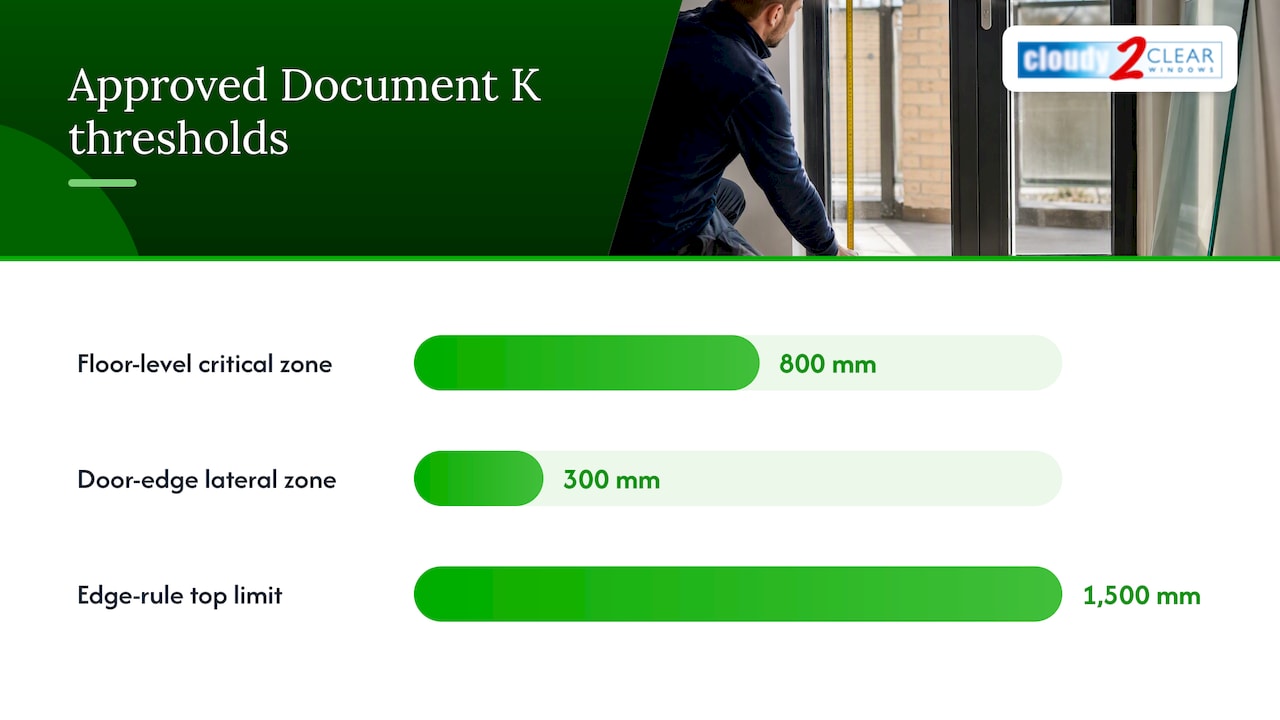
Part K requires protection wherever a person could fall more than 600mm. For openable windows in those locations, the rules are:

  • The window must be restricted so it cannot open more than 100mm, or
  • Guarding of at least 1,100mm must be provided with a non-climbable barrier

NHBC guidance notes that standard releasable restrictors may not satisfy Part K where a 100mm opening must be prevented; permanent or robust guarding may be required instead.

Landlord and homeowner action checklist:

  • Report broken or missing restrictors to your landlord in writing and keep a copy
  • Document the date of any repair request; this starts the Awaab’s Law clock for social tenants
  • Choose hardware that is certified to resist a 100mm sphere where Part K applies
  • Confirm with your installer whether a releasable restrictor or fixed guarding is legally required for your window type

Which window types carry the greatest risk?

Not every window presents the same hazard. Knowing your window type helps you prioritise.

  • UPVC casement windows open outward on a side hinge; a child leaning against the pane can push it open if the restrictor is weak or absent
  • Sash windows slide vertically; the lower sash can be pushed up by a toddler, and the upper sash may be overlooked as a risk
  • Low-cill windows and French doors have sills close to floor level, making them climbable without any furniture nearby
  • Velux and roof windows sit in the roof plane; a child who reaches one faces a steep fall onto a pitched surface
  • Balcony doors and floor-to-ceiling glazing require guarding rather than restrictors, per BCA Technical Guidance Note 16, which provides dimensional guidance on when non-climbable barriers are required

Low-cill windows are particularly deceptive. A cill at 300mm above floor level is within easy step-up range for a two-year-old. As children grow, their reach and climbing ability change rapidly, so a window that seemed safe at 18 months may become a hazard by age two and a half.

Pro Tip: Get down to your child’s eye height in each room and look at every window from their perspective. You will often spot climbable routes, low cills, or furniture positions that are invisible from adult height.

What hardware options are available for child window safety?

Hardware type How it works Best suited to Escape-route compatible?
Releasable restrictor Limits opening to ~100mm; adult can release with key or push-button Bedrooms, living rooms Yes, if adult-operable
Permanent restrictor / fixed guard Fixed bar or grille; cannot be released without tools Low-cill windows, communal areas No — do not fit on escape windows
Keyed window lock Locks sash or casement shut; key required to open Ground-floor rooms, sash windows Yes, if key is accessible
Sash stop Small device fitted to sash channel; limits travel Sash windows Yes
Cable restrictor Steel cable limits opening width Casement and tilt-and-turn windows Yes, if adult-operable


Selection checklist:

  • Age of youngest child (under two: prioritise fixed guarding on low-cill windows)
  • Whether the window is a designated escape route
  • Cill height and whether Part K guarding thresholds apply
  • Material strength: the device must resist a 100mm sphere under load
  • Maintenance access: can you test and replace it without specialist tools?

Pro Tip: For family bedrooms, choose a restrictor that an adult can release in under five seconds but that a child under ten cannot operate unaided. For communal stairwells or rooms with low cills, fixed guarding is the safer default.

Hands installing window restrictor hardware at home

How do you balance ventilation with emergency escape?

Permanent restrictors solve the fall problem but can reduce purge ventilation, the ability to open a window fully to clear stale air or smoke. They also create a conflict with escape requirements if the window is the only means of exit from a room.

The practical rule: never fit a permanent, non-releasable restrictor on a window that serves as a means of escape. Use a releasable restrictor or keyed device instead, and store the key where adults can reach it in seconds but children cannot.

Safe ventilation options that preserve escape:

  • Trickle vents built into the frame (no opening required)
  • Releasable restrictors that allow a controlled 100mm opening for background ventilation
  • Keyed casement stays that adults can open fully when supervised ventilation is needed

Pro Tip: Label escape-route windows clearly, for example with a small sticker on the frame, and tell every adult in the household where the release key or device is kept. Run a practice drill so the action is automatic under stress.

Inspection, maintenance, and typical costs

Inspection schedule

  1. Monthly: Visually check every restrictor and lock; tug the restrictor to confirm it holds at 100mm; look for corrosion, loose fixings, or cracked frames
  2. Annually: Book a professional inspection; test resistance to a 100mm sphere; lubricate hinges and moving parts; replace any corroded or worn components
  3. Immediately: After any reported damage, forced entry attempt, or tenant complaint about a window not locking

Typical repairs and indicative timelines

Repair or upgrade Indicative timeline Approximate cost band
Restrictor installation (per window) 30 minutes
Lock or handle replacement 30 minutes
Double-glazing pane replacement Half to full day £300+ depending on size
Fixed guarding installation 1–3 hours £200+ per window


These are broad estimates. Actual costs vary by region, window type, and condition. Always obtain a written quote.

Social landlords operating under Awaab’s Law must complete significant hazard repairs within five working days of investigation. Homeowners should aim for the same urgency when a restrictor is broken or a window will not lock.

Immediate home-proofing steps you can take today

  • Move beds, sofas, and chairs at least 500mm from any window
  • Fit window stops or temporary restrictors on upstairs windows right away
  • Lock windows whenever they are unattended, even briefly
  • Use cord shorteners or cord cleats on all window blinds to eliminate strangulation risk
  • Supervise children actively whenever any window is open

Temporary adhesive restrictor devices and window alarms are available as short-term measures, but treat them as interim only. They are not a substitute for a properly fitted, tested restrictor or guarding that meets Part K. For practical security steps that complement child safety, Cloudy2Clear Windows has published a homeowner guide.

Pro Tip: Keep a simple notebook log of every window check, repair request, and professional visit. If you are a tenant, this record is your evidence if a landlord disputes a repair timeline under Awaab’s Law.

When should you call a professional?

Some problems cannot wait and should not be handled with a temporary fix.

Call a professional if you notice:

  • A restrictor that is broken, missing, or moves beyond 100mm
  • A frame that is warped, cracked, or no longer holds the sash square
  • Failed double glazing (misting between panes indicates seal failure, which also weakens the unit)
  • A window that will not lock or latch securely
  • Visible damp or mould around the frame linked to a broken seal or damaged window

Questions to ask your repairer or installer:

  • Are you insured, and can you provide a written guarantee?
  • Does this installation comply with Building Regulations Part K?
  • Will you fit permanent guarding if the restrictor is not legally adequate for this window?
  • Can you provide a written quote and confirm the timeline before starting work?

Expect a professional visit to include a safety check, a quoted repair or replacement, and an estimated time on site. Tenants in social housing should note the date of any professional visit, as this forms part of the Awaab’s Law repair timeline. For risks associated with ageing windows, Cloudy2Clear Windows outlines the warning signs that indicate a window is past repair.

Home inspector testing child-safe window restrictor

Choosing the right solution for your child’s age and stage

A newborn presents no window risk, but a home changes fast. By 12 months, a child pulls to stand; by 18 months, they climb. By three, many children can operate simple lever mechanisms.

  • Under 18 months: Focus on furniture placement and ensuring windows cannot be opened at all when unsupervised
  • 18 months to 3 years: Fit restrictors rated for child resistance; this is the highest-risk window, so prioritise bedrooms and play rooms first
  • 3 to 7 years: Children can operate push-button restrictors; move to keyed devices or fixed guarding on high-risk windows
  • 7 and above: Educate children directly about window danger; keyed devices remain appropriate for upper floors

Reassess your hardware every time a child reaches a new developmental stage. What was adequate at two may be insufficient at four.

Emergency escape: making child-safe fittings work in a fire

A fire changes everything. The fitting that keeps a child safe on a Tuesday afternoon must not trap the family on a Wednesday night. Every escape-route window needs a releasable restrictor or keyed lock, with the release mechanism stored within adult reach but out of a child’s sight and grasp.

For child safety window options that address both fall prevention and escape, a range of hardware types is available to suit different frame materials and opening configurations.

Check that any guarding or restrictor leaves the minimum clear opening required for escape once released. Practice the release action with every adult in the household so it becomes automatic. Never assume a child can operate a release device in a panic; the adult must be the one who acts.

Educating carers and family members about window safety

Consistent safety depends on everyone in the household understanding the rules, not just the primary carer. Grandparents, older siblings, childminders, and occasional visitors all need a brief, clear briefing.

Cover three points with every carer:

  1. Which windows have restrictors and how they work
  2. Where escape-route keys are stored and how to release the device quickly
  3. The rule: never leave a window open and unattended when a child under seven is in the room

A laminated card on the inside of a cupboard door, listing window rules and key locations, takes five minutes to make and removes ambiguity. Newham Council’s guidance on keeping children safe around windows is a useful reference to share with carers who want more detail.

Our view on child window safety

The cases that concern us most are not the homes with no restrictors at all. They are the homes where a restrictor was fitted years ago, was never tested again, and had quietly failed. Hardware corrodes, fixings loosen, and children grow stronger. A restrictor that passed a tug test in 2021 may not pass one today.

Cloudy2Clear Windows has been repairing and replacing double glazing since 2005, and in that time we have seen the same pattern repeatedly: a window that looks fine from the outside has a handle that spins freely, a lock that no longer engages, or a restrictor arm that snaps under light pressure. These are not dramatic failures. They are gradual ones, and they are entirely preventable with a scheduled annual inspection.

If you have not tested your window restrictors recently, do it today. If anything feels wrong, book a professional check before the end of the week.

Cloudy2Clear Windows can help you secure your home

Cloudy2Clear Windows offers glass-only double-glazing repairs, lock and handle replacements, and compliance inspections for residential and housing association properties across the UK. If a window pane has failed, a restrictor is broken, or you need guarding fitted to meet Part K, the team can assess, quote, and complete the work efficiently.

Cloudy2clearwindows


For a broken window repair or a full double-glazing replacement, contact your nearest branch to arrange a visit. The team operates Monday to Friday, 8:30am to 6:30pm. Find your local branch at cloudy2clearwindows.co.uk and book a time that suits you.

Useful sources

Report hazards to your landlord in writing and reference Awaab’s Law and Building Regulations Part K when requesting urgent repairs.

FAQ

What is the best way to childproof windows in a UK home?

Fit a releasable restrictor that limits the opening to 100mm on all upstairs and low-cill windows, move climbable furniture away from sills, and test every device monthly. Where Part K requires it, permanent guarding is the legally compliant option.

What are the benefits of fitting child-safe window restrictors?

Restrictors prevent a window from opening wide enough for a child to fall through, while still allowing ventilation. RoSPA guidance recommends devices that adults can release quickly in an emergency but that children cannot operate in everyday use.

How quickly must a social landlord repair an unsafe window?

Under Awaab’s Law, social landlords in England must complete repairs for significant hazards within five working days of completing their investigation, or provide suitable alternative accommodation for the household.

How often should window restrictors be inspected?

Check restrictors by hand every month and arrange a professional inspection annually. Replace any device that moves beyond 100mm under light pressure, shows corrosion, or has loose fixings.

At what age are children most at risk from window falls?

Research shows that 73.3% of children hospitalised after window falls are under five years old, making the toddler years the highest-risk period and bedrooms and play rooms the priority spaces for safety hardware.

Security features in windows: the UK homeowner’s guide

The physical security features that make the biggest difference are laminated or toughened glazing, multi-point locks with a key or thumb-turn deadlock, reinforced frames with increased fixings, hinge protection, and anti-snap cylinders. Together, these are the building blocks of any credible window or door upgrade, and they are what PAS 24 — the British Standards Institution’s enhanced-security standard — tests as a complete unit. Cloudy2Clear Windows fits and repairs all of them across residential and commercial properties throughout the UK.

The single most important behaviour to adopt right now is the ‘LIFT, LOCK, REMOVE’ routine, recommended by ProtectUK and the Door and Hardware Federation: lift the handle to engage the locking points, turn the key or thumb-turn to fully deadlock, then remove the key. Leaving a multi-point lock on the handle-lift alone does not fully engage the deadlock and leaves the window or door vulnerable.

Key features to prioritise:

  • Laminated or toughened glass (or a laminated interlayer in double-glazed units)
  • Multi-point espagnolette locks with key or thumb-turn deadlock
  • Reinforced frames with fixings into the structural reveal
  • Hinge claws, dogbolts or internally located hinge fixings
  • Internal beading with security clips or screw-fixed retention
  • Window restrictors that allow ventilation without compromising security
  • Anti-snap cylinders on any door within the same property

Pro Tip: If you are leaving the property now and have not yet upgraded, lock every window with the key, remove the key, and store it away from the window. That single step removes the most common route for opportunistic entry.

What are the essential security features for your windows?

NPSA’s technical guidance identifies six factors that determine a window’s resistance: opening mode, material assembly, locking mechanism, hinges, glazing method, and installation fixings. Upgrading only one of these while leaving the others weak is a common and costly mistake.

Glazing

Laminated glass holds together when struck, delaying entry by forcing an attacker to work through a sticky, fragment-retaining interlayer. Toughened glass shatters into small pieces on impact, which reduces injury risk but offers less delay. For higher-risk properties, a toughened-plus-laminated unit combines both benefits. Anti-shatter film is a retrofit option that provides similar fragment retention and typically needs periodic replacement to maintain its rated performance.

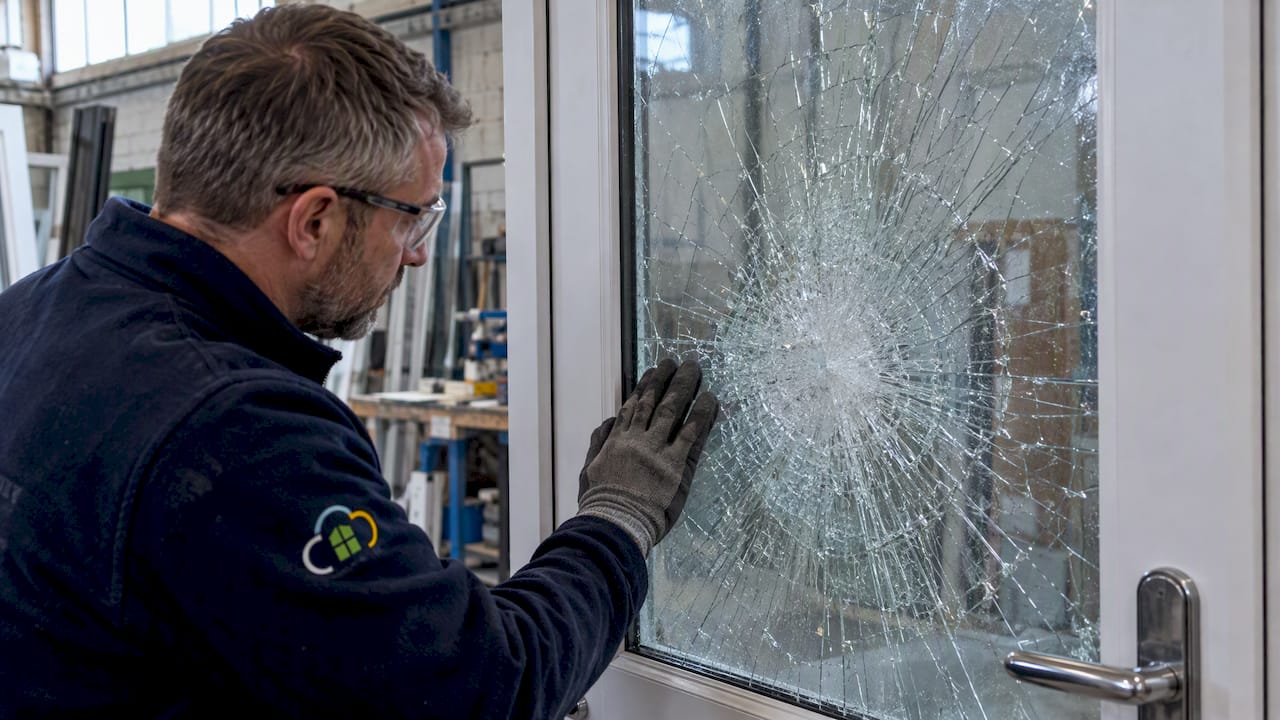
Close-up laminated glass window security test


For casement and tilt-and-turn windows, a laminated inner pane is usually the most practical upgrade. Sash windows often benefit from secondary glazing fixed securely to the reveal, which also adds acoustic performance.

Infographic showing five key window security steps

Locks and locking points

Single-point locks secure the window at one location only. Multi-point espagnolette systems engage at the top, bottom, and sides simultaneously, distributing load across the frame. The critical detail: most multi-point systems are not fully secure unless the key or thumb-turn is turned to deadlock after lifting the handle.

“Balanced design means every component — fixings, frame, glazing, locks and hinges — must be upgraded to the same resistance level. Upgrading one part alone leaves weaknesses that an attacker will find.” NPSA

Frames, hinges, and beading

Reinforced frames with fixings set into the structural reveal resist lever attacks far better than frames fixed only into the surrounding plaster. Hinge claws and dogbolts prevent outward-opening windows from being lifted off their hinges even when the hinge itself is exposed. For externally beaded windows, ProtectUK and NPSA recommend security clips, double-sided security tape, or screw-fixed beading to prevent undetected glass removal from outside.

Restrictors allow ventilation while limiting how far a window opens. On escape routes, choose a restrictor with a quick-release mechanism so occupants can exit in an emergency. Shutters can add a further layer of delay when fixed correctly, particularly for ground-floor or basement windows.

Pro Tip: Secondary glazing fixed to the reveal is one of the most cost-effective upgrades for sash windows in conservation areas, where replacing the original frame is not permitted. Check whether the secondary unit carries a security rating before specifying it.

Which UK standards apply and what does compliance actually mean?

PAS 24 is the primary enhanced-security standard for doors and windows in the UK. It tests the complete unit — frame, glazing, and hardware — as a single configuration. A window where the glass meets PAS 24 but the frame does not is not a PAS 24 compliant product.

Part Q of the Building Regulations requires easily accessible windows in new dwellings to resist physical attack. PAS 24 and BS EN 1627 are the two accepted routes to demonstrating compliance. Part Q applies to new builds; it does not retrospectively require existing windows to be replaced, but it sets a useful benchmark when you are specifying replacements.

“PAS 24 compliance is not a component-level claim — it belongs to the whole tested assembly. Swapping the glazing or the hardware after testing voids the compliance evidence.” LABC

Documents to request from any supplier or installer:

  • The manufacturer’s whole-unit PAS 24 test certificate, showing the exact frame, glazing, and hardware configuration tested
  • LPCB or BRE listing reference where applicable
  • UKAS accreditation details for the test laboratory
  • Installer membership of FENSA or CERTASS (for replacement windows under Building Regulations notification)
  • Written guarantee covering both the product and the installation
  • Proof of public liability insurance

Secured by Design accreditation is a useful additional signal: it requires products to meet PAS 24 as a minimum and involves independent assessment.

Repair or replace? Typical UK costs and timelines

The decision usually comes down to three questions: how much frame damage is there, how old is the hardware, and does whole-unit test evidence exist for the current installation?

Job type Approximate cost range Typical on-site time
Single lock or hinge repair 1–2 hours
Multi-point lock replacement 2–3 hours
Anti-shatter film (per pane) 1 hour
Secondary glazing (per window) Half to full day
Full double-glazed unit replacement Half to full day
Full window replacement (PAS 24) 1–2 days


Ranges are illustrative and vary by frame size, material, access, and region.

Factors that push costs higher include bespoke frame sizes, listed-building or conservation-area constraints, scaffold requirements for upper floors, and the need for PAS 24 tested replacements where Part Q applies. Lead times for standard double-glazed units are typically 2–4 weeks; bespoke heritage profiles can take longer.

When to repair rather than replace:

  1. The frame is structurally sound and undamaged.
  2. The hardware is faulty but the unit itself has no compliance issues.
  3. The property is listed or in a conservation area where replacement is restricted.
  4. Budget constraints make a phased approach necessary — prioritise locks and hinges first.

What does a professional inspection and repair actually involve?

A competent installer will ask about the age of the installation, any known faults, access restrictions, and whether the property is listed or in a conservation area before visiting.

On-site, a thorough inspection covers:

  • Opening mode and frame condition
  • Frame fixings and depth into the reveal
  • Glazing retention method (internal or external beading, clips, tape)
  • Number and location of locking points
  • Cylinder type on any associated doors
  • Hinge condition and whether hinge protection is present
  • Evidence of previous repairs or upgrades

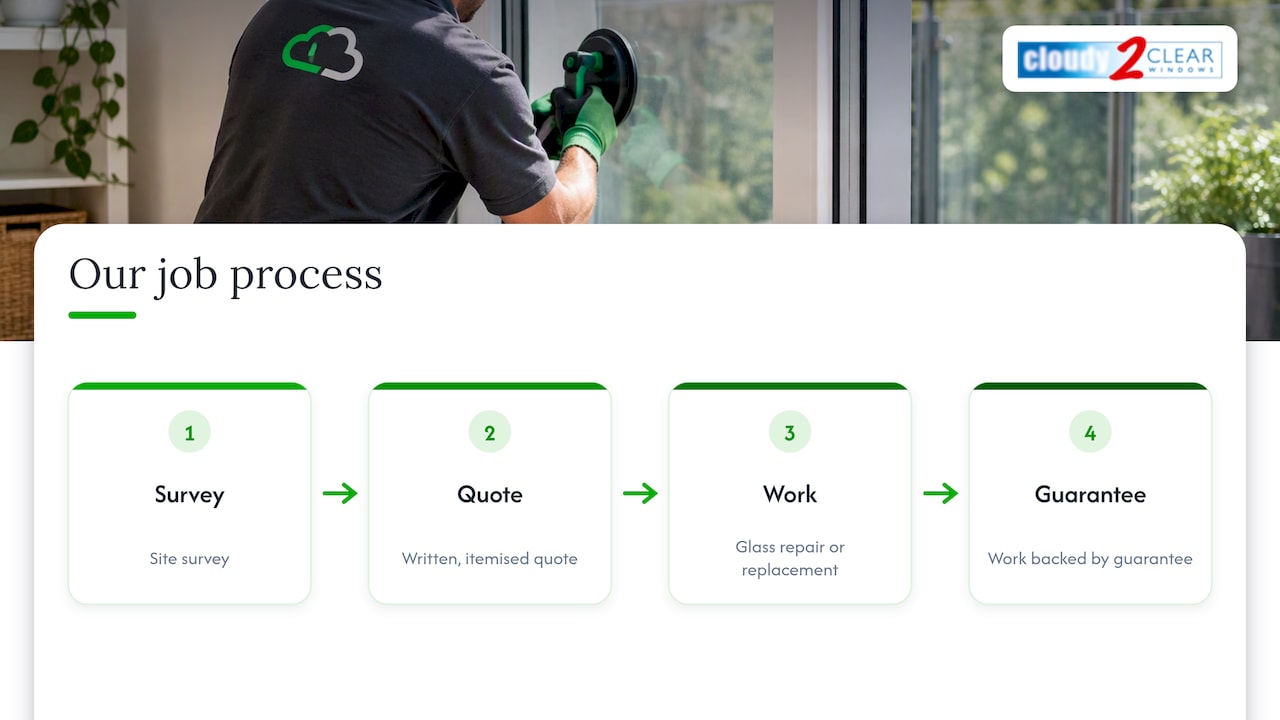
The written report should include photographic evidence, a clear description of recommended works, any compliance implications, and itemised pricing. Vague quotes that bundle everything into a single figure make it impossible to compare contractors fairly.

On completion, a professional will demonstrate the ‘LIFT, LOCK, REMOVE’ routine to every household member or building manager present, hand over written warranty details, and confirm their public liability insurance is in place. Practical repair steps and expected workmanship standards are worth reviewing before any contractor visit so you know what to expect.

How do you choose the right contractor and what should you ask?

The right contractor will answer your questions directly, provide written evidence, and never pressure you into an immediate decision.

Selection criteria:

  • Public liability insurance (ask for the certificate, not just a verbal confirmation)
  • Written guarantee covering product and installation
  • FENSA or CERTASS membership for replacement window work
  • PAS 24 test certificates for any products they propose
  • Local references and photographic examples of similar past work

Questions to ask on first contact:

  • Do you supply PAS 24 tested units, and can you show the whole-unit test certificate?
  • Are the fixings and installation method included within the tested scope?
  • What warranty do you offer, and is it backed in writing?
  • Can you provide proof of public liability insurance before work starts?

“Any installer who cannot produce a whole-unit test certificate for a PAS 24 product is either supplying a non-compliant product or cannot verify what they are fitting. Either way, walk away.” LABC

Red flags to watch for:

  • Evasive or vague answers about test evidence
  • No written, itemised quote
  • Cash-only payment requests
  • Inability to provide trade references or insurance documentation

Pro Tip: Shortlist two or three local installers, compare written quotes line by line, and confirm lead times and contract terms before committing. A contractor who resists putting terms in writing is telling you something important.

For listed buildings or conservation areas, check with your local planning authority before specifying any replacement unit. Secondary glazing and window coverings that meet current regulations are often the only permitted route to improved security without planning consent.

The upgrade that most property owners overlook

Most of the properties Cloudy2Clear Windows visits have at least one window where the lock is worn, the beading is external, or the glazing unit has failed. The glass gets noticed because it looks cloudy; the lock gets ignored because it still turns. That is the wrong priority. A failed seal is a comfort issue. A worn multi-point lock on an accessible ground-floor window is a security issue.

Since 2005, the upgrades that have made the most consistent difference for our customers are multi-point lock replacements, laminated glass units on ground-floor and accessible windows, and hinge protection on outward-opening casements. These are not the most expensive jobs. They are the ones that remove the easiest entry points. Customers who have had these done consistently report fewer concerns at insurance renewal and greater confidence when the property is unoccupied.

We provide itemised quotes, test evidence where applicable, and public liability insurance details on every job. No surprises.

Cloudy2Clear Windows can help you upgrade your window security

Worn locks, failed glazing units, and unprotected hinges are the three most common security gaps Cloudy2Clear Windows finds on inspection visits. Fixing them does not always mean a full window replacement.

Cloudy2clearwindows


Cloudy2Clear Windows offers lock, hinge, and handle repairs, glass replacement with laminated or toughened units, secondary glazing, and fully compliant whole-unit replacements for residential and commercial properties. Every job comes with a written quote, itemised pricing, and a written guarantee.

To book an inspection or get a quote, visit the Cloudy2Clear Windows website or call your local branch. Have the age of your windows, any known faults, and your property type ready to speed up the process. The team is available Monday to Friday, 8:30am to 6:30pm.

Useful sources

  1. NPSA: Protect Your Home — Comprehensive guidance on physical security measures for domestic properties, including windows, doors, and perimeter security.
  2. GOV.UK: Approved Document Q — The Building Regulations document setting security requirements for doors and windows in new dwellings in England.
  3. LABC: Part Q security of windows — Plain-language explanation of Part Q scope, PAS 24 evidence requirements, and what installers must provide.
  4. ProtectUK: Physical security measures — Police-backed guidance on anti-shatter film, locks, and complementary deterrents including lighting and alarm systems.
  5. BSI / NBS: PAS 24 enhanced security standard — The primary UK standard for whole-unit testing of doors and windows; request this reference when asking suppliers for compliance evidence.

Request manufacturer test certificates, installation evidence, and written warranties from any supplier before work begins.

FAQ

What does PAS 24 compliance mean for a window?

PAS 24 tests the entire window assembly — frame, glazing, and hardware — as one unit. A product is only PAS 24 compliant when all three components match the tested configuration exactly.

Does Part Q require me to replace existing windows?

No. Part Q applies only to easily accessible windows in new dwellings. It does not require existing windows to be upgraded retrospectively, but it sets a useful benchmark when you are specifying replacements.

What is the ‘LIFT, LOCK, REMOVE’ routine?

Lift the handle to engage the locking points, turn the key or thumb-turn to fully deadlock the window or door, then remove the key. Leaving the lock on handle-lift alone does not engage the deadlock.

How long does a multi-point lock replacement take?

A straightforward multi-point lock replacement typically takes 2–3 hours on site. Cloudy2Clear Windows carries out this repair alongside hinge and handle work as part of a single visit where possible.

Do I need planning permission to upgrade window security on a listed building?

Replacing windows on a listed building or in a conservation area usually requires listed building consent or planning permission. Secondary glazing and security film are often the only permitted options; always confirm with your local planning authority before specifying any replacement unit.

Why specify fire rated glass: UK compliance guide

Specify fire-rated glass whenever an opening forms part of a fire-separating element. It is a tested, certified component of a fire-resisting system that protects escape routes, maintains compartmentation, and satisfies UK building regulations. Standard toughened or laminated glass offers no fire resistance, regardless of how it looks or how it was installed.

The immediate reasons to specify it are straightforward:

  • Life safety: keeps escape routes usable for a rated period so occupants can get out
  • Compartmentation: stops fire and smoke spreading between zones of a building
  • Compliance: Approved Document B sets minimum resistance periods for glazed elements in fire-separating constructions
  • Insurance and liability: non-compliant glazing can void cover and expose you to enforcement action
  • Property protection: slows structural damage and limits the spread of heat

What do the fire-resistance ratings on glass actually mean?

Fire-rated glass is classified by what it resists and for how long. The three performance classes you will see on BS EN 13501-2 test reports and specification sheets are:

  • E (integrity): prevents flames and hot gases passing through for the rated period
  • EW (integrity + radiation control): as above, plus limits radiant heat on the unexposed face
  • EI (integrity + insulation): as above, plus limits the temperature rise on the unexposed face

The minute rating (30, 60, 90 or 120) follows the letter code. So EI60 means 60 minutes of both integrity and insulation. Approved Document B also references the REI notation, where R indicates load-bearing resistance — relevant for structural glazed elements.

Rating What it does Typical use
E Provides integrity (flame/smoke barrier) for a period Vision panels in internal doors and other applications
EW Provides integrity plus limits radiant heat Screens near escape routes and similar locations
EI Provides integrity and insulation against heat transfer Protected corridors, stairways, compartment walls, and higher risk areas


Infographic comparing E and EI fire-rated glass ratings


EI is commonly required for escape routes because it limits heat transfer as well as preventing flame passage. E-only glazing may be restricted in area on some escape routes under Approved Document B tables.

Where in a UK building must you use fire-rated glazing?

The short answer: anywhere the glazing sits within a fire-separating element. Common locations include:

  • Fire doors with vision panels in protected corridors, stairwells and lobbies
  • Protected escape routes in flats, offices, schools and care homes
  • Compartment walls between separate occupancies or fire compartments
  • Staircase enclosures in houses with loft conversions (a frequent discovery during refurbishment)
  • Façades and external walls where unprotected area limits apply under Approved Document B

The Regulatory Reform (Fire Safety) Order 2005 places a duty on the Responsible Person in non-domestic premises to maintain passive fire protection, including glazing. In practice, fire-rated glazing is often discovered to be missing or incorrectly replaced during refurbishment or a fire-risk assessment. If you are planning interior door replacements, it is worth checking whether any glazed panels fall within a fire-rated location before work begins; see this guidance on what to consider when replacing interior doors.

How is fire-rated glass tested and what proof should you ask for?

The two test standards you will encounter are BS 476 Part 22 (the historic British standard, still referenced for older installations) and BS EN 13501-2 (the current European classification system). For new applications, EN classifications should be specified; guidance indicates these will be mandatory in certain contexts.

Third-party certification gives you independent assurance that a product consistently meets its claimed rating. Look for:

  • Certifire approval mark (a UKAS-accredited scheme)
  • BSI Kitemark on the glass or its packaging
  • Permanent markings on the glass itself: manufacturer name, product reference and test standard

The Glass and Glazing Federation recommends checking the glass for manufacturer markings and confirming test data with the supplier before installation. A certificate alone is not enough — the certificate must match the exact product and system being installed.

Pro Tip: Cross-reference the Certifire or BSI certificate number against the manufacturer’s published data sheet. The glass product name, thickness and system reference should match exactly. If they do not, the installation may fall outside the tested scope.

Documents to request from your installer or supplier before work starts:

  • Test report reference (BS EN 13501-2 classification report)
  • Third-party certification number (Certifire or BSI Kitemark)
  • Manufacturer’s system reference and permitted dimensions
  • Evidence of installer competence (training records or scheme membership)

Why ‘like-for-like’ glass replacement can invalidate fire resistance

This is the most common and most dangerous mistake. Fire-rated glass is not a standalone product; it must be installed as part of a complete, tested fire-resistant glazed system. The frame, glazing seals, beads and fixings are just as important as the glass itself. Substituting any single component can invalidate the entire fire rating.

Common errors that invalidate fire resistance:

  • Substituting standard toughened glass for a rated product
  • Using non-rated or incorrect glazing seals and intumescent strips
  • Installing rated glass in a frame that was not part of the tested system
  • Making on-site modifications to dimensions outside the tested scope
  • Damaging intumescent components during fitting

The enforcement and insurance consequences are real. A building-control officer or fire authority inspector can require remedial work, and an insurer may decline a claim if non-compliant glazing contributed to fire spread. Your glazing compliance record directly affects your cover.

How often should you inspect fire-rated glazing?

Tie fire-rated glazing checks to your fire-door inspection cycle and your fire-risk assessment review. As a minimum, inspect annually. Three triggers require an immediate check regardless of schedule:

  1. Refurbishment or building works near any glazed fire-separating element
  2. A fire brigade visit or enforcement notice
  3. An insurer instruction or insurance renewal survey

Inspection checklist

  1. Confirm permanent markings are present and legible on the glass
  2. Check intumescent strips and glazing seals for damage, compression or missing sections
  3. Inspect the glass for cracks, chips or any sign of unauthorised replacement
  4. Examine beads and fixings for looseness, corrosion or DIY alterations
  5. Verify that no on-site modifications have been made to the frame or aperture size
  6. Record findings in your passive fire protection survey log

Pro Tip: Intumescent seals can be damaged by ordinary cleaning products and minor impacts. Never use abrasive cleaners near glazing seals in fire-rated doors or screens, and flag any impact damage for professional assessment before the next inspection.

What are the practical trade-offs with fire-rated glazing?

Fire-rated glass costs more than standard glazing and typically carries longer lead times. The table below gives qualitative guidance to help you plan.

Two colleagues discussing fire-rated glazing trade-offs


Factor Fire-rated glazing Standard double glazing
Cost Noticeably higher, especially for EI products Lower
Lead time Often 2–6 weeks for certified units Usually 1–2 weeks
Thermal performance Generally lower U-values than modern double glazing Better thermal efficiency available
Acoustic performance Varies by product; some EI glass performs well Wide range available
Appearance options Clear, tinted and wired options; wired glass is visually distinctive Broad range


The thermal gap is worth planning for. If you are replacing glazing in a fire-rated location and energy performance matters, ask your installer about glazing options for energy efficiency that are compatible with the required fire classification. Some EI products can be specified with low-emissivity coatings, though the tested system reference must still be maintained.

What should you ask an installer before specifying the job?

A compliant specification needs more than a product name. Include these items in any tender or quote request:

  1. Required classification (E, EW or EI) and duration in minutes
  2. Full glazed-system reference: manufacturer, frame type and associated test report number
  3. Permitted pane dimensions within the tested system
  4. Confirmation that seals, beads and fixings are from the tested system
  5. Third-party certification number (Certifire or BSI Kitemark)

Questions to ask your installer

  1. Can you provide the BS EN 13501-2 test certificate for this exact system?
  2. What is the manufacturer’s system reference, and does it cover these dimensions?
  3. Are your installers trained or accredited for fire-rated glazing installation?
  4. Can you provide traceable batch numbers for the glass supplied?

Documents to request at handover

  • Certificate of conformity for the installed system
  • Signed installation record confirming the system reference and dimensions
  • Photographs of permanent markings on the installed glass
  • Maintenance guidance from the manufacturer

Keeping traceable certificates and an installation sign-off at handover reduces liability and speeds any future insurer or building-control check.

Why Cloudy2Clear Windows treats fire-rated glazing as a system responsibility

The temptation when replacing a cracked or misted pane in a fire door is to treat it as a straightforward glass swap. In our experience, that approach is where compliance failures begin. A pane that looks identical to the original may carry no fire rating at all, and once it is fitted, the problem is invisible until an inspection or, worse, a fire.

Cloudy2Clear Windows has been repairing and replacing glazing in residential and commercial properties since 2005. That depth of experience means we understand that a fire-rated replacement is not just about the glass. It is about verifying the full system, supplying certified components, and handing over paperwork that stands up to scrutiny. Our types of safety glass guide covers the product landscape in detail for readers who want to go deeper.

Use the checklists in this article as your starting point, and contact us if you need an inspection or a compliant replacement quote.

Cloudy2Clear Windows: compliant fire-rated glazing from inspection to handover

Fire-rated glazing done properly means verified systems, certified glass, and paperwork you can keep on file. Cloudy2Clear Windows offers exactly that: inspection of existing fire-rated units, glass-only replacement within tested systems, full glazed-system installation, and compliance documentation at handover.

Cloudy2clearwindows

Our commercial window repair service is available to property managers and housing associations across the UK, with local branches covering areas including Milton Keynes and beyond. We operate Monday to Friday, 8:30am to 6:30pm. Start with an inspection, and we will tell you exactly what is needed before any work is quoted.

FAQ

Why specify fire-rated glass rather than standard toughened glass?

Standard toughened glass is impact-resistant but carries no fire rating. Fire-rated glass is a tested component of a fire-resisting system that maintains compartmentation and keeps escape routes usable for a stated period.

What is the difference between E and EI fire-rated glass?

E (integrity) prevents flames and hot gases passing through. EI (integrity plus insulation) also limits the temperature rise on the unexposed face, making it the required classification for most protected escape routes.

Does replacing one pane in a fire door need a full system check?

Yes. The Glass and Glazing Federation confirms that substituting any component, including the glass alone, can invalidate the fire rating of the entire glazed system if the replacement falls outside the tested specification.

How do I know if existing glazing is fire-rated?

Check the glass for permanent manufacturer markings showing the product name, test standard and classification. If the glass is unmarked in a location that requires fire resistance, treat it as non-compliant and arrange a professional inspection.

How often should fire-rated glazing be inspected?

At minimum, annually, aligned with your fire-door inspection cycle. Immediate checks are needed after any refurbishment, a fire brigade visit, or an insurer instruction.

Self-cleaning glass: what homeowners need to know

Self-cleaning glass is a factory-coated glazing product that uses a two-stage process, photocatalysis followed by hydrophilic water sheeting, to break down organic dirt and rinse it away with rainfall. It genuinely reduces how often you need to clean certain windows, but it is not maintenance-free: it needs regular exposure to UV light and rain to work, and it will not touch limescale or mineral deposits. Products such as Pilkington Activ and SGG BIOCLEAN (Saint-Gobain) are the most widely available options in the UK market.

How does self-cleaning glass work?

The coating does two distinct jobs in sequence, and understanding both helps you judge whether it will work for your glazing.

Stage one: photocatalysis. The outer surface of the glass carries a thin layer of titanium dioxide (TiO2). When UV light from the sun hits this layer, it triggers a chemical reaction that breaks down organic deposits on the surface, things like pollen, algae, and general atmospheric grime. The dirt does not disappear instantly; it is loosened and degraded at a molecular level.

Close-up wet titanium dioxide coated window glass


Stage two: hydrophilic sheeting. Once rain arrives, the same TiO2 coating causes water to spread across the glass in a thin, even sheet rather than forming droplets. That sheet carries the loosened particles down the pane and off the edge, leaving far fewer streaks than standard glass would show.

For the process to run effectively, three conditions must be met:

  • Sufficient UV light (direct or indirect sunlight; deep shade reduces effectiveness)
  • Rainfall or a deliberate rinse with a hose
  • The coating must be on the outer face of the glass, exposed to the elements

A minimum installation pitch of approximately 10 degrees is generally required for water to run off properly. Windows set at a shallower angle, or those permanently under deep eaves, may never activate the coating fully.

Hydrophilic versus hydrophobic: what the product claims actually mean

Not all self-cleaning coatings work the same way. There are two principal approaches, and knowing the difference helps you read product datasheets with confidence.

Coating type How it cleans Best suited to Limitation
Hydrophilic (TiO2 photocatalytic) UV breaks down organic dirt; water sheets across the surface and rinses particles away Rain-exposed glazing: conservatory roofs, rooflights, south-facing windows Does not remove inorganic deposits (limescale, mineral staining)
Hydrophobic (lotus-effect) Water droplets bead up and roll off, carrying loose surface particles with them Vertical façades where rapid run-off is the priority Less effective against organic grime; no photocatalytic breakdown


Infographic comparing hydrophilic and hydrophobic coatings


Most products sold in the UK residential market, including Pilkington Activ and SGG BIOCLEAN, use the hydrophilic photocatalytic approach. The TiO2 coating is applied during manufacture as a permanent layer, not a retrofit film, so you cannot add it to existing glass. Upgrading means replacing the glass unit entirely.

Hydrophobic coatings are more common in specialist architectural or automotive applications. For a conservatory roof or a rooflight, the hydrophilic route is almost always the right choice.

Where is self-cleaning glass most useful?

Ranked by practical value, these are the locations where the technology earns its premium most reliably:

  1. Conservatory roofs and rooflights. These are the strongest case. The glass sits at an angle, receives good UV exposure, and is genuinely difficult to clean safely without scaffolding or specialist equipment. Conservatory roof glazing is where most homeowners see the clearest payback.
  2. High-level or inaccessible windows. Upper-storey windows on a three-storey property, or glazing above a stairwell, can cost significantly more to clean professionally. Self-cleaning glass reduces that frequency.
  3. Commercial façades. Large glazed elevations on offices or retail units accumulate grime quickly. Specifying self-cleaning glass at build stage can reduce the commercial window maintenance burden considerably over a building’s lifetime.
  4. South- and west-facing windows. Maximum UV exposure means maximum photocatalytic activity. These orientations get the most from the coating.

One practical note: frames, sills, and surrounding sealants still need manual attention. The coating covers only the glass surface itself.

What self-cleaning glass won’t remove, and how to care for it

The coating has clear limits. It cannot break down inorganic contamination, and that covers a wider range of deposits than most people expect.

Limescale from hard water, mineral staining, lead leaching from flashings, heavy paint or sealant residues, and thick bird fouling all require manual cleaning. The photocatalytic reaction only degrades organic material; inorganic particles simply sit on the surface until you remove them.

When manual cleaning is needed, use a pH-neutral, non-abrasive detergent and soft water where possible. Abrasive cloths, scourers, or harsh chemical cleaners can scratch or chemically degrade the TiO2 layer, shortening its effective life. Hard water can leave mineral deposits that physically block the coating and reduce its performance over time.

Pro Tip: During extended dry spells, the photocatalytic stage will still break down organic dirt, but without rain the loosened particles stay on the glass. A gentle rinse with a hose is all that is needed to complete the process. For a full routine, our window cleaning checklist covers the steps in detail.

After installation, ask your installer to confirm the first-rinse procedure. Some manufacturers recommend an initial rinse to remove any handling residues before the coating is considered fully active.

How long does the coating last, and what does it cost?

Manufacturers including Pilkington state that the coating is designed to last for the life of the glass under normal circumstances. Performance, however, depends heavily on cleaning methods and environmental exposure. Abrasive cleaning or persistent hard-water deposits can degrade it well before the glass itself fails.

Cost at a glance: The typical UK price premium for self-cleaning glass is roughly 15–30% above standard double glazing, or approximately £60–£120 per square metre extra. Always request itemised quotes from at least two installers before committing.

On warranty, ask three specific questions before you sign anything:

Question Why it matters
Is the coating warranty separate from the unit warranty? Some manufacturers cover the glass unit but not the coating performance separately
Does the warranty cover loss of effect or only physical damage? Loss of photocatalytic performance is the more common complaint
Is the warranty transferable if you sell the property? Relevant for resale value arguments


The payback case is strongest where professional cleaning costs are high or access is genuinely difficult. For a straightforward ground-floor window you can clean yourself, the premium is harder to justify.

Self-cleaning glass products available in the UK

Two products dominate the UK market and are the names you will encounter most often when specifying or buying:

  • Pilkington Activ. Widely regarded as the original commercial self-cleaning glass, it uses a nanocrystalline TiO2 film approximately 15 nm thick. Pilkington publishes detailed technical datasheets and maintenance guides on its website, which are worth reading before specifying.
  • SGG BIOCLEAN (Saint-Gobain). Saint-Gobain’s equivalent product, also based on a photocatalytic hydrophilic coating. UK availability is good through major glazing distributors.

When comparing products, ask for the relevant datasheet and check whether the product is tested to EN 1096-5, the European standard that allows specifiers to differentiate self-cleaning performance between coatings. This is particularly useful for commercial projects where performance claims need to be verified.

The coating is factory-applied and cannot be added retrospectively. If your existing windows are standard double-glazed units, upgrading to self-cleaning glass means replacing the glass unit entirely, not applying a film.

Questions to ask your installer before fitting self-cleaning glass

A few straightforward checks before you commit will save you from a costly mismatch between the product’s requirements and your glazing’s actual conditions.

  1. Is the window sufficiently sun-exposed? Assess the orientation and whether nearby structures, trees, or overhangs will shade the glass for significant parts of the day.
  2. What is the installation pitch? Confirm the angle is at or above approximately 10 degrees for effective water run-off.
  3. How hard is your local water supply? In hard-water areas, mineral deposits will accumulate faster and require more frequent manual cleaning to maintain coating performance.
  4. How often do you currently clean that window professionally? If the answer is once a year and access is easy, the premium may not pay back.
  5. Ask your installer to confirm the coating is factory-applied, not a surface film, and to provide written warranty terms covering both the unit and the coating performance.
  6. Ask about sealant and frame compatibility. Some silicone sealants can leave residues that affect the coating near the edges; your installer should specify compatible products.
  7. Confirm disposal and recycling of replaced units. Responsible installers will handle this as part of the job.

Pro Tip: Self-cleaning glass works best as a targeted upgrade, not a blanket replacement for every pane in the house. At Cloudy2Clear Windows, we assess each window individually, looking at orientation, pitch, access difficulty, and local conditions, before recommending whether the upgrade makes practical sense. Our double glazing maintenance guidance covers what to check between professional visits.

When a failed or misted unit needs replacing anyway, that is the natural moment to upgrade to self-cleaning glass. The additional cost per unit is modest when you are already paying for a replacement.

Our view from the field

Self-cleaning glass genuinely earns its place in specific situations, and those situations are more common than many homeowners realise. Conservatory roofs, Velux-style rooflights, and high-level glazing on larger properties are where we see the clearest benefit: the coating reduces cleaning frequency, lowers the risk of access-related accidents, and can extend the intervals between professional cleans by a meaningful margin.

Where we are more cautious is on standard ground-floor windows in accessible locations. The premium is real, and if you can clean the glass yourself with a squeegee and a bucket, the payback period stretches considerably. The technology is sound; the question is always whether your specific glazing will give it the conditions it needs to perform.

Cloudy2Clear Windows has been assessing, replacing, and upgrading double-glazed units since 2005, across both residential and commercial properties. That experience tells us that the best time to specify self-cleaning glass is when a unit needs replacing anyway, not as a standalone retrofit project.

Ready to upgrade or replace your glazing?

Cloudy2Clear Windows handles glass-only replacements, conservatory and rooflight repairs, and commercial fenestration across the UK. If you have a misted, cracked, or failed unit and want to explore whether self-cleaning glass makes sense for your property, we can assess the glazing and provide a clear, itemised quote.

Cloudy2clearwindows


Whether you need a single pane replaced or a full conservatory roof upgrade, our team can advise on the right specification for your conditions. To book an assessment or request a quote for double glazing replacement, contact us Monday to Friday, 8:30am to 6:30pm.

Useful sources

  • Pilkington: What is self-cleaning glass? — Manufacturer overview of the technology and product range; a good starting point for technical detail.
  • Pilkington: How it works — Step-by-step explanation of the photocatalytic and hydrophilic stages from the original product developer.
  • Pilkington: Self-cleaning glass FAQs — Covers warranty, maintenance, and performance questions in plain language.
  • WindowCost: Self-cleaning glass UK guide — Independent UK cost estimates and practical limitations; useful for budgeting.
  • Axiom Eco Homes: Is self-cleaning glass worth it? — Cost-benefit analysis with UK price premium data.
  • Wikipedia: Self-cleaning glass — Neutral encyclopaedic overview of both hydrophilic and hydrophobic coating types.

FAQ

Does self-cleaning glass actually work?

Yes, for organic dirt on sun-exposed, rain-washed glazing. The photocatalytic coating breaks down grime and the hydrophilic surface rinses it away, but it will not remove limescale, mineral deposits, or heavy soiling without manual intervention.

Is self-cleaning glass a thing, or just a marketing claim?

It is a real, commercially available product. Pilkington Activ was the first commercial example and remains widely specified in the UK; SGG BIOCLEAN is the other major option available here.

How long does self-cleaning glass last?

Manufacturers state the coating is designed to last for the life of the glass unit under normal use. Abrasive cleaning or persistent hard-water deposits can degrade performance earlier, so gentle maintenance with a pH-neutral detergent is important.

How much more does self-cleaning glass cost?

The typical UK premium is roughly 15–30% above standard double glazing, or approximately £60–£120 per square metre extra. Get itemised quotes from at least two installers to compare accurately for your specific glazing.

Can Cloudy2Clear Windows fit self-cleaning glass?

Yes. When a unit needs replacing, Cloudy2Clear Windows can specify self-cleaning glass as part of a glass-only replacement. Contact the team Monday to Friday, 8:30am to 6:30pm, to discuss your glazing and get a quote.