• USP Logo Icon
    25 Year Guarantee
  • USP Leaf Icon
    Latest ECO Friendly Technology
  • USP Pointer Icon
    National Coverage
Get a FREE quote

Window Seal Failures: 5 Types & 10-Year Lifespan Guide

Rising energy bills and persistent condensation between your window panes signal a common yet costly problem: window seal failure. These failures compromise insulation, allow drafts, and increase heating costs for homes and businesses across England and Scotland. Understanding the five main types of seal failures and their solutions helps you restore energy efficiency, eliminate moisture issues, and decide whether to repair or replace damaged seals before problems escalate.

Selection Criteria for Evaluating Window Seal Failures and Solutions

Before choosing between repair and replacement, you need clear criteria to assess your window seal situation. Seal durability, failure severity, cost, and energy efficiency impact are key decision factors that guide effective solutions. Most window seals last around 10 years under normal conditions, but exposure to harsh weather accelerates degradation.

Evaluating your seals requires examining several factors:

  • Seal material durability and expected lifespan for your window type
  • Failure type severity, whether minor shrinkage or severe cracking with moisture ingress
  • Cost comparison between quick repairs and full seal replacement
  • Energy efficiency losses measured through draft presence and heating bill increases
  • Frame material compatibility, as uPVC, wood, and metal frames require different seal approaches

Pro Tip: Inspect seals annually before winter to catch early signs like brittleness or minor gaps. Addressing small issues prevents costly moisture damage to frames and glass units.

Understanding types of window seals and materials helps match solutions to your specific situation. Premium silicone and neoprene gaskets offer superior weather resistance compared to standard rubber, particularly important for exposed properties in Scotland and northern England. When you fix window leaks promptly, you protect both immediate comfort and long-term frame integrity.

Types of Window Seal Failures and Their Characteristics

Five main window gasket types each have distinct sealing properties and failure modes including shrinkage and brittleness. Each serves specific purposes and fits different frame designs, affecting how they fail over time.

The five primary gasket types and their characteristics:

  • Bubble gaskets create compression seals in sliding windows, prone to flattening and losing springback
  • E-gaskets fit standard uPVC frames, commonly experiencing shrinkage at corners and joints
  • Wedge gaskets provide adjustable compression but develop cracks when overtightened or aged
  • Flipper gaskets suit tilt and turn windows, losing flexibility and adhesion with UV exposure
  • Brush gaskets seal sliding doors and sash windows, with bristles wearing down or detaching

Environmental factors accelerate seal degradation significantly. Direct sunlight causes UV damage and brittleness, while temperature fluctuations create expansion and contraction stress. Coastal properties face additional challenges from salt air corrosion. Window seals generally last around 10 years, with degradation becoming visible after 5 years of service.


Cracked window seal on brick house exterior


Pro Tip: Premium silicone and neoprene gaskets cost more initially but outlast standard rubber seals by 3 to 5 years, making them worthwhile for quality wooden or metal frames.

Material choice matters especially for window frame materials like wood and aluminium that expand differently than uPVC. Selecting compatible window seal materials and types prevents premature failure. When seals fail, you can often repair failed double glazing without replacing entire units if caught early.

Signs and Symptoms of Window Seal Failures

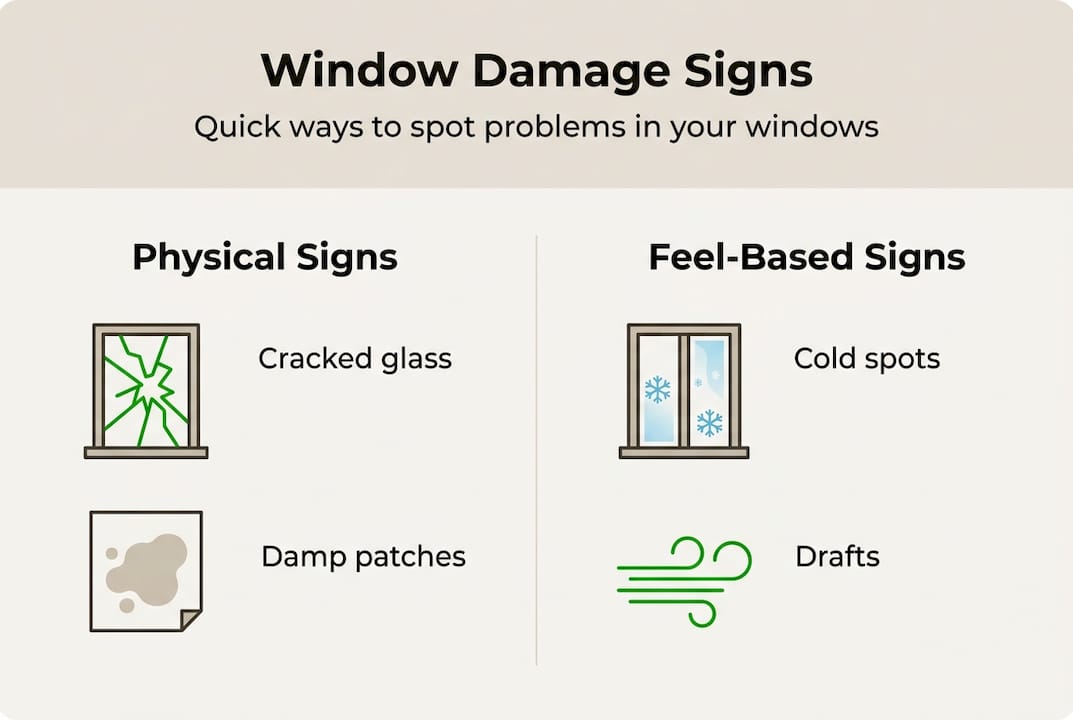
Condensation or fogging between panes is the primary sign of seal failure, accompanied by drafts and energy loss. Recognising these symptoms early lets you address problems before they worsen and cause structural damage.

Key indicators of failing window seals:

  • Fogging or moisture between glass panes that cannot be wiped away externally
  • Noticeable drafts near window edges even when closed and locked
  • Cold spots on interior walls adjacent to window frames
  • Unexplained increases in heating bills during winter months
  • Reduced sound insulation allowing more outdoor noise inside
  • Visible brittleness, cracking, or gaps in seal material around frame perimeter
  • Water stains or mould growth on window sills and surrounding walls

The severity of symptoms indicates failure progression. Minor condensation appearing only during extreme cold suggests early stage degradation. Persistent fogging with visible water droplets signals advanced failure requiring immediate attention. Drafts combined with condensation mean seals no longer provide adequate insulation or moisture barriers.

You might notice secondary effects like difficulty operating windows smoothly or increased dust infiltration. These symptoms accompany primary seal failures and confirm the need for intervention. Understanding when to replace window seals versus attempting repairs depends on symptom severity and pattern.

Monitoring signs of window seal failure helps you catch issues during early stages when repairs remain viable and cost effective. Regular inspection saves money compared to emergency replacements after extensive moisture damage occurs.

Repair vs Replacement: Assessing Your Options

Repairs extend window seal life by 2-5 years, while replacements last 10-20 years and restore full energy efficiency. Understanding the tradeoffs helps you choose the most cost effective solution for your situation.

Repair options work best for minor damage:

  • Reseating loose gaskets using specialist tools costs £50 to £100 per window
  • Applying silicone sealant to small gaps provides temporary weatherproofing
  • Replacing individual gasket sections addresses localised wear without full removal
  • Adjusting window mechanisms reduces stress on deteriorating seals

Repairs offer quick fixes at lower upfront costs but provide temporary solutions. Most repairs last 2 to 5 years before seals degrade again. You save money initially but may spend more over time through repeated interventions.

Replacement delivers long term benefits:

  • Full seal replacement costs £150 to £300 per window but restores original performance
  • New seals eliminate drafts and moisture ingress completely
  • Modern materials offer improved UV resistance and flexibility
  • Energy savings from restored insulation offset replacement costs within 3 to 5 years

Pro Tip: Calculate your annual heating cost increase from failed seals. If you spend an extra £200 yearly on heating, replacement pays for itself faster than repeated cheap repairs.

Immediate seal replacement after failure maximizes energy savings and reduces condensation damage. Delaying replacement allows moisture to damage frames and glass coatings, increasing eventual repair costs significantly. You can reduce double glazing costs by addressing failures promptly rather than waiting for emergency situations.

Solution Cost Range Lifespan Best For
Gasket reseating £50-£100 2-3 years Loose but intact seals
Silicone repair £30-£80 1-2 years Minor gaps and cracks
Partial seal replacement £100-£200 3-5 years Localised damage
Full seal replacement £150-£300 10-15 years Severe degradation
Complete unit replacement £300-£800 15-20 years Frame and glass damage


Weigh immediate costs against long term performance when deciding. Severe failures with visible condensation justify replacement investment. Minor issues on newer windows suit repair approaches. Recognising early signs of window seal failure gives you time to plan rather than react. When you repair failed double glazing strategically, you balance budget constraints with performance needs.

Situational Recommendations: Best Solutions for Common Scenarios

Minor damage on uPVC windows is best repaired cost effectively; severe failures or older frames benefit from replacements with premium materials. Matching solutions to specific situations optimises both costs and outcomes.

  1. Recent uPVC windows with minor seal shrinkage: Reseat gaskets and apply silicone to gaps. This costs £50 to £100 per window and extends life 2 to 3 years, suitable when frames remain in good condition.
  2. Severe condensation with visible drafts on any frame type: Replace seals completely or consider full unit replacement. Persistent moisture damages frames and reduces property value, justifying £200 to £400 investment per window.
  3. Older wooden frames with brittle gaskets: Install premium silicone or neoprene gaskets during replacement. Wood expands more than uPVC, requiring flexible materials that accommodate movement without cracking.
  4. Metal framed commercial properties with multiple failures: Replace all affected seals simultaneously using durable materials. Bulk replacement reduces labour costs and ensures consistent performance across the building.
  5. Budget constrained situations with functional frames: Prioritise rooms with highest heating costs for replacement, repair less critical windows temporarily. This staged approach spreads costs while addressing worst energy losses first.
  6. Properties scheduled for sale within 2 years: Invest in full replacements to improve energy performance certificates and buyer appeal. New seals add value exceeding replacement costs.

Your frame material influences seal compatibility and longevity. Understanding various double glazing options helps match solutions to your property type. Business owners benefit from reviewing energy efficiency checklist items alongside window upgrades for comprehensive improvements.

Prompt action prevents escalation. Small gaps become major leaks, minor condensation leads to frame rot. When you replace window seals at first signs of failure, you avoid compounding damage that multiplies repair costs.

Summary Comparison Table of Window Seal Failures and Solutions

Window seal failure types correlate with distinct symptoms and solution costs impacting efficiency and lifespan. This comparison clarifies options based on observed problems.

Failure Type Primary Symptoms Repair Suitability Typical Cost Post-Fix Lifespan Energy Impact
Gasket shrinkage Minor gaps, occasional drafts High £50-£120 2-4 years Low to moderate
Seal cracking Visible cracks, persistent drafts Moderate £80-£180 1-3 years Moderate
Complete detachment Large gaps, severe drafts Low £150-£300 Requires replacement High
Moisture ingress Condensation between panes Very low £200-£500 Requires full unit replacement Very high
UV degradation Brittleness, loss of flexibility Moderate £100-£250 3-5 years with premium materials Moderate to high


This table helps you evaluate whether your situation suits repair or demands replacement. Moisture between panes indicates seal failure severe enough to require complete unit replacement, not just gasket fixes. Simple shrinkage responds well to reseating and sealing.

Energy impact correlates with failure severity. Minor gaps increase heating costs 5 to 10 percent, while complete seal failure can raise bills 20 to 30 percent. Calculate your potential savings when deciding on solutions. Quick reference to window seal failure comparison data confirms these ranges.

Matching your observed symptoms to this table guides initial decisions. Professional assessment then confirms the best approach. Knowing when to replace window seals versus attempting repairs prevents wasting money on inadequate fixes.

Get Expert Help for Window Seal Failures and Energy Savings

Professional assessment takes the guesswork out of window seal decisions. At Cloudy2Clear Windows, we have spent over 20 years helping property owners across England and Scotland restore energy efficiency through expert double glazing repairs and replacements. Our technicians identify failure types accurately and recommend solutions matched to your frame materials, budget, and performance goals.


https://www.cloudy2clearwindows.co.uk


We tailor repairs and replacements to your specific situation, whether you need quick fixes for minor uPVC seal issues or premium gasket installations for heritage wooden frames. Our services address all double glazing options and frame types detailed in our comprehensive window materials guide. Act now to eliminate drafts, prevent moisture damage, and reduce heating costs before winter increases your energy bills further.

Frequently Asked Questions

How can I tell if my window seals are failing?

Condensation or fogging between glass panes that you cannot wipe away from either side indicates seal failure. You will also notice drafts near closed windows, cold spots on adjacent walls, and increased heating bills as insulation deteriorates.

Is it worth repairing a failed window seal or should I replace it?

Repair works for minor shrinkage or small gaps on newer windows, extending life 2 to 5 years at lower cost. Severe failures with persistent condensation or brittle seals require replacement to restore full efficiency for 10 to 20 years.

What are typical costs associated with seal repairs vs replacements?

Repairs range from £50 to £180 per window depending on severity and method. Full seal replacement costs £150 to £300, while complete unit replacement runs £300 to £800 when frames or glass suffer damage.

How long can a repaired window seal last compared to new seals?

Repaired seals typically last 2 to 5 years before requiring further attention. New seal replacements last 10 to 15 years, and complete window units provide 15 to 20 years of optimal performance when properly maintained.

Can I maintain my seals to prevent premature failure?

Clean seals regularly with mild soap and water to remove dirt that accelerates degradation. Inspect annually for brittleness or gaps, addressing minor issues immediately. Avoid harsh chemicals and excessive force when operating windows to reduce stress on seals.

Do different frame materials affect seal lifespan?

Yes, frame expansion rates impact seal durability significantly. Wood and metal frames expand more than uPVC, requiring flexible gasket materials like silicone or neoprene. Matching seal type to frame material prevents premature cracking and extends lifespan. When you replace window seals, choose materials compatible with your specific frame type for best results.

Double Glazing Care Tips 2026: Extend Lifespan by 7 Years

Proper double glazing care transforms UK homes and businesses by preserving energy efficiency and preventing costly repairs. Your windows face constant pressure from British weather, making maintenance critical. Regular biannual inspections detect seal failures up to 80% earlier, reducing expensive replacements. This guide delivers practical steps to extend window lifespan, improve comfort, and protect your investment through simple yet effective maintenance routines.

Introduction to Double Glazing Care

Double glazing improves energy efficiency and reduces noise in properties across England and Scotland. These windows create thermal barriers that slash heating costs and block external sound. UK weather demands robust window performance year round.

British climate variations stress window seals through temperature swings, rain, and humidity. Winter frost contracts materials while summer heat expands them. Proper care extends window lifespan by years, saving thousands on premature replacements.

Economic benefits multiply over time. Maintained windows preserve insulation properties, reducing energy bills month after month. Businesses benefit from consistent indoor temperatures without excessive HVAC costs.

Neglecting maintenance triggers cascading problems:

  • Condensation forms between panes when seals fail
  • Energy efficiency drops by 20 to 30 percent
  • Frames deteriorate from moisture exposure
  • Replacement costs reach £400 to £800 per window

Regular care prevents these issues before they escalate. Understanding double glazing lifespan factors helps you protect your investment strategically.

Prerequisites: What You Need Before Starting

Gathering proper tools ensures safe, effective maintenance without damaging seals or glass. Quality materials protect your investment better than improvised alternatives.

Essential cleaning materials include:

  • Microfiber cloths that trap dirt without scratching
  • Diluted ammonia-free detergent for gentle cleaning
  • Stable ladder for upper floor access
  • Protective gloves to shield hands
  • Soft bristle brush for frame crevices

Basic knowledge about window construction prevents accidental damage. Seals bond glass panes and require gentle treatment. Using soft microfiber cloths and ammonia-free cleaners prevents damage to seals and glass surfaces.

Safety preparations matter when working at height. Secure ladders on level ground. Work with a partner for upper storey windows. Check weather conditions to avoid slippery surfaces.

Woman preparing safe ladder for window maintenance


Tool Purpose Safety Note
Microfiber Cloths Lint-free glass cleaning Wash regularly to remove grit
Ammonia-Free Detergent Safe seal-friendly cleaning Dilute as directed on label
Stable Ladder Upper floor access Place on firm, level surface
Protective Gloves Hand protection Choose non-slip grip varieties
Silicone Lubricant Hinge and handle maintenance Apply sparingly to moving parts

Having correct tools for window maintenance ready streamlines the process. Purchase quality products once rather than replacing cheap alternatives repeatedly.

Infographic with double glazing care essentials

Proper Cleaning Techniques

Cleaning double glazed windows correctly preserves seals and coatings for years. Wrong products or methods accelerate deterioration and void warranties.

Ammonia-based cleaners degrade glazing sealants within weeks if used repeatedly. These harsh chemicals break down rubber and silicone compounds essential for thermal performance. Choose pH-neutral cleaners designed for glazing instead.

Follow these steps for optimal results:

  1. Mix diluted ammonia-free detergent in lukewarm water.
  2. Dampen microfiber cloth without saturating it.
  3. Wipe glass in circular motions from top to bottom.
  4. Clean frames using same gentle solution and fresh cloth.
  5. Dry immediately with separate clean microfiber cloth.
  6. Inspect for streaks and buff if needed.

Avoid abrasive materials entirely. Steel wool, scouring pads, and rough cloths scratch glass permanently. High-pressure washers force water behind seals, causing internal condensation.

Frame materials need compatible cleaners. uPVC tolerates mild detergents but suffers from solvent-based products. Wood frames require specialised cleaners that nourish timber while removing dirt. Aluminium tolerates most gentle solutions without issue.

Pro Tip: Clean windows on overcast days when temperatures stay moderate. Direct sunlight dries cleaning solution too quickly, leaving streaks and water spots. Early morning or late afternoon works best during sunny weather.

Practising safe cleaning methods for double glazing protects your investment while maintaining clarity. Consistency matters more than intensity when establishing maintenance routines.

Regular Inspection for Seal Integrity

Catching seal problems early prevents expensive emergency repairs and full window replacements. Visual checks take minutes but save substantial money long term.

Regular biannual inspections detect seal failures up to 80% earlier, reducing costly replacements. Spring and autumn inspections align with seasonal weather changes that stress seals most.

Look for fogging or condensation between panes as early signs of seal failure. Internal moisture appears as persistent fog, water droplets, or mineral deposits between glass layers. External condensation disappears when wiped. Internal moisture never clears.

Inspect every six to twelve months for best results. Commercial properties with heavy use benefit from quarterly checks. Residential homes typically manage with biannual reviews.

Use this inspection checklist:

  • Check for condensation or fogging between panes
  • Test window opening and closing for smooth operation
  • Examine seals for cracks, gaps, or deterioration
  • Look for frame warping or discolouration
  • Feel for drafts around closed windows
  • Listen for rattling when windows are closed

Early detection transforms major problems into manageable repairs. Catching seal failure within months costs £150 to £300 for professional resealing. Waiting until complete failure forces full replacement at £400 to £800 per window.

Document findings with photos and dates. Tracking changes over time reveals deterioration patterns. This evidence helps professionals diagnose issues accurately during consultations.

Double glazing seal inspection tips from professionals emphasise systematic approaches. Create calendar reminders to maintain consistent inspection schedules.

Additional Maintenance Steps

Beyond basic cleaning, supplementary tasks keep windows operating smoothly between professional services. Small actions compound into significant lifespan extensions.

Annual lubrication of hinges with silicone-based products keeps window components operating smoothly. Metal parts corrode without protection, especially in coastal areas with salt air exposure.

Perform these maintenance steps seasonally:

  1. Apply silicone lubricant to hinges, handles, and locking mechanisms each spring.
  2. Clear drainage channels in frames to prevent water accumulation.
  3. Use anti-fog spray on interior glass if minor condensation appears.
  4. Tighten loose screws in handles and hinges before they strip.
  5. Check weatherstripping for gaps and replace worn sections.

Drainage channels collect water that enters frame cavities during heavy rain. Blocked channels cause moisture buildup, encouraging mould growth and frame rot. Clear debris with thin wire or compressed air quarterly.

Anti-fog treatments provide temporary relief for minor condensation. These sprays create hydrophobic coatings that prevent moisture from obscuring glass. They work for surface condensation only, not sealed unit failures.

Pro Tip: Schedule maintenance tasks with seasonal changeovers. Lubricate before winter to ease operation in cold weather. Clear drainage before autumn rains. This rhythm prevents forgetting crucial upkeep.

Find anti-fog and lubrication tips tailored to British climate challenges. Regional weather patterns influence maintenance priorities and frequencies.

Common Mistakes and How to Avoid Them

DIY enthusiasm sometimes causes more harm than good. Understanding frequent errors helps you avoid expensive repairs from well-intentioned maintenance.

About 20% of reported double glazing failures in UK properties result from improper cleaning such as high-pressure washing. These preventable problems cost homeowners and businesses millions annually.

Avoid these critical mistakes:

  • Never use ammonia, bleach, or acetone-based cleaners that destroy seals rapidly
  • Avoid abrasive pads, scrapers, or harsh brushes that scratch glass permanently
  • Do not ignore early condensation signs hoping problems resolve themselves
  • Never apply high-pressure water near seals or frame joints
  • Avoid complex repairs without professional assessment to prevent worsening damage
  • Do not paint over drainage holes or ventilation gaps in frames

Correct these errors immediately if discovered. Switch to pH-neutral cleaners. Replace scratched glass before cracks develop. Address condensation within weeks of first appearance.

Many attempt DIY seal repairs with hardware store kits. These temporary fixes last one to two years maximum. Professional resealing uses superior materials and techniques that extend performance five to seven years.

Painting window frames requires care around seals and moving parts. Mask rubber components completely. Avoid thick paint buildup in drainage channels. Use exterior-grade paint formulated for frame materials.

Study avoiding common mistakes in window care to protect your investment. Learning what not to do proves as valuable as proper technique knowledge.

Professional Repairs: When and Why

Recognising when DIY efforts fall short saves money and frustration. Professional intervention delivers superior results for complex issues.

Professional resealing extends double glazing lifespan by 5 to 7 years versus 1 to 2 years for DIY fixes. Technicians use commercial-grade sealants unavailable to consumers. Their experience ensures proper application and curing.

Approach Lifespan Extension Typical Cost Warranty
DIY Seal Repair 1 to 2 years £30 to £60 None
Professional Resealing 5 to 7 years £150 to £300 2 to 5 years
Full Replacement 15 to 25 years £400 to £800 10 to 15 years

Seek professional help when:

  • Condensation appears between glass panes consistently
  • Seals show visible cracks, gaps, or crumbling
  • Windows become difficult to open or close
  • Drafts penetrate despite closed windows
  • Energy bills increase noticeably without usage changes

Early professional assessment helps avoid costly replacements and maximises energy efficiency. Technicians identify root causes, not just visible symptoms.

Professional benefits extend beyond repairs. Experts assess frame condition, hardware functionality, and overall system performance. They catch problems you might miss during routine inspections.

Cost versus benefit analysis favours professional intervention for seal failures. Spending £200 for five years of restored performance beats £600 replacement costs. Calculate payback periods based on energy savings and avoided replacement expenses.

Explore professional double glazing repairs to understand service options. Review cost benefits of professional repairs for financial planning.

Expected Outcomes and Maintenance Frequency

Understanding realistic timeframes and results helps maintain motivation for consistent care. Small investments yield substantial returns over window lifespans.

Routine maintenance takes 30 to 60 minutes twice a year and delays replacements by up to 7 years. This minimal time commitment translates to thousands in savings per property.

Energy efficiency is maintained at peak levels with regular care. Well-maintained double glazing preserves U-values and thermal performance specifications throughout its service life.

Maintenance frequency guidelines:

  • Clean glass and frames twice yearly minimum
  • Inspect seals and hardware every 6 to 12 months
  • Lubricate moving parts annually before winter
  • Clear drainage channels quarterly in wet regions
  • Schedule professional assessment every 3 to 5 years

Typical outcomes from consistent maintenance include:

  • Window replacement delayed 5 to 7 years beyond typical lifespan
  • Energy costs reduced 15 to 20 percent compared to neglected units
  • Indoor comfort improved through consistent thermal performance
  • Property value maintained with well-kept windows
  • Repair costs minimised through early problem detection

Commercial properties see additional benefits. Professional appearance impresses clients and customers. Reliable climate control reduces HVAC strain and maintenance costs. Employee comfort improves productivity.

View maintenance as investment rather than expense. Two hours yearly protecting assets worth thousands makes financial sense. Calculate savings by comparing maintenance costs against replacement expenses and energy waste.

Learn about maintenance benefits and timelines to plan long-term property care strategies.

Explore Our Expert Double Glazing Care Services

Maintaining double glazed windows requires knowledge, proper tools, and consistent effort. When professional help makes sense, Cloudy2Clear Windows delivers expertise honed since 2005.

https://www.cloudy2clearwindows.co.uk


Our team understands British climate challenges intimately. We’ve served homes and businesses across England and Scotland for two decades. Whether you need guidance on expert double glazing maintenance tips or require professional double glazing repairs, we’re here to help.

Schedule an assessment to evaluate your windows’ current condition. Our specialists identify issues early, recommend cost-effective solutions, and extend your windows’ productive lifespan. Contact us today to protect your investment and enhance comfort.

FAQ

How often should I inspect my double glazed windows for signs of seal failure?

Inspect windows every 6 to 12 months for best maintenance results. Spring and autumn inspections align with weather changes that stress seals most. Early detection prevents expensive repairs and maintains energy efficiency. Check window inspection frequency recommendations for your property type.

What cleaning products are safe to use on double glazed windows?

Use diluted ammonia-free detergents with soft microfiber cloths for optimal cleaning. Avoid bleach, ammonia, acetone, and abrasive tools that damage seals and glass. pH-neutral cleaners preserve window components without compromising thermal performance. Review safe cleaning products suitable for different frame materials.

When should I consult a professional for double glazing repairs?

Seek professional help immediately if condensation appears between panes or seals show visible damage. Professional repairs last 5 to 7 years compared to 1 to 2 years for DIY attempts. Early intervention avoids costly full replacements. Learn about professional double glazing repair timing to make informed decisions.

How long can proper maintenance extend the life of double glazed windows?

Maintenance extends window life by up to 7 years beyond typical 15 to 20 year lifespans. Regular care preserves energy efficiency, prevents premature seal failure, and delays expensive replacements. Consistent biannual maintenance delivers maximum value. Explore double glazing lifespan extension factors for your property.

Building Regulations for Windows: 15% Energy Savings Guide

Many homeowners believe installing double glazed windows automatically ensures compliance with building regulations. The reality is far more nuanced. Regulations in England and Scotland include detailed requirements covering energy efficiency, safety glazing, ventilation, fire resistance, and accessibility standards. Understanding these rules protects you from fines, ensures occupant safety, and unlocks significant energy savings. This guide walks you through every essential requirement so you can confidently plan compliant window installations or upgrades.

Introduction to Building Regulations for Windows

Building regulations for windows operate under distinct frameworks in England and Scotland. England follows Approved Document L1B and related guidance issued by the Ministry of Housing, Communities and Local Government. Scotland relies on Technical Handbooks published by Scottish Government Building Standards.

These regulations exist to safeguard occupants, reduce energy waste, and maintain minimum standards across all properties. Window replacements and upgrades trigger building regulation requirements regardless of whether planning permission applies. Property managers and homeowners must understand which rules govern their specific situation to avoid costly mistakes.

Key regulatory areas include:

  • Energy efficiency thresholds measured by U-values and air permeability
  • Safety glazing requirements in vulnerable locations
  • Fire resistance for windows in escape routes
  • Ventilation and daylight minimums for habitable rooms
  • Accessibility standards ensuring ease of use

England’s Approved Document L1B specifies energy efficiency requirements for replacement windows. Different glazing unit configurations affect compliance differently. The impact of glazing bars on regulations also matters when selecting designs. Understanding these fundamentals helps you make informed choices that meet legal standards while improving energy efficiency in windows.

Energy Performance Standards and Requirements

Energy performance standards form the backbone of window regulations in both England and Scotland. U-values measure thermal transmittance, indicating how much heat passes through a window. Lower U-values mean better insulation, less heat loss, and reduced energy bills.

Infographic summarizing energy requirements England and Scotland


Region Maximum U-Value Impact
England 1.6 W/m²K Moderate insulation requirement
Scotland 1.4 W/m²K Stricter standard for greater energy savings

England’s Approved Document L1B requires window U-values of 1.6 W/m²K or lower for compliance. Scotland’s stricter 1.4 W/m²K threshold reflects its commitment to reducing carbon emissions more aggressively. These standards apply to replacement windows and new installations alike.

Air permeability requirements ensure windows seal properly without allowing drafts, yet maintain adequate ventilation. Modern double glazing typically meets these thresholds, but not all products carry proper certification. Verify U-value ratings before purchase to guarantee compliance.

Proper window selection delivers tangible benefits:

  • Household heating bills can drop by up to 15% with compliant windows
  • Reduced carbon footprint aligns with national climate goals
  • Enhanced thermal comfort eliminates cold spots and drafts
  • Long-term savings offset initial installation costs

Pro tip: Always request U-value certification documentation from suppliers before purchase. This simple step prevents discovering non-compliance after installation, which requires expensive remediation.

Our detailed window energy efficiency guide explores how different glazing options achieve these standards. Understanding English energy efficiency standards helps you select products that deliver compliance and comfort.

Safety and Accessibility Regulations

Safety glazing prevents serious injuries from broken glass. Building regulations mandate safety glass in specific high-risk locations. Any window within 800mm of floor level must use toughened or laminated safety glazing. This requirement protects children and adults from potentially fatal lacerations if glass breaks.

Window installer inspecting safety glazing on site


Fire safety adds another layer of requirements. Fire safety regulations require windows in escape routes to meet fire resistance with self-closing devices and fire-rated glass. Windows forming part of fire-resisting walls need specific fire ratings to prevent flame spread. These standards vary based on building type and occupancy.

Ventilation and daylight requirements ensure healthy indoor environments. Windows in sleeping rooms must meet ventilation and daylight minimums per Approved Document F. Habitable rooms need:

  • Background ventilation providing continuous fresh air
  • Purge ventilation through openable windows for rapid air changes
  • Minimum daylight factors calculated based on room size and window area

Scottish regulations include specific accessibility standards. Windows must operate with reasonable force, allowing people with limited mobility to open and close them safely. Handle heights and opening mechanisms require consideration for wheelchair users.

Pro tip: Work exclusively with certified installers familiar with these layered requirements. They understand how safety glazing, fire resistance, ventilation, and accessibility interact, ensuring nothing gets overlooked.

Avoiding common safety issues in windows starts with proper compliance. Review fire safety window regulations and ventilation requirements early in your planning process.

Planning Permission vs Building Regulation Approval

Confusing planning permission with building regulations causes frequent compliance problems. These are separate approval processes with different objectives.

Approval Type Purpose When Required
Planning Permission Controls external appearance and design Listed buildings, conservation areas, significant changes
Building Regulations Ensures safety, energy, accessibility standards Always required for installations and upgrades


Planning permission governs how changes affect a property’s appearance and neighbourhood character. Like-for-like window replacements typically fall under permitted development rights, requiring no planning permission. However, listed buildings and conservation areas impose stricter controls.

Building regulations focus entirely on performance standards. Every window installation or upgrade must meet energy, safety, ventilation, and accessibility requirements regardless of planning status. This approval cannot be skipped.

Steps to verify permissions before starting work:

  • Contact your local planning authority to confirm if your property has special designations
  • Check if proposed changes qualify as permitted development
  • Verify building regulation requirements with building control
  • For listed properties, review additional requirements for double glazing for listed buildings
  • Obtain written confirmation of all required approvals before purchasing materials

Misunderstanding these distinctions leads to project delays, enforcement action, and wasted investment. Assume building regulations always apply, then investigate whether planning permission also applies to your specific situation.

Certification and Inspection Processes

Certified installers provide your first line of compliance protection. Registration schemes like FENSA, CERTASS, and others authorize installers to self-certify work meets building regulations. Using certified professionals eliminates the need for separate building control applications.

Local authorities conduct inspections when non-certified installers perform work. Building control officers verify installations meet all applicable standards before issuing completion certificates. These certificates prove legal compliance, protecting you during property sales or insurance claims.

Essential documentation to retain:

  • Installation contracts specifying compliance standards
  • U-value certificates for all glazing units
  • Competent person scheme certificates from registered installers
  • Building control completion certificates if applicable
  • Product warranties and performance guarantees

Pro tip: Request all compliance certificates immediately after installation finishes. Chasing documentation months later creates unnecessary stress and delays property transactions.

Experienced installers understand regional variations between England and Scotland. They navigate technical requirements efficiently, reducing your compliance burden. Proper certification also affects how long does double glazing last by ensuring correct installation techniques preserve performance.

Maintaining complete records protects your investment and simplifies future upgrades or property sales.

Consequences and Enforcement of Non-Compliance

Ignoring building regulations carries serious legal and financial consequences. Local authorities possess enforcement powers to compel compliance when violations come to light.

Common enforcement actions include:

  • Formal enforcement notices requiring remedial work within specified timeframes
  • Financial penalties escalating with continued non-compliance
  • Orders to remove non-compliant installations entirely
  • Prosecution for persistent violations resulting in criminal records

Non-compliance creates broader problems beyond immediate enforcement. Insurance companies may deny claims related to defective installations that never received building control approval. Property buyers increasingly request compliance certificates during conveyancing, and missing documentation reduces property value or prevents sales.

Occupant safety risks compound legal problems. Non-compliant windows lacking proper safety glazing, fire resistance, or ventilation endanger lives. Liability for injuries or deaths resulting from regulatory violations can lead to substantial compensation claims.

Enforcement typically occurs when:

  • Neighbours report suspicious or obviously substandard work
  • Property sales reveal missing compliance documentation
  • Insurance claims trigger investigations into installation quality
  • Routine building control spot checks identify violations

The financial burden of rectification often exceeds original installation costs. Removing non-compliant windows, purchasing certified replacements, and paying for proper installation doubles your expenditure. Understanding risks from non-compliant window faults emphasizes why compliance matters from the start.

Benefits of Compliance: Energy Efficiency and Cost Savings

Meeting building regulations delivers measurable advantages that justify upfront investment in certified products and installation.

Compliant windows can reduce home heating energy use by up to 15%, delivering immediate savings on utility bills. Lower energy consumption reduces your carbon footprint, contributing to national climate targets while keeping more money in your pocket.

Long-term financial benefits include:

  • Annual heating cost reductions of £150 to £300 for average homes
  • Increased property value from documented compliance and energy efficiency
  • Lower maintenance costs due to quality materials and installation
  • Reduced risk of costly enforcement actions or remediation

Occupant comfort improves dramatically with proper thermal performance. Compliant windows eliminate cold drafts, reduce condensation problems, and maintain consistent indoor temperatures. Better ventilation standards ensure healthy air quality without sacrificing warmth.

Property marketability increases when you can provide complete compliance documentation. Buyers pay premiums for homes demonstrating proper building control approval and energy efficiency. Conversely, missing certificates trigger price reductions or transaction failures.

The 15% energy savings achievable with regulated windows represents thousands of pounds over the typical 20-year window lifespan. Initial costs pale against cumulative benefits, making compliance a smart financial decision beyond its legal necessity.

Explore Cloudy2Clear’s Energy-Efficient Window Solutions

Navigating building regulations feels overwhelming, but Cloudy2Clear simplifies the process with expert guidance and compliant products. Our windows meet or exceed energy efficiency and safety standards for both England and Scotland, giving you confidence your installation satisfies all requirements.

We help you select glazing configurations matched to your specific needs, whether upgrading a residential property or managing commercial buildings. Our team explains technical requirements in plain language, ensuring you understand what compliance means for your project.


https://www.cloudy2clearwindows.co.uk


Explore our double glazing options explained to find solutions combining regulatory compliance with aesthetic preferences. Learn about double glazing lifespan to plan long-term value. Our guide on maintaining double-glazed windows helps you protect your investment for decades. Compliance delivers peace of mind plus measurable energy savings and enhanced property value.

Frequently Asked Questions

What is the difference between planning permission and building regulations?

Planning permission controls external appearance changes and often is not needed for like-for-like window replacements. Building regulations approval ensures safety, energy, and ventilation standards are met and always applies to installations.

Are all double glazed windows automatically compliant with building regulations?

No, compliance requires meeting specified U-value thresholds and safety glazing standards, not just any double pane glass. Always verify certification before purchase to ensure your windows meet regional requirements.

When is safety glazing legally required for windows?

Safety glazing is mandatory in windows within 800mm of floor level to reduce injury risks from broken glass. This applies to all habitable rooms and high-traffic areas.

Can I install replacement windows myself and still pass building control?

DIY installation is possible but risky without extensive knowledge of building regulations. Certified installers familiar with compliance requirements best ensure successful inspections and proper documentation.

What happens if my window installation fails the building regulation inspection?

You may receive enforcement notices requiring costly rectifications, face financial penalties, and experience delays in property transactions. Non-compliance also voids insurance coverage for related claims.

Why Window Maintenance Saves 15% Energy & Prevents Repairs

Many homeowners believe window maintenance is an unnecessary expense that delivers little value. The truth is quite different. Routine maintenance can reduce energy losses by up to 15% and prevent expensive repairs later. Windows significantly impact your home comfort and energy bills in UK climates, where variable weather constantly tests their integrity. This article explains why maintenance matters and how it benefits you through lifespan extension, improved insulation, enhanced aesthetics, repair avoidance, and myth busting.

Introduction to Window Maintenance and Its Importance

The UK’s variable weather accelerates window deterioration without proper maintenance. Rain, wind, temperature fluctuations, and UV exposure all contribute to material degradation over time. Windows play a crucial role in your home’s thermal performance by controlling heat loss and solar gain.

Without regular care, several problems emerge rapidly. Dirt accumulation blocks natural light and reduces solar heat transmission. Seal degradation allows drafts and moisture penetration. Frame damage from rot or corrosion compromises structural integrity. These issues directly reduce the energy efficiency of your windows and comfort levels inside your property.

Common problems that develop include:

  • Wooden frame rot from moisture exposure
  • Seal failure causing condensation between panes
  • Draft penetration through worn weather stripping
  • Glass surface etching reducing clarity
  • Hardware corrosion affecting operation

Maintenance sustains insulation performance and natural light transmission that windows provide. Regular cleaning and maintenance improve solar heat gain during winter, reducing heating needs. Understanding these vulnerabilities helps you appreciate why proactive care delivers substantial returns on your time and investment.

How Window Maintenance Extends Window Lifespan

Consistent maintenance prevents common decay patterns that shorten window life. Wooden frames suffer rot when moisture penetrates protective paint layers. Metal components rust when exposed to condensation and weather. Seal materials degrade under UV exposure and temperature cycling.

Cleaning removes corrosive dirt and grime that accelerates material breakdown. Repainting protects frames from moisture penetration and UV damage. Replacing worn seals stops water ingress that causes frame warping and internal damage. These simple actions address problems before they become structural failures.

Proper upkeep can extend your double glazing lifespan from the typical 20 to 35 years well beyond 35 years. This delay saves thousands on replacement costs while maintaining your home’s thermal performance and appearance.

Key maintenance actions that extend lifespan include:

  • Annual frame inspection for cracks, rot, or corrosion
  • Biannual deep cleaning of glass, frames, and tracks
  • Immediate repainting when protective coatings show wear
  • Seal replacement every 5 to 7 years or when gaps appear
  • Hardware lubrication to prevent wear and ensure smooth operation

Pro Tip: Schedule annual professional inspections each autumn before winter weather arrives. Catching small issues early prevents them from developing into major problems during harsh conditions.

Energy Efficiency Benefits of Proper Window Maintenance

Maintenance directly enhances your windows’ insulation performance. Weather seals create the primary barrier against air infiltration. When these seals wear, gaps allow heated air to escape and cold drafts to enter. Inspecting and replacing seals as needed stops this heat loss immediately.


Woman checking window for drafts inside home


Clean glass increases natural light penetration and solar gain. Dirty windows block sunlight that would naturally warm your home during winter months. Regular cleaning and maintenance improve solar heat gain during winter, reducing heating needs. This effect alone can noticeably lower your energy consumption.

Well sealed windows reduce heating demand throughout the cold season. Research shows energy loss reduction up to 15% with proper maintenance. For an average UK household spending £1,500 annually on heating, this represents £225 in yearly savings.

Follow these steps to maximize energy efficiency:

  1. Inspect all weather seals quarterly for gaps or cracking
  2. Replace damaged seals immediately using quality materials
  3. Clean glass surfaces inside and out twice yearly
  4. Check frame joints for air leaks using a candle flame test
  5. Apply weather stripping where gaps exist around opening sashes

Understanding the importance of replacing window seals helps you prioritize this critical task. Additionally, fixing window leaks promptly prevents compounding energy losses.

Maintenance Action Energy Impact Annual Savings Potential
Seal replacement 8 to 12% heat loss reduction £120 to £180
Glass cleaning 3 to 5% solar gain increase £45 to £75
Draft sealing 5 to 8% air leak reduction £75 to £120

Concerns about glazing bars and efficiency are often overstated. Modern low conductivity materials minimize heat transfer through decorative elements without sacrificing style.

Pro Tip: Perform seal inspections on windy days when air infiltration becomes most noticeable. You can feel drafts more easily and identify problem areas quickly.

Preserving Property Aesthetics Through Window Maintenance

Window appearance significantly impacts your property’s curb appeal and perceived value. Clean, well maintained windows signal proper home care to potential buyers and neighbors. Neglected windows suggest broader maintenance issues that can depress property values.

Cleaning glass removes mineral deposits, dirt films, and debris that dull appearance. Frame upkeep prevents peeling paint, discoloration from UV exposure, and visible rot damage. These visual problems make your entire property look tired and poorly maintained regardless of other improvements.

Period and listed homes require special consideration. Original window styles contribute to architectural character that modern replacements cannot replicate. Proper maintenance preserves these features while maintaining functionality. Glazing bars and window aesthetics play an important role in traditional property appearance.

Well maintained windows positively influence property value and market readiness. Estate agents consistently report that homes with bright, clean windows attract more buyer interest and achieve better sale prices. Regular window maintenance tips apply across property types, from homes to commercial buildings.

Actions that preserve aesthetics include:

  • Monthly quick cleans to prevent dirt buildup
  • Annual deep cleaning including frames and hardware
  • Immediate touch up painting when chips or scratches appear
  • Professional restoration for period window features
  • Consistent hardware polishing to prevent tarnishing

These practices ensure your windows continue enhancing rather than detracting from your property’s appearance. Maintaining window aesthetics requires consistent attention but rewards you with lasting visual appeal.

Cost Savings from Preventive Window Maintenance

Early detection and repair prevent expensive frame and seal replacements down the line. A small crack in a wooden frame costs £50 to repair today but leads to complete frame replacement costing £500 or more if ignored. This ten times cost difference makes preventive care financially sensible.


Infographic on window maintenance savings and benefits


Common failures develop from minor issues. Seal failure begins with small gaps that allow moisture penetration. Frame rot starts with tiny paint chips exposing wood to weather. Glass cracks expand from small chips under thermal stress. Catching these problems early stops expensive escalation.

Routine inspection identifies issues when repairs remain simple and affordable. Professional assessments cost £75 to £150 but prevent repairs costing thousands. This represents excellent value for money and financial protection.

Problem Early Repair Cost Deferred Replacement Cost Savings
Worn seal £15 to £30 per window £200 to £400 (unit replacement) £170 to £370
Paint damage £40 to £80 (touch up) £400 to £600 (frame replacement) £320 to £560
Minor glass chip £50 to £100 (repair) £150 to £300 (pane replacement) £50 to £250
Hardware wear £20 to £50 (lubrication/adjustment) £100 to £200 (replacement) £50 to £180

Understanding strategies for reducing double glazing repair costs helps you budget effectively. Prevention consistently proves cheaper than cure when managing window performance and longevity.

Common Misconceptions About Window Maintenance

Several myths discourage homeowners from proper window care. Understanding the facts helps you make informed decisions about maintenance investment.

Myth: Maintenance is expensive and rarely pays for itself.

Fact: Regular upkeep costs £100 to £200 annually but prevents energy losses worth £200+ and repairs costing thousands. The financial return far exceeds the investment through lower bills and avoided replacements.

Myth: Glazing bars substantially decrease energy efficiency.

Fact: Modern materials minimize heat loss through decorative elements. Thermal breaks and low conductivity designs maintain insulation performance while preserving traditional aesthetics. You can have style without sacrificing efficiency.

Myth: Maintenance only improves appearance, not energy performance.

Fact: Maintenance boosts both aesthetics and thermal performance simultaneously. Clean glass increases solar gain. Replaced seals stop drafts. Repaired frames prevent air infiltration. These actions deliver measurable energy savings alongside visual improvements.

Addressing glazing bars myths helps homeowners with period properties feel confident maintaining original features. Similarly, proper double glazing maintenance tips demonstrate how simple actions deliver significant benefits.

Well maintained windows reduce energy consumption while enhancing comfort and property value. The modest investment in regular care pays dividends through lower bills, extended lifespan, and avoided repairs that make maintenance one of the best financial decisions homeowners can make.

Additional Benefits and Practical Maintenance Tips

Beyond energy and aesthetics, maintenance delivers other valuable advantages. Well maintained windows enhance home security through proper hardware function. Locks, latches, and hinges work reliably when cleaned and lubricated regularly. This prevents forced entry attempts that exploit worn or broken components.

Good seals and regular cleaning reduce condensation and mould risks. Windows with maintained panes and seals contribute to reduced condensation issues, improving comfort and indoor air quality. This protects your family’s health while preventing damage to window frames and surrounding walls.

Follow this numbered routine for effective maintenance:

  1. Inspect all windows quarterly for damage, wear, or performance issues
  2. Clean glass, frames, tracks, and hardware thoroughly twice yearly
  3. Lubricate moving parts, hinges, and locks with appropriate products annually
  4. Repair minor damage immediately before problems escalate
  5. Schedule professional servicing annually for comprehensive assessment

These steps address most common issues before they become serious problems. Understanding how to prevent window condensation helps you maintain healthy indoor conditions. Recognizing common window faults enables quick identification and resolution.

Pro Tip: Use mild detergents and soft cloths to protect window surfaces during cleaning. Harsh chemicals and abrasive materials damage protective coatings and glass surfaces, creating more problems than they solve. Warm soapy water works effectively for most cleaning tasks.

Conclusion and Maintenance Action Plan

Regular maintenance improves energy efficiency by 15% or more while cutting your heating bills substantially. It preserves aesthetics that protect property value and market appeal. Proper care extends window lifespan beyond 35 years, delaying expensive replacements for decades.

These benefits prevent costly repairs through early problem detection. A consistent maintenance routine costs far less than emergency fixes or premature replacements. The financial case for regular care is compelling and proven.

Implement this recommended routine immediately:

  • Inspect windows every three months for damage or wear
  • Clean glass and frames thoroughly twice yearly
  • Schedule professional servicing annually before winter
  • Address minor repairs promptly when identified
  • Keep maintenance records to track work completed

This schedule balances thoroughness with practical time investment. Most homeowners can complete quarterly inspections and biannual cleaning themselves. Annual professional service provides expert assessment and addresses issues beyond DIY capabilities.

Contact trusted UK providers for expert assistance with double glazed window maintenance and repairs. Professional support ensures your windows deliver maximum performance, efficiency, and longevity throughout their service life.

Explore Our Window Maintenance Solutions

At Cloudy2Clear Windows, we bring decades of experience to every window maintenance and repair project. Since 2005, we have helped homeowners throughout England and Scotland maximize window performance through expert care and professional service.

Discover practical guidance in our comprehensive double glazing maintenance guide covering essential tasks and schedules. Learn about expected performance in our double glazing lifespan insight to plan long term property care.


https://www.cloudy2clearwindows.co.uk


Exploring double glazing buying options helps when maintenance alone cannot restore performance. Our team provides honest assessments about repair viability versus replacement needs, ensuring you make informed decisions that protect your investment and home comfort.

FAQ

Why Is Regular Window Maintenance Important?

Regular maintenance preserves seals and frames, reducing energy loss and preventing expensive repairs. It keeps windows looking good and functioning properly for decades longer than neglected units. This protection delivers substantial financial returns through lower bills and delayed replacements.

How Often Should I Maintain My Windows?

Inspect windows every three months for damage or performance issues. Clean glass, frames, and hardware at least twice yearly, ideally in spring and autumn. Schedule professional servicing annually before winter weather arrives to ensure optimal performance during harsh conditions.

Can Window Maintenance Really Lower My Energy Bills?

Maintaining seals and cleaning glass significantly improves insulation and solar heat gain. Routine window maintenance can reduce energy losses by up to 15%, representing £150 to £250 in annual heating cost savings for typical UK households. These savings compound year after year.

Does Window Maintenance Help Prevent Condensation?

Seals and glass cleaning substantially reduce moisture buildup between panes and on interior surfaces. Windows with maintained panes and seals reduce condensation, improving comfort and air quality. This lowers mould risk and protects your family’s health while preventing frame damage from persistent moisture exposure.

Glazing Bars: Impact on Window Style and Efficiency

Upgrading windows in urban England often brings a blend of excitement and concern about maintaining the distinct style of your property while improving efficiency. Choosing glazing bars can transform a window’s appearance, but myths still linger about their effect on energy performance and period authenticity. This guide clarifies how glazing bars shape heritage character and energy efficiency and helps you navigate common misconceptions and regulations for a smooth, satisfying renovation.

Defining Glazing Bars and Common Misconceptions

Glazing bars are the wooden or metal strips that divide window panes into smaller sections. They’re sometimes called muntins or glazing beads, and they’ve been a feature of windows for centuries. If you’re looking at Victorian or period properties across England, you’ll see them everywhere.

These bars serve more than just an aesthetic purpose. When exploring double glazing options, it’s helpful to understand how glazing bars contribute to both the visual character and performance of your windows.

What Glazing Bars Actually Are

Glazing bars sit between the glass panes or on the surface of the window frame. They create a grid pattern that divides the window into smaller rectangular sections. The bars themselves are typically thin strips made from timber, aluminium, or composite materials.

The main types you’ll encounter include:

  • Horizontal bars running left to right across the window
  • Vertical bars running top to bottom
  • Decorative grilles with more intricate crossing patterns
  • Through-bars that run between glass panes inside the sealed unit

Each type affects both how your window looks and performs in terms of insulation and maintenance.

Common Misconceptions About Glazing Bars

Most homeowners believe glazing bars dramatically reduce energy efficiency. This isn’t entirely accurate. Modern bars made from low-conductivity materials have minimal impact on thermal performance.

Another widespread myth is that all glazing bars are the same. They’re not. The material, design, and installation method vary significantly between options.

Many people also think glazing bars must be authentic wood to suit period homes. Actually, high-quality uPVC or aluminium bars can replicate the appearance perfectly whilst offering superior durability and lower maintenance.

Modern glazing bars need not sacrifice efficiency for aesthetics—the right design delivers both.

Some homeowners worry that removing glazing bars permanently damages their property value. In reality, the choice depends on your home’s character and your personal preference. A Georgian townhouse benefits from traditional bars, but a modern extension might not.

One final misconception: that glazing bars are impossible to keep clean. Modern through-bars sit inside sealed units, meaning no dirt accumulates between panes. This makes them far easier to maintain than older designs.

Pro tip: When considering glazing bar options, request samples installed in a test window on your home first—you’ll see exactly how they change your property’s appearance in real light conditions before committing.

Types of Glazing Bars in UK Windows

Glazing bars come in several distinct varieties, each suited to different home styles and requirements. Understanding the options helps you make an informed choice that balances aesthetics with performance. The type you select will define how your windows look and function for decades to come.

Traditional Glazing Bars

Timber glazing bars are the classic choice found on period properties throughout the UK. They sit on the surface of the glass, creating authentic divisions that suit Georgian, Victorian, and Edwardian homes perfectly.

The appeal of timber is obvious: they look genuinely period-correct and age beautifully. However, they require regular maintenance, including repainting every 5-7 years to prevent rot and weathering.

Timber bars work best on heritage properties where authenticity matters. If you live in a conservation area, your local authority might require wooden bars for listed buildings.

Modern Alternatives

uPVC glazing bars replicate the timber appearance without the maintenance burden. They’re factory-finished, moisture-resistant, and rarely need attention beyond occasional cleaning.

Aluminium bars offer a sleek, contemporary look suitable for modern extensions and new builds. They’re incredibly durable and conduct heat slightly more than other materials, though modern thermal breaks minimise this impact.

Contemporary home with aluminium-framed glazing bars


Composite bars blend the best features of both timber and synthetic materials. They provide authentic wood appearance with low-maintenance synthetic durability.

Here’s how the main types compare:

Here’s a comparison of the main glazing bar materials and their typical applications:

Material Maintenance Level Typical Use Case Visual Authenticity
Timber High (regular painting) Heritage and listed properties Excellent, period-accurate
uPVC Low (easy cleaning) Modern homes, low upkeep Very good imitation
Aluminium Very low (wipe clean) Contemporary builds, extensions Sleek, modern look
Composite Very low (minimal attention) Versatile, both period and new builds Realistic, wood-like finish
  • Timber: Authentic, beautiful ageing, high maintenance, requires regular repainting
  • uPVC: Low maintenance, realistic wood finishes available, durable in UK weather
  • Aluminium: Contemporary styling, excellent durability, minimal thermal conductivity impact
  • Composite: Hybrid approach, wood-like appearance, easy care

Through-Bars vs Surface-Mounted Bars

The placement method matters as much as the material. Through-bars sit between the glass panes inside the sealed unit, eliminating cleaning challenges and improving thermal performance.

Surface-mounted bars sit on the outside of the glass, creating authentic period appearance but trapping dust between glass and bars. Understanding different window materials helps you assess how each type performs with various glazing systems.

Through-bars offer practical advantages for modern living whilst maintaining period aesthetics when designed correctly.

Surface bars suit heritage properties where internal appearance matters less than external authenticity. Through-bars work better for everyday homes where maintenance and cleaning convenience take priority.

Pro tip: Request samples of different bar styles installed temporarily on your home before deciding—viewing them in natural light and from different angles reveals how they’ll look permanently rather than relying on small showroom samples.

How Glazing Bars Enhance Aesthetics and Heritage

Glazing bars are far more than functional window dividers—they define the visual character of period properties. The right glazing bar style can transform your home’s appearance, enhance its heritage value, and ensure it fits seamlessly within its architectural context. For homeowners in conservation areas, choosing appropriate bars often becomes a planning requirement rather than optional.

The Visual Impact of Glazing Bars

Glazing bars create distinctive patterns that immediately signal architectural period. A Georgian townhouse with slim, evenly-spaced bars looks entirely different from a Victorian villa with bolder proportions. These patterns aren’t accidental—they reflect authentic design choices made centuries ago.

The grid pattern created by bars draws the eye vertically and horizontally, affecting how light and shadow play across your façade. When sunlight hits the bars at different angles, they create dynamic visual interest that plain glass simply cannot achieve.

Here’s what glazing bars contribute visually:

  • Create authentic period character matching your home’s age
  • Add depth and shadow play to window openings
  • Define proportion and scale of the building façade
  • Enhance curb appeal and street presence
  • Break up large glass areas into manageable visual sections

Heritage Authenticity Matters

Glazing bar styles evolved across different architectural eras. Georgian properties typically feature slim Lambs Tongue bars, whilst Victorian and Edwardian homes use more substantial Ovolo styles. Using the wrong bar style on a period property can undermine its historical authenticity.

In listed buildings and conservation areas, local authorities often specify which glazing bar styles are acceptable. Getting this wrong risks planning enforcement action or refusal of window replacement applications. Selecting period-correct glazing bars isn’t just about aesthetics—it’s about preserving your home’s architectural integrity and heritage value.

Authentic bars also tell a property’s story. Visitors immediately recognise the architectural period through these visual markers, reinforcing your home’s historical significance.

Enhancing Curb Appeal

Glazing bars significantly impact how neighbours and potential buyers perceive your property. Homes with appropriate traditional bars appear more established, characterful, and valuable than those with plain modern glass.

When you renovate windows with quality glazing bars, you’re investing in lasting visual appeal. This investment protects your home’s street presence and contributes positively to your neighbourhood’s character.

UPVC and composite bars now replicate timber authenticity perfectly, allowing you to enhance heritage appeal without high maintenance demands.

Pro tip: Before committing to glazing bar styles, photograph neighbouring period properties to understand what’s authentic for your street—this research prevents costly mistakes and ensures your windows harmonise with local architectural character.

Energy Efficiency and Performance Factors

Glazing bars affect window performance more subtly than most homeowners realise. They don’t dramatically reduce efficiency, but they do influence how heat moves through your windows. Understanding this relationship helps you make choices that balance aesthetics with thermal performance.

How Glazing Bars Impact Thermal Performance

Traditional surface-mounted glazing bars create small thermal bridges where materials connect to the glass. Heat flows slightly more readily along metal or timber bars than through glass, though the effect is minimal on modern windows.

Through-bars sit inside the sealed unit between glass panes, eliminating this thermal bridge problem entirely. They allow heat to flow uniformly across the window without material interruption.

The real thermal performance comes from what surrounds the bars, not the bars themselves. Modern window energy ratings incorporate low-emissivity glass coatings, argon gas fills, and insulated spacer bars that vastly outweigh the minimal impact of glazing bar material.

Infographic of glazing bar types and efficiency factors

Key Efficiency Features That Matter More

When evaluating window efficiency, focus on these primary factors:

  • Low-emissivity coatings on glass reduce radiative heat loss
  • Argon or krypton gas fills between panes provide superior insulation
  • Insulated spacer bars prevent heat loss at the glass edge
  • Quality frame construction maintains airtightness around the entire window
  • Proper installation sealing prevents air infiltration

Glazing bars rank below all these elements in terms of thermal impact. A window with basic bars but excellent glass coatings outperforms one with no bars and poor glazing specs.

This summary shows how bars and glass features impact energy efficiency:

Feature Effect on Energy Efficiency Practical Importance
Glazing Bar Material Minimal impact if modern Secondary to glass spec
Low-Emissivity Coating Greatly improves performance Most important glass factor
Gas Fill (Argon/Krypton) Enhances insulation Major efficiency influence
Sealed Unit (Through-Bar) Prevents thermal bridging Strong positive effect

Window Energy Ratings and Glazing Bars

Window Energy Ratings (WER) in the UK assess overall window performance on a scale from A++ (best) to E (poorest). These ratings account for heat retention, solar heat transmittance, and air infiltration across the entire window assembly.

Your rating depends primarily on glass quality and frame insulation, not glazing bar choice. Two windows with identical frames and glass but different bar styles will receive the same WER rating.

This means you can achieve excellent energy efficiency whilst maintaining period authenticity through glazing bars. The two goals aren’t mutually exclusive. Glazing bars have negligible impact on overall window efficiency when combined with modern glass technology and proper installation.

Making the Right Choice

Select glazing bars based on your home’s aesthetic requirements first. Then ensure your window supplier uses high-performance glass and framing to meet your energy targets.

Through-bars in sealed units offer the best combination: authentic appearance with eliminated thermal bridging concerns and easier maintenance.

Pro tip: Request full Window Energy Rating details for any window with glazing bars before purchase—compare the WER rating to simpler windows to verify that bar style hasn’t compromised efficiency, and confirm your chosen option meets current Building Regulations standards.

Regulations, Costs, and Installation Mistakes to Avoid

Window installation isn’t a free-for-all. UK Building Regulations govern thermal performance, safety, and structural requirements. Getting this wrong creates legal headaches, failed property inspections, and difficulty selling your home. Understanding the rules and common pitfalls protects your investment.

UK Building Regulations and Compliance

All window replacements must meet strict Building Regulations standards. These focus on thermal performance, safety glazing, ventilation, and structural integrity. Properties built before recent updates must be brought up to current U-value standards during replacement.

Building Regulations window installations require Competent Person certification through schemes like FENSA. Accredited installers can self-certify compliance, providing certificates essential for legal assurance and property sales.

Skipping proper certification creates serious consequences:

  • Enforcement actions from local authorities
  • Rejection of glazing bar designs in conservation areas
  • Inability to sell your property without costly remediation
  • Void warranties on non-compliant installations
  • Increased insurance liability

Always verify your installer holds current FENSA or equivalent accreditation before work begins. Request full certification documents before final payment.

Cost Factors and Budget Planning

Glazing bars add cost to window replacement, but less than many homeowners expect. Costs vary based on bar material, placement method, and number of windows.

Typical cost additions:

  • uPVC through-bars: £50–£150 per window
  • Aluminium bars: £100–£200 per window
  • Timber bars: £200–£400 per window (heritage work)

Through-bars cost slightly more than surface-mounted versions but offer better long-term value through reduced maintenance and superior thermal bridging elimination. The cost of authentic glazing bars is minimal compared to the aesthetic and heritage value they provide to period properties.

Obtain detailed quotes specifying bar type, material, and placement method. Compare quotes from multiple FENSA-accredited installers to ensure competitive pricing for comparable specifications.

Common Installation Mistakes

Most glazing bar problems stem from poor installation rather than design flaws. Watch for these frequent errors:

Inadequate sealing around bar attachment points allows water infiltration and thermal bridging. Proper installation requires silicone sealant and backing rods throughout.

Incorrect bar proportions for your property’s age destroy authenticity. Installing thick modern bars on a Georgian townhouse creates jarring visual discord.

Moisture trapped between panes indicates failed sealed unit installation. Through-bars must sit perfectly sealed within the unit without condensation.

Poor ventilation consideration during installation blocks air flow your home requires. Modern windows need adequate background ventilation to prevent damp.

Pro tip: Before signing an installation contract, request references from at least three previous glazing bar projects, verify FENSA accreditation directly with the scheme, and confirm the installer provides Building Regulations certification as standard—not as an expensive add-on.

Enhance Your Home’s Style and Efficiency with Expert Glazing Bar Solutions

Choosing the right glazing bars is essential for balancing authentic period style with modern energy efficiency. If you want to preserve your home’s architectural character while benefiting from advanced window technology, trusted expertise makes all the difference. At Cloudy2Clear Windows, we understand the challenges of maintaining heritage appeal alongside thermal performance and low maintenance.

https://www.cloudy2clearwindows.co.uk


Discover our tailored window solutions that offer:

  • Authentic timber, uPVC, aluminium, or composite glazing bars
  • Expert installation meeting UK Building Regulations for safety and energy
  • Superior double glazing options designed to enhance efficiency without compromising style

Do not leave your home’s comfort and curb appeal to chance. Visit Cloudy2Clear Windows today to explore how we can help you achieve the perfect combination of tradition and innovation. Learn more about our double glazing options and how to choose the right window materials to suit your property. Take the first step towards smarter, stylish windows—contact us now for expert advice and a free consultation.

Frequently Asked Questions

What are glazing bars and what purpose do they serve?

Glazing bars are the wooden or metal strips that divide window panes into smaller sections. They serve both aesthetic and functional purposes, impacting the visual character of windows while also influencing insulation performance.

How do traditional timber glazing bars compare to modern materials like uPVC and aluminium?

Traditional timber glazing bars offer authentic aesthetics and period accuracy but require high maintenance, including regular painting. Modern uPVC and aluminium options replicate the appearance of wood with lower maintenance needs, providing durability and moisture resistance.

Do glazing bars significantly affect the energy efficiency of my windows?

Glazing bars do not significantly reduce energy efficiency when modern materials and technologies are used. The primary factors impacting thermal performance are the overall window construction, including the type of glass and frame, rather than the glazing bars themselves.

What are the differences between through-bars and surface-mounted bars?

Through-bars are located between the glass panes in a sealed unit, offering advantages like easier cleaning and improved thermal performance. Surface-mounted bars sit on the outside of the glass, providing authentic aesthetics but may trap dust and dirt between the glass and the bars.